
Edible
Swiss Chard
Beta vulgaris var. cicla
Also known as Chard, Silverbeet, Leaf beet, Perpetual spinach
How to grow Swiss chard, Beta vulgaris var. cicla. The spinach that does not bolt, cutting it for eighteen months, and cooking stalk and leaf separately.
At a glance
- Difficulty
- Easy
- Water
- Weekly, and more often on light soil
- Light
- Full sun to partial shade, and it crops on four or five hours
- Temperature
- 10-24 deg C, and hardy to about -5 deg C, more with a cloche
- Hardiness
- USDA 3-10, RHS H5, hardy to -10 C
- Type
- Biennial grown as an annual or overwintered
- Height
- 30-60 cm
- Native to
- Coastal Europe and the Mediterranean
- Best month
- April in the Northern Hemisphere, October in the Southern Hemisphere
The same species as beetroot, and it holds through both the heat that bolts spinach and frost down to about -10 deg C, which gives it much the longest season of any leaf crop here. A single sowing crops for the best part of a year. It bolts in its second spring, as a biennial should.
Hardiness zones describe winter cold alone. Summer heat, humidity, rainfall and the length of the growing season decide as much, so treat the range as the outer limit rather than as a recommendation.
Every month named in this guide is for the temperate Northern Hemisphere. If you garden in the Southern Hemisphere, shift each one by six months, so April becomes October. Closer to the equator the wet and dry seasons matter more than the calendar, and the shift stops being a useful guide.
Edible, with limits
- Safe to eat
- The whole leaf and stalk, cooked or young and raw
- Harm from
- Eating it
- Affects
- People
Swiss chard is a food crop eaten across Europe and carries no meaningful toxicity concern. The RHS does not list Beta vulgaris as a potentially harmful garden plant and the ASPCA does not list it as toxic to cats and dogs. The main caution is oxalic acid. Chard is among the higher oxalate vegetables, alongside spinach, sorrel and rhubarb, and oxalate binds calcium and contributes to kidney stones in people prone to them. Ordinary portions are well within safe limits and boiling and discarding the water removes much of it. Anybody with a history of kidney stones or on a low-oxalate diet should treat chard as they treat spinach. Chard is also a moderately high nitrate accumulator, which is why the usual advice against reheating cooked spinach applies here too, and it is a food handling point rather than a plant hazard. Both stalk and leaf are eaten, and the coloured stalks of the rainbow varieties carry betalain pigments, the same compounds that colour beetroot.
Sources: RHS potentially harmful garden plants, ASPCA toxic and non-toxic plants
About
Chard is a beetroot that was selected for its leaves instead of its root, and it does the job spinach is supposed to do without any of spinach’s bad habits. It does not bolt in a hot June, it stands a hard winter, and one April sowing crops until the following summer.
Two plants meeting in the seed catalogue cause most of the confusion. Swiss chard has broad white or coloured stalks and is grown for both stalk and leaf. Perpetual spinach, sold as leaf beet, has thin green stalks and is grown for leaf alone. Both are Beta vulgaris var. cicla, both are handled the same way, and neither is spinach.
The kitchen point that turns people into chard growers is separating the two parts. Stalks want five or six minutes and leaves want one, and cooking them together gives either raw stalk or ruined leaf.
Appearance and character
An upright rosette of large leaves, 30 to 60 cm tall, held on broad flat stalks that widen at the base.
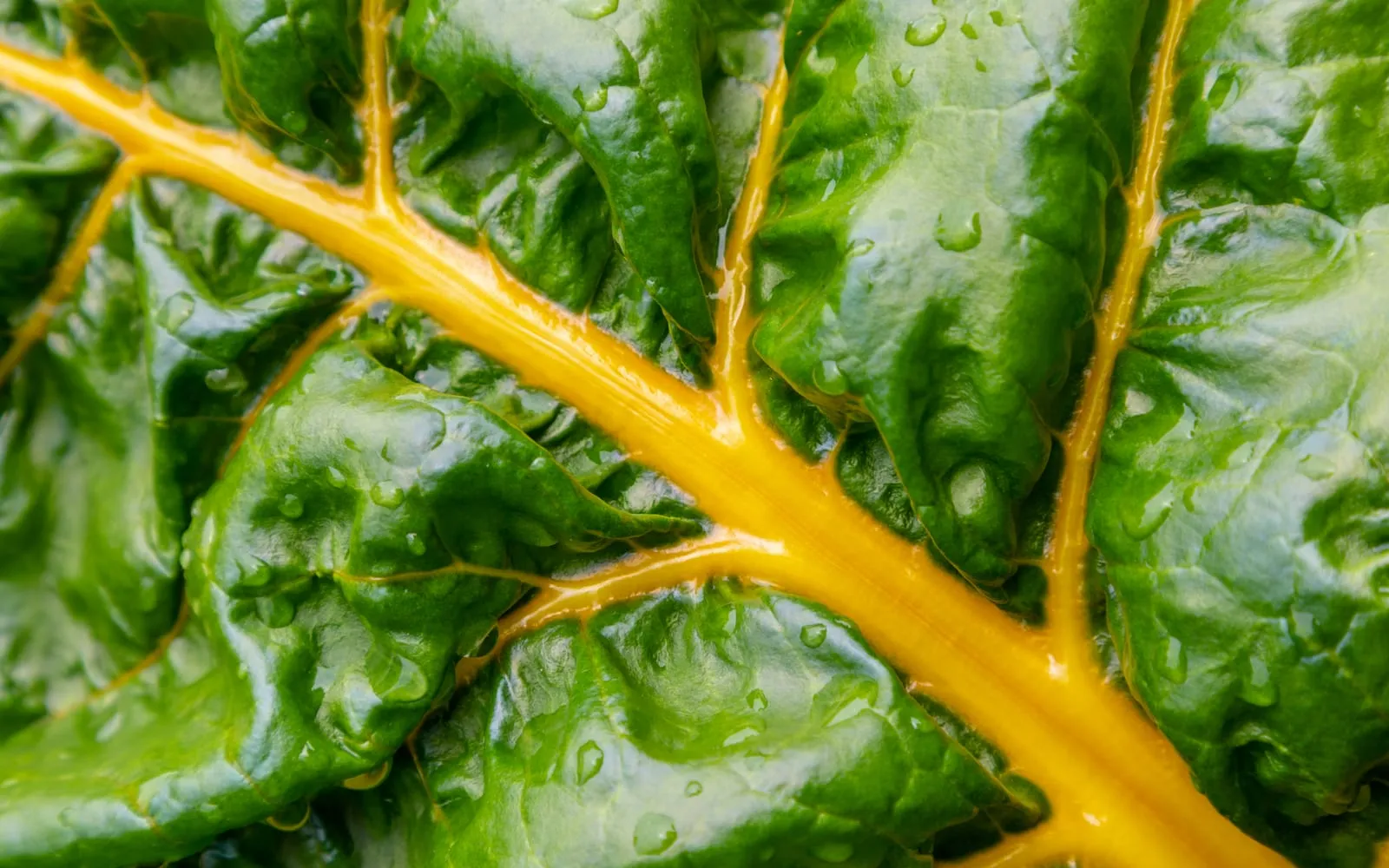
Leaves are broadly oval, thick, heavily crinkled and puckered, in glossy dark green or bronze, with a prominent midrib running the length of the blade.
Stalks are the distinguishing feature and are wide, flat, fleshy and crisp, running a third to half the length of the plant. White in the classic Swiss chard, and yellow, orange, pink, crimson or striped in the rainbow mixtures such as ‘Bright Lights’.
Flavour is mild and earthy in the leaf, closer to beetroot than to spinach, and sweet and faintly salty in the stalk.
A bolting plant in its second summer throws up a branched stem to a metre with inconspicuous green flowers, and the leaves coarsen as it goes.
Where it is from
Chard is Beta vulgaris, the same species as beetroot, sugar beet and mangel, and it descends from sea beet, which grows on shingle and salt marsh around the coasts of Britain and Europe.
The leaf forms were selected first. Mediterranean cultivation of leaf beet runs back to classical antiquity, and Aristotle described chard in the fourth century BC. The swollen-rooted beetroot is a much later selection.
The Swiss part of the name has no botanical meaning. It was attached in the nineteenth century by seed catalogues, probably to distinguish the plant from French varieties of the same thing.
Sea beet is the wild relative. It grows on the same beaches sea kale does, it is edible, and the leaves are tougher and stronger than the garden crop.
How it grows
Sow direct, or in modules for transplanting, and chard moves more willingly than most root-family crops.
Sow from April to August at 2 cm deep in rows 40 cm apart, then thin to 30 cm. The seed is a cluster containing several embryos, so a single seed often gives three seedlings and thinning is always needed.
Germination takes seven to fourteen days.
Start cutting at eight to ten weeks. Take outer leaves at the base with a knife and leave the growing point, and the plant crops for months.
Cut hard rather than picking a leaf here and there. A plant stripped to its inner four leaves regrows faster than one picked over.
Sow again in July or August for plants that overwinter and give a spring crop before bolting.
Through the seasons
Spring is the main sowing window, from April once the soil has warmed. An early sowing under fleece in March works, and cold checks make it bolt.
Summer is the cutting season. Cut hard and feed after each cut. This is when chard proves itself, standing through the heat that bolts every spinach in the garden.
Late summer takes the second sowing, from July to mid-August, for the plants that will carry the winter.
Autumn and winter are steady picking from the summer sowing. Growth slows in December. A cloche or fleece keeps the leaves clean and extends the cutting.
The second spring brings a flush of tender growth in March, then bolting in May. Take the spring flush, then clear the plants and resow.
Care difficulty
One of the easiest crops in the collection, and the one to recommend to anybody who has failed with spinach.
Thinning is the only routine job people skip. A multi-germ seed cluster gives three plants in one spot, and a crowded row gives small leaves.
Leaf miner is the pest that disfigures the crop and rarely reduces it.
Watering keeps the leaves tender. A dry plant gets tough and bitter.
Bolting is a second-year event rather than a summer one, which is the whole advantage over spinach. Resow annually and it hardly arises.
Slugs take seedlings and are less interested in an established plant.
Watering
Water weekly, around 12 litres per square metre, and more often on light soil.
Chard wilts fast in dry weather and recovers, and the leaves it grows through a dry spell are tough and bitter.
Water at the base rather than over the leaves, which reduces downy mildew and gives slugs less to work with.
Mulch after thinning with 5 cm of compost, which holds moisture and keeps the soil cool.
Water immediately after cutting hard, which is what drives the regrowth.
Container growing works well. Use a pot at least 25 cm deep and water every day or two in summer.
Warning signs, diseases and pests
Leaf miner blisters pale tunnels and blotches through the leaf, worst from May to July. The same fly attacks beetroot. Squeeze the blisters between finger and thumb to crush the larvae, remove badly mined leaves, and cover with fine mesh from May. The plant grows through it.
Downy mildew shows yellow patches above and grey growth beneath in a wet autumn. Space at 30 cm, water at the base, and remove affected leaves.
Slugs take seedlings and young plants. Water in the morning and patrol on damp evenings.
Birds strip seedlings, particularly on an allotment. Net or use fleece until the plants have four true leaves.
Bolting comes in the second year, or after a cold check on a March sowing. Remove the flower stem to extend picking a little, then clear and resow.
Small pale leaves mean nitrogen shortage or crowding. Feed and thin.
Rust occasionally spots the leaves in a wet summer and rarely matters.
Growing environment
Full sun gives the heaviest crop, and chard is one of the more shade-tolerant vegetables and crops usefully on four or five hours. It is a good choice for a partly shaded plot.
Fertile, moisture-retentive soil grows the tenderest leaves. Dig in compost before sowing.
Neutral soil, pH 6.5 to 7.
Space at 30 cm each way. Crowding is the commonest cause of a disappointing crop.
A cloche or fleece from November keeps the winter leaves clean and undamaged by wind.
Rotate with beetroot on three years, since the two share leaf miner and several soil problems. Chard does not belong in the brassica rotation.
Feeding
Dig garden compost into the bed before sowing.
Feed with a nitrogen-rich liquid feed every two or three weeks through the cutting season. The crop is leaf, so nitrogen is right here in a way it is not for the root crops in this wave.
Feed immediately after each hard cut.
Stop feeding in November. Soft growth going into winter is damaged by frost.
Feed again in February to push the spring flush from overwintered plants.
Avoid fresh manure, which softens growth and attracts slugs.
Troubleshooting
Three seedlings in one spot. Normal. The seed is a cluster containing several embryos. Thin to the strongest at the two-leaf stage.
Pale tunnels and blisters in the leaves. Leaf miner. Squeeze the blisters to crush the larvae, remove the worst leaves, and cover with fine mesh from May.
Tough, bitter leaves. Grown too dry or picked too old. Water weekly and cut hard rather than picking over.
It bolted. Either a second-year plant, which is normal, or a March sowing that met a cold spell. Sow from April and resow annually.
Small pale leaves. Crowding or nitrogen shortage. Thin to 30 cm and feed with a nitrogen-rich liquid feed.
The stalks are stringy. Older stalks develop fibres. Cut younger, or peel the strings off the outside as you would celery.
Is it the same as spinach? No. Chard is a leaf beet, related to beetroot. Spinach is Spinacia oleracea, a different genus, and it bolts in summer where chard does not.
What is perpetual spinach? The same species as chard, selected for thin green stalks and leaf alone. Grow it exactly the same way.
Swiss Chard problem guides
Not sure what is wrong? See the common vegetable pests guide.