
Edible
Orach
Atriplex hortensis
Also known as Mountain spinach, French spinach, Red orach, Arrach
How to grow orach, Atriplex hortensis. The spinach that stands summer heat, growing the red form for colour, and cutting it before it seeds itself everywhere.
At a glance
- Difficulty
- Easy
- Water
- Weekly in dry weather
- Light
- Full sun to light shade
- Temperature
- 12-25 deg C, and it tolerates heat that bolts spinach
- Hardiness
- USDA 4-9, RHS H4, hardy to -5 C
- Type
- Annual
- Height
- 1-1.8 m if left to flower
- Native to
- Central Asia and eastern Europe
- Best month
- May in the Northern Hemisphere, November in the Southern Hemisphere
Heat and salt are both taken in its stride, and it holds a leaf crop through conditions that finish spinach. Long days eventually make it flower, and the young tips stay usable well past that point. It seeds itself freely enough to become a nuisance.
Hardiness zones describe winter cold alone. Summer heat, humidity, rainfall and the length of the growing season decide as much, so treat the range as the outer limit rather than as a recommendation.
Every month named in this guide is for the temperate Northern Hemisphere. If you garden in the Southern Hemisphere, shift each one by six months, so May becomes November. Closer to the equator the wet and dry seasons matter more than the calendar, and the shift stops being a useful guide.
Edible, with limits
- Safe to eat
- The leaves and young shoots, raw when small or cooked
- Harm from
- Eating it
- Affects
- People
Orach is a food crop grown in Europe since antiquity and carries no meaningful toxicity concern. Neither the RHS nor the ASPCA lists Atriplex hortensis. The main caution is oxalic acid, which orach contains at a level comparable to spinach, above chard and well below sorrel or rhubarb. Oxalate binds calcium and contributes to kidney stones in people prone to them, and ordinary portions are well within safe limits. Boiling and discarding the water removes much of it. Anybody with a history of kidney stones or on a low-oxalate diet should treat orach as they treat spinach. Like most fast leafy crops it accumulates nitrate when grown hard on rich soil in low light, which is a commercial consideration rather than a garden one. The red-leaved forms owe their colour to betalain pigments, the same class that colours beetroot, and the colour leaches into cooking water and turns a soup pink.
Sources: RHS potentially harmful garden plants, ASPCA toxic and non-toxic plants
About
Orach was the spinach of European kitchen gardens before spinach arrived, and it does the job better in one respect that matters. It stands summer heat. A row sown in May crops through July and August, which is exactly when spinach bolts and gives up.
The red-leaved form is the one most people grow now, and it earns a place on looks alone. Deep magenta-purple leaves on a plant that reaches head height by August make it a genuine ornamental, and several gardeners grow it in a border without ever eating it.
The catch is self-seeding. A plant left to flower produces thousands of papery seeds and orach will come up across the plot for years. Cut before it flowers and the problem does not arise.
Appearance and character
An upright branching plant, reaching a metre by midsummer and up to 1.8 m if left to flower.
Leaves are triangular to arrow-shaped, soft, slightly mealy on the underside, and held on long stalks. The mealiness is a coating of salt-excreting bladder cells, which is what lets the plant grow on saline ground.
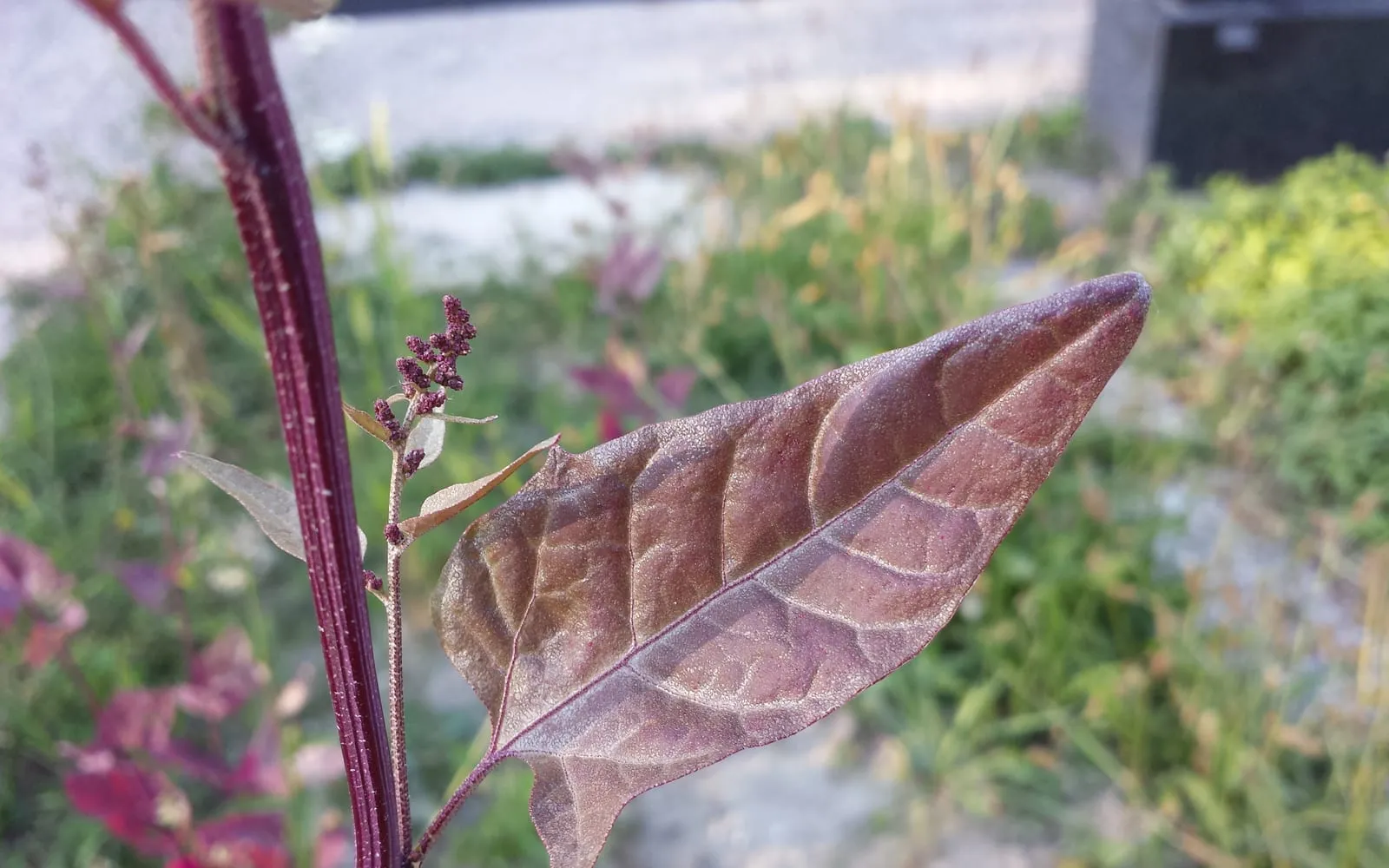
Colour is the choice to make. Green, gold, and the deep red-purple of ‘Rubra’ and ‘Ruby Red’, which holds its colour through the season and bleeds into cooking water.
Flowers are tiny and green in branching spikes from July, followed by flat papery discs holding the seed, which look like small coins and are the reason the plant self-sows so effectively.
Flavour is mild and slightly salty, closer to spinach than to chard, with none of the metallic edge some people dislike in spinach.
Where it is from
Orach is native to central Asia and eastern Europe, growing on saline and disturbed ground, and it is naturalised across much of Europe including Britain.
It has been cultivated since at least the classical period and was the standard leaf vegetable of northern European gardens through the Middle Ages, grown alongside good King Henry and fat hen.
Spinach reached Europe from Persia via Moorish Spain and gradually displaced it from the sixteenth century onwards.
Interest revived in the last thirty years, driven mostly by the red form appearing in ornamental planting schemes and salad-leaf mixes.
The genus contains a great many salt-tolerant species, including the sea purslanes of Atlantic salt marshes, and this tolerance is why orach grows where other leaf crops fail.
How it grows
Sow direct. Orach grows fast and transplanting checks it.
Sow from April to July at 1 cm deep in rows 45 cm apart, then thin to 30 cm for full plants or 15 cm for a cutting row.
Germination takes seven to fourteen days.
Pick young leaves from six weeks, taking the tips and upper leaves, which keeps the plant branching and productive.
Pinch out the growing tip when the plant reaches 30 cm. This delays flowering, forces side shoots and roughly doubles the useful picking period.
Cut the whole plant back hard when it starts to run up, and it will regrow once.
Pull the plants before the seed discs turn papery, which is the difference between a crop and a decade of weeding.
Through the seasons
Spring is the main sowing window, from April once the soil has warmed. Sow successionally every three weeks.
Summer is when orach earns its place, cropping through the heat that ends the spinach row. Pinch out the tips, pick regularly, and water in dry spells.
Late summer brings flowering. Cut plants back hard, or pull them and sow again for an autumn crop.
Autumn carries a July sowing through to the frosts. The plants are killed by the first hard frost, unlike chard or corn salad.
Winter is nothing. Orach is an annual that dies with the frost, so clear the bed and follow with garlic or a green manure.
Care difficulty
One of the easiest crops here, and a good one for a beginner or a difficult site.
Self-seeding is the only real management issue, and it is entirely solved by cutting before the seed sets.
Pinching out the tip is the technique that makes the difference between a short crop and a long one.
Slugs take seedlings and lose interest once the plant is up and away.
Watering keeps the leaves tender. Orach survives drought and produces tough leaves through it.
The plant tolerates poor and salty soil that would defeat most vegetables, which makes it useful in a coastal garden.
Watering
Water weekly in dry weather, around 12 litres per square metre.
Orach is far more drought-tolerant than spinach and it produces better leaves when watered.
Water immediately after cutting back hard, which drives the regrowth.
Mulch after thinning to hold moisture.
Water at the base rather than over the leaves in a wet season, which reduces downy mildew.
Container growing works in a pot 30 cm deep, though the plant gets tall and needs staking or regular pinching.
Warning signs, diseases and pests
Slugs graze seedlings off at ground level and the plant outgrows them within a fortnight.
Leaf miner blisters pale tunnels through the leaves, and the same flies attack beetroot and chard. Squeeze the blisters to crush the larvae and remove the worst leaves.
Aphids cluster on the growing tips in summer. Wash them off and predators handle the rest.
Downy mildew brings yellow patches with grey growth beneath in a wet season. Space at 30 cm and water at the base.
Self-seeding is the main problem and is not a pest. Pull the plants before the seed discs go papery.
Tough leaves mean the plant is running up to flower or has gone short of water.
Wind rock topples a tall plant in an exposed garden. Pinch out the tips to keep it shorter and bushier.
Growing environment
Full sun to light shade.
Fertile, moisture-retentive soil grows the tenderest leaves, and orach tolerates poor, dry and saline ground better than any other leaf crop here.
Neutral soil, pH 6.5 to 7.5, and it takes a wide range.
Space at 30 cm each way for full plants.
Shelter helps a tall plant, though pinching out keeps it manageable.
Rotate with beetroot and chard on three years, since all three are in the Amaranthaceae and share leaf miner.
Feeding
Work garden compost into the bed before sowing.
Feed with a balanced liquid feed after a hard cut to drive the regrowth.
Avoid heavy nitrogen. Orach grows large enough without it, and hard-grown leafy crops accumulate nitrate.
Never use fresh manure.
On decent ground the crop needs nothing beyond the compost dug in at sowing.
Troubleshooting
The plant went to flower within two months. Normal for an unpinched plant. Pinch out the growing tip at 30 cm to force side shoots and delay flowering.
Orach seedlings all over the plot. A plant was allowed to seed. Pull plants before the seed discs turn papery. The seedlings are easy to hoe when small.
Tough leaves. Grown too dry, or picked from a plant that is running up. Water weekly and pick the young upper leaves.
Pale tunnels in the leaves. Leaf miner, the same one that attacks beetroot and chard. Squeeze the blisters and remove the worst leaves.
It fell over in a gale. A tall unpinched plant. Pinch out the tips to keep it bushy, or stake it.
The cooking water went bright pink. Betalain pigment from a red variety. Harmless, and it will colour whatever you cook it with.
Is it better than spinach? For summer, yes, because it does not bolt in the heat. Spinach is better in spring and autumn. Growing both covers the year.
Can I eat it raw? Yes, when the leaves are young and small. Larger leaves are better cooked.
Orach problem guides
Not sure what is wrong? See the common vegetable pests guide.