
Edible
Chervil
Anthriscus cerefolium
Also known as Garden chervil, French parsley
How to grow chervil, Anthriscus cerefolium. Sowing it in autumn for a winter crop, why it bolts in a hot bed, and how to tell it from the cow parsley it is related to.
At a glance
- Difficulty
- Moderate
- Water
- Regularly. Drying out is what makes it bolt
- Light
- Part shade in summer, full sun in winter
- Temperature
- Hardy to about -10 deg C. It grows through mild winters
- Hardiness
- USDA 4-9, RHS H5, hardy to -10 C
- Type
- Hardy annual, sometimes biennial
- Height
- 30-60 cm
- Native to
- southeastern Europe, western Asia
- Best month
- March and September in the Northern Hemisphere, September and March in the Southern Hemisphere
Shade and cool are what it wants, and it bolts within weeks in sun or heat, which reverses the usual advice for a herb. Autumn sowings stand the winter under a cloche and give the best leaf of the year in March. The aniseed flavour is destroyed by cooking, so it goes in at the end.
Hardiness zones describe winter cold alone. Summer heat, humidity, rainfall and the length of the growing season decide as much, so treat the range as the outer limit rather than as a recommendation.
Every month named in this guide is for the temperate Northern Hemisphere. If you garden in the Southern Hemisphere, shift each one by six months, so March becomes September. Closer to the equator the wet and dry seasons matter more than the calendar, and the shift stops being a useful guide.
Not known to be toxic
- Safe to eat
- Leaves and young stems
Non-toxic. Chervil is a culinary herb and appears on neither the RHS list of potentially harmful garden plants nor the ASPCA list of plants toxic to cats, dogs and horses. The point that deserves attention is identification rather than toxicity. Chervil is Anthriscus cerefolium and its close relative Anthriscus sylvestris is cow parsley, the plant that hemlock, hemlock water-dropwort and fool's parsley are all mistaken for. Three of those can kill. Garden chervil raised from a seed packet is safe to eat; a ferny white-flowered umbellifer found in a hedge is not something to pick without certainty, and the identification checks are set out in the hemlock and hemlock water-dropwort guides.
Sources: RHS potentially harmful garden plants, ASPCA toxic and non-toxic plants
About
Chervil is the fourth herb in fines herbes and the one temperate gardens leave out. The flavour is delicate, faintly of aniseed, and it belongs with eggs, fish, young vegetables and cream. Long cooking destroys it, so it goes in at the end.
Growing it turns on one thing. Chervil bolts. Heat, drought and root disturbance all send it straight to flower, and a plant that has bolted is finished for the kitchen. Sow it in cool conditions, keep it damp, sow it where it is to stand, and sow again every few weeks.
The best crop comes from an autumn sowing. Chervil is hardy, it grows slowly through the winter under a cloche, and it gives you fresh leaf from February when there is very little else. Treating it as a summer herb is what disappoints people.
Appearance and character
A soft, low rosette of finely divided leaves, 20 to 30 cm across before the plant runs up to flower.
Leaves are bright light green, lacy and ferny, more finely cut than flat parsley and softer to the touch. They flush pinkish-bronze in cold weather, which is normal rather than a sign of stress.
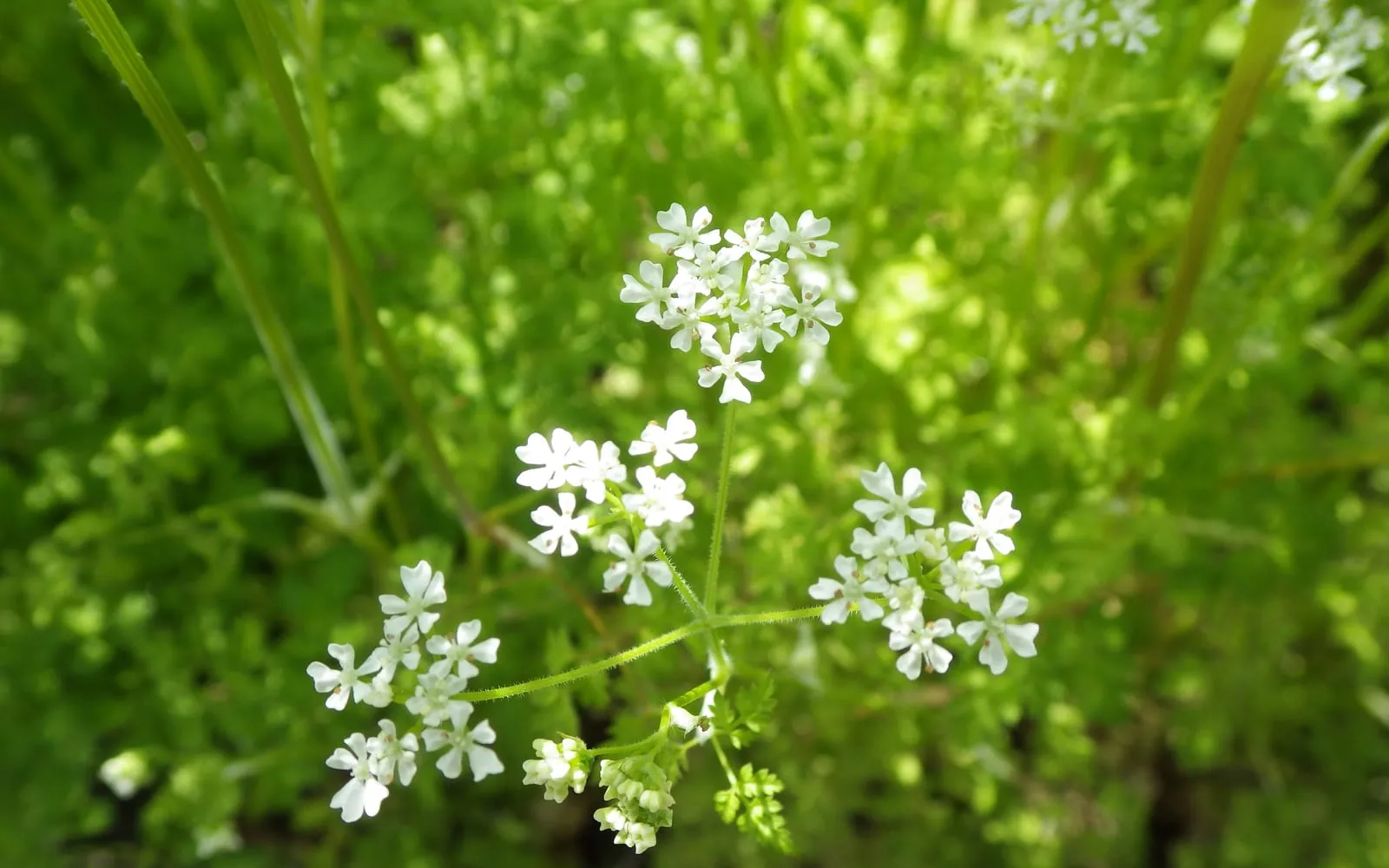
Flowering stems reach 40 to 60 cm and carry small flat umbels of tiny white flowers from May.
Seeds are long, narrow, black and beaked, ripening quickly and shattering.
The scent is light aniseed with a grassy note behind it, much gentler than fennel or anise.
The whole plant is soft. Nothing about chervil is tough, and that includes its tolerance of heat, drought and rough handling.
Where it is from
Chervil is native to south-eastern Europe, the Caucasus and western Asia, and it has been cultivated so long across Europe that it turns up naturalised in many places.
The Romans spread it. It was in general use across the empire, and the specific name cerefolium comes from the Greek for leaf of rejoicing.
Medieval Europe used it as a spring tonic, eaten in quantity after the winter, and it kept a place in the kitchen gardens of monasteries and manor houses.
France made it central. Chervil is one of the four fines herbes with parsley, tarragon and chives, it goes into sauces, omelettes and soups, and French cooking uses far more of it than British cooking ever has.
Britain grew it steadily until the nineteenth century and then largely lost interest, which is why a supermarket sells parsley and coriander by the shelf and chervil not at all.
How it grows
Sow direct where it is to grow. Chervil resents root disturbance and a transplanted seedling usually bolts within weeks.
Sow thinly in shallow drills, covering with 5 mm of soil, and thin to 20 cm.
Use fresh seed. Chervil seed loses viability within a year, and stale seed is the commonest cause of a row that never comes up.
Sow from March to April for a spring crop, then every three weeks through the summer into a shaded bed, then in August and September for the best crop of the year.
The autumn sowing is the one to prioritise. Plants stand through winter, take frost to about -10 deg C, and crop from February under a cloche or in a cold frame.
Site summer sowings in part shade. Full sun in July gives you a plant that bolts before it is worth picking.
Keep the soil damp. Drying out triggers flowering as reliably as heat does.
Harvest from the outside of the rosette when the plant is about 10 cm across, taking whole leaves rather than shearing the top. Cut a bolting plant back hard and it sometimes gives one more flush.
Through the seasons
Winter is when an autumn-sown crop earns its place. The plants sit low, tinged bronze, and give you leaf under a cloche from February. Ventilate on mild days.
Spring brings fast growth and the first main sowing in March. The overwintered plants bolt in April and should be pulled once they do.
Early summer needs successional sowing into shade and consistent watering. This is the hardest season to keep chervil going.
Midsummer is usually a write-off in a hot year. Accept it, sow into the shadiest damp corner you have, and wait for August.
Autumn is the second good season. Sow in late August and September for plants that stand the winter, and cover them with a cloche in November.
Care difficulty
Moderate, and the whole difficulty is bolting.
Chervil goes to flower under heat, under drought, after transplanting and when crowded. Once it bolts the leaf turns coarse and the flavour goes, and there is no recovering it. Everything about growing chervil is arranged around delaying that.
Sowing direct rather than transplanting removes one trigger. Shade in summer removes another. Even watering removes the third.
The autumn sowing sidesteps the problem entirely, since a plant growing through a cool winter has no reason to run up.
Seed viability is the other common failure. Buy it fresh each year and sow more than you think you need.
Beyond that it is undemanding. It needs no feeding, no staking, no protection beyond a cloche and it has no disease of consequence.
Watering
Keep the soil evenly damp. Chervil is a plant of woodland edges and damp ground, and letting it dry out is the fastest way to make it bolt.
Water the seedbed before sowing and keep it moist until germination, which takes two to three weeks in cool soil.
Water established plants two or three times a week in summer, more in a container.
Mulch lightly around the plants with compost to hold moisture and keep the roots cool. A cool root run buys you weeks of picking.
Water in the morning at the base. Wet foliage overnight in a crowded row brings on downy mildew.
Reduce watering through the winter, when the plants are barely growing and the compost stays wet on its own.
Warning signs, diseases and pests
Bolting is the main event. A flower stem rises from the centre, the leaves go coarse and the flavour thins. Cut the plant back hard for a possible last flush, then pull it and sow again.
Slugs clear a row of seedlings in a night. Protect new sowings, particularly autumn ones.
Aphids collect on the soft growth in early summer. Rub them off, since a herb you are about to eat is the wrong plant to spray.
Downy mildew produces yellow patches above and grey growth beneath on crowded plants in a wet autumn. Thin the row and improve the airflow.
Pale, thin, stretched growth means too much shade in winter. Chervil wants shade in summer and sun in winter, which is why the position changes with the sowing.
Bronze-pink leaves in cold weather are normal colouring rather than a problem.
Rows that never appear almost always mean old seed.
Growing environment
Part shade from May to September, and full sun from October to April. Chervil is the rare herb whose ideal position changes with the season, and the practical answer is to sow in different places at different times.
Moisture-retentive but well-drained soil with some organic matter worked in.
pH from 6 to 7.5, and it is not fussy.
A bed under deciduous trees or beside taller crops suits summer sowings. Beans, sweetcorn and courgettes all cast useful shade.
A cold frame or a cloche is the single most useful piece of equipment for it, turning an autumn sowing into a February crop.
A container works well if it is kept damp and out of afternoon sun, and a 20 cm pot holds a useful clump.
Feeding
Nothing is needed in reasonable soil. Chervil is a fast short-lived plant that finds what it wants in an ordinary bed.
Compost worked in before sowing is ample preparation, and it does more for the moisture than for the nutrition.
Avoid nitrogen feeds. They give you soft growth that aphids find and that offers no more flavour.
A container plant takes a weak balanced feed every three weeks, since a pot runs out faster than a bed.
If plants look starved, the cause is usually crowding or dryness rather than nutrition. Thin them and water.
Troubleshooting
It flowered within a month. Bolting from heat, drought or transplanting. Sow direct into part shade, keep it damp, and make the main sowing in autumn.
Nothing came up. Old seed, almost certainly. Chervil seed does not keep. Buy fresh each year.
The leaves went pink. Cold weather colouring. It is normal and the plant is fine.
Is this chervil or cow parsley? Garden chervil is a low soft rosette with bright light-green lacy leaves, sown from a packet. Cow parsley is a much larger, coarser roadside plant. Never eat an umbellifer found growing wild without certainty, since hemlock and hemlock water-dropwort share the family and both can kill.
The flavour is weak. Picked from a bolting plant, or grown in too much sun. Pick young leaves from unstressed plants.
Can I dry it? Not usefully. Chervil loses almost everything on drying. Freeze it in butter or in ice cubes instead, or grow it fresh through the winter, which is the better answer.
When should I sow for winter? Late August into mid-September, direct, with a cloche over the row from November.
Chervil problem guides
Not sure what is wrong? See the common vegetable pests guide.