
Edible
Spearmint
Mentha spicata
Also known as Garden mint, Common mint, Lamb mint
How to grow spearmint, Mentha spicata. Containing the runners, telling it from peppermint, mint rust, and cutting back for a second flush of clean leaf.
At a glance
- Difficulty
- Easy
- Water
- Whenever the top of the pot is dry, which in summer is most days
- Light
- Full sun to light shade, and it takes more shade than most herbs
- Temperature
- Fully hardy. Dies to the ground in winter and returns in April
- Hardiness
- USDA 4-9, RHS H6, hardy to -20 C
- Type
- Hardy herbaceous perennial
- Height
- 30-100 cm
- Native to
- Europe, Asia
- Best month
- May and June in the Northern Hemisphere, November and December in the Southern Hemisphere
It runs as hard as peppermint and, unlike peppermint, sets viable seed, so it spreads by both routes. Carvone rather than menthol is the dominant oil, which is why it tastes sweet where peppermint tastes cold. Full sun raises the oil and light shade gives a larger softer leaf.
Hardiness zones describe winter cold alone. Summer heat, humidity, rainfall and the length of the growing season decide as much, so treat the range as the outer limit rather than as a recommendation.
Every month named in this guide is for the temperate Northern Hemisphere. If you garden in the Southern Hemisphere, shift each one by six months, so May becomes November. Closer to the equator the wet and dry seasons matter more than the calendar, and the shift stops being a useful guide.
Edible, with limits
- Safe to eat
- Leaves and flowering tops, in normal culinary amounts
- Do not eat
- Large quantities of leaf, and the concentrated oil
- Harm from
- Eating it
- Affects
- People, cats, dogs and horses
The ASPCA lists Mentha spicata as toxic to cats, dogs and horses, and the harm it describes is vomiting and diarrhoea from the essential oils after a large ingestion. That is a statement about quantity. Mint in a sauce, a salad or a pot of tea is food and has been for as long as there are records of cooking. Concentrated spearmint oil is a different substance and should never be given to an animal or put on its skin, because cats lack the liver enzymes that process these compounds. The mint worth treating carefully is pennyroyal, Mentha pulegium, which contains pulegone, damages the liver and has killed people taken as an abortifacient. It looks like a small spearmint and it is not one, so buy named plants rather than lifting an unlabelled mint from a verge.
Sources: ASPCA toxic and non-toxic plants, RHS potentially harmful garden plants
About
Spearmint is the mint most people mean. It is the one in mint sauce, in a mojito, in the tea served across the eastern Mediterranean, and the one that takes over a border if you let it.
Two things decide how well you get on with it. The first is where you put the roots, because spearmint spreads by pale runners that travel just under the surface and will cross a metre of border in a season. The second is mint rust, which lives inside the plant rather than on the surface of it and cannot be sprayed off.
Both have straightforward answers. Grow it in a container, and pull out any plant that shows rust rather than trying to treat it. Beyond that, spearmint is one of the easiest edible plants in this collection and it will outlive most of the garden.
Appearance and character
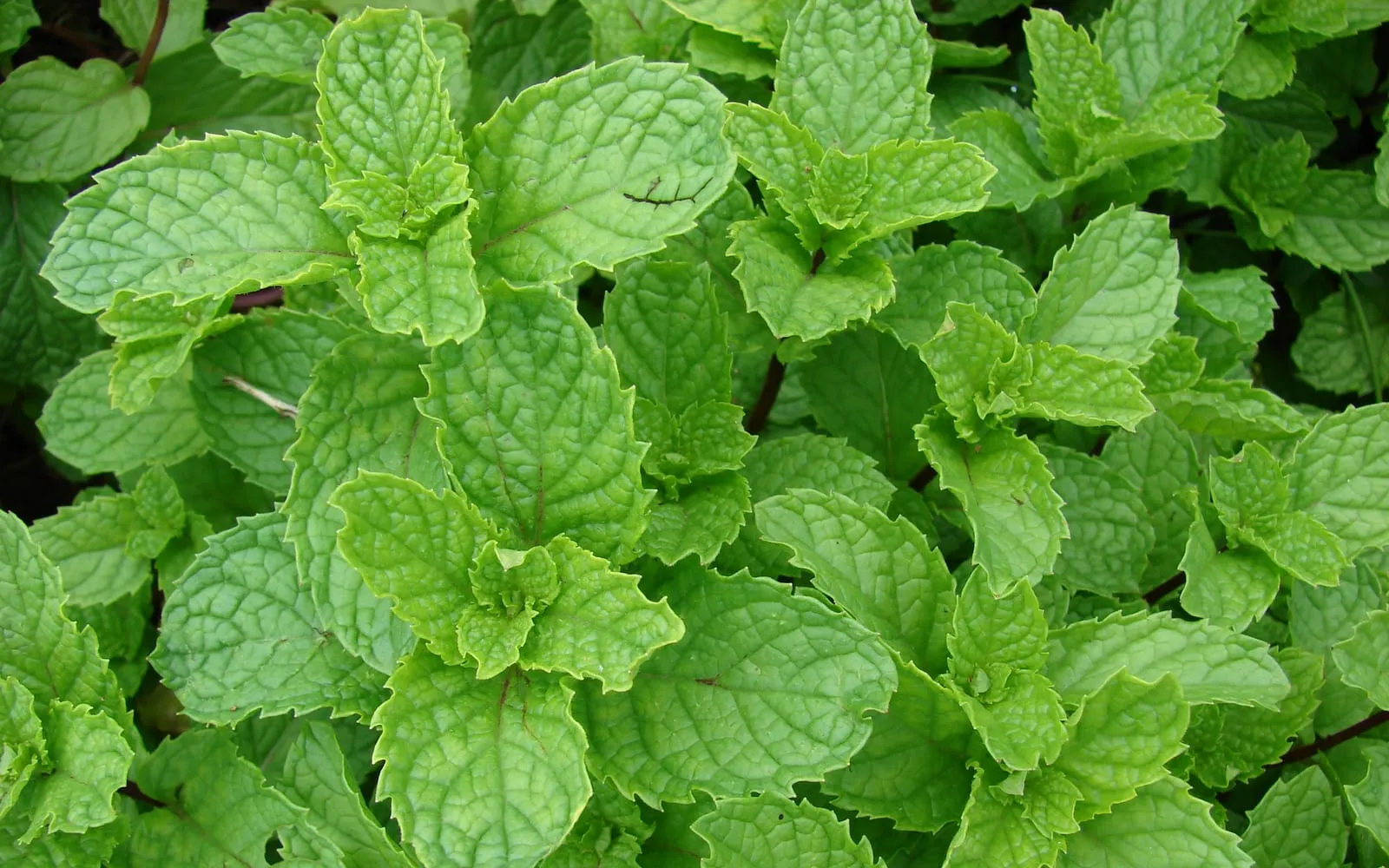
Bright mid-green leaves, pointed, wrinkled and stalkless, held in opposite pairs up a square stem. The lack of a leaf stalk is the quickest way to separate spearmint from peppermint, which has a short stalk and a darker, purple-flushed leaf.
Stems are square in cross-section, as every mint-family plant’s are, and green rather than the purple-red of peppermint.
Flowers come in a slender terminal spike in July and August, pale lilac to pink, and they are worked hard by bees. Field mint is the mint that flowers in the leaf axils instead, which separates the two in the wild.
The scent is clean and sweet, with none of the cold menthol hit of peppermint. Spearmint carries carvone rather than menthol, which is the whole difference between mint sauce and toothpaste.
Roots are the part that decides where you plant it. White, brittle, running just below the surface, and every broken fragment makes a new plant.
Where it is from
Spearmint is native to most of Europe and much of temperate Asia, and it has been carried around the world for so long that its wild range is hard to draw with any confidence.
The Romans grew it, Pliny wrote about it, and it reached Britain with them. Chaucer mentions a mint bed. By the Tudor period it was in every English kitchen garden.
Mint sauce is the English habit and it is older than it looks. Vinegar and mint were served with lamb in the medieval period, and the pairing survived here after the rest of Europe dropped it.
The plant travelled well. Spearmint is naturalised across North America, and the American mint industry grew large enough that Michigan and the Pacific Northwest still supply most of the world’s mint oil.
Its parentage is uncertain and probably hybrid, which is why named cultivars are propagated by cuttings and division rather than seed.
How it grows
Buy a plant rather than sowing seed. Seed-raised mint is variable and often disappointing, and one plant divides into a dozen within two years.
Plant into a container of ordinary multipurpose compost, at least 25 cm across. Growing it in a pot sunk to its rim in a border gives you a mint bed that stays where you put it, though runners still escape over the top, so raise the rim 5 cm proud of the soil.
Site it in sun or light shade. Spearmint in full shade grows leggy and loses scent; in baking sun in a small pot it wilts every afternoon.
Pinch out the growing tips from May to keep it bushy. Cut the whole plant to 5 cm after it flowers and it comes again with clean, tender leaf for autumn.
Divide every second or third spring. An undivided clump exhausts its compost, the centre dies out and the leaves shrink.
Harvest by cutting whole stems rather than picking single leaves. The plant branches from the cut and gives you more.
Through the seasons
Winter is dormancy. The top growth dies away and there is nothing to see. Leave the pot outside, since the roots need the cold, and keep it out of a saucer of standing water.
Spring brings shoots in April. Divide now if the clump needs it, top-dress the pot with fresh compost, and watch for slugs on the first soft growth.
Summer is the main harvest. Cut hard and often. Flowering starts in July and the leaf loses some sweetness once it does, so cut the plant back and take the second flush.
Autumn gives a last cut in September. Mint rust shows most clearly now, as orange pustules on the undersides of the leaves.
Late autumn is the time to sort out an escaped clump. Lift it, wash the roots, take the youngest runner tips and replant those. Every fragment left in the ground grows back.
Care difficulty
Easy. Spearmint is one of the few plants in this collection where the usual problem is too much growth.
Containing it is the main job. A runner reaching open ground will produce a new crown a metre away by the end of the summer, and digging mint out of a border takes several attempts because any root left behind regrows.
Mint rust is the one real disease and it cannot be cured. It is a systemic fungus that overwinters in the runners, so a plant that shows it in September will show it again in May. Destroy the plant and start with a clean one from a nursery.
Watering a pot in summer is the daily task, and mint is unforgiving about it. A dry pot wilts flat within hours, and although it usually recovers, repeated wilting costs you the leaf quality.
Nothing else about it is difficult. It is hardy, it needs no protection, and it fruits nothing you have to wait for.
Watering
Water pot-grown mint whenever the top 2 cm of compost is dry. Through July that is most days, and in a heatwave twice a day for a small pot.
Water in the ground during dry spells. Mint grows wild along ditches and damp field edges, and drought is what makes it woody and bitter.
Give a thorough soak rather than a sprinkle. Water the compost until it runs from the base of the pot, then leave it until the surface dries again.
Stand a pot in a shallow tray during the hottest weeks if you cannot water twice a day, and take it out again in autumn. Mint tolerates damp roots far better than most herbs and still rots in a waterlogged pot over winter.
Water at the base. Wetting the foliage overnight encourages mildew on a crowded plant.
Warning signs, diseases and pests
Mint rust is the disease that ends a plant. Orange to brown pustules break out on the undersides of the leaves, distorted pale shoots come up in spring, and the leaves drop. Nothing available to a gardener cures it. Lift and destroy the plant, do not compost it, and do not replant mint in that ground for several years.
Mint beetle is a hard, metallic green beetle around 8 mm long that chews the leaves into lace. Pick them off by hand in the evening. They are handsome enough that some gardeners tolerate them.
Powdery mildew whitens the leaves of a plant that is crowded, pot-bound and dry at the root. Cut it back, divide it and water more consistently.
Aphids cluster on the shoot tips in early summer. Rub them off or cut the tips away, since a mint you are going to eat is the wrong plant to spray.
Slugs shred the first shoots in April. That is the one moment in the year mint is vulnerable to them.
Woody stems, small leaves and a weak scent mean the clump is old and starved. Divide it.
Yellowing lower leaves in a pot in midsummer usually mean the compost is exhausted rather than that anything is wrong.
Growing environment
Sun or light shade. Spearmint takes more shade than any other common kitchen herb, which makes it useful on a north-facing patio where basil and thyme would fail.
Moisture-retentive soil with some body to it. Mint on thin dry sand goes woody and stops being worth picking.
Almost any pH between 6 and 7.5 suits it, and it grows on chalk without complaint.
A container is the right environment in a mixed border, and open ground is the right environment where you want a mint bed and nothing else. Both work. What does not work is one plant tucked between perennials.
Shelter is unnecessary. The stems flop in wind and stand up again.
Indoors it disappoints. A kitchen windowsill mint grows pale and leggy within weeks, and the plants sold in supermarkets are forced, crowded and intended to be used rather than kept.
Feeding
Mint in the ground needs almost nothing. A barrow of compost spread over the bed each spring covers it.
Mint in a pot needs feeding, because it exhausts a container faster than most herbs. A balanced liquid feed every three or four weeks from May to August keeps the leaves large and the colour good.
Top-dress the pot each spring with fresh compost after scraping off the top 3 cm of the old.
Avoid high-nitrogen feeds. Soft sappy mint is what aphids and mildew find first, and the scent thins as the growth speeds up.
Repot or divide every second year. That does more for a tired plant than any feed, since the problem is usually root congestion rather than nutrition.
Troubleshooting
Orange spots on the undersides of the leaves. Mint rust. Destroy the plant, wash your hands and tools, and buy a clean one. There is no treatment.
It has taken over the border. Lift every fragment you can find, then watch that ground for two seasons and pull the regrowth. Replant into a sunken pot with the rim standing proud.
The leaves are small and the stems are woody. An old congested clump. Divide in spring and replant only the young outer runners.
It wilted flat in the sun. A dry pot. Soak it and it usually recovers by evening. Move it out of full afternoon sun if it happens weekly.
The scent is weak. Too much shade, too much nitrogen, or a plant that has flowered. Cut it to the base and take the next flush.
Which mint is which? Spearmint has stalkless bright green leaves and a sweet scent. Peppermint has short-stalked darker leaves, purple stems and a cold menthol scent. Field mint flowers in the leaf axils rather than in a spike at the top.
Can I grow it from a supermarket pot? Yes, and it is worth doing. Split the crowded root ball into three or four, pot each separately, and cut the top growth back hard.