
Edible
Field Mint
Mentha arvensis
Also known as Corn mint, Japanese mint, Wild mint
How to identify and grow field mint, Mentha arvensis. The whorls of flower in the leaf axils, the plant that most menthol is distilled from, and where it grows wild.
At a glance
- Difficulty
- Easy
- Water
- Keep it damp. It tolerates ground too wet for other mints
- Light
- Full sun to part shade
- Temperature
- Fully hardy anywhere in its range
- Hardiness
- USDA 3-9, RHS H7, hardy to -30 C
- Type
- Hardy herbaceous perennial
- Height
- 20-60 cm
- Native to
- the temperate Northern Hemisphere
- Best month
- July and August in the Northern Hemisphere, January and February in the Southern Hemisphere
The hardiest of the mints and the source of most of the world's menthol, grown on a field scale across India, China and the American Midwest. It runs at least as hard as the others. Its natural home is damp ground, and it holds a crop through wet soil that would rot a Mediterranean herb.
Hardiness zones describe winter cold alone. Summer heat, humidity, rainfall and the length of the growing season decide as much, so treat the range as the outer limit rather than as a recommendation.
Every month named in this guide is for the temperate Northern Hemisphere. If you garden in the Southern Hemisphere, shift each one by six months, so July becomes January. Closer to the equator the wet and dry seasons matter more than the calendar, and the shift stops being a useful guide.
Edible, with limits
- Safe to eat
- Leaves, in normal culinary amounts
- Do not eat
- The concentrated oil, and large quantities of leaf
- Harm from
- Eating it
- Affects
- People, cats, dogs and horses
Field mint is a culinary mint eaten across Asia and it carries the same mild caution as every other Mentha. The ASPCA lists garden mint as toxic to cats, dogs and horses on the basis of vomiting and diarrhoea from the essential oils after a large ingestion, and the same applies here. The leaf in food is safe. What deserves respect is the oil, because this is the species most of the world's natural menthol is distilled from and concentrated menthol is an irritant that should not be given to animals or applied undiluted to skin. Pennyroyal, Mentha pulegium, is the mint to avoid outright, and a low sprawling wild mint found in damp ground could be either, so identify before you pick.
Sources: ASPCA toxic and non-toxic plants, RHS potentially harmful garden plants
About
Field mint is the wild mint of damp field bottoms across the northern hemisphere, and it is also the plant most of the world’s natural menthol comes out of. Those two descriptions belong to slightly different plants. The wild European form is mildly scented, whereas the Asian form grown for oil, sometimes separated as var. piperascens, is loaded with menthol.
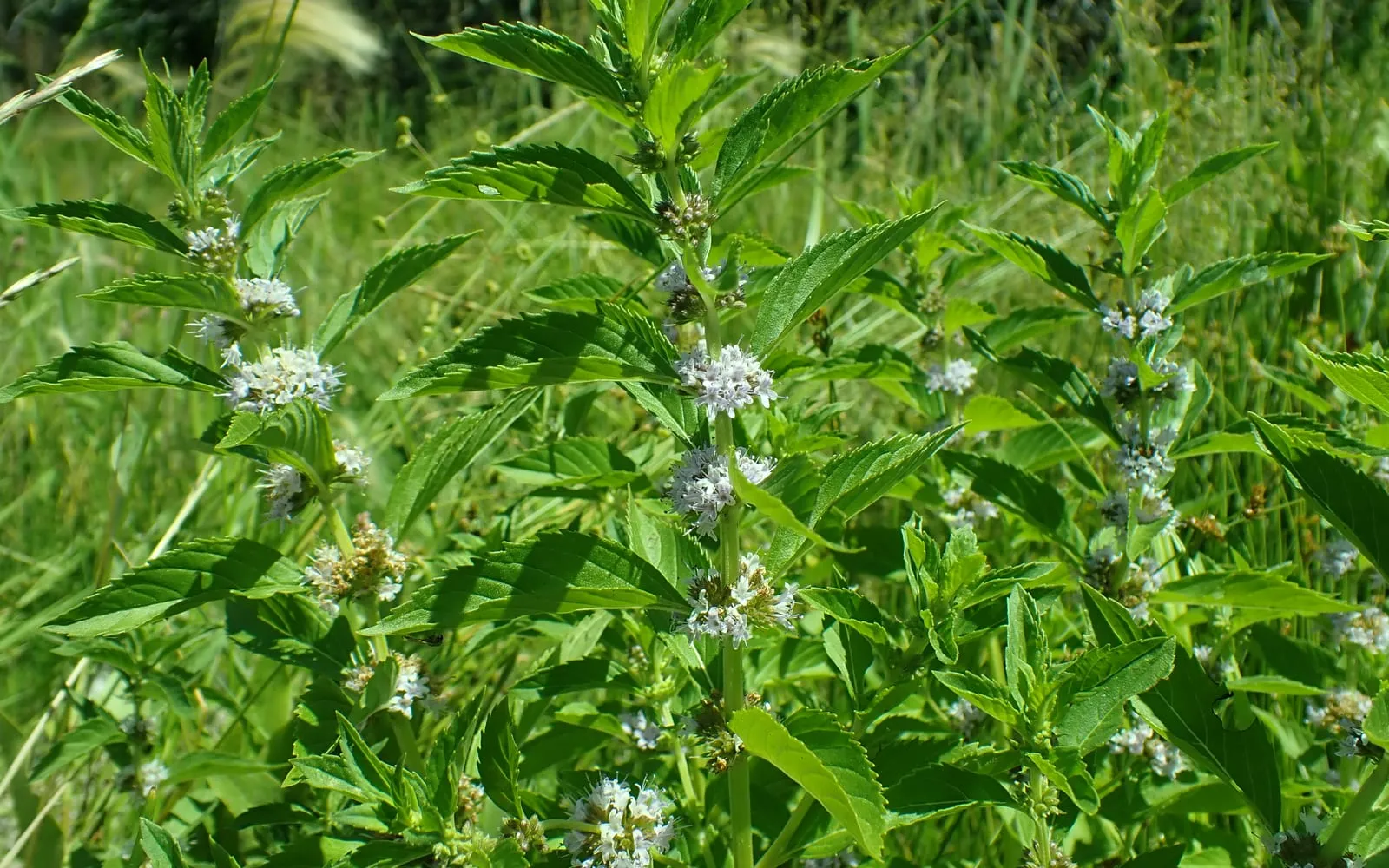
The identification character is easy and reliable. Field mint flowers in tight whorls in the angles between leaf and stem, all the way up the stem, rather than in a spike at the tip. Every other common mint flowers at the tip.
As a garden plant it is a curiosity rather than a workhorse. It is coarser and less sweet than spearmint, it sprawls rather than standing up, and it runs harder in wet ground. Grow it if you want the wild one, and grow spearmint if you want mint sauce.
Appearance and character
A low, sprawling plant, usually 20 to 40 cm and often flatter than that where it is grazed or mown.
Leaves are oval, blunt-tipped, hairy on both surfaces and shortly stalked, carried in opposite pairs on the square stems the mint family always has.
Flowers are the character to look for. Small, pale lilac, packed into dense whorls sitting in the leaf axils up the length of the stem, with a leafy shoot continuing above them, and no spike at the tip of the stem at all.
The scent is sharper and less pleasant than spearmint’s, described by some older floras as slightly acrid. The Asian oil form smells overwhelmingly of menthol when crushed.
Stems root where they touch damp ground, which is how a single plant becomes a patch.
The whole plant dies to the ground each winter and reappears from the runners in April.
Where it is from
Field mint is native right across the temperate Northern Hemisphere, from Ireland to Japan and across North America, which makes it one of the most widely distributed flowering plants in these guides.
In Britain it grows in wet arable field edges, ditches, damp tracks and pond margins, and it is common through most of the country.
Its economic history is Japanese and then Indian. Japan distilled menthol from this species from the eighteenth century, and the trade was large enough that the plant is still called Japanese mint. Production moved to India in the twentieth century, and Uttar Pradesh now grows most of the world’s supply.
Natural menthol crystallised out of that oil competes with synthetic menthol made from thymol or from pinene. The natural product still holds much of the market because it is cheap to grow and the crop fits between two rice harvests.
Cooking uses it across east and south Asia, where it goes into salads, soups and pickles in the way a European kitchen uses spearmint.
How it grows
Buy a plant or take a rooted runner. Seed is available and the seedlings vary in scent, which makes division the sensible route.
Plant in spring into damp, heavy ground, or into a large container of ordinary compost that you can afford to keep wet.
Give it more water than you would give spearmint. Field mint grows in ground that lies wet through winter and it never resents it.
Contain it if it is anywhere near a border. In damp soil it runs faster than spearmint, and the sprawling stems root as they go, so it advances on two fronts at once.
Cut the whole plant back in July as flowering begins if you want clean leaf. It regrows within a month.
Divide every second spring, replanting only the young runner tips.
Harvest leaves before flowering for the best scent, cutting stems rather than stripping leaves.
Through the seasons
Winter is bare ground. The plant retreats to its runners and shows nothing above the surface.
Spring brings shoots in April, later than spearmint in cold ground. Divide now, and top-dress a container with compost.
Summer is the growing season and the flowering season. The whorls open from July, working up the stem over several weeks, and the plant is covered in bees and hoverflies while they do.
Autumn is when rust shows worst. Check the leaf undersides in September, and lift and destroy any plant carrying orange pustules.
Late autumn is the moment to cut the dead top growth away and, in a container, to tip the plant out, take the fresh runners and start again.
Care difficulty
Easy, with the same caveat every mint carries. Growing it is straightforward and containing it is the work.
In wet ground it spreads faster than spearmint. Rooting stems mean it colonises sideways as well as underground, so a plant in a damp border needs a physical barrier rather than good intentions.
Mint rust affects it as badly as the others and has the same answer, which is destruction rather than treatment.
Drought is the one thing it minds. A field mint that dries out goes crisp at the edges and sulks, and it recovers less readily than spearmint does.
Nothing else troubles it. It is fully hardy, it needs no feeding beyond an annual mulch, and slugs leave it largely alone once it is established.
Watering
Keep it damp. This is a plant of ditch bottoms and wet arable margins, and it grows best in ground most herbs would rot in.
Water a container every day in summer, and stand it in a saucer of water through July and August without worrying about it.
In the ground on heavy soil it usually needs no watering at all. On free- draining sand it needs weekly soaking or it will not persist.
Do not let a pot dry out completely. Field mint browns from the leaf margin inwards when it does, and the damaged leaves do not recover.
Reduce watering from October and let the plant go dormant with the compost merely moist.
Warning signs, diseases and pests
Mint rust produces orange or brown pustules on the leaf undersides and pale, thickened, distorted shoots in spring. The fungus lives in the runners, so there is no spraying it off. Dig the plant out, bin it rather than composting it, and keep mint off that ground for a few years.
Mint beetle chews holes through the leaves and leaves a metallic green insect sitting on the damage. Hand picking is the answer on a plant destined for the kitchen.
Powdery mildew appears on plants that have gone dry at the root in a hot August. Water better and cut the affected growth away.
Aphids gather on the soft tips. Rub them off or cut the tips out.
Brown crisp leaf margins mean drought, which is the most likely complaint on this species.
Stems rooting a metre from where you planted it mean the plant is doing what it does. Cut them off at the crown.
Weak scent through a wet summer is normal. Aromatic oils concentrate in sun.
Growing environment
Damp ground in sun or part shade. A pond margin, a wet corner or a bog garden suits it better than a herb bed.
Heavy soil is an advantage. Field mint is one of the few kitchen plants that prefers clay to sand.
It tolerates seasonal flooding and standing water in summer, which is unusual among the herbs in these guides.
Light shade is fine and full shade is not. In deep shade the stems stretch, the leaves thin and the scent goes.
pH is unimportant between about 5.5 and 7.5.
As ground cover in a damp wild corner it works well, and it feeds a great number of pollinators in July and August, which is more than most kitchen herbs manage.
Feeding
Little is needed. Field mint grows in field bottoms where the soil is already rich with what has washed into them, and it takes the same view of a garden.
Mulch with compost in spring where it grows in the ground. That is enough for the year.
Feed a container plant with a balanced liquid feed every month from May to August, since a pot exhausts itself.
Skip high-nitrogen feeds. They give you soft leaf with less scent and more aphids.
Refresh a container annually rather than feeding harder. Root congestion is what makes an old pot of mint look starved.
Troubleshooting
Is this field mint or water mint? Field mint flowers in whorls in the leaf axils with leafy growth continuing above. Water mint, Mentha aquatica, ends its stem in a rounded head of flower. Both grow in wet ground and the flowering pattern separates them at a glance.
The leaves went brown at the edges. Drought. This species minds it more than the others. Keep the roots damp.
Orange pustules under the leaves. Mint rust. Destroy the plant. Nothing treats it.
It has rooted right across the bed. The stems root where they lie. Cut them back to the crown and put a barrier in, or move it to a wet corner where spreading does no harm.
The scent is harsh rather than sweet. That is field mint. It was never spearmint, and the European wild form is the coarse-scented one. Grow spearmint for the kitchen.
Can I make menthol from it? Not usefully at home. Distilling menthol needs the Asian oil form and a still, and the crop is grown by the hectare for the purpose.
Where do I find it wild? Wet arable field edges, damp tracks, ditch sides and pond margins, common through most of a cool climate from July.