
Edible
Peppermint
Mentha x piperita
Also known as Mint, Brandy mint
How to grow peppermint, Mentha x piperita. Containing the runners, cutting back for clean growth, why it cannot be grown from seed, and the mint that is dangerous.
At a glance
- Difficulty
- Easy
- Water
- Keep the soil moist. Mint is thirsty
- Light
- Full sun to partial shade. Takes more shade than most herbs
- Temperature
- Fully hardy, to about -20 deg C. Dies back and returns
- Hardiness
- USDA 3-9, RHS H7, hardy to -25 C
- Type
- Hardy herbaceous perennial
- Height
- 30-90 cm
- Native to
- Of garden hybrid origin, from watermint and spearmint
- Best month
- June in the Northern Hemisphere, December in the Southern Hemisphere
Hardiness is not the question with mint, containment is. The rhizomes run a metre a season through anything loose, so a bed shared with mint becomes a mint bed within three years, and a sunken bucket with the base cut out is the standard answer. Peppermint is a sterile hybrid and cannot seed, which is the one restraint it has.
Hardiness zones describe winter cold alone. Summer heat, humidity, rainfall and the length of the growing season decide as much, so treat the range as the outer limit rather than as a recommendation.
Every month named in this guide is for the temperate Northern Hemisphere. If you garden in the Southern Hemisphere, shift each one by six months, so June becomes December. Closer to the equator the wet and dry seasons matter more than the calendar, and the shift stops being a useful guide.
Edible, with limits
- Safe to eat
- Leaves, in normal culinary amounts
- Do not eat
- Large quantities of leaf, and the concentrated oil
- Harm from
- Eating it
- Affects
- People, cats, dogs and horses
NC State Extension classes peppermint as a low severity poison for people, with vomiting and diarrhoea from large ingestions caused by the essential oils, and tags it as a problem for cats, dogs and horses. This describes quantity rather than ordinary use. Mint in tea, in a salad or on new potatoes is food, and has been for millennia. Concentrated peppermint oil is a different matter, and it should never be given to pets or applied to their skin, since cats in particular lack the liver enzymes needed to process these compounds. The mint genuinely worth avoiding is pennyroyal, Mentha pulegium, which contains pulegone, is toxic to the liver, has caused human deaths when taken as an abortifacient, and should not be planted where animals graze. Peppermint and spearmint are safe kitchen herbs. Pennyroyal looks similar and is not.
Sources: NC State Extension, Mentha x piperita, RHS potentially harmful garden plants
About
Peppermint is a hybrid and a sterile one. It arose as a cross between watermint and spearmint, and because the seed it sets is unreliable and mostly infertile, every peppermint plant in cultivation descends by division and cutting from earlier plants. A packet of peppermint seed will give you something minty and almost certainly not peppermint.
That sterility is also why it spreads so determinedly by runner. The plant has one route to reproduction and takes it seriously.
Grow it in a container. This is the single piece of advice every mint guide gives, because a mint planted in a border will be in the lawn within three years and in the neighbouring bed within five.
Appearance and character
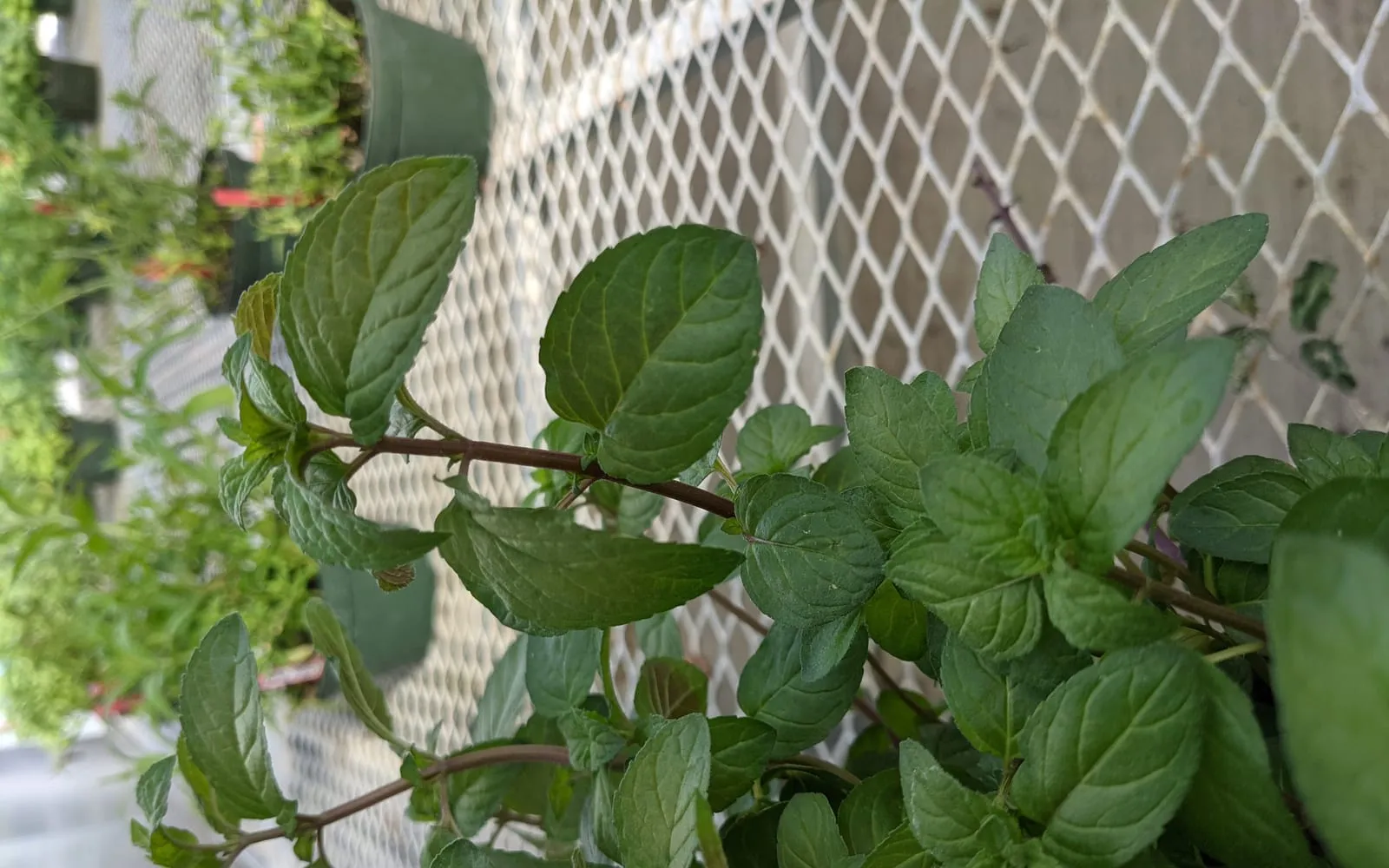
Dark green, toothed, pointed-oval leaves in opposite pairs on square stems, often flushed purple, particularly at the nodes. The square stem places it in Lamiaceae with basil, thyme, rosemary and lavender.
Flowers come in summer as blunt spikes of small pink to lilac blooms at the shoot tips. Bees work them enthusiastically. The leaves lose flavour once the plant flowers, so cut the stems back before the buds open if you are growing it for the kitchen.
The flavour is the cool sharp hit of menthol, which is the distinguishing compound. Spearmint has carvone instead and tastes rounder and sweeter, which is why spearmint suits new potatoes and lamb while peppermint suits tea and chocolate.
Rubbing a leaf releases the oil from glands on the surface, and the scent is strongest on a warm afternoon before flowering.
Where it is from
Peppermint has no wild homeland, since it is a garden hybrid. It was first recorded in Hertfordshire in the late seventeenth century, growing among its parents, and everything since descends from selected clones.
Its parents give it the conditions it wants. Watermint, Mentha aquatica, grows on stream banks and in wet ditches, and spearmint, Mentha spicata, is a plant of damp ground. Peppermint inherits a tolerance for wet soil that few herbs share.
This is why mint sits apart from the Mediterranean herbs it is often grouped with. Rosemary, thyme and lavender want sun and sharp drainage. Mint wants moisture and takes shade.
How it grows
A hardy herbaceous perennial spreading by stolons, which run just under the soil surface and root at intervals. One plant becomes a colony in a season and a problem in three.
Growth starts in March and runs to October. The whole plant dies back to the ground over winter and returns with real vigour in spring.
Propagation could hardly be easier. Lift a rooted runner at any point in the growing season, cut it from the parent and pot it. Stem cuttings also root in a glass of water within ten days.
Vigour declines after three or four years as the clump congests and the compost exhausts. Divide and repot annually in spring, taking a healthy young runner and discarding the woody centre.
Containers should be sunk into the ground if you want the look of mint in a border. A pot with the base removed, buried to its rim, contains the runners while letting the plant root down for water.
Through the seasons
Spring is for dividing and repotting. Do this every year for container mint, which exhausts its compost fast. New growth appears in March.
Summer is harvest. Cut whole stems rather than picking leaves, and cut hard and often. Remove flower buds as they appear to keep the leaves sweet.
Late summer is the point to cut everything to the ground if rust or mildew has taken hold. Fresh growth usually comes clean.
Autumn and winter are dormancy. Cut the dead top growth away in November. A pot brought into a cool greenhouse gives a light picking through the winter.
Care difficulty
Easy to the point of being difficult to kill, and the only real skills are containment and cutting back.
Containment means a pot, always. Even a large tub will be full of roots within two seasons.
Cutting back means being ruthless. Mint left alone goes tall, bare at the base and flowers, and the leaves coarsen. Cut the whole clump to 5 cm at any point in the growing season and it regrows tender within a fortnight. Doing this two or three times a summer keeps it productive.
Watering
Keep the soil moist. Mint is thirstier than any other common herb and drought brings on both poor flavour and powdery mildew.
Container plants need water daily in hot weather, sometimes twice, and a pot that dries out completely can kill the plant outright rather than merely check it.
Mint tolerates wet ground, including heavy clay, which few herbs do. Waterlogging in winter around a dormant crown is the only condition it dislikes.
Mulch garden plants in spring to hold summer moisture.
Warning signs, diseases and pests
Mint rust is the serious disease. Bright orange pustules appear on the leaf undersides and on the stems, the leaves distort and drop, and it overwinters in the rootstock. Cut all growth to the ground and bin it rather than composting. In a bad case the plant is best discarded entirely, with fresh stock started from clean cuttings in new compost, since the fungus persists in the roots.
Powdery mildew coats the leaves white in dry weather and on dry-rooted plants. Cut back hard, water well, and improve air movement.
Mint beetle is a striking metallic green insect that grazes the leaf edges from midsummer. Pick them off. Damage is rarely serious.
Leggy bare stems with small leaves means the plant needs cutting back and probably repotting.
A container that dries out and then shows no regrowth has usually lost the crown. Take cuttings from any surviving stem.
The most common problem is spread rather than disease, and by the time mint is where you do not want it, digging out every fragment of runner is the only remedy.
Growing environment
Full sun to partial shade. Mint tolerates more shade than any other kitchen herb here and four hours of sun is plenty. Some growers find the flavour better in part shade, and the plant certainly stays lusher.
Fully hardy through any temperate winter, to around -20 deg C, needing no protection.
Soil should hold moisture and be reasonably fertile. Mint is the herb to plant where drainage is poor, since it thrives on ground that would kill rosemary.
Containers are the standard method. Use a pot at least 25 cm across, in soil-based or general peat-free compost, and stand it on a saucer in summer so it does not dry out.
Indoors on a windowsill, mint is a short-term proposition. It wants more light and cooler air than a kitchen offers, so grow it outside and cut what you need.
Feeding
Garden mint in decent soil rarely needs feeding, and rich conditions produce lush growth with diluted flavour.
Container plants are different, since they exhaust a pot within a season. Feed fortnightly with a balanced organic liquid fertiliser through the growing season, and repot into fresh compost every spring.
Use organic feeds on anything you are eating raw.
A nitrogen-leaning feed suits mint better than most herbs, since leaves are the crop.
Troubleshooting
Orange spots on the leaf undersides. Mint rust. Cut everything to the ground and bin it. If it returns, discard the plant and start again with clean cuttings in fresh compost.
Tall, bare at the base, small leaves. Needs cutting back. Take the whole clump to 5 cm and it regrows tender in a fortnight.
Flavour has gone weak. The plant has flowered, or the compost is exhausted. Remove flower buds as they form, and repot annually.
It has escaped into the lawn. Dig out every fragment of white runner you can find, and grow the replacement in a pot.
Plant died after the pot dried out. Mint does not always recover from complete drying. Water daily in summer, or stand the pot in a saucer.
Grew mint from seed and it tastes wrong. Peppermint is a sterile hybrid and does not come true from seed. Buy a plant, or take a cutting from one you have tasted.
White coating on the leaves. Powdery mildew, usually from dry roots. Cut back, water, and improve airflow.