
Edible
Abyssinian Gooseberry
Dovyalis abyssinica
Also known as Ethiopian Gooseberry
How to grow Abyssinian gooseberry, Dovyalis abyssinica. Why a female plant needs a male nearby to fruit at all, the highland origin that lets it tolerate a light frost most tropical shrubs cannot, and training its spines into an impassable hedge.
At a glance
- Difficulty
- Moderate
- Water
- Regular water while establishing; drought-tolerant once mature
- Light
- Full sun for the heaviest fruiting; tolerates part shade
- Temperature
- Tolerates a light frost once established; damaged by a hard one
- Hardiness
- USDA 9-11, RHS H2-H3, hardy to -3 C
- Type
- Evergreen large shrub or small tree
- Height
- 3-6 m unpruned; usually kept lower as a hedge
- Native to
- eastern Africa
Native to cool highland forest margins in East Africa rather than the humid lowland tropics, and its origin at altitude, often above 1500 metres, is why it tolerates an occasional light frost that would kill a true lowland tropical shrub outright. It flowers and fruits best where nights stay cool, and struggles in hot, humid, low-elevation climates even where frost is never a risk.
Hardiness zones describe winter cold alone. Summer heat, humidity, rainfall and the length of the growing season decide as much, so treat the range as the outer limit rather than as a recommendation.
Not known to be toxic
- Safe to eat
- The ripe fruit
Abyssinian gooseberry is grown for its tart, edible fruit, eaten fresh when fully ripe or made into jam once cooked and sweetened, and neither the RHS harmful plants index nor the ASPCA toxic and non-toxic plants list carries an entry for Dovyalis. The genuine hazard on this plant is mechanical rather than chemical: the stems and branches carry long, stiff spines capable of a deep puncture wound, and a hedge of it is planted specifically to be impassable to people and animals alike. Keep that in mind when siting it near a path a child or a pet uses regularly, since the injury this plant causes is a scratch or a puncture rather than a poisoning.
Sources: RHS potentially harmful garden plants, ASPCA toxic and non-toxic plants
About
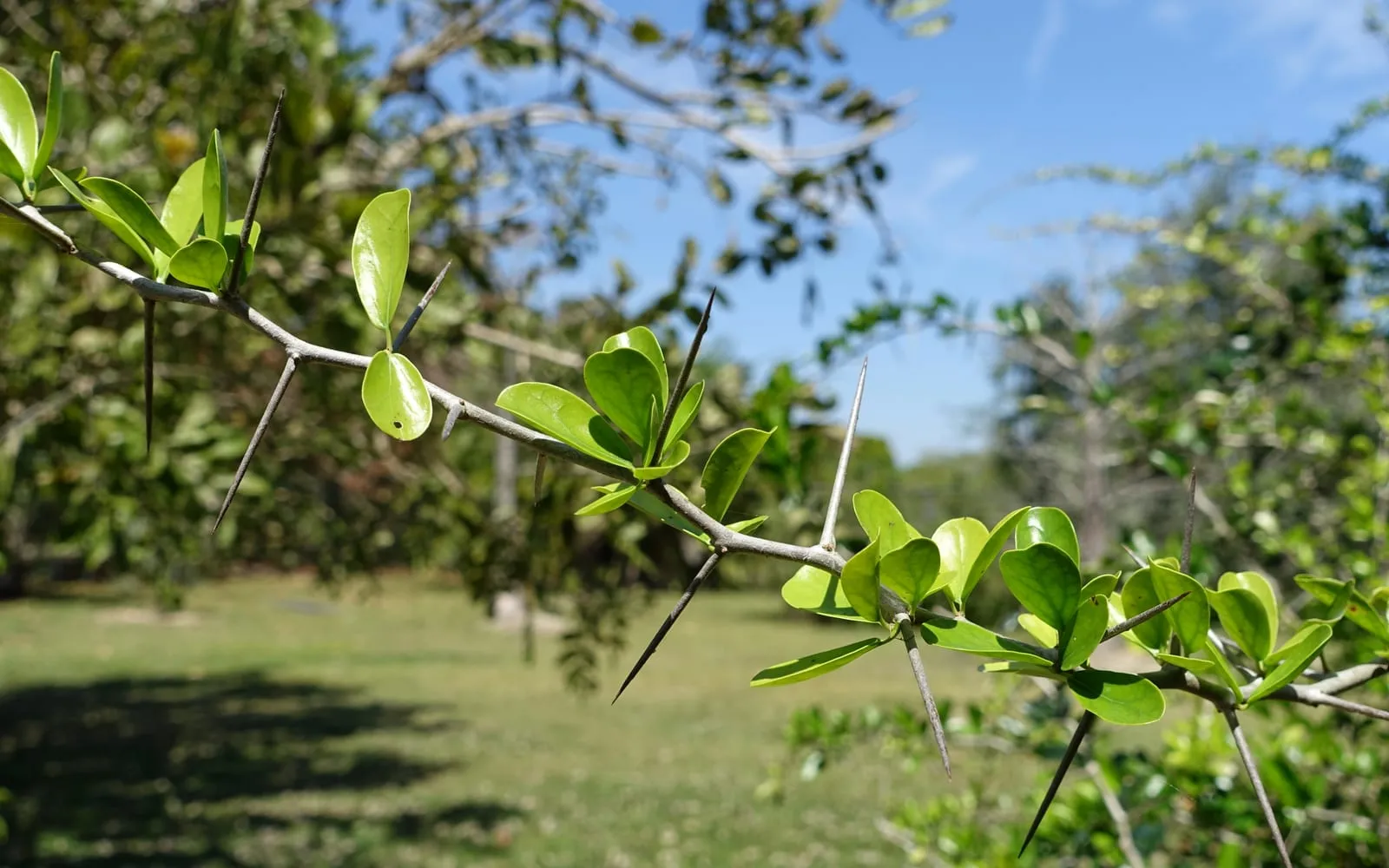
Abyssinian gooseberry is a dense, thorny East African shrub grown both for a tart, yellow-orange fruit and for its usefulness as a living barrier. Long, sharp spines line the stems, and a row of plants pruned to knit together forms a hedge few people or animals attempt to push through. Left less formally trimmed, it grows into a broad, many-stemmed small tree that still carries the same thorns along every branch. The fruit, similar in use to a true gooseberry though unrelated botanically, ripens through the warm season and works best cooked into jam or a sharp sauce rather than eaten raw off the branch in quantity.
Appearance and character
Leaves are small, glossy and dark green, oval with a slightly toothed edge, dense enough on a well-grown plant to hide the stems almost entirely outside the gaps opened by pruning. Spines emerge along the length of every stem, straight and stiff rather than hooked, some reaching several centimetres and capable of a real puncture wound. Small greenish flowers are easy to overlook, since the plant is dioecious, meaning male and female flowers grow on separate plants, and only a female specimen pollinated by a male nearby produces fruit. The fruit itself is round, roughly two to three centimetres across, ripening from green through yellow to a deep orange, with a thin skin and a sharply tart, juicy flesh around several small seeds.
Where it is from
Dovyalis abyssinica grows wild through the highland forest margins and scrubland of eastern Africa, particularly Ethiopia, Kenya and neighbouring countries, typically at elevations from around 1500 to 2600 metres. That highland origin sets it apart from most tropical fruiting shrubs: cool nights and an occasional light frost are part of its native climate rather than an occasional hazard, which is why it tolerates cold that would kill a true lowland species. It has long been grown as a living fence around homesteads and gardens across its native range, valued for how effectively its thorns keep livestock and intruders out, and was introduced to other warm-temperate and subtropical regions, including parts of California and Florida, largely for the same hedging use before its fruit found wider appreciation.
How it grows
Plant in full sun in well-drained soil of average fertility; it is not demanding about soil type once established, though it dislikes ground that stays waterlogged. Because it is dioecious, a fruit crop needs at least one male plant growing within pollinating distance of a female one. Confirm this with a nursery before buying if fruit rather than hedging is the goal. Trim regularly if grown as a hedge, ideally starting while the plants are young, to build the dense, twiggy growth that makes an effective barrier; left unpruned it grows into a looser, more open shrub or small tree. Wear thick gloves and long sleeves for any pruning work, since the spines puncture easily through thin clothing.
Through the seasons
Spring brings new leafy growth and the small, easily missed flowers that set the year’s fruit crop on a pollinated female plant.
Summer is fruit development, ripening from green through yellow to orange as the season progresses.
Autumn is usually the main harvest in a warm climate, though timing shifts with local conditions.
Winter brings the only real risk to the plant. Young growth can be damaged by a hard frost, though an established plant in a suitable zone survives a light one with no lasting harm.
Care difficulty
Moderate. Once established in a suitable climate, Abyssinian gooseberry is tough and undemanding, tolerating poor soil and drought better than most fruiting shrubs. The real work is in training it, whether shaping a hedge through regular trimming or managing a plant whose every stem is armed with spines. A young plant also needs protection on any night when frost threatens, since cold damage is concentrated in soft new growth rather than in older wood.
Watering
Water regularly through the first year while the root system establishes, then expect a mature plant to cope with dry spells reasonably well. Extra water during flowering and while fruit is swelling improves the crop in a dry season, though this is not a plant that demands constant moisture the way a soft-fruiting shrub from a wetter climate does.
Warning signs, diseases and pests
Scale insects form small, flat, brownish bumps along the woody stems, sapping the plant’s vigour over time if left unchecked; scraping them off by hand or treating with horticultural oil controls a light infestation.
Mealybug clusters in leaf axils and along soft new growth, visible as small white, cottony tufts; wipe affected areas with a damp cloth or treat with horticultural soap.
Spider mite thrives in hot, dry conditions, showing as fine pale speckling on the leaves and, in bad cases, faint webbing between them; raising humidity around the plant and rinsing the foliage occasionally helps prevent it taking hold.
Aphids cluster on soft new shoots, distorting growth and fouling the leaves below with sticky honeydew that then grows sooty mould; a strong jet of water or an insecticidal soap deals with most infestations.
Growing environment
Full sun brings the heaviest flowering and fruiting, though the plant tolerates part shade at some cost to crop size. Soil drainage matters more than fertility; it grows in average to poor ground provided water does not stand around the roots. Shelter from the coldest winter wind helps protect soft new growth in a marginal climate, and a position against a warm wall can push it into a slightly harder USDA zone than the open ground of the same garden.
Feeding
Apply a balanced fertiliser or a spring mulch of compost once or twice a year for a young, establishing plant. A mature specimen in reasonable soil needs comparatively little supplementary feeding, and heavy nitrogen feeding encourages soft growth that is more vulnerable to frost damage than wood that has hardened off at a steadier pace.
Troubleshooting
My plant has never produced any fruit. Almost certainly a pollination problem. Dovyalis abyssinica is dioecious, so a female plant needs a male growing nearby to set fruit at all; a single plant of unknown sex, common where the plants were not sold labelled, may be the wrong one for fruiting on its own.
New growth blackened after a cold night. Frost damage to soft young tissue, which is the main cold-related risk this species carries. Older, hardened wood usually survives a light frost with no lasting harm; cut back the damaged tips once new growth resumes in spring.
The hedge has gaps and does not feel dense enough to keep animals out. Regular trimming from a young age is what builds the tight, twiggy growth that makes an effective barrier; an unpruned or lightly pruned hedge stays looser and more open. Start harder pruning while plants are still young rather than trying to thicken a mature, sparse hedge quickly.
Can I grow this in a humid, low-elevation tropical climate? It survives but tends to flower and fruit less generously than in a cooler highland climate closer to its native range, since cool nights favour flowering in this species more than constant warmth does.
How painful are the thorns really, compared with an ordinary rose? They are considerably sharper and stiffer, capable of a deep puncture rather than a surface scratch, which is exactly why this plant is chosen for boundary hedging over a less thorny alternative. Thick gloves are worth using for any close pruning work.