
Disease
Phytophthora root rot
Phytophthora cinnamomi and other species
Also called Phytophthora, Phytophthora collar rot, Phytophthora crown rot, Water mould root rot
A healthy-looking shrub wilts and dies over a few weeks, and the bark at the base is dead. Cut into it and the edge between live and dead wood is a sharp line, which rules out honey fungus. The organism is a water mould, so fungicides aimed at true fungi disappoint.
At a glance
- Type
- Disease
- Cause
- Oomycete (water mould)
- Severity
- Can kill the plant
- Affects
- Garden plants, Herbs and edibles
- Active
- April to October
- Established in
- Worldwide
What you are seeing
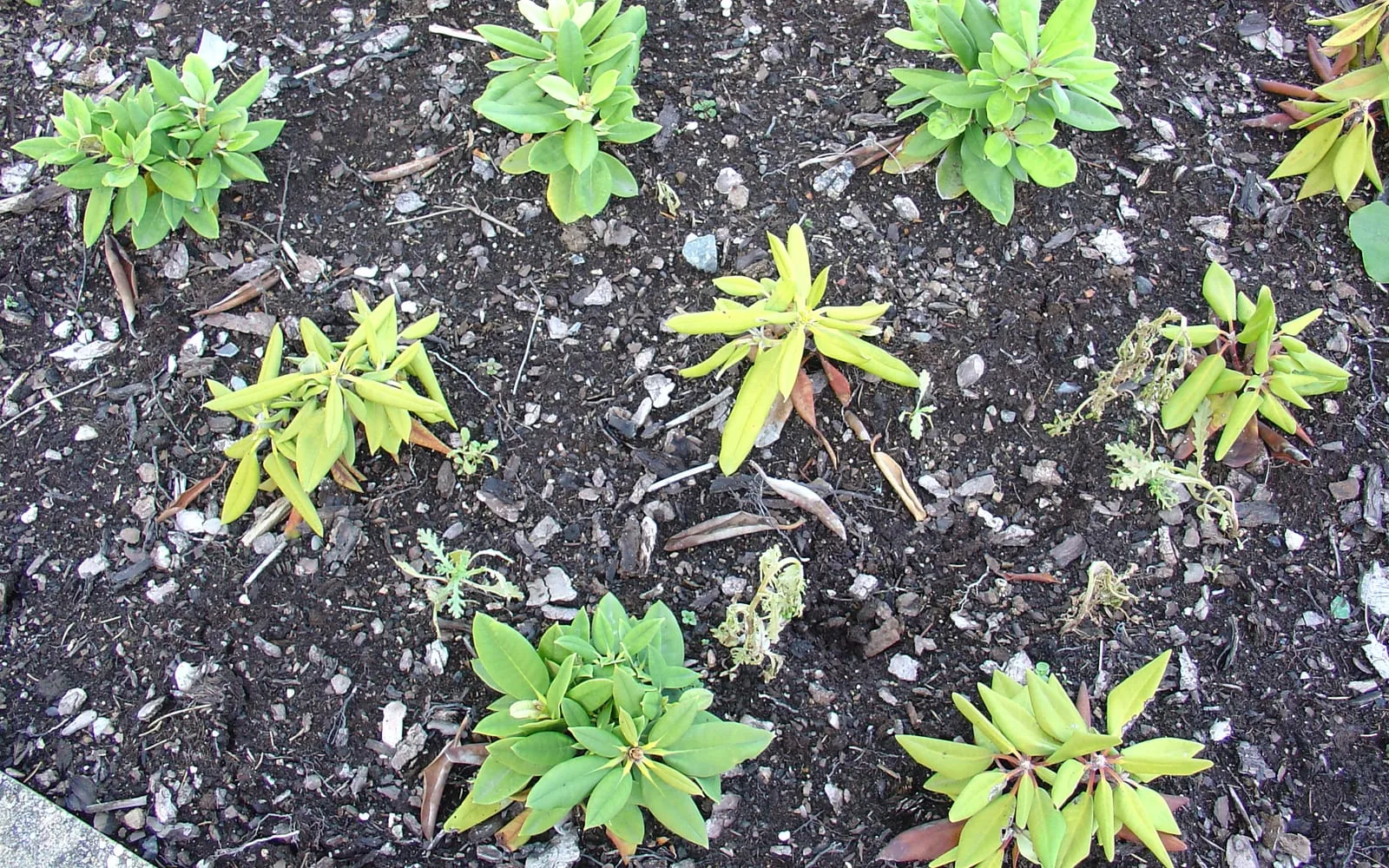
- A shrub or tree wilting and dying over weeks despite the soil being damp
- Leaves small, pale, yellowing or dull, often shed early, on a plant that had looked well
- Dieback starting at the top and working down, or one branch at a time
- Dark staining on the bark at the base of the stem, sometimes with a wet or gummy ooze
- Bark cut away at the collar showing dead brown tissue with a sharp edge against healthy white
- Roots blackened, brittle and stripped of their fine feeding roots
- Plants dying in the wettest part of the bed, along a low line or at the bottom of a slope
- Newly planted stock failing in the first season in a spot that has killed others before
Before you treat anything
Nothing here is harmful to people or animals. Phosphonate treatments sold to amateurs are classified and regulated differently from country to country and they suppress the disease in a plant rather than curing it, so a treated plant stays infectious and remains a source for its neighbours.
What you are looking at
A shrub or a young tree that looked well last month is wilting. The leaves are small, dull and pale, and they yellow and drop early. Branches die back, either from the top down or one at a time, and within a season or two the plant is dead.
The soil is damp. A wilting plant in damp ground looks like it needs water, so most people reach for the can, and watering it makes matters worse.
Look at the base of the stem. There is often dark staining on the bark at or just below ground level, sometimes with a gummy or wet ooze. Pare a sliver of bark away with a knife on the affected side and look at the tissue underneath. Healthy tissue is white or greenish and moist. Infected tissue is brown or reddish-brown, and the line between the two is sharp.
The other pattern to notice is where the dead plants are. They sit in the wettest part of the bed, along a low line, at the bottom of a slope, or beside a downpipe.
Not a fungus, which changes what works
Phytophthora is an oomycete, a water mould. It sits in a different kingdom from the true fungi and is more closely related to brown algae than to anything that produces a mushroom.
The practical consequence is that fungicides developed against true fungi disappoint against it, because the cell wall chemistry they target is not the chemistry it has. This is the same reason ordinary fungicides do so little against potato blight and downy mildew, which are oomycetes too.
The name comes from the Greek for plant destroyer, and Phytophthora cinnamomi is regarded as one of the most damaging plant pathogens in the world. It has over five thousand recorded hosts.
Water is how it moves
The spores swim. Zoospores have two flagella, they are released into films of water in the soil, and they travel towards root exudates until they reach a root tip and encyst on it.
Everything about the advice follows from that. Free water in the soil is the condition it requires, so ground that stays saturated after rain is where it does its damage and drainage is the whole of the prevention. Water moves it downhill, which is why plants die along a low line. It comes into a garden most often in the compost of a container, and it leaves a garden on boots, tools, tyres and barrowed soil.
Rainwater butts deserve a mention of their own. A butt collects runoff from anywhere in the garden that drains into it, spores included, and then distributes it to every pot you water. Where a plant matters, use the tap.
The organism survives in soil and in dead root fragments for years as thick walled resting spores, so replanting the same spot with the same genus repeats the outcome.
Telling it from honey fungus
Both kill a woody plant from the base and both are fatal, so the distinction gets made in the same five minutes.
Honey fungus leaves a sheet of white fungal growth between the bark and the wood that smells strongly of mushroom, and flat black rhizomorphs like bootlaces running through the soil and under the bark. Honey-coloured toadstools appear in tufts at the base in autumn.
Phytophthora leaves none of those. What it leaves is a sharp margin between brown dead tissue and white living tissue at the collar, and a root system stripped of its fine feeding roots.
The site tells you something too. Honey fungus spreads outward from a source along its rhizomorphs and works through a hedge or a border in sequence. Phytophthora picks out the wet ground, so the dead plants map the drainage rather than a line of advance.
What to do about it
Cut into the bark at the collar and look for the sharp margin before deciding anything.
Stop watering, and check the soil before you reach for a can.
Fix the drainage, raise the bed or plant on a mound before replacing anything.
Take the dead plant out with as much root as you can and bag it.
Replant with something that tolerates wet ground, and avoid the genus you lost.
Set new plants with the root flare at or above soil level and keep mulch off the stem.
Buy from a nursery that stands its pots on gravel rather than soil, and inspect the root ball.
Clean boots, spades and barrow wheels when moving between beds.
Water anything precious from the tap rather than the butt.
What it gets mistaken for
Honey fungus leaves white mushroom-smelling sheets under the bark and black bootlaces in the soil.
Waterlogging alone kills roots evenly by suffocation, with no sharp margin at the collar.
Overwatering a houseplant is the same word for a different problem, and there the fix is a change of habit.
Verticillium wilt stains a ring inside the wood higher up the stem and often takes one side.
Drought wilts a plant in dry soil and it recovers on watering.
Wind rock loosens the base and opens a socket in the soil while the bark stays sound.
What to do, in order
Nothing available to a gardener will cure this once a plant has it. The steps below are about limiting the spread and deciding what to plant in its place.
Start here
Prevention, and the changes that stop the problem returning. Most of these pages should end at this tier.
- Fix the drainage before you replant anything
- The spores swim, so they need free water in the soil to reach a root at all. Ground that stays saturated after rain is what turns a low-level infection into a dead shrub. Break up a pan, raise the bed, cut a drain or plant on a mound, and do it before the replacement goes in rather than after it dies too.
- Stop watering a plant you suspect
- The instinct on seeing a wilting shrub is to water it, and here that feeds the pathogen and drowns what roots are left. Check the soil first. Wilting in damp ground means something has taken the roots rather than that the plant is thirsty.
- Plant high, and never deeper than the plant grew before
- Soil piled against the stem keeps the collar permanently damp, which is where the infection takes hold. Set the root flare at or slightly above the surrounding soil level, and keep mulch pulled back a hand's width from the trunk.
- Choose resistant plants for ground you cannot drain
- Susceptibility varies enormously. Rhododendron, azalea, camellia, lavender, heather, yew, beech and raspberry are among the easiest to lose, and many willows, alders, birches and dogwoods tolerate wet ground without trouble. Replanting the same genus in the same wet spot is the commonest way this repeats.
- Buy from a nursery that keeps its pots off the ground
- Most garden infections arrive in a container. Pots standing on bare soil or in standing water, and irrigation drawn from a reservoir or pond, are how nurseries spread it. Look at the plant's root ball before planting, and reject anything with blackened roots or a sour smell.
- Do not move soil around the garden
- The organism travels in soil, in water and on anything that carries either. Barrowing soil from a bed where a shrub died into a clean part of the garden takes the problem with it.
Then reach for a barrier
Netting, hand removal and water. Nothing here harms anything except the target.
- Cut into the bark at the collar to confirm it
- Pare a sliver of bark away at ground level with a knife on the affected side. Healthy tissue underneath is white or green and moist. Infected tissue is brown or reddish-brown, and the boundary between the two is a sharp line. That line is the diagnosis, and it is what separates this from honey fungus.
- Take out the dead plant with as much root as you can
- The organism survives in root fragments and in the soil for years, so leaving the stump and the root plate in place leaves the inoculum in place. Bag it and take it away rather than composting it.
- Clean boots, tools and tyres between areas
- A boot sole carries enough infected soil to start a new area, which is why land managers in infected regions install wash-down points. In a garden, scrubbing the spade and rinsing your boots after working an affected bed costs a minute.
- Water containers from the tap rather than a butt
- Rainwater butts and garden ponds collect the swimming spores from anywhere in the garden that drains into them, and a butt is a reasonable way to distribute the problem across every pot you own. Where a plant is precious, use mains water.
Plants affected
Guides that name it among the problems to watch for. The list is the plants it is characteristic of rather than everything it will feed on.