
Disease
Mosaic virus
Also called Cucumber mosaic virus, Tobacco mosaic virus, Virus
Mosaic viruses cause dark and pale green blotching, puckered leaves and misshapen fruit. There is no treatment once a plant is infected, so remove affected plants and control the routes of spread.
At a glance
- Type
- Disease
- Cause
- Virus
- Severity
- Destroys the crop or display
- Affects
- Herbs and edibles, Garden plants, Houseplants
- Active
- May to September
- Established in
- Worldwide
What you are seeing
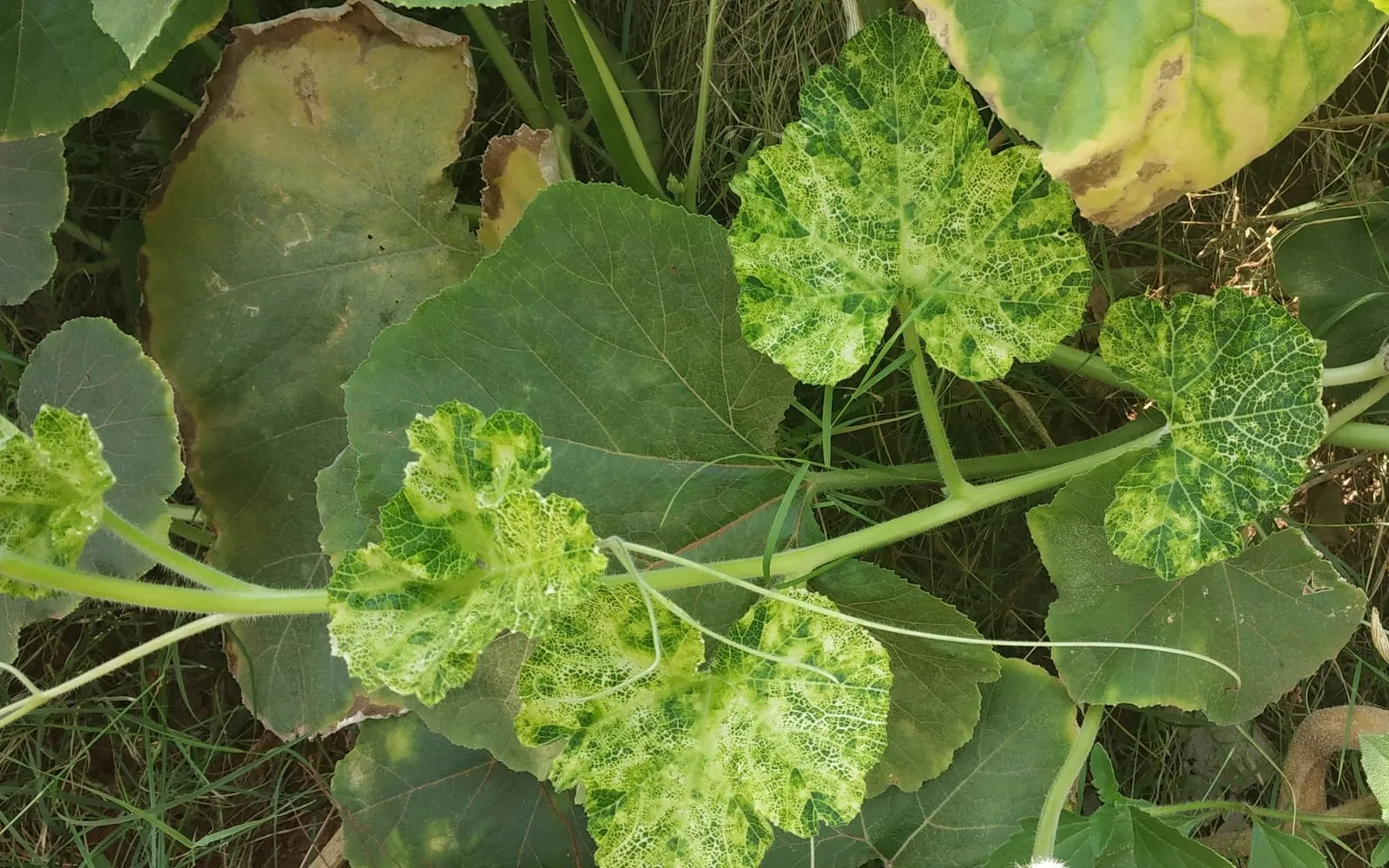
- Irregular patches of dark and pale green across a leaf, with no defined edges and no fungal growth
- Leaves puckered, blistered or narrowed to a fraction of their normal width
- Bright yellow mottling or yellow rings on older leaves
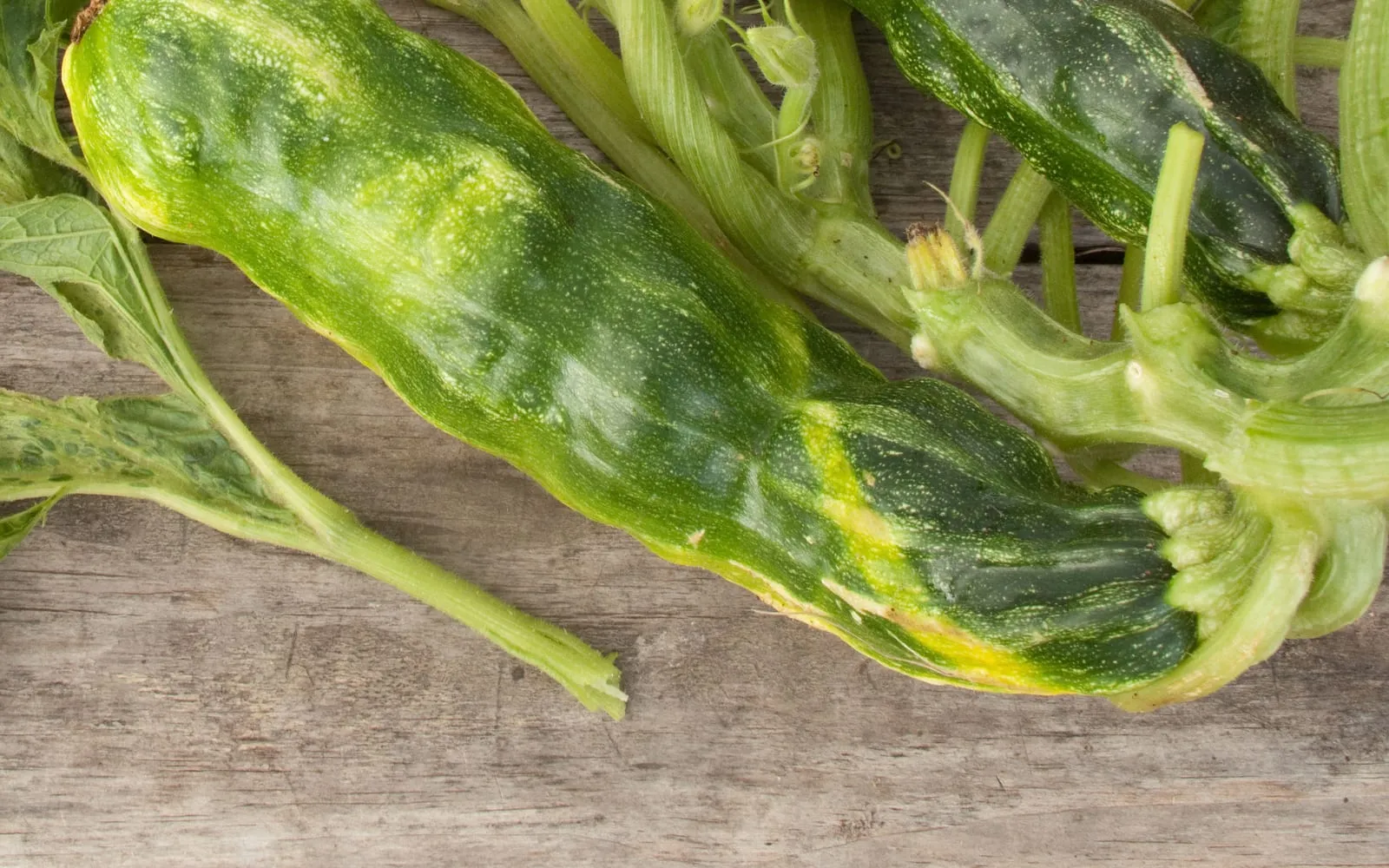
- Fruit lumpy, mottled or misshapen, and hard where it should be soft
- Plants stunted and cropping poorly while their neighbours grow away
- Flowers streaked or broken in colour on plants that were plain
- Symptoms that never improve, whatever is fed or watered
Before you treat anything
Plant viruses cannot infect people or animals. Fruit and vegetables from an infected plant are safe to eat, though they are often distorted and poor.
What you are looking at
The leaf carries irregular blocks of dark green against pale green or yellow, with no line between them and nothing growing on the surface. Rub it and nothing comes off. Hold it to the light and there is no hollow chamber underneath.
New leaves come out puckered, blistered or narrowed, sometimes to a strap a centimetre wide where the plant should be making a broad blade. The plant stays small while the one next to it grows away.
Fruit shows it too. Courgettes and cucumbers come lumpy and mottled with hard patches, tomatoes ripen unevenly, and the crop is not worth much.
Whatever you feed or water it, none of this improves. That permanence is the strongest single clue, because almost every other cause of mottled leaves responds to something.
A group of diseases rather than one
Mosaic is a pattern, not a species. Cucumber mosaic virus has the widest host range of any plant virus and turns up on well over a thousand species from courgettes to delphiniums. Tobacco and tomato mosaic viruses run through the tomato family. Zucchini yellow mosaic ruins squashes. Arabis mosaic, turnip mosaic and a long list of others do the same job on their own hosts.
They travel by different routes and the routes decide the control.
Most are carried by aphids. An aphid probes an infected plant, picks the virus up on its mouthparts within seconds, and delivers it to the next plant it tries. That happens far too quickly for an insecticide to prevent, which is why controlling aphids here means encouraging their predators rather than spraying after the event.
Some travel by contact. Tobacco mosaic is the notorious one, spread on hands, clothes, tools and cigarettes, and stable enough to survive in cured tobacco and in dried plant debris for years.
Some go through seed, some through tubers, cuttings and divisions, and a few through soil nematodes.
Nothing cures a virus
There is no treatment. A virus is inside the plant’s own cells, and nothing available to a gardener or a commercial grower removes it. Any product sold on that promise is selling something else.
Take the plant out, stop it infecting others, and prevent the next one. That is the whole of the advice, and it is better than the hedged non-advice that usually fills the gap.
One footnote. Some virus infections have been kept deliberately. The broken tulips that made fortunes in seventeenth-century Holland were infected with tulip breaking virus, and several variegated abutilons and honeysuckles sold today are virused plants propagated for the pattern. Those are curiosities rather than a reason to keep a mottled courgette.
What to do about it
Pull out badly affected plants, bag them and bin them. Do not compost them.
Start with the worst ones where a whole row is showing symptoms.
Deal with the aphids, mainly by keeping the predators that eat them.
Weed thoroughly, and particularly clear chickweed and groundsel, which carry cucumber mosaic virus through the winter.
Wash hands and tools between plants in a greenhouse, and keep tobacco away from tomatoes.
Buy certified virus-free raspberry canes, strawberry runners and seed potatoes.
Choose resistant cultivars where the catalogue offers them.
Never take cuttings, divisions or tubers from an affected plant.
What it gets mistaken for
Magnesium and iron shortages yellow the leaf between the veins in a regular pattern, on a predictable part of the plant, and they respond to a feed or a change of pH within a fortnight.
Herbicide damage twists, cups and narrows new growth in a way that closely resembles a virus. The tell is the pattern across the garden. A drifting herbicide hits everything downwind, and a virus takes individual plants and leaves their neighbours untouched.
Spider mite stipples a leaf with fine pale dots of even size and leaves webbing at the shoot tips.
Genetic variegation is stable, symmetrical, present from the first leaf, and usually rather beautiful. A mosaic is irregular, appears partway through the season, and comes with distortion and stunting.
Downy mildew makes angular yellow patches penned in by the veins, with growth on the underside. A mosaic ignores the veins and has nothing underneath.
What to do, in order
Nothing available to a gardener will cure this once a plant has it. The steps below are about limiting the spread and deciding what to plant in its place.
Start here
Prevention, and the changes that stop the problem returning. Most of these pages should end at this tier.
- Control the aphids
- Aphids carry most of the viruses on this page, and a single aphid can infect a plant in under a minute of probing. Everything on the aphids page applies here, and keeping ladybirds, hoverflies and lacewings is worth more than any of it.
- Buy certified stock and fresh seed
- Raspberries, strawberries and potatoes are sold as certified virus-free for exactly this reason, and it is worth paying for. Some viruses go through seed, so saving seed from a plant that cropped badly can carry the problem into next year.
- Weed thoroughly, particularly chickweed
- Cucumber mosaic virus has the widest host range of any plant virus and overwinters in garden weeds. Chickweed, groundsel and bittercress are all reservoirs, and clearing them removes the winter store the aphids draw on in spring.
- Wash your hands between plants
- Tobacco mosaic virus and its relatives spread by contact alone. Handling an infected tomato and then a healthy one is enough. Wash hands and wipe tools with hot soapy water when working through a greenhouse, and keep tobacco away from tomatoes, since cured tobacco carries live virus.
- Grow resistant cultivars where they exist
- Courgette, cucumber and tomato breeding against these viruses is well advanced, and the resistances are listed in the catalogue against each cultivar. On a plot that has had it before, that choice matters more than anything done during the season.
- Keep the plant fed and watered while it lasts
- A courgette with a mild infection will still crop, badly, for weeks. If the plant is worth keeping to the end of the season, keep it growing. Just do not expect it to recover.
Then reach for a barrier
Netting, hand removal and water. Nothing here harms anything except the target.
- Pull out badly affected plants and bin them
- There is no treatment, and an infected plant is a reservoir the aphids will work from for the rest of the summer. Lift it, bag it and take it away rather than composting it or leaving it at the end of the row.
- Take the worst-affected plants out first
- Where several plants in a row are showing it, the ones that are stunted and cropping nothing are pure liability. Removing those slows the spread to the rest even if you keep the mildly marked ones.
- Do not propagate from an infected plant
- Cuttings, divisions, tubers and offsets all carry the virus with them. A dahlia tuber lifted from an infected plant produces an infected plant next year and every year after.
In pictures
Plants affected
Guides that name it among the problems to watch for. The list is the plants it is characteristic of rather than everything it will feed on.
A common tomato problem
This is one of the problems tomato growers meet most often. See it alongside the other pests, diseases and disorders on the tomato guide.
Common tomato problemsA common rose problem
This is one of the pests, diseases and disorders that rose growers meet most often. See it alongside the others on the common rose problems guide.
Common rose problems