
Disorder
Fruit splitting
Also called Fruit cracking, Rain cracking, Growth cracks, Bursting
Fruit splits when it swells faster than the skin can stretch, often after rain follows a dry spell. Pick damaged fruit quickly, reduce swings in soil moisture and protect cherries from rain where possible.
At a glance
- Type
- Disorder
- Cause
- Growing conditions
- Severity
- Destroys the crop or display
- Affects
- Herbs and edibles
- Active
- June to October
What you are seeing
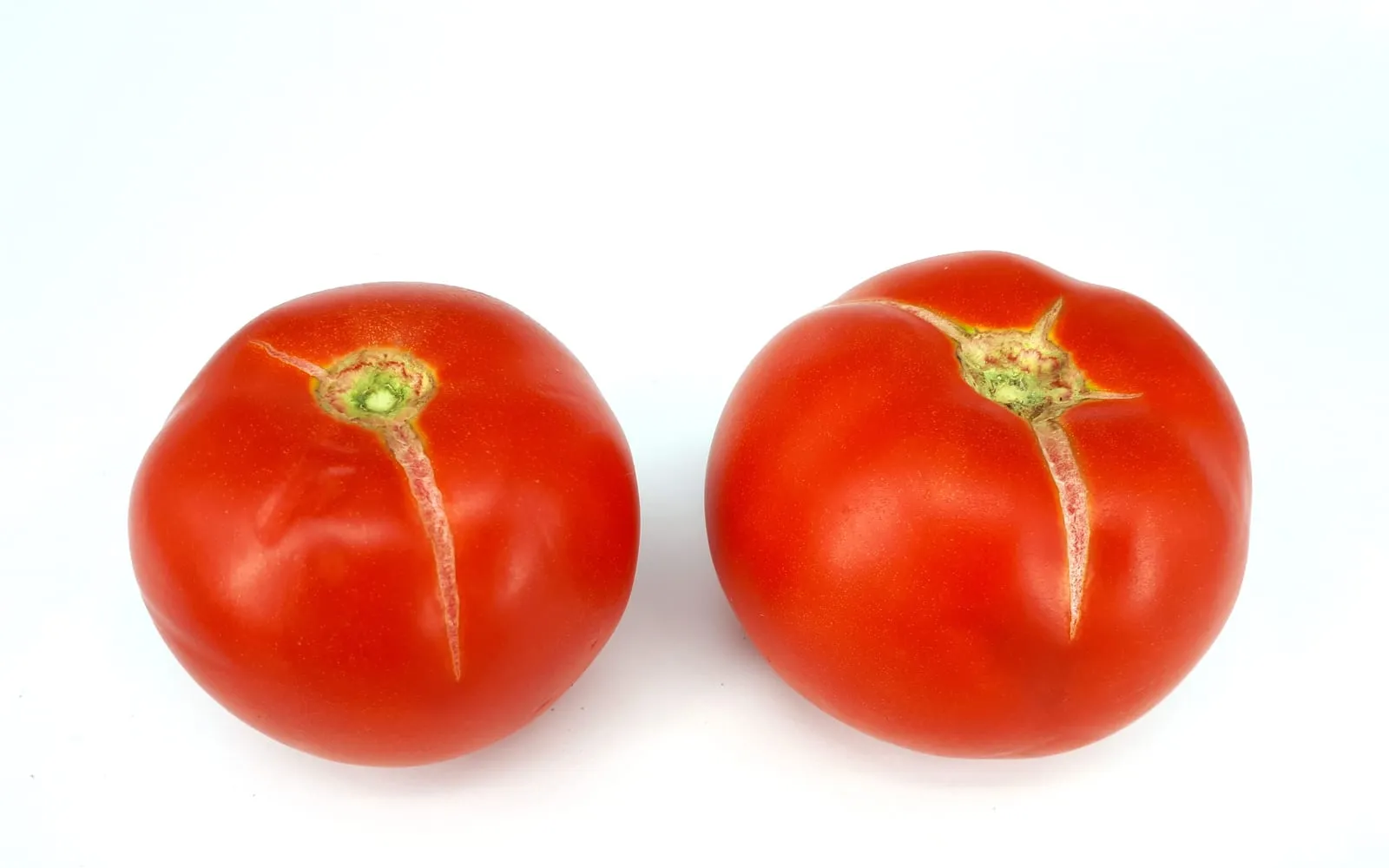
- Straight splits running down a tomato from the stalk scar towards the base
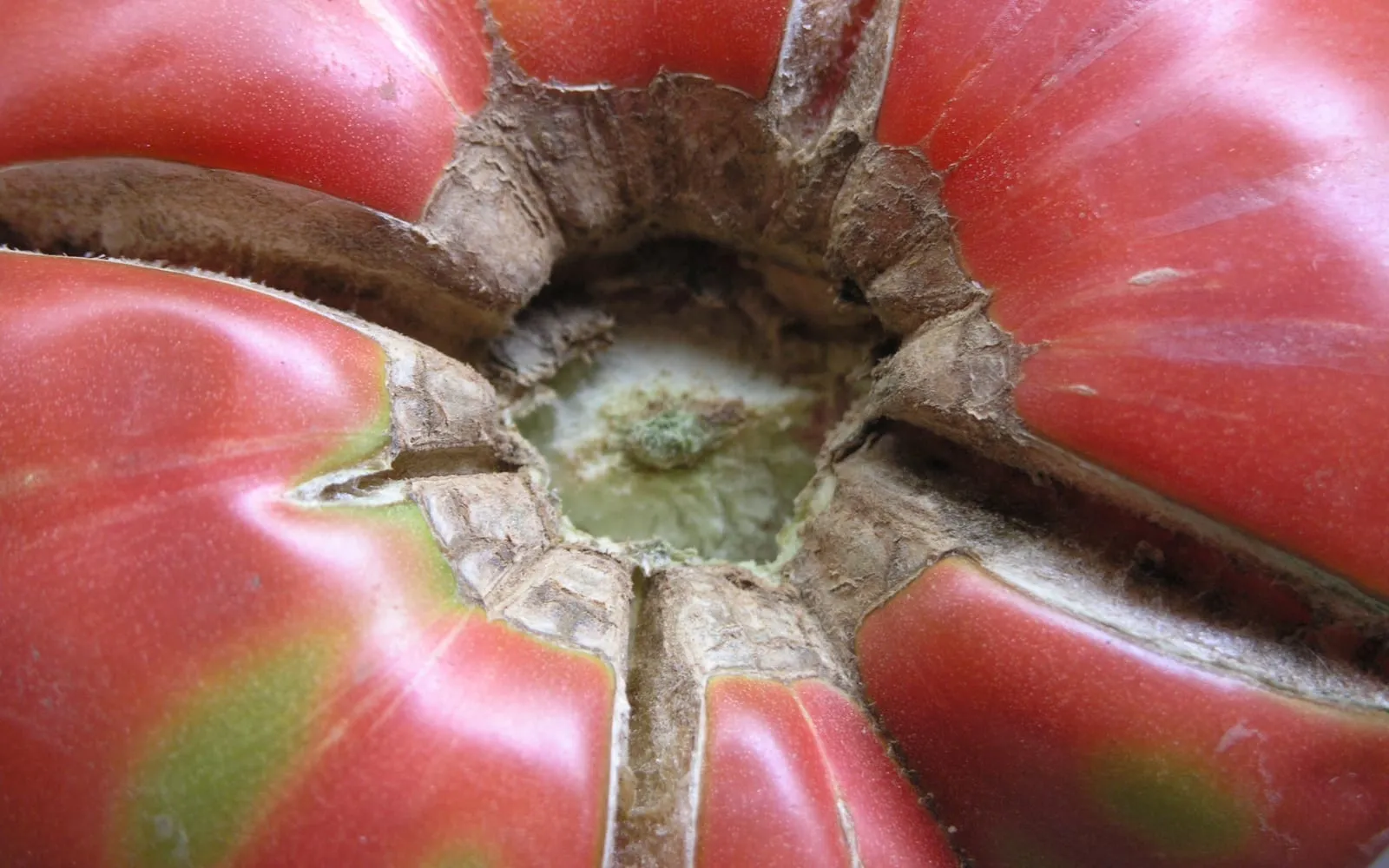
- Fine cracked rings around the shoulder of a tomato, sometimes healed brown and corky
- Cherries split at the tip or along one side within a day of rain
- A cabbage burst open from the centre, with the split running down through the head
- Carrots, parsnips and radishes split lengthways
- Grapes splitting where the berries press against each other in a tight bunch
- The largest and ripest fruit affected while smaller ones on the same plant stay sound
- Grey mould or brown rot spreading from the split within two or three days
Before you treat anything
Split fruit is safe to eat on the day it splits, provided nothing has grown in the wound. Discard anything with mould in the crack rather than cutting round it, since the fungus reaches further into soft fruit than the visible patch suggests.
What you are looking at
A tomato with a clean split running down from the stalk, opened far enough to show the flesh inside. Or a cherry that was perfect on Friday and has a tear across the tip on Saturday morning. Or a cabbage that has burst from the middle outwards, the head cracked down one side like a log.
In every case the fruit was sound days earlier, the biggest and ripest ones went first, and it happened after rain or after a heavy watering that followed a dry spell.
The crack itself does no immediate harm. What follows it does. Grey mould and brown rot both need a wound to get started, and a split fruit left on the plant gives them one.
Why the skin gives way
A fruit stops making new skin long before it stops filling. From the point it begins to colour, the cuticle can stretch a little and grow hardly at all, while the flesh underneath goes on taking water and sugar. The skin spends the last weeks of ripening under increasing tension, like an overfilled bag.
Add water faster than the skin can accommodate and it tears. A dry fortnight followed by 20 mm of rain does it, and so does a gardener who forgets the growing bags for four days and then floods them.
Variety sets most of what the skin will take, because thickness and elasticity are inherited and vary hugely between cultivars of the same crop. Size accounts for a good deal of the rest, since a large fruit has a larger surface to hold together. And fine cracking of the cuticle, invisible without a lens, weakens the skin over the preceding weeks so that a fruit which has sat through repeated wetting splits at a shower that would not have troubled it in June.
Two different cracks on a tomato
Radial cracks run from the stalk scar down the fruit, straight and open. These are the water ones. They follow a surge of uptake, and they are answered by mulching, steadier watering and picking before rain.
Concentric cracks make fine rings around the shoulder, often shallow and healed over into brown corky lines rather than gaping. These come from swings in temperature and from direct sun falling on the exposed shoulder of a fruit, which is why they show up on trusses that lost their leaf cover to over-enthusiastic defoliation. Ventilation, shading and leaving the foliage alone do more about them than the watering can does.
A plant can produce both at once, and the two need different fixes, which is worth sorting out before changing how you water.
The cherry takes water through its skin
Cherry growers cover their orchards, and the reason is a piece of physiology that surprises most gardeners.
A cherry does not crack mainly because its roots took up water. It cracks because rain sat on the fruit. The flesh of a ripe cherry is a concentrated sugar solution, the skin is permeable to water, and a drop of pure rainwater resting on that skin is drawn straight through it by osmosis. The cells beneath swell within minutes, and the skin over them fails.
That explains why a cherry on a tree in dry soil still splits in a summer shower, and why watering advice on its own disappoints. It also explains why a roof over the tree works so well, and why knocking the water off within the hour saves a large part of the crop.
Grapes crack for a mix of both reasons. An outdoor vine in a wet autumn suffers and one under glass with dry feet does not.
Underground, and in the cabbage patch
Carrots, parsnips and radishes split lengthways after the same sequence of dry weeks and heavy rain. The root has laid down its outer tissue at one growth rate, the core resumes at another, and the two part company.
A cabbage does something similar on a larger scale. The head is a ball of tightly packed leaves that finished expanding some time ago, wrapped around a core that has not. When the plant takes up water quickly the core pushes outwards and the head splits from the inside.
Cutting promptly is the answer to all of these. Where a row is ready at once and you cannot use it, root-pruning the cabbages buys a fortnight, and roots left in the ground through a wet autumn will split whatever you do.
What to do about it
Water little and often from the point the fruit starts to colour, and mulch everything, containers first.
Pick tomatoes, cherries and plums at first colour when heavy rain is forecast, and ripen them indoors.
Roof a cherry from colour break, or shake the tree out within an hour of a shower.
Choose crack-tolerant varieties, and ask about it when buying a cherry.
Feed with potassium rather than pushing nitrogen, and keep the feed regular.
Ventilate and shade a greenhouse to flatten the temperature swings behind concentric cracking, and stop stripping leaves off the trusses.
Cut cabbages the week they feel solid, and root-prune the ones you cannot use yet.
Thin congested bunches of grapes while the berries are small.
Pick off split fruit whenever you harvest, and use it that day.
What it gets mistaken for
Blossom end rot makes one dark sunken leathery patch at the end opposite the stalk, and the skin over it stays whole.
Brown rot spreads soft decay with rings of buff cushions on the surface, and it frequently starts inside a split rather than causing one.
Grey mould coats the wound in fuzzy grey. Both it and brown rot are what happens next rather than what happened first.
Bitter pit puts many small sunken dimples in an apple with brown flecks in the flesh underneath.
Capsid bug damage was there when the fruit was tiny, and it shows as corky brown scars and lopsided growth rather than a fresh tear.
Russeting is a rough brown netting spread over the skin of certain apple and pear varieties, and it is a characteristic of the fruit rather than a fault.
What to do, in order
Start here
Prevention, and the changes that stop the problem returning. Most of these pages should end at this tier.
- Water steadily rather than heavily
- A fruit splits when the flesh takes on water faster than the skin can stretch, and the reliable way to produce that is to let a plant go dry and then soak it. Little and often beats a weekly flood, and it matters most from the point the fruit starts to colour, which is when the skin stops growing and the flesh does not.
- Mulch, and mulch containers most of all
- A mulch flattens out the swings between wet and dry that irrigation on its own cannot. Growing bags and pots dry out and rewet faster than any border soil, which is why tomatoes in a bag split more than the same variety in the ground.
- Pick at the first sign of colour when rain is forecast
- Cherries, tomatoes and plums all split at their ripest and all of them finish ripening off the plant. Clearing a tree the day before a thunderstorm loses a little flavour and saves the crop, and it is the single most effective thing most growers can do.
- Choose varieties bred to resist it
- Susceptibility is largely inherited, and it varies enormously. Small thin-skinned tomatoes crack far more than beefsteak types, and among sweet cherries the difference between a tolerant variety such as 'Regina' and a susceptible one decides whether a wet June costs you the whole crop. Ask for crack tolerance by name when buying a cherry tree, because it is rarely on the label.
- Keep the feeding even and go steady on nitrogen
- A plant pushed hard with high-nitrogen feed grows soft, thin-skinned fruit that splits at the first shower. Potassium builds a tougher skin and firmer flesh, so a tomato feed from the point the first truss sets is doing more than filling the fruit out.
- Even out the temperature under glass
- Rings of fine cracking around a tomato's shoulder come from swings in temperature and from strong sun on exposed fruit rather than from watering. Ventilating early on a hot morning, shading the glass through midsummer and leaving enough leaf cover over the trusses all reduce it.
- Cut cabbages as soon as the head is firm
- A cabbage keeps growing after the head has closed, and the outer leaves have stopped stretching. Squeeze the head, and cut it the week it feels solid rather than leaving it to gain another few hundred grams. A cut cabbage keeps far longer in a cool shed than a standing one keeps in a wet garden.
- Thin a heavy crop of grapes and plums
- Berries pressed hard against each other in a tight bunch split along the contact points, and the split then spreads botrytis through the whole bunch. Thinning out a third of the berries with narrow scissors while they are still pea-sized is tedious and it works.
Then reach for a barrier
Netting, hand removal and water. Nothing here harms anything except the target.
- Cover cherries from the point the fruit colours
- A rain cover over a fan-trained cherry or a small tree is the only measure that reliably stops rain cracking, because the water reaching the fruit is what causes it. Commercial growers roof whole orchards for this reason alone. A sheet of clear polythene over a frame from late May until picking, open at the sides so air moves through, does the same job in a garden.
- Shake the water off a cherry tree after rain
- Cracking depends on how long free water sits on the skin, so getting it off within the hour prevents a good share of the damage. Shake the branches with a pole, or blow the tree over with a garden blower, which is what commercial orchards without covers do.
- Root-prune a cabbage that is about to burst
- Push a spade vertically into the soil about 15 cm from the stem on one side, cutting through some of the roots, or take hold of the whole plant and twist it a quarter turn. Either one reduces water uptake enough to hold the head together for another week or two.
- Use the split fruit straight away
- A crack is an open wound and the rots find it within a couple of days. Pick every split fruit off the plant at the same time you pick the sound ones, use them that day, and keep them out of the punnet holding the rest.
In pictures
Plants affected
Guides that name it among the problems to watch for. The list is the plants it is characteristic of rather than everything it will feed on.
A common tomato problem
This is one of the problems tomato growers meet most often. See it alongside the other pests, diseases and disorders on the tomato guide.
Common tomato problems