
Disease
Alternaria leaf blight
Alternaria dauci, Alternaria solani and Alternaria brassicae
Also called Alternaria, Early blight, Target spot, Alternaria leaf spot, Dark leaf spot
Dark brown spots with concentric rings and a yellow halo, starting on the oldest leaves. It arrives on the seed as often as on the wind, which is why the same bed goes down to it every year.
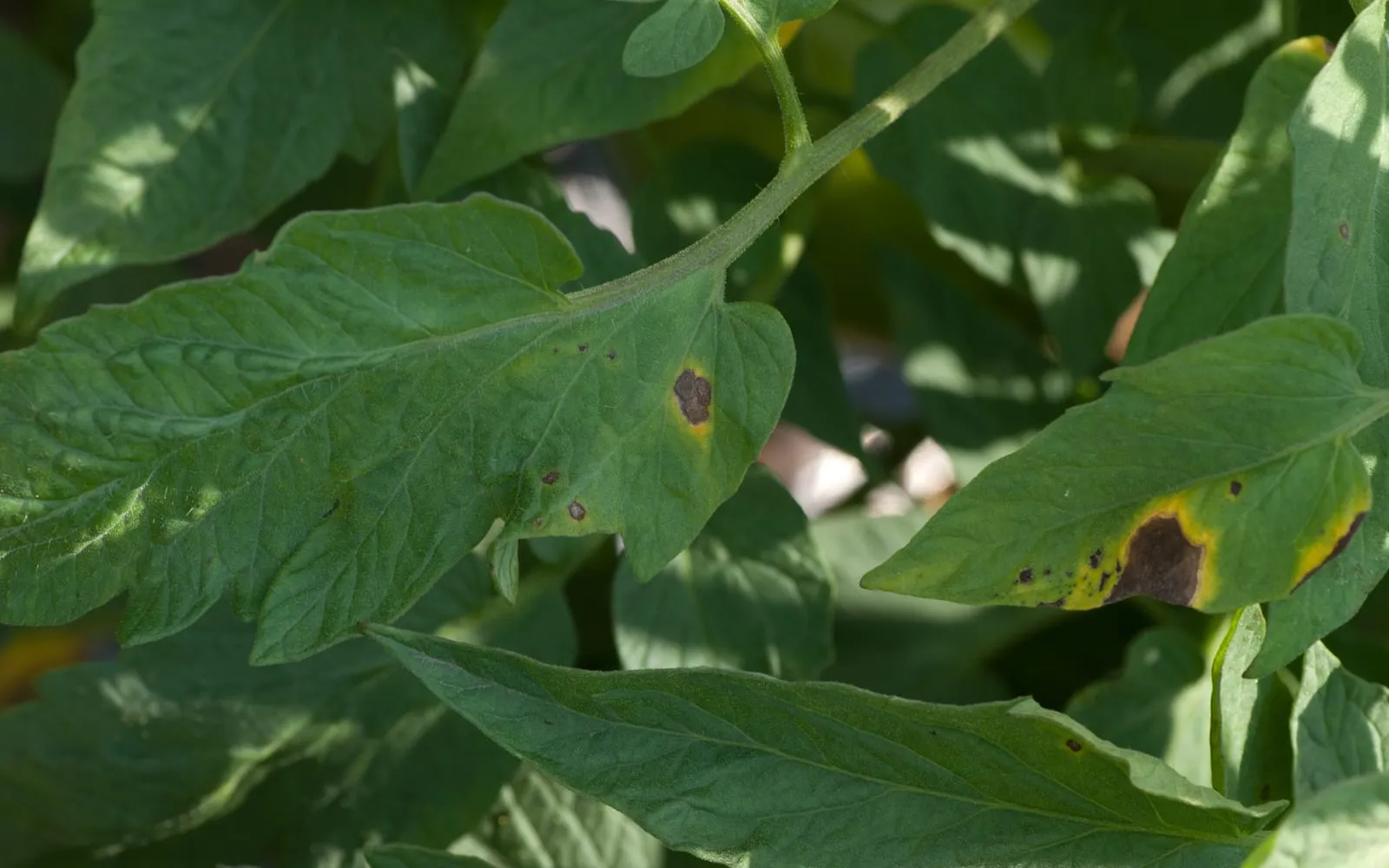
At a glance
- Type
- Disease
- Cause
- Fungus
- Severity
- Destroys the crop or display
- Affects
- Garden plants, Herbs and edibles
- Active
- June to October
- Established in
- Worldwide
What you are seeing
- Dark brown to black spots on the oldest lowest leaves first
- Concentric rings inside each spot, like a target, visible with a hand lens or the naked eye
- A yellow halo around each spot, spreading until the whole leaf yellows and dies
- Spots running together so the leaf collapses while still attached
- Carrot foliage blackening and collapsing at the crown, so the tops break off when you pull
- Dark sunken lesions on potato tubers and on tomato fruit at the stem end
- Brassica leaves with dark spots that dry and drop out, leaving shot holes
- Defoliation working steadily up the plant while the growing tip stays green
Before you treat anything
Some Alternaria species produce mycotoxins in stored produce, so a tomato or a potato with sunken rotting lesions is not one to cut around and eat. Sound produce from a plant with blighted foliage is fine. Discard anything with soft dark lesions rather than trimming it.
What you are looking at
Dark brown to black spots on the lowest, oldest leaves of a carrot, a potato, a tomato or a brassica. Each spot has a yellow halo around it, and the yellow spreads until the whole leaf goes.
Look inside a spot. Concentric rings, one inside the next, like a target or the rings of a tree. That is the Alternaria signature and the other leaf spot diseases do not produce it.
The spots run together, the lower leaves collapse while still attached, and the damage works steadily up the plant. The growing tip usually stays green longest.
On carrots the effect is at the crown, where the foliage blackens and gives way so the tops break off when you pull. On potatoes and tomatoes there are also dark sunken lesions on the tubers and on the fruit at the stem end.
Telling it from late blight
On a potato or a tomato this is the distinction worth getting right, because the two diseases move at completely different speeds and call for different responses.
Late blight makes greasy grey-green patches with no internal structure and no sharp edge. In damp weather there is a fine white fringe of mould on the underside at the margin of the patch. It spreads outward fast and can take a crop in a week.
Alternaria makes discrete round brown spots with rings inside them and a yellow halo. It starts on the oldest leaves at the bottom and climbs slowly, over weeks.
The pace is the practical difference. A crop going down to late blight needs the haulm off today. A crop with Alternaria on its lower leaves in July usually finishes the season.
The other reason to separate them is that late blight is an oomycete and this is a true fungus, so what works against one disappoints against the other.
It comes in on the seed
Most foliage diseases arrive on the wind or survive in the soil, and this one does both. What sets it apart is that it also travels inside the seed.
Carrot, brassica and tomato seed all carry Alternaria, which is how a bed with no history and clean ground goes down to it in the first season. Treated or certified seed avoids that, and saving your own seed from an affected plant guarantees the opposite.
The rest of the carryover is ordinary. The fungus survives on crop debris left on the ground, on volunteers, and on related weeds including fat hen, the wild nightshades and charlock, so clearing the tops at the end of a crop and keeping the weeds down does real work.
Leaf wetness is the lever
Spores need several hours of continuous moisture on the leaf to germinate and get in. Everything that shortens that period reduces infection, and a gardener controls more of it than they might think.
Space the plants so air moves between them. Thin the carrot row rather than leaving it dense. Water the soil rather than the foliage, and do it in the morning so anything that does land on a leaf dries before nightfall. Mulch under tomatoes and potatoes so rain does not splash spores up from the debris in the soil.
None of that stops a wet fortnight. It does decide whether the crop loses its lower leaves in July or in September, which on a carrot or a maincrop potato is most of the yield.
What to do about it
Buy treated or certified seed for carrots, brassicas and tomatoes.
Never save seed from an affected plant.
Rotate three years off the family, and keep fat hen, nightshades and charlock down.
Clear the old tops off the plot at the end of the crop.
Space generously and thin the rows so the leaves dry.
Water the soil in the morning rather than the foliage in the evening.
Mulch under tomatoes and potatoes to stop the splash.
Feed evenly, since hungry plants lose their lower leaves first.
Pick off the first spotted leaves in dry weather and take them away.
Cut and remove potato haulm early on a bad crop, and leave the tubers a fortnight before lifting.
What it gets mistaken for
Late blight makes greasy grey-green patches with no rings, spreads fast, and often shows white mould on the underside.
The general leaf spots, Septoria and the bacterial ones, make spots without concentric rings.
Downy mildew is bounded by the veins into angular patches with furry growth underneath.
Scorch marks the leaf edges evenly and stops when the weather changes.
Carrot fly reddens and stunts the tops and tunnels the root.
Magnesium shortage yellows between the veins with no spots at all.
What to do, in order
Start here
Prevention, and the changes that stop the problem returning. Most of these pages should end at this tier.
- Start with clean seed, since this one travels on it
- The fungus is carried on and in the seed of carrots, brassicas and tomatoes, which is how a bed with no history goes down to it in the first year. Buy treated or certified seed for the crops that carry it, and do not save your own seed from an affected plant, since that is the surest way to reinfect the ground.
- Rotate off the affected family for three years
- The fungus survives on crop debris and on volunteers and related weeds, so a three-year gap without carrots, brassicas or potatoes on the same ground breaks the carryover. Fat hen, nightshades and charlock host it too, so the weeding is part of the rotation.
- Clear the debris rather than digging it in shallowly
- Old foliage left lying is where next season starts. Take affected tops off the plot rather than composting them in a heap that never heats, and clear carrot and brassica stumps at the end of the crop.
- Space and thin so the leaves dry
- Spores need several hours of leaf wetness to infect, so anything that shortens the wet period helps. Generous spacing, thinning a carrot row, and orientating rows with the prevailing wind all keep foliage drier for longer than any treatment shortens the season.
- Water the soil rather than the leaves, in the morning
- Overhead watering in the evening leaves the foliage wet all night, which is exactly the condition needed. Water at the base, and where overhead watering is unavoidable do it early enough for the leaves to dry before dark.
- Feed adequately, since hungry plants go down first
- Alternaria takes older and stressed tissue preferentially, and a crop short of nitrogen loses its lower leaves far faster. On potatoes and tomatoes an even supply through the season delays defoliation noticeably.
- Grow resistant cultivars where they exist
- Carrot cultivars differ substantially in how fast the tops go down, and this matters for anyone lifting by machine, since foliage that collapses cannot be gripped. Tomato and potato cultivars vary too, though the resistance is partial in every case.
Then reach for a barrier
Netting, hand removal and water. Nothing here harms anything except the target.
- Pick off the first affected leaves
- On a garden scale, removing the lowest spotted leaves as they appear slows the climb up the plant, because each spot produces the spores that infect the leaf above it. Do it in dry weather and take them off the plot.
- Mulch to stop soil splashing onto the lowest leaves
- Spores on crop debris in the soil reach the plant when rain splashes them up, so a straw or compost mulch under tomatoes and potatoes interrupts the first step. It also keeps moisture even, which helps for other reasons.
- Take the haulm off early on a bad potato crop
- Where foliage is going down anyway, cutting and removing it stops the spores reaching the tubers as they are lifted, which is what causes the dark sunken storage lesions. Leave the tubers a fortnight in the ground before lifting so the skins set.
Plants affected
Guides that name it among the problems to watch for. The list is the plants it is characteristic of rather than everything it will feed on.
A common tomato problem
This is one of the problems tomato growers meet most often. See it alongside the other pests, diseases and disorders on the tomato guide.
Common tomato problems