
Disease
Allium white rot
Stromatinia cepivora
Also called Onion white rot, White rot, Sclerotium cepivorum
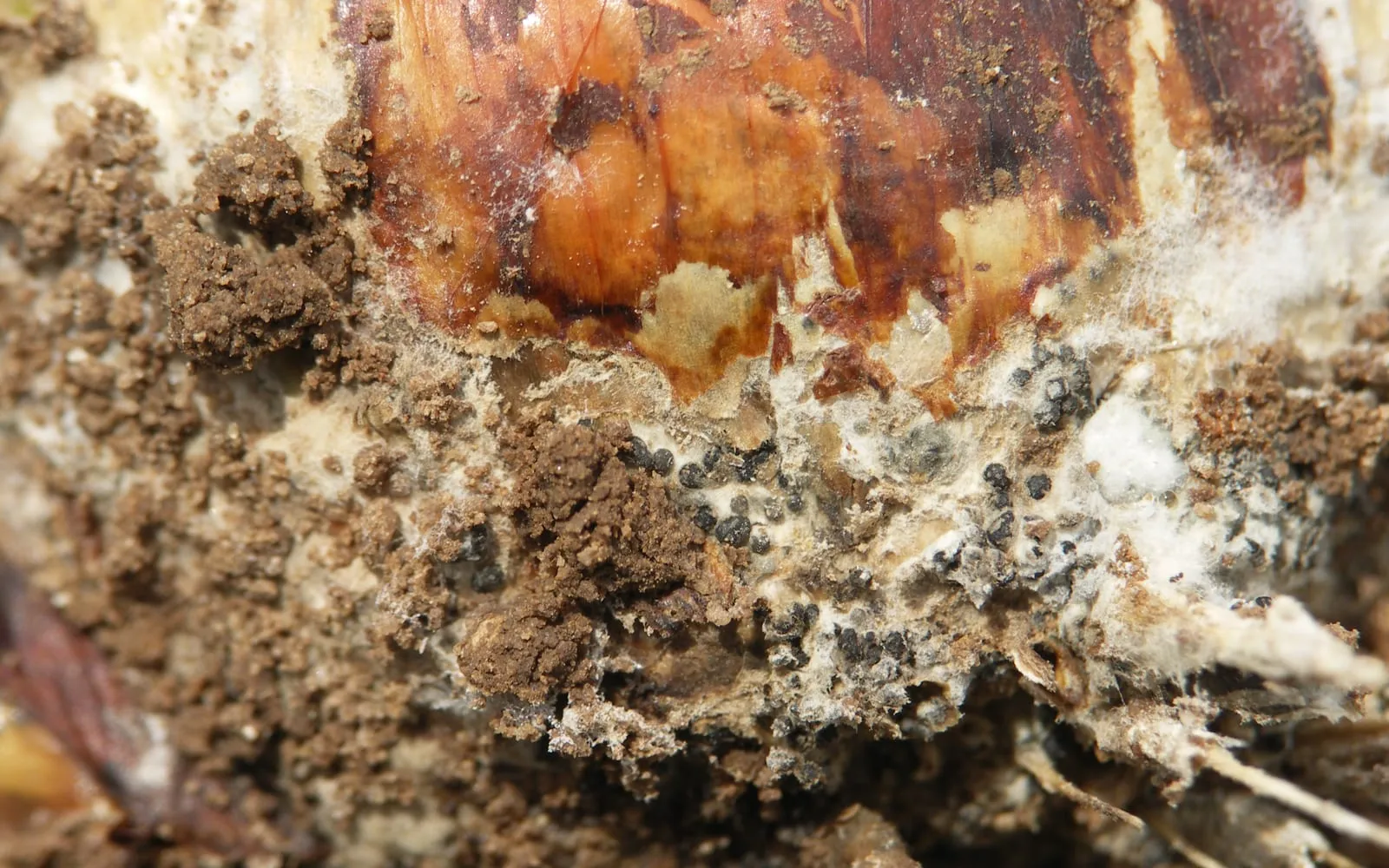
Onions and garlic yellow, wilt and pull out with white fluff and black grains at the base. White rot survives in soil for years, so control depends on clean planting stock, hygiene and growing alliums away from infested ground.
At a glance
- Type
- Disease
- Cause
- Fungus
- Severity
- Destroys the crop or display
- Affects
- Herbs and edibles
- Active
- May to September
- Established in
- Worldwide
What you are seeing
- Older leaves yellowing and dying back from the tip while the plant is still young
- Plants wilting and lifting out of the ground with almost no resistance
- A dense white fluffy growth over the base of the bulb and the roots
- Small hard black grains the size of poppy seeds embedded in the white growth
- Roots rotted away entirely, leaving the bulb sitting in soil
- Bulbs going soft and collapsing, in the ground or shortly after lifting
- Patches of the row affected together, spreading a little further each year
Before you treat anything
Harmless to people and animals. Bulbs that are still firm are safe to eat, and any that have gone soft should be discarded.
What you are looking at
The older leaves of an onion or a leek yellow and die back from the tip while the plant is still young. It wilts, and when you take hold of it, it lifts out of the ground with no resistance at all, because there are no roots left to hold it.
Turn the base over. There is a dense white fluffy growth over the base plate and where the roots were, and embedded in it are small hard black grains about the size of poppy seeds.
Those grains are the diagnosis and the problem in one. Nothing else in a British vegetable garden produces white fungal growth studded with black grains at the base of an allium.
Garlic and shallots suffer worst, onions next, and leeks usually least, though none of them escapes.
Twenty years in the soil, waiting
The black grains are sclerotia, resting bodies with a hard coat, and they can sit in soil for fifteen to twenty years without a host.
What makes this particularly hard to shift is how they wake up. A sclerotium stays dormant until it detects the sulphur compounds that allium roots release into the soil, and only then does it germinate and grow the short distance to the root. It is a lock that only onions, garlic, leeks, shallots and chives carry the key to.
That is why rotation, which handles a great many soil problems, does not handle this one. Nothing you grow in between triggers the sclerotia, so they wait. A three-year rotation is meaningless here and even an eight-year one is a delay rather than a cure.
It is also why there is no cure and no chemical. Nothing available to a gardener or to a commercial grower removes sclerotia from soil, and no resistant onion exists. Commercial growers sometimes use garlic oil to bring the sclerotia out of dormancy when there is no crop for them to infect, so they germinate and starve, and that technique is not sold at a garden centre scale.
What works instead
Grow alliums somewhere else. Not another bed on the same plot, since the sclerotia will get there eventually on a boot, but in containers or a raised bed of bought compost standing clear of the infected ground.
Onions, garlic and leeks grow perfectly well in a deep tub. Allotment holders who lost their onion bed a decade ago are still eating home-grown garlic on exactly this basis.
Then keep the infection where it is. Clean boots, a dedicated fork, no gifted plants with soil on the roots, and every affected plant dug out with the soil around it and binned rather than composted. That is how the other half of the plot stays usable, and it is how you avoid giving it to a neighbour.
What to do about it
Move allium growing into containers or raised beds with fresh compost.
Lift every affected plant with a spadeful of the soil around it and bin or burn the lot.
Never compost anything from an affected plant.
Scrape and wash boots and tools before moving off the bed.
Refuse onion and leek plants raised in someone else’s soil.
Rotate as far as your plot allows, while expecting it to delay rather than fix the problem.
Pull wild garlic, three-cornered leek and self-sown onions from around the plot.
Use the infected bed for everything else, which is most of what you grow.
What it gets mistaken for
Ordinary root rot follows waterlogging and leaves the roots dark, soft and shrunken with no fungal growth you could point to and no black grains.
Downy mildew greys and collapses onion leaves from halfway up and leaves the base of the plant sound.
Leek rust marks the leaves with bright orange pustules that come off on a finger.
Onion neck rot shows up in store rather than in the ground, softening the neck of a lifted bulb with a grey fuzzy growth.
Clubroot is the closest thing to this on the plot, doing the same job on brassicas with the same twenty-year persistence. Neither has a cure and both have the same answer, which is to grow the crop in clean compost instead.
What to do, in order
Nothing available to a gardener will cure this once a plant has it. The steps below are about limiting the spread and deciding what to plant in its place.
Start here
Prevention, and the changes that stop the problem returning. Most of these pages should end at this tier.
- Grow alliums in containers or bought compost
- On a plot that has white rot, this is the answer that works. A deep tub or a raised bed filled with fresh compost, standing on a hard surface rather than on the infected ground, grows onions, garlic and leeks perfectly well. Anyone who has lost a crop to this should start here rather than with rotation.
- Rotate as long as you can and expect it not to be enough
- The resting bodies survive in soil for fifteen to twenty years, so no allotment rotation outlasts them. Eight years between allium crops is worth doing and it is not a cure. Any advice suggesting a three-year rotation solves this is wrong.
- Keep the infected soil where it is
- White rot moves on boots, tools, barrow wheels and the compost around a gifted plant, and most infected plots were infected by somebody else's soil. Scrape and wash boots after working an affected bed, keep one fork for it, and never accept onion or leek plants raised in another garden.
- Buy sets and seed rather than accepting plants
- Bought sets and seed from a reputable supplier are far safer than plants passed over an allotment fence with soil on the roots. Onions raised from seed in clean compost are safer still.
- Sow and plant into warm soil
- The fungus is most active in cool moist conditions between about ten and twenty degrees, so autumn-planted garlic and very early onions sit when conditions favour the fungus. Later plantings sometimes escape the worst, which buys a crop rather than solving anything.
- Weed out wild alliums near the plot
- Three-cornered leek, crow garlic and any self-sown onions keep the infection topped up between crops.
Then reach for a barrier
Netting, hand removal and water. Nothing here harms anything except the target.
- Lift affected plants with the soil around them and bin them
- Every plant left to rot in the ground adds hundreds of thousands of resting bodies to the soil. Dig each one out with a good spadeful of surrounding soil, bag it for household waste or burn it, and do not compost it or leave it on the path.
- Wash tools and boots before moving to clean ground
- The grains are tiny and they travel in dried mud. This is the step that keeps the other half of the plot usable.
- Give up on a bed rather than fighting it
- Where a bed is thoroughly infected, growing alliums in it again wastes seed, money and a season. Use that ground for everything else, which is most of the vegetable garden, and move the onions into containers.
Plants affected
Guides that name it among the problems to watch for. The list is the plants it is characteristic of rather than everything it will feed on.
Common on UK allotments
This is one of the pests and diseases allotment growers meet most often. See it alongside the other common problems on the allotment guide.
Common allotment pests and diseases