
Edible
Niger Seed
Guizotia abyssinica
Also known as Nyjer, Noug, Ramtil, Blackseed, Inga seed
How to grow niger seed, Guizotia abyssinica. The Ethiopian oilseed in every goldfinch feeder, a daisy that flowers into October, and the reason your birdseed never sprouts.
At a glance
- Difficulty
- Easy
- Water
- Moderate. It tolerates wetter ground than most oilseeds
- Light
- Full sun
- Temperature
- 18-28 deg C, and frost ends it
- Hardiness
- USDA 9-11, RHS H2, hardy to 10 C
- Type
- Tender annual
- Height
- 60-200 cm
- Native to
- the Ethiopian highlands
- Best month
- May, June and October in the Northern Hemisphere, November, December and April in the Southern Hemisphere
An Ethiopian oilseed grown on waterlogged and acid ground that defeats other crops, and it needs a long warm season to ripen. The seed shatters from a dry head and ripens unevenly, which is why it is cut early and dried under cover. Seed imported for bird food is heat-treated to kill it, so a packet of birdseed will usually not germinate.
Hardiness zones describe winter cold alone. Summer heat, humidity, rainfall and the length of the growing season decide as much, so treat the range as the outer limit rather than as a recommendation.
Every month named in this guide is for the temperate Northern Hemisphere. If you garden in the Southern Hemisphere, shift each one by six months, so May becomes November. Closer to the equator the wet and dry seasons matter more than the calendar, and the shift stops being a useful guide.
Not known to be toxic
- Safe to eat
- The seed, pressed for oil or eaten roasted
Niger seed is not poisonous. Noug oil is a staple cooking oil in Ethiopia and the roasted seed is eaten there as a snack and ground into condiments. Across Europe and North America the seed is sold almost exclusively as wild bird food, marketed as nyjer, and it is a favourite of goldfinches and siskins. Bird food niger is heat treated before sale specifically to stop it germinating, since the plant is a vigorous coloniser and importers are required to sterilise it. That treatment is why spilled nyjer under a feeder does not come up. The plant is in the Asteraceae, so people sensitive to that family, which includes ragweed and chrysanthemum, may react to handling it.
Source: Food Standards Agency on food allergy and intolerance
About
Niger seed is the small black seed in a goldfinch feeder, and outside Ethiopia almost nobody knows it as anything else. In Ethiopia it is noug, one of the country’s principal oilseeds, and the oil pressed from it is a staple cooking oil across the highlands.
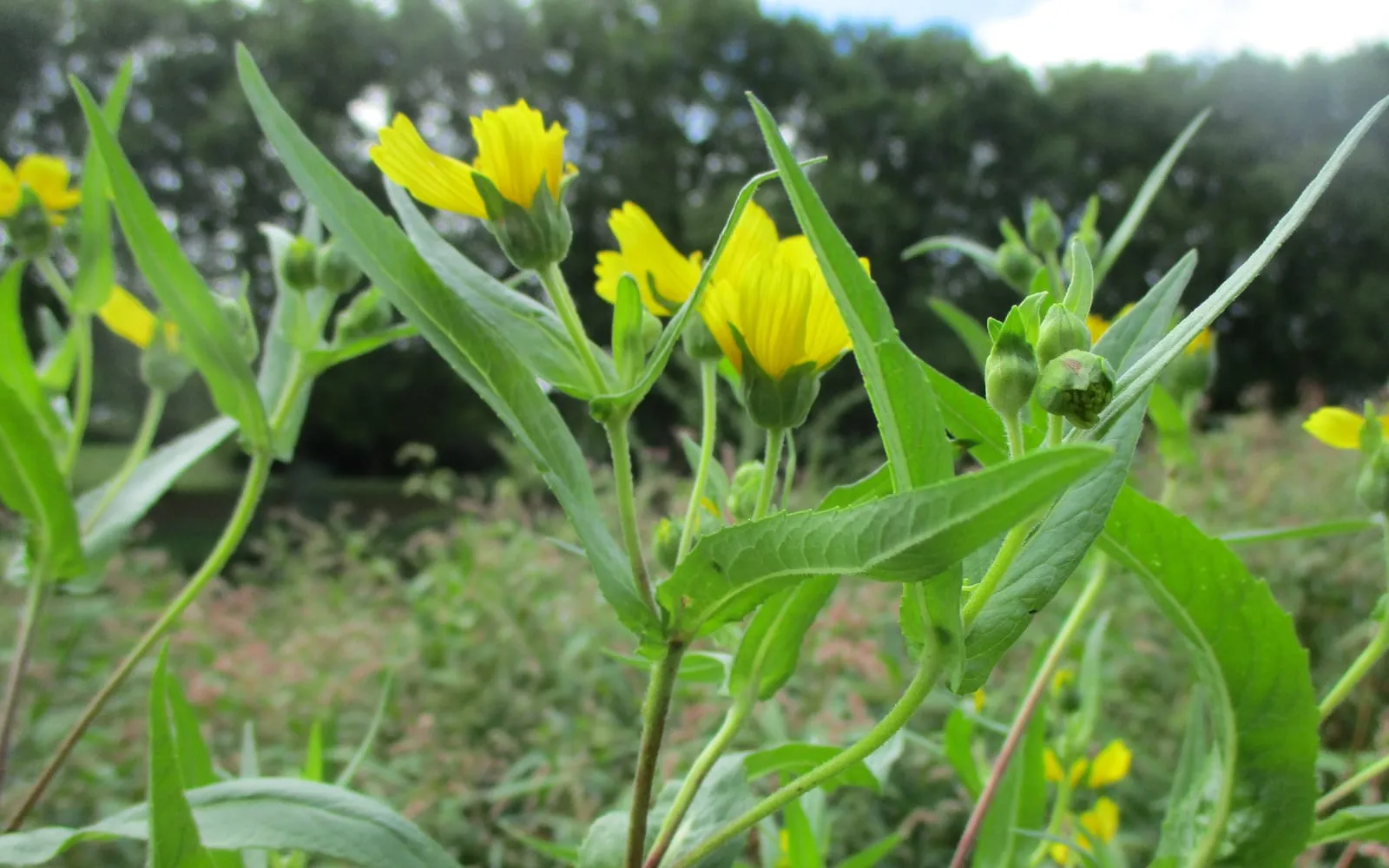
The plant is a daisy, in the same family as the sunflower, and it looks like a loose branching yellow-flowered annual growing to head height. It flowers late and long, from August into October, which makes it useful to insects at a time when little else is going.
Its career as bird food comes with a quirk. Imported niger has to be heat treated to prevent germination, because the plant is a vigorous coloniser and regulators require sterilisation. That is why nyjer spilled under a feeder never comes up, and why growing it means buying seed from a horticultural supplier rather than a pet shop.
Appearance and character
The plant is upright and freely branching, with a slightly rough hairy stem and narrow lance-shaped leaves that clasp the stem where they join it. It looks unremarkable until it flowers.
The flower heads are yellow daisies, 2 to 4 cm across, with a ring of broad ray florets around a darker yellow disc, carried at the ends of the branches. A mature plant carries dozens of them and they open over several weeks.
The seed is small, black, narrow and four-sided, about 4 to 5 mm long, and it sits in the dried head in the way a sunflower seed does, only far smaller. Around 40 per cent of it is oil.
Where it is from
Niger seed was domesticated in the Ethiopian highlands from a wild Guizotia ancestor that still grows there, and cultivation is ancient in the region though poorly dated.
Ethiopia remains the largest producer, where noug supplies a substantial share of the country’s edible oil, and it is grown across the highlands from 1,500 to 2,500 m, often on waterlogged or degraded land where other crops fail.
India is the second producer, growing it as ramtil in tribal and upland areas of Madhya Pradesh, Odisha and Maharashtra. Elsewhere the crop is grown almost entirely for the bird food market.
How it grows
Niger germinates readily in warm soil and grows steadily, branching from early on. It has a fibrous root system rather than a taproot, and it tolerates wetter ground than most oilseeds, which is part of why Ethiopian farmers grow it on land that waterlogs.
Flowering starts about ten weeks after sowing and continues for many weeks, with heads opening in sequence rather than together. The plant is largely cross-pollinated and insect-pollinated, so it needs company and it feeds bees and hoverflies while doing so.
Ripening is uneven and late. The seed shatters from a dry head, and in a short season the first frost usually arrives before the bulk of the crop has ripened, which makes a seed harvest difficult even when the plant grows well.
Through the seasons
Sow in May or early June once the soil is above 15 deg C, thinly in rows 40 cm apart, and thin to 20 cm. Sow a decent patch rather than a few plants, since the crop cross-pollinates.
Growth is steady through June and July, and the plant reaches full height by August. Flowering starts in August and runs through September and into October.
Harvest is the difficulty. Cut heads individually as they dry and brown from late September, before shattering and before frost. In most years in a cool climate the plant is better grown as a late-season insect plant and a curiosity than as a seed crop.
Care difficulty
Growing the plant is easy. It germinates readily, tolerates poor, wet and acid ground, needs little feeding, and has almost no pests worth naming outside its home range.
Getting seed out of it is hard, for two reasons that compound. The plant flowers late and ripens unevenly, and the first frost usually arrives before most of the heads are ready. What has ripened shatters.
Buy seed from a horticultural supplier rather than from a bird food shelf. Bird food nyjer is heat treated specifically so that it will not germinate, and a packet of it will produce nothing at all.
Watering
Water through establishment and then moderately. Niger tolerates wetter ground than any other oilseed here, and Ethiopian farmers put it on land that waterlogs.
A weekly soak in a dry July supports the plant through its main growth. There is no advantage to watering once flowering has begun.
The plant will still fail in standing water, so tolerance of damp is not tolerance of a bog. Ordinary garden drainage is ample.
Warning signs, diseases and pests
Birds are the pest, and they are also the purpose. Goldfinches and siskins will find a ripening head, and a small patch grown for seed needs netting from the point the heads start to brown.
Powdery mildew appears late in the season as a white coating on the leaves, usually on crowded plants, and it does little harm at that stage.
Slugs take seedlings in a cool damp start, and aphids gather on the growing tips without amounting to much.
The main failure is climatic rather than biological. Frost ends the plant while much of the crop is still green, and what has ripened shatters from the head.
Growing environment
Full sun on almost any soil. Niger is exceptionally tolerant, growing on poor, acid, degraded and periodically waterlogged ground, which is why it is a crop of marginal land in both Ethiopia and India.
The pH range runs from about 5 to 7.5, and fertility is not required. Rich ground produces a tall leafy plant that flowers later, which in a short season is the wrong direction.
Warmth and a long season are what it wants, and a cool summer supplies neither. Sow as early as the soil allows and accept that the flowering is the reward rather than the seed.
Feeding
Feed lightly. One dressing of a balanced granular feed at around six weeks is enough on tired ground, and nothing on a bed with residual fertility.
Nitrogen delays flowering and makes the plant taller, and in a short season that pushes the whole schedule past the first frost.
The crop’s usefulness on poor ground is a large part of why it is grown where it is, and a garden bed will need less than you expect.
Troubleshooting
Why does spilled nyjer never grow? It is heat treated before import specifically to stop it germinating, because the plant is a vigorous coloniser and importers are required to sterilise the seed. Buy horticultural seed if you want to grow it.
Is nyjer the same as niger seed? Yes. Nyjer is a trade name adopted by the American bird food industry in the 1990s, partly to fix the pronunciation. The plant is Guizotia abyssinica either way.
Which birds eat it? Goldfinches and siskins above all, along with redpolls and other small finches. The seed is small and oily and suits a fine beak, which is why nyjer feeders have narrow ports.
Will it ripen where I am? The plant grows well almost anywhere warm. Ripening seed needs a long frost-free autumn, and in a short season it flowers late, ripens unevenly and is cut short by the first frost.
Is it related to sunflowers? Yes, both are in the daisy family Asteraceae, and the seed sits in the dried head in the same way, only far smaller.
What is noug? The Ethiopian name for the crop and its oil, which is a staple cooking oil across the highlands and a major part of the country’s edible oil supply.
Does it feed bees? It does, and usefully, because it flowers from August into October when much else has finished. It is cross-pollinated and depends on insects, so a patch is worth more to them than a single plant.
Niger Seed problem guides
Not sure what is wrong? See the common vegetable pests guide.