
Edible
Melon
Cucumis melo
Also known as Cantaloupe, Muskmelon, Honeydew, Galia
How to grow melons, Cucumis melo. Cantaloupe under glass in a cool summer, training and stopping the vine, supporting the fruit, and knowing when it is ripe.
At a glance
- Difficulty
- Difficult
- Water
- Every two days, tapering off as the fruit ripens
- Light
- Full sun under glass, or a polytunnel or cold frame
- Temperature
- 25-30 deg C. Growth stops below 18 deg C
- Hardiness
- USDA 10-11, RHS H1b, hardy to 5 C
- Type
- Tender annual
- Height
- 2-3 m trained, trailing further
- Native to
- Africa and southern Asia
- Best month
- April in the Northern Hemisphere, October in the Southern Hemisphere
Sweetness comes from accumulated heat and from dryness at ripening, so a wet fortnight before harvest gives a large bland fruit whatever the cultivar. Growth stops below 18 deg C. Charentais and other short-season types ripen in about 80 days and are the only realistic outdoor melons in a cool summer.
Hardiness zones describe winter cold alone. Summer heat, humidity, rainfall and the length of the growing season decide as much, so treat the range as the outer limit rather than as a recommendation.
Every month named in this guide is for the temperate Northern Hemisphere. If you garden in the Southern Hemisphere, shift each one by six months, so April becomes October. Closer to the equator the wet and dry seasons matter more than the calendar, and the shift stops being a useful guide.
Not known to be toxic
- Safe to eat
- The ripe flesh, and the seeds roasted
Melon is a food crop and carries no toxicity concern. The RHS does not list Cucumis melo as a potentially harmful garden plant and the ASPCA does not list it as toxic to cats and dogs. The cucurbit caution applies as it does to every squash and cucumber. The family produces cucurbitacins, intensely bitter compounds that cause violent vomiting and diarrhoea, and they have been bred out of edible varieties but can reappear in plants grown from home-saved seed that has crossed with a wild or ornamental relative. Taste a small piece before eating a whole fruit, and if it is bitter, discard the lot. Bought seed carries no such risk. A separate and better-documented point concerns hygiene rather than the plant. Cut melon is a recognised vehicle for listeria and salmonella, because the rind carries soil organisms that a knife drags into the flesh, so wash the outside of a melon before cutting it and refrigerate it once cut.
Sources: RHS potentially harmful garden plants, ASPCA toxic and non-toxic plants
About
Melons are the most demanding crop in this wave, and wherever summers stay below about 25 deg C they belong under glass. A greenhouse, a polytunnel or at the very least a cold frame with a south-facing aspect. Outdoors in an average summer the plant produces leaves and nothing worth eating.
Variety choice narrows the field considerably. Cantaloupe types such as ‘Sweetheart’, ‘Emir’ and ‘Ogen’ ripen under glass in a cool summer. Honeydew and the long-season American cultivars do not.
The technique that decides the crop is restraint. Four fruits per plant under glass is the sensible maximum, and setting all four at roughly the same time matters, because a plant that has one fruit already swelling will abort every flower that follows it.
Appearance and character
A trailing or climbing vine with slender ridged stems and branching tendrils, reaching 2 to 3 m when trained up strings.
Leaves are roughly circular to shallowly lobed, softly hairy, in a fresh mid-green.
Flowers are yellow and open-faced. Male flowers come first in numbers, and female flowers follow with a small round fruit already visible behind the petals.
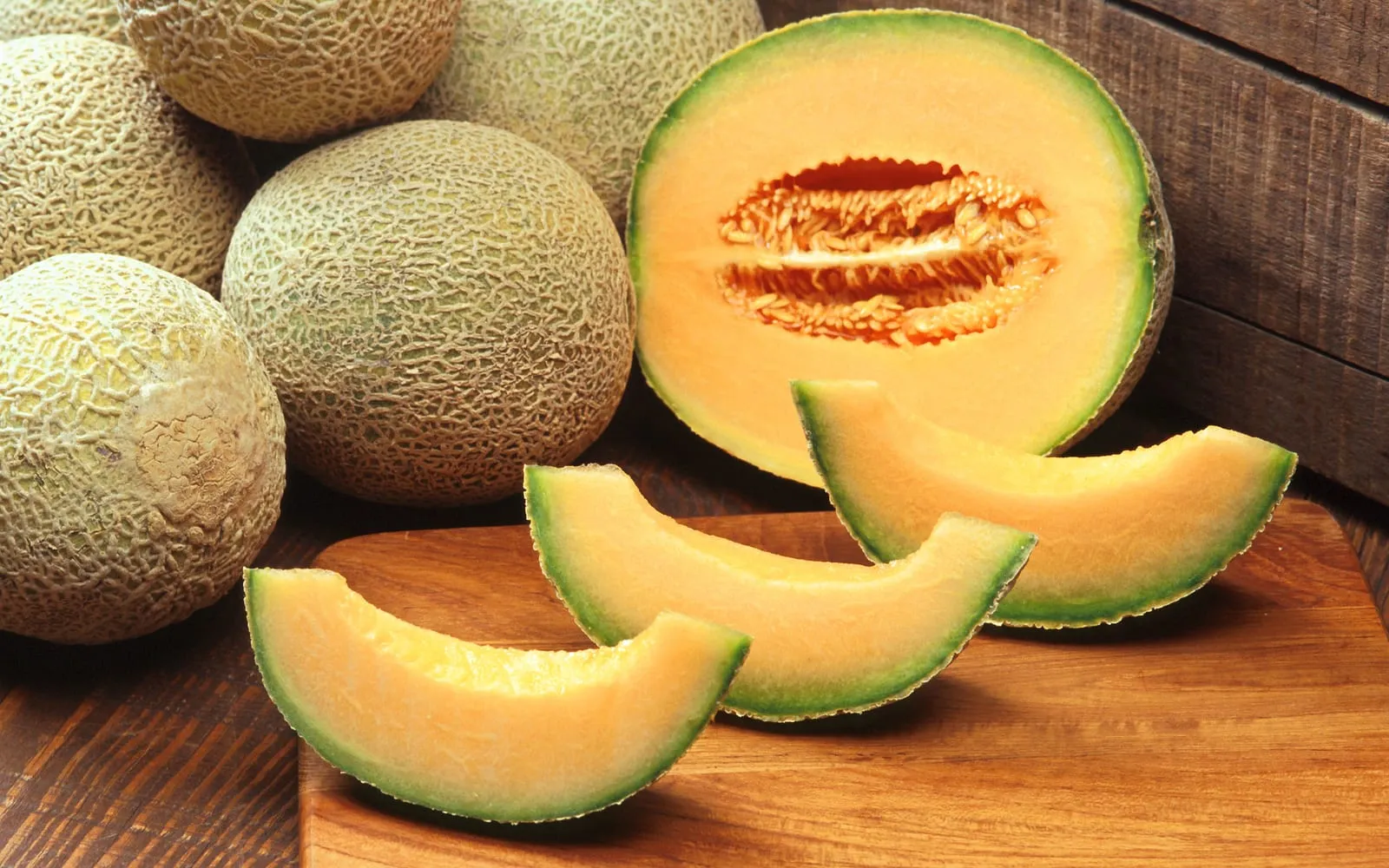
Fruit varies by type. Cantaloupes are round, ribbed and netted with orange flesh. Galia melons are netted with green flesh. Honeydews are smooth-skinned and pale.
Ripeness announces itself by smell more than by look. A ripe cantaloupe smells sweet and musky at the stalk end and develops a fine crack around the stalk where it will part from the vine with light pressure.
Where it is from
Cucumis melo originated in Africa and southern Asia, and the wild relatives grow across both. Domestication seems to have happened more than once, with Indian, African and Asian centres all proposed.
Egyptian and Mesopotamian records describe melons from at least 2000 BC, and they were probably closer to a cucumber in flavour than to anything sweet.
Sweet melons developed in Persia and central Asia, and the Persian and Afghan melons of the mediaeval period were famous enough to be shipped packed in ice.
Cantaloupe takes its name from Cantalupo, a papal estate near Rome where seed from Armenia was grown in the fifteenth century.
Britain grew melons in heated frames and pineapple pits from the seventeenth century onwards, and Victorian head gardeners competed over them. That tradition is why northern European melon growing has always assumed glass.
How it grows
Sow indoors from mid-April at 20 to 25 deg C, two seeds to a 9 cm pot, sown on their edge, thinning to the stronger.
Germination takes five to ten days in steady warmth.
Plant into a greenhouse border, a growbag or a 30 cm pot in late May, at 45 cm apart. Plant on a slight mound and keep the stem base proud of the compost, because collar rot is the commonest way a melon plant dies.
Train the main stem up a string or cane. Pinch out the growing tip at five leaves to force side shoots, which carry the female flowers.
Hand-pollinate. Pick a male flower, strip the petals, and dab the pollen onto the stigma of a female flower in the middle of a sunny morning. Pollinate four females on the same day.
Once four fruits have set, remove all further flowers and pinch each fruiting side shoot two leaves beyond the fruit.
Support each fruit in a net, an old pair of tights or a sling as it swells, or the stem tears.
Through the seasons
Mid-spring is sowing, from mid-April at 20 to 25 deg C.
Late spring grows the plants on under cover. Plant into the greenhouse border in late May.
Early summer is training and pollination. Pinch out at five leaves, train the side shoots, and hand-pollinate four flowers on the same morning.
Summer swells the fruit. Water every two days, feed weekly with high potash, damp the floor daily against red spider mite, and support each fruit.
Late summer and autumn are the harvest, from August to September. Reduce watering as the fruit ripens, which concentrates the sugars, and pick when the fruit smells sweet and the stalk cracks.
Care difficulty
Difficult, and honestly the hardest crop in this wave.
Heat is the first requirement. Growth stops below 18 deg C and the plant needs 25 to 30 to fruit properly, which means glass wherever summers fall short of that.
Hand pollination is close to essential under cover, since the insects that would do it are outside.
Restricting to four fruits, set on the same day, is the technique that separates a crop from a plant covered in aborted flowers.
Collar rot kills plants that are watered carelessly at the stem base. Plant on a mound and water around the plant rather than into it.
Red spider mite thrives in exactly the conditions the melon wants.
Judging ripeness takes practice, and the smell is a better guide than anything visual.
Watering
Water every two days through the growing season, and daily in a hot greenhouse.
Water around the plant rather than at the stem, and keep the stem base dry. Collar rot is the single commonest cause of sudden death in a greenhouse melon.
Damp the greenhouse floor every morning in hot weather, which raises humidity and suppresses red spider mite.
Reduce watering sharply once the fruits reach full size and start to net or colour. A dry finish concentrates the sugars, and a wet one gives watery fruit that splits.
Mulch the border after planting.
Container plants in growbags need daily watering from July and are harder to keep even than a border.
Warning signs, diseases and pests
Red spider mite bronzes and speckles the leaves and spins fine webbing, and it is the defining glasshouse pest here. Damp the floor daily and introduce Phytoseiulus predators early.
Powdery mildew coats the leaves from midsummer. Ventilate, water at the base, and remove the worst leaves. Late mildew matters little.
Collar rot browns and shrivels the stem at compost level and the plant collapses suddenly. Plant on a mound, keep the stem base dry, and water around the plant.
Whitefly and aphids build up under cover. Use Encarsia and Aphidius biological controls.
Flowers dropping without setting means no pollination, or a fruit already swelling that is suppressing the rest. Hand-pollinate four flowers on the same day.
Splitting fruit follows a heavy watering after a dry spell.
Fruit that never sweetens usually means too many fruits on the plant, too little sun, or watering continued right up to picking.
Cucumber beetle attacks outdoor melons across North and South America and carries bacterial wilt, a disease with no cure that kills a vine within weeks; melon is among the crops hit hardest by it. Cover young plants with row cover until flowering. The beetle has never established outside the Americas.
Growing environment
Full sun under glass, in a polytunnel, or in a cold frame in the warmest position. Outdoors is not realistic where summers stay cool.
Rich, free-draining, moisture-retentive soil or good multipurpose compost.
Neutral to slightly acid, pH 6 to 7.
Temperatures of 25 to 30 deg C by day and above 18 at night.
High humidity suits the plant and suppresses red spider mite.
A support system of strings or canes, plus nets or slings for the fruit.
Rotate with cucumbers and squash, or grow in fresh compost each year.
Feeding
Use a balanced liquid feed from planting until the fruits have set.
Switch to a high-potash tomato feed weekly once the fruits are swelling.
Avoid nitrogen after fruit set, which gives leaf rather than sugar.
Stop feeding as the fruits reach full size and begin to net or colour.
Growbags need feeding from about six weeks after planting.
Troubleshooting
All the flowers fell off. Either no pollination, or one fruit is already swelling and suppressing the rest. Hand-pollinate four female flowers on the same sunny morning.
The plant collapsed suddenly at the base. Collar rot from water sitting against the stem. Plant on a mound and water around the plant.
Fine webbing and bronzed leaves. Red spider mite. Damp the greenhouse floor daily and introduce Phytoseiulus predators.
The melons are watery and not sweet. Too many fruits, too little sun, or watering continued to the end. Limit to four fruits and taper watering as they ripen.
The fruit split. A heavy watering after a dry spell. Water evenly and reduce gradually rather than suddenly.
The stem tore and the fruit fell. Support each fruit in a net or a sling once it reaches tennis-ball size.
How do I know when it is ripe? Smell the stalk end. A ripe cantaloupe smells sweet and musky and develops a fine crack around the stalk, and the fruit parts from the vine under light pressure.
Can I grow them outdoors? In a cool summer, only under a cloche or in a cold frame in the warmest sheltered position, and even then the crop is unreliable. A greenhouse or polytunnel is the realistic answer.
Melon problem guides
Not sure what is wrong? See the common vegetable pests guide.
- Red spider mite in dry glasshouse heat
- Powdery mildew from midsummer
- Collar rot at the stem base from careless watering
- Whitefly and aphids under cover
- Poor fruit set without hand pollination
- Fruit splitting after irregular watering
- Cucumber beetle outdoors across the Americas, which can carry bacterial wilt