
Edible
Malabar Spinach
Basella alba
Also known as Ceylon spinach, Vine spinach, Poi, Pui saag
How to grow Malabar spinach, Basella alba. The tropical climbing spinach for a greenhouse, the heat it needs, and the mucilage that thickens a soup.
At a glance
- Difficulty
- Moderate
- Water
- Every two or three days in summer
- Light
- Full sun, and as much heat as can be arranged
- Temperature
- 25-30 deg C. Growth stops below 15 deg C and frost kills it
- Hardiness
- USDA 10-12, RHS H1b, hardy to 8 C
- Type
- Tender perennial, grown as an annual where frost comes
- Height
- 2-3 m on supports
- Native to
- Tropical Asia, probably India
- Best month
- June in the Northern Hemisphere, December in the Southern Hemisphere
It crops through heat and humidity that make true spinach bolt in days, which is the whole argument for growing it, and growth stops below 15 deg C. Flowering is short-day, so a high-latitude plant stays leafy all season. The purple berries stain everything and seed themselves freely in the tropics.
Hardiness zones describe winter cold alone. Summer heat, humidity, rainfall and the length of the growing season decide as much, so treat the range as the outer limit rather than as a recommendation.
Every month named in this guide is for the temperate Northern Hemisphere. If you garden in the Southern Hemisphere, shift each one by six months, so June becomes December. Closer to the equator the wet and dry seasons matter more than the calendar, and the shift stops being a useful guide.
Not known to be toxic
- Safe to eat
- The leaves and young stems, cooked
Malabar spinach is a food crop eaten daily across South and South East Asia, West Africa and the Caribbean, and it carries no toxicity concern. Neither the RHS nor the ASPCA lists Basella alba. It contains oxalic acid at a level below true spinach, and cooking reduces it further, so the usual spinach caution applies in a milder form for anybody prone to kidney stones. The leaves are markedly mucilaginous, thickening a stew in the way okra does, which is a texture some people dislike and no kind of hazard. Cooking briefly at high heat or adding an acid reduces the sliminess. The dark purple berries produced by the red-stemmed forms are edible but almost tasteless, and their strong pigment has been used as a dye and a food colouring, so expect it to stain hands and worktops.
Sources: RHS potentially harmful garden plants, ASPCA toxic and non-toxic plants
About
Malabar spinach is a tropical climber grown as a leaf vegetable, and it needs more heat than a cool summer reliably provides. In a greenhouse or a polytunnel it is productive and handsome. Outdoors in an average summer it sits still and sulks.
Where it works, it works well. A single plant climbs two or three metres, crops from July to October, and produces more leaf per square metre than anything else in this collection because it grows upwards.
The texture divides people. The leaves are mucilaginous, thickening whatever they are cooked in, which is exactly why Indian and West African cooking uses them in soups and stews. Anyone expecting the clean texture of spinach will be surprised.
Appearance and character
A vigorous twining climber, 2 to 3 m on supports, with thick fleshy stems.
Two forms are grown. Basella alba has green stems and leaves, and the form often listed as Basella rubra has deep purple-red stems and leaf veins and is the more ornamental of the two.
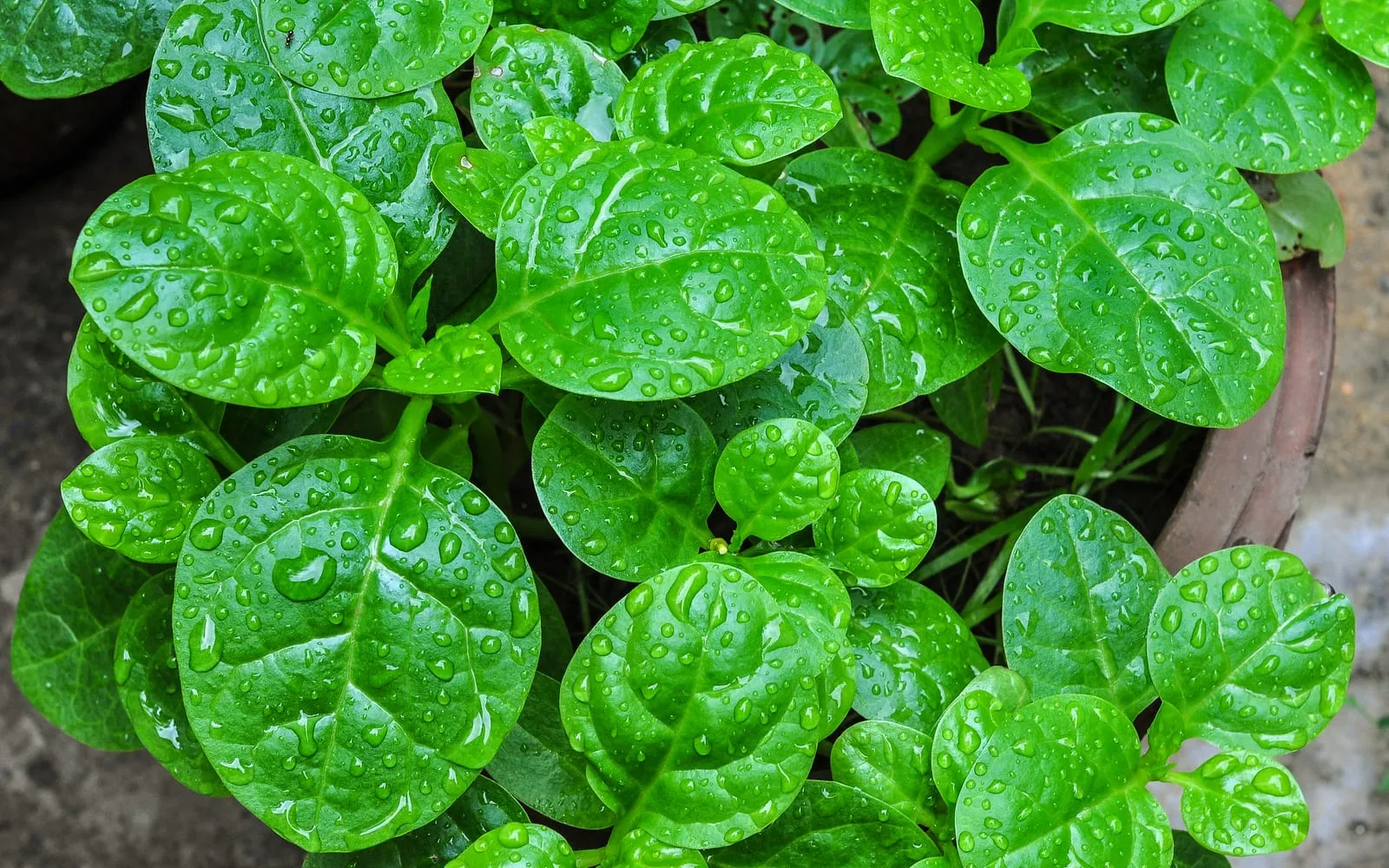
Leaves are broadly heart-shaped to almost round, thick, fleshy, glossy and smooth, up to 12 cm across.
Flowers are small, white or pink, in short spikes from the leaf axils, and they open only briefly.
Berries follow, small and round and turning deep purple-black, heavily pigmented and used as a dye in parts of Asia.
Flavour is mild and faintly peppery, closer to chard than to spinach, with a distinctly slippery texture when cooked.
Where it is from
Malabar spinach is native to tropical Asia, most likely the Indian subcontinent, and it has been cultivated there for a very long time.
India, Bangladesh and Sri Lanka grow it as a monsoon-season green under the names pui saag and basella, and it is a staple in Bengali cooking.
China grows it as luo kui, and it spread through South East Asia, West Africa and the Caribbean along trade routes.
Chinese records mention it from at least the Tang period, and the plant reached Europe in the eighteenth century as a curiosity for hothouses.
Northern Europe has always grown it under glass. It is one of the few crops in this wave for which a greenhouse is a requirement rather than an advantage.
How it grows
Sow indoors in March or April at 20 to 25 deg C. Soaking the seed for 24 hours and nicking the hard coat improves germination, which is otherwise slow and patchy.
Germination takes ten to twenty days in warm compost and fails in cold.
Pot on and grow at 20 deg C or more. Do not plant out until nights are reliably above 12 deg C, which in a cool climate means late June.
Plant into a greenhouse border, a polytunnel or a large container against a south-facing wall, at 45 cm apart, with a support in place.
Train the shoots up canes, netting or string. The plant twines and needs no tying once started.
Pick from eight weeks, taking the top 15 cm of each shoot. Regular picking keeps it branching and productive.
Take cuttings in September and overwinter them on a warm windowsill, which is easier than raising new plants from seed each year.
Through the seasons
Early spring starts seed indoors in March or April, soaked and nicked, at 20 to 25 deg C.
Late spring grows the plants on under cover. Pot on as they fill their pots and keep them warm, since a chilled plant checks and takes weeks to recover.
Early summer is for planting out, and late June is early enough where summers are cool. Under glass, plant in late May.
Summer is the season. Water every two or three days, feed fortnightly, and pick the tips weekly.
Autumn carries the crop to the first frost outdoors, and to November under glass. Take cuttings in September for next year.
Care difficulty
Moderate, and the difficulty is heat rather than technique.
Warmth is the limit. Under glass or in a tunnel this is an easy and generous crop. Outdoors in a cool summer it is a disappointment, and no amount of feeding or watering compensates.
Germination is the second hurdle. Soak and nick the seed and give it 20 deg C or more.
Support is a practical requirement, since the plant climbs and sprawls otherwise.
Red spider mite is the pest of glasshouse growing and thrives in exactly the dry heat this plant enjoys.
Picking regularly keeps the leaves tender.
Watering
Water every two or three days in summer. The plant carries a lot of leaf and transpires heavily in the heat it needs.
Keep the soil damp at all times. A checked plant stops and takes a long time to restart.
Damp the greenhouse floor in hot weather, which raises humidity and is the most effective measure against red spider mite.
Water at the base rather than over the leaves.
Reduce watering in autumn as growth slows.
Container growing works well in a pot of 40 litres, and it needs daily watering in a hot greenhouse.
Warning signs, diseases and pests
Cold is the main enemy and shows as a plant that stops growing. Growth halts below 15 deg C and frost kills it outright. Grow under cover.
Red spider mite bronzes and stipples the leaves and spins fine webbing in dry glasshouse heat. Damp the floor daily to raise humidity, and introduce Phytoseiulus predators early rather than after an infestation is established.
Aphids and whitefly build up under cover. Ventilate, and use biological controls.
Slugs take young plants outdoors.
Poor germination means cold compost or untreated seed.
Yellowing lower leaves usually mean the plant is short of nitrogen, which a heavy leaf crop uses quickly.
Growing environment
Full sun and as much heat as can be arranged. A greenhouse or polytunnel is the right environment outside the tropics.
Rich, moisture-retentive but free-draining soil. Dig in plenty of compost.
Neutral to slightly acid soil, pH 6 to 7.
A support of canes, netting or strings, two metres or more.
Humidity suits it, which is convenient because the same conditions discourage red spider mite.
Outdoors, only the warmest sheltered sunny position in a mild district is worth attempting.
Feeding
Dig rich compost into the bed before planting.
Feed with a nitrogen-rich liquid feed fortnightly through the growing season. The crop is leaf and the plant is large, so nitrogen is right here.
Feed after each hard picking.
Reduce feeding from September as growth slows.
Avoid fresh manure, which encourages soft growth and pests under glass.
Troubleshooting
The plant has not grown all summer. Too cold. Growth stops below 15 deg C. This is a glasshouse crop wherever summers are cool.
Almost nothing germinated. Cold compost or an untreated hard seed coat. Soak the seed for 24 hours, nick it, and germinate at 20 to 25 deg C.
Fine webbing and speckled bronze leaves. Red spider mite. Damp the greenhouse floor daily and introduce Phytoseiulus predators.
The cooked leaves are slimy. Normal, and the point of the plant in the cuisines that use it. Cook briefly at high heat or add an acid such as tamarind or lemon to reduce it.
Yellowing lower leaves. Nitrogen shortage. Feed fortnightly with a nitrogen-rich liquid feed.
Purple stains all over the kitchen. The berries carry a strong pigment used as a dye. Pick them off if you are not saving seed.
Can I grow it outdoors? Only in the warmest sheltered position in a good summer, and even then it will be slow. Use a greenhouse or a polytunnel.
Will it survive the winter? No, outdoors. Take cuttings in September and root them on a warm windowsill, which is easier than starting from seed again.
Malabar Spinach problem guides
Not sure what is wrong? See the common vegetable pests guide.