
Edible
Lychee
Litchi chinensis
Also known as Litchi, Lichee, Leechee
How to grow lychee, Litchi chinensis. The cool dry winter it needs before it will flower, telling a fresh one from a canned one, and the real story about unripe lychees and sick children.
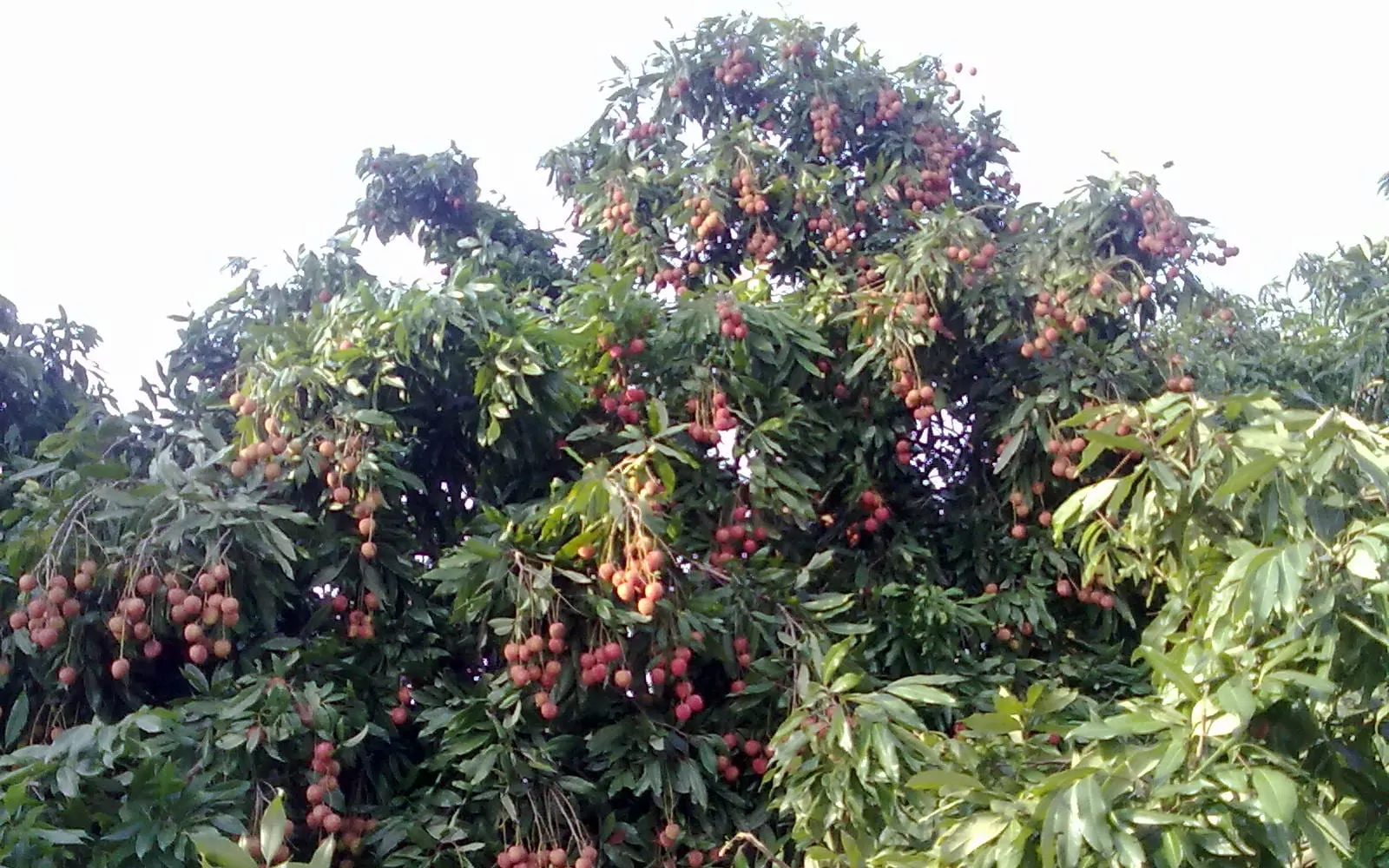
At a glance
- Difficulty
- Difficult
- Water
- Twice a week in growth, almost nothing during the winter rest
- Light
- Full sun
- Temperature
- Needs a cool dry spell at 10-15 deg C in winter to flower. Damaged by frost
- Humidity
- High in summer, low in the winter rest
- Hardiness
- USDA 10-11, RHS H1c, hardy to -1 C
- Type
- Tender evergreen tree
- Height
- 10-15 m in the open, 2 m in a pot
- Native to
- southern China
- Best month
- June and July in the Northern Hemisphere, December and January in the Southern Hemisphere
Subtropical southern China, and flowering depends on cold rather than on feeding. It needs roughly 100 to 200 hours below 20 deg C, with nights near 10, to initiate flower buds. Too warm a winter gives a healthy tree and no fruit; too cold a one kills the young growth.
Hardiness zones describe winter cold alone. Summer heat, humidity, rainfall and the length of the growing season decide as much, so treat the range as the outer limit rather than as a recommendation.
Every month named in this guide is for the temperate Northern Hemisphere. If you garden in the Southern Hemisphere, shift each one by six months, so June becomes December. Closer to the equator the wet and dry seasons matter more than the calendar, and the shift stops being a useful guide.
Toxic if eaten
- Safe to eat
- The ripe white flesh
- Do not eat
- Unripe fruit, which carries hypoglycin A and MCPG, and the seed
- Harm from
- Eating it
- Affects
- People
Ripe lychee is safe and is eaten in enormous quantity across Asia. Unripe lychee is a different matter. Green fruit contains hypoglycin A and methylenecyclopropylglycine, compounds that block the body's ability to make glucose when its stores are already empty. In Muzaffarpur in Bihar, and in similar lychee-growing districts, hundreds of malnourished children a year were falling ill and dying each May and June with a sudden encephalopathy. Investigations led by Indian health authorities and the US Centers for Disease Control traced it to children eating fallen unripe lychees through the day and going to bed without an evening meal. Overnight their blood sugar crashed and could not be restored. The condition is now managed by ensuring an evening meal during the season. A well-fed adult eating ripe lychees is at no risk whatever. The lesson is to eat them ripe and not on an empty stomach, and to keep windfalls away from small children. The seed is not eaten.
Sources: PLOS ONE on the litchi-associated encephalopathy outbreaks in Muzaffarpur, RHS potentially harmful garden plants
About
Lychee is one of the few tropical fruits that demands a cold spell. Without four to six weeks somewhere between 10 and 15 deg C in winter, and dry with it, a lychee tree makes leaves and no flowers, indefinitely.
That single requirement puts it out of reach of most conservatory growers, who can supply the summer heat easily and the winter chill not at all. It also explains why lychee is grown in subtropical rather than tropical districts, across southern China, northern Vietnam, Taiwan and the Indian foothills.
The fruit deteriorates fast. A lychee picked and left goes brown within days, the skin hardening and the flavour flattening, which is why the tinned ones taste of syrup and the fresh ones, caught in season, taste of roses.
Appearance and character
A dense rounded evergreen tree, 10 to 15 m in the open, with a short trunk and a low spreading crown.
Leaves are pinnate, with two to four pairs of glossy dark green leaflets, each lance-shaped and 5 to 15 cm long. New growth flushes bronze or coppery red and hangs limp before hardening.
Flowers come in large terminal sprays in late winter and early spring, small, greenish white to yellow, without petals, and heavily worked by bees. Lychee honey is a named product.
Fruit hangs in loose clusters, round to oval, 3 to 4 cm, with a thin brittle skin covered in small raised bumps that turns from green to bright pink-red as it ripens.
Peeling reveals a translucent white aril, glossy and slightly firm, wrapped round a single shiny brown seed.
The flavour is floral and grape-like and disappears fast. Fruit browns within two or three days of picking and the skin hardens.
Seed size varies by cultivar, and the prized ones have a shrivelled seed called chicken tongue, leaving more flesh.
Where it is from
Lychee is native to southern China, in Guangdong, Guangxi and Fujian, where it has been cultivated for well over two thousand years.
Chinese records of it are among the oldest for any fruit. The Tang dynasty consort Yang Guifei is said to have had lychees carried to the capital by relay riders, a story every Chinese schoolchild knows and one that neatly captures how badly the fruit travels.
Cultivation spread to northern Vietnam, Thailand, Taiwan and then India, where Bihar and West Bengal became major producers.
It reached the West late. British and French collectors moved plants to Mauritius, Reunion and the West Indies in the eighteenth century, and to Florida, Hawaii and Australia in the nineteenth.
China still grows most of the world crop, followed by India and Vietnam. Temperate markets see fresh fruit in early summer from Madagascar and South Africa, and later from Israel and Spain.
How it grows
Buy a grafted or air-layered plant if fruit is the aim. Seedlings take ten years or more and give unreliable fruit.
Sow seed fresh if you want a plant for its own sake. Lychee seed dies within days of leaving the fruit, so sow the day you eat it. Germination is quick at 25 to 30 deg C.
Use an ericaceous compost. Lychee is acid-loving and shows iron shortage on anything neutral.
Grow in full sun at 25 to 30 deg C in summer, with high humidity.
Water generously through the growing season and never let it dry out completely.
Give a winter rest that is both cool and dry. Four to six weeks at 10 to 15 deg C with minimal water is what initiates the flower buds.
Feed fortnightly from April to August with an acid-loving plant feed.
Prune lightly after fruiting to keep the plant compact.
Expect fruit on a grafted plant in three to five years under good conditions, and none at all if the winter chill is missing.
Through the seasons
Early winter is the rest period. Hold the plant at 10 to 15 deg C, keep it dry, and give no feed.
Late winter brings the flower sprays on a plant that had its chill.
Spring is flowering and setting. Raise the temperature, resume watering, and start feeding.
Early summer is fruit swell, which takes about three months from flowering.
Midsummer is harvest, and the fruit must be picked ripe because it does not ripen further off the tree.
Late summer is the growth flush after fruiting. Prune lightly and keep feeding.
Autumn is the taper. Stop feeding, reduce watering, and begin dropping the temperature towards the winter rest.
Care difficulty
Difficult, and the difficulty is a scheduling problem rather than a cultural one.
The winter chill is the obstacle. Four to six weeks at 10 to 15 deg C and dry initiates flowering, and a heated conservatory kept at a comfortable 18 deg C all winter will never produce a flower.
Acid compost is not optional. Lychee yellows badly between the veins on neutral or alkaline compost and on hard water.
Humidity in summer needs to be high, which conflicts with the dry winter and means moving the plant or changing the regime twice a year.
Seedlings are a long wait and unreliable. Buy grafted.
Frost is fatal to young wood, though a mature tree takes a light one.
Anyone who can give a cool dry winter and a hot humid summer has a real chance, and that combination suits an unheated-in-winter greenhouse better than a warm conservatory.
Watering
Water twice a week through the growing season, keeping the compost evenly damp.
Never let it dry out completely in summer, since lychee has a shallow fibrous root system that suffers quickly.
Cut water right back for the winter rest. Four to six weeks nearly dry, with enough to stop the leaves flagging and no more.
Use rainwater. Hard water raises the pH of the compost and brings on the iron shortage this species is prone to.
Keep summer humidity high with misting and damping down.
Mulch the surface of the pot with bark or leaf mould, which suits the shallow roots.
Resume normal watering once the flower sprays extend.
Warning signs, diseases and pests
Yellowing between the veins on young leaves, with the veins staying green, is iron shortage. It is the commonest lychee complaint on hard water and it comes from hard water or neutral compost.
Brown crisp leaf tips and margins are salt burn or dry air.
Coppery limp new growth is a normal flush and hardens in a week.
A plant that grows well and never flowers has not had a cool dry winter.
Brown limpets along the stems and leaf undersides are scale.
White waxy fluff in the leaf axils is mealybug.
Wilting with damp compost is root rot, usually from a heavy mix.
Fruit splitting on the tree comes from irregular watering during fruit swell.
Fruit browning within days of picking is normal and not a fault. Lychee does not keep.
Macadamia nut borer, despite the name, tunnels into lychee fruit outdoors just as readily as macadamia, running toward the seed and often causing early fruit drop. It occurs throughout Australia’s growing regions and much of Asia and the Pacific, and has not reached Europe or New Zealand.
Growing environment
A greenhouse that can be run hot in summer and cool in winter, which is an unusual requirement and the key to the species.
Summer at 25 to 30 deg C with high humidity.
Winter at 10 to 15 deg C, dry, for four to six weeks at least.
Full sun.
Ericaceous compost with plenty of organic matter, free-draining but moisture-retentive.
pH from 5.0 to 5.5.
Rainwater rather than tap water.
Shelter from wind, which the shallow-rooted tree dislikes.
Feeding
Feed fortnightly from April to August with an ericaceous or acid-loving plant feed.
Add sequestered iron at the first sign of yellowing between the veins.
Stop feeding by the end of August so the wood ripens.
Give nothing at all through the winter rest.
Top-dress with leaf mould or composted bark each spring, which suits the shallow root system.
Repot every second or third spring into fresh ericaceous compost.
Avoid lime in any form, including tap water in a hard water area.
Troubleshooting
It grows well and never flowers. It has not had a winter chill. Lychee needs four to six weeks at 10 to 15 deg C, kept dry, to initiate flower buds. A conservatory held at 18 deg C all winter will never trigger it.
The leaves are yellow between green veins. Iron shortage, from hard water or compost that is not acid enough. Repot into ericaceous compost, water with rainwater, and give sequestered iron.
Can I grow one from a lychee seed? Yes, if you sow it the same day. Lychee seed dies within a few days of leaving the fruit. The plant will take ten years or more to fruit and may never do so well, so buy grafted if fruit is the aim.
Why do fresh lychees go brown so fast? The thin skin dries and the phenols in it oxidise. It happens within two or three days and it does not mean the fruit is bad, though the flavour flattens with it.
Do lychees ripen after picking? No. They must be picked ripe, which is why the fresh season is short and the tinned trade is large.
I heard lychees killed children in India. Unripe lychees carry hypoglycin A, which blocks the body from making glucose. Malnourished children in Bihar eating fallen green fruit and skipping their evening meal suffered overnight blood sugar crashes. The answer was to make sure the children ate supper. Ripe fruit eaten by a well-fed person carries no such risk.
What is a chicken tongue lychee? A cultivar with a shrivelled abortive seed, which leaves far more flesh in the fruit. They are the prized ones.
The fruit split on the tree. Irregular watering during fruit swell. Keep the compost evenly damp from setting to harvest.
Lychee problem guides
Not sure what is wrong? See the common vegetable pests guide.
- Iron shortage on any compost that is not acid, showing as yellowing between the veins
- Root rot in heavy wet compost
- Scale insects along the stems
- Failure to flower, which is nearly always the missing winter chill
- Leaf scorch from hard water and dry air
- Mealybug in the leaf axils
- Macadamia nut borer, present throughout Australia and much of Asia and the Pacific