
Pest
Macadamia nut borer
Cryptophlebia ombrodelta
Also called Litchi fruit borer
A macadamia husk with a tiny entry hole and frass-packed tunnel running to the shell, or the same caterpillar doing identical damage inside a lychee or longan. Native across a huge swathe of Asia and the Pacific, present throughout Australia's macadamia-growing regions, and established in Hawaii but not the US mainland.
At a glance
- Type
- Pest
- Cause
- Insect
- Severity
- Destroys the crop or display
- Affects
- Herbs and edibles
- Active
- November to March
- Established in
- Asia, Australia and Pacific Islands
What you are seeing
- A small entry hole in a macadamia husk, often near the base, with a frass-packed tunnel running through the husk to the shell beneath
- Premature nut drop, with a high proportion of dropped nuts carrying internal damage
- Similar entry holes and internal tunnelling in lychee and longan fruit, running toward the seed
- A pinkish caterpillar up to about 2 cm long, found inside the tunnel when affected husks or fruit are opened
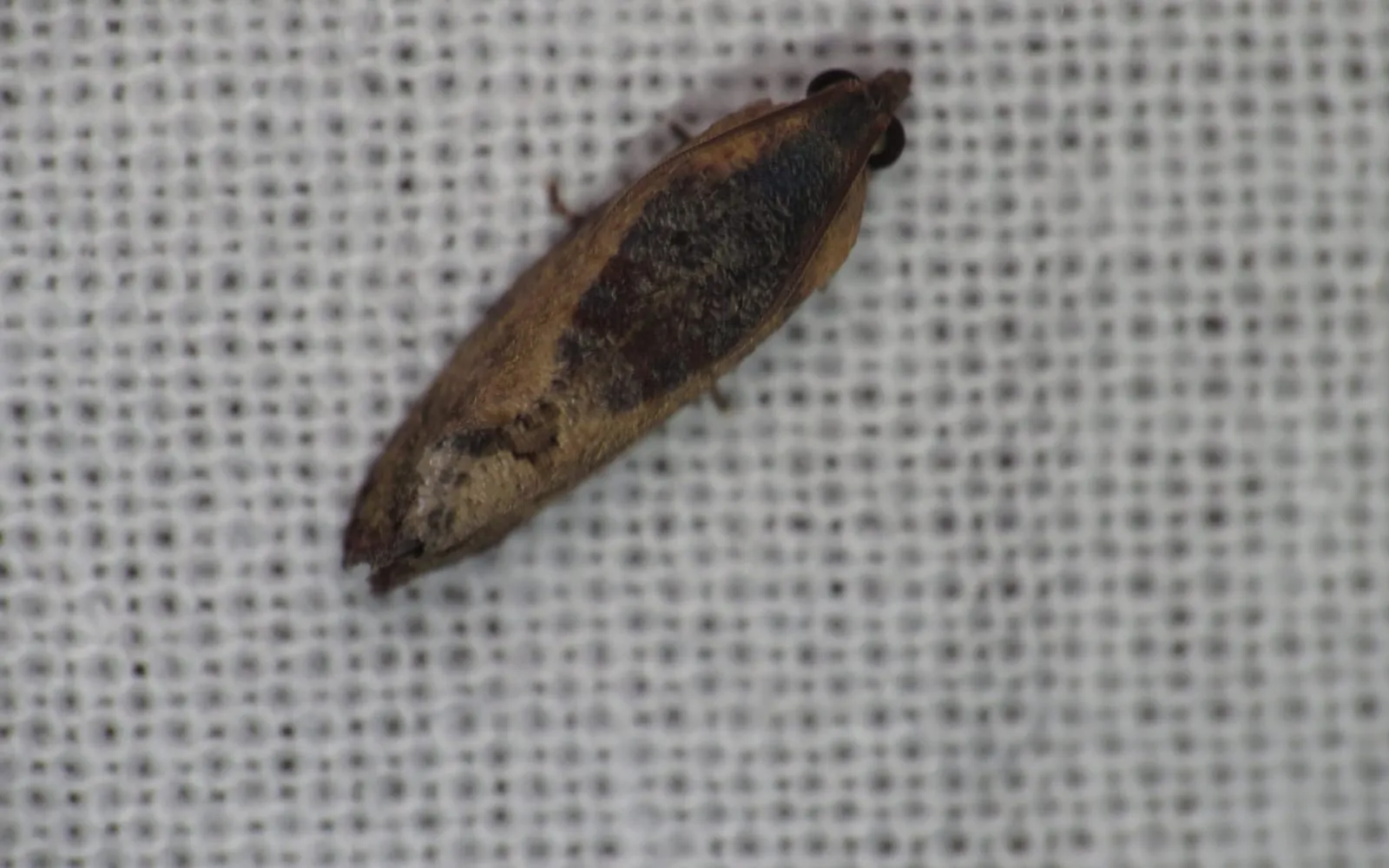
- Small grey-brown moths, rarely seen in the day, that lay eggs directly on the developing husk or fruit
- Damage building through the harvest season as successive generations pass through a crop
Before you treat anything
Affected nuts or fruit with visible tunnelling should be discarded; sound fruit on the same tree is unaffected.
What you are looking at
A macadamia husk with a small entry hole, often near the base, opening onto a frass-packed tunnel running through to the shell. Affected nuts frequently drop before they should, and cutting open either a dropped nut or a tunnelled husk still on the tree usually turns up a pinkish caterpillar, up to about 2 cm long. The same insect does identical damage to lychee and longan, boring in and tunnelling toward the seed rather than the shell.
The adult is a small, unremarkable grey-brown moth, rarely seen during the day, that lays eggs directly onto the developing husk or fruit surface.
Common across its native range, absent from most of the Americas
This species has an unusually broad native distribution, recorded from India and Sri Lanka through Southeast Asia, China, Japan and New Guinea to the Philippines and Guam. It occurs throughout Australia’s macadamia, lychee and longan growing regions, where growers manage it as a familiar, recurring part of the season rather than a novel threat. Hawaii carries an established population too, but the mainland United States, including Florida and California’s smaller macadamia and lychee plantings, remains free of it, as do Europe, Africa, the rest of the Americas, and New Zealand, which grows a modest commercial macadamia crop and treats a find as reportable.
What to do about it
Collect and destroy fallen nuts and fruit promptly through the harvest season, since larvae complete development in dropped material as readily as in fruit still on the tree.
Monitor with pheromone traps and check a sample of developing fruit for fresh eggs, white or pink rather than black, which shows whether the egg parasitoid and other natural enemies already have the population covered. Where they have not, a spray timed to that egg-laying window is far more precise than one applied on a calendar date, and broad-spectrum products are best avoided since they suppress the same natural enemies this pest is otherwise kept in check by.
Manage nearby ornamental and wild host plants where practical, since this species breeds in a wide range of them.
Support natural parasitoid wasps already established in the area by limiting broad-spectrum insecticide use where it is not strictly needed.
What it gets mistaken for
Codling moth attacks apples, pears and walnuts and does not touch macadamia, lychee or longan. A tunnelling caterpillar in any of the latter three, wherever this species occurs, is almost certainly it rather than an unrelated moth.
Not established in New Zealand
Do not prune, spray or otherwise treat a suspected case. Doing so risks spreading an organism the country has kept out, and it disturbs the evidence needed to identify it. Photograph what you can see, leave the plant alone, and contact your national or state plant health authority. The control advice further down this page is written for regions where this problem is already established.
Native across an unusually wide swathe of Asia and the Pacific, recorded from India and Sri Lanka through Southeast Asia, China, Japan and New Guinea to the Philippines and Guam. It occurs throughout Australia's macadamia, lychee and longan growing regions, where it is treated as a standard, manageable pest rather than a new threat. It has been introduced to Hawaii, where it is established, but the mainland United States, including Florida and California's smaller macadamia and lychee plantings, remains free of it. It has not reached Europe, Africa, the Americas outside Hawaii, or New Zealand, and a find in New Zealand, which grows a modest commercial macadamia crop, is treated as reportable.
What to do, in order
The steps below apply where this problem is already established.
Start here
Prevention, and the changes that stop the problem returning. Most of these pages should end at this tier.
- Collect and destroy fallen nuts and fruit promptly
- Larvae complete their development in fallen material as readily as in fruit still on the tree, and clearing the ground beneath affected trees regularly through the harvest season removes a generation before the moths inside can emerge and lay the next one.
- Manage nearby ornamental and wild hosts
- This species breeds in a wide range of other plants, including several ornamental trees and shrubs commonly grown near orchards. Where practical, reducing or monitoring these alternative hosts near a valued crop reduces the local population pressure feeding into it.
Then reach for a barrier
Netting, hand removal and water. Nothing here harms anything except the target.
- Monitor with pheromone traps and check developing fruit for fresh eggs
- Pheromone-baited traps track when moths are active locally, and checking a sample of developing fruit or nuts for fresh eggs, white or pink rather than the black of an already-parasitised egg, shows whether the egg parasitoid and other natural enemies are already keeping pace, rather than assuming a spray is needed on a calendar date.
Then bring in the predators
Encourage what already lives in the garden, and buy predators in where the problem is under glass and nothing will arrive on its own.
- Support the egg parasitoid Trichogrammatoidea cryptophlebiae
- This tiny parasitic wasp attacks the moth's eggs before they can hatch and, alongside several native braconid and ichneumonid wasps that attack the larvae, forms a meaningful background control in areas where broad-spectrum spraying has not suppressed it.Naturalised and established in parts of Australia, where it provides substantial control particularly on longan later in the season; not something typically bought or released by an individual gardener.
Biological controls are live organisms and their sale and release are regulated country by country. An agent sold freely in one place may be unapproved in another, so buy from a licensed supplier where you live and never import or move one yourself.
Plants affected
Guides that name it among the problems to watch for. The list is the plants it is characteristic of rather than everything it will feed on.