
Edible
Endive
Cichorium endivia
Also known as Frisee, Escarole, Batavian endive, Scarole
How to grow endive, Cichorium endivia. Blanching the heart to sweeten it, curly frisee against broad escarole, and keeping the plants dry while they blanch.
At a glance
- Difficulty
- Moderate
- Water
- Weekly, and stop wetting the leaves once blanching starts
- Light
- Full sun, with light shade for summer sowings
- Temperature
- 15-20 deg C. Hardier than lettuce, to about -5 deg C
- Hardiness
- USDA 4-9, RHS H4, hardy to -6 C
- Type
- Annual or biennial grown as an annual
- Height
- 20-40 cm
- Native to
- The eastern Mediterranean
- Best month
- July in the Northern Hemisphere, January in the Southern Hemisphere
Hardier than lettuce and slower to bolt, which makes it the more dependable autumn salad in a climate where lettuce runs to seed. Blanching the heart removes most of the bitterness. Cold below about -6 deg C rots the crowded centre before it kills the plant.
Hardiness zones describe winter cold alone. Summer heat, humidity, rainfall and the length of the growing season decide as much, so treat the range as the outer limit rather than as a recommendation.
Every month named in this guide is for the temperate Northern Hemisphere. If you garden in the Southern Hemisphere, shift each one by six months, so July becomes January. Closer to the equator the wet and dry seasons matter more than the calendar, and the shift stops being a useful guide.
Not known to be toxic
- Safe to eat
- The whole rosette, raw or cooked
Endive is a food crop and carries no toxicity concern. The RHS does not list Cichorium endivia as a potentially harmful garden plant and the ASPCA does not list it as toxic to cats and dogs. The bitterness comes from sesquiterpene lactones, the same family of compounds that make chicory and dandelion bitter, and they are a flavour rather than a hazard. The milky latex in cut stems occasionally causes contact dermatitis in people with a strong allergy to the daisy family, which is uncommon. Blanching, which is the traditional way to make the heart sweet and pale, works by excluding light so the plant produces less of those compounds and no chlorophyll, and it changes nothing about the plant's safety. Both the outer green leaves and the blanched heart are eaten, and the outer leaves are best cooked since they are considerably more bitter.
Sources: RHS potentially harmful garden plants, ASPCA toxic and non-toxic plants
About
Endive is the autumn salad that fills the gap after summer lettuce has finished and before winter leaves get going. It is hardier than lettuce, less inclined to bolt, and it carries a bitterness that either delights or defeats people.
Blanching is the answer to the bitterness and it is a simple operation. Cover the plant for ten days before cutting, exclude the light, and the heart turns pale yellow, tender and sweet while the outer leaves stay green and strong.
Two forms are grown. Curly endive, the frisee of French salads, has finely cut frilly leaves and blanches to a beautiful pale heart. Escarole, also called Batavian, has broad flat leaves, a more upright habit and a milder flavour, and it is the better choice in a wet autumn, because the open head holds less water.
Appearance and character
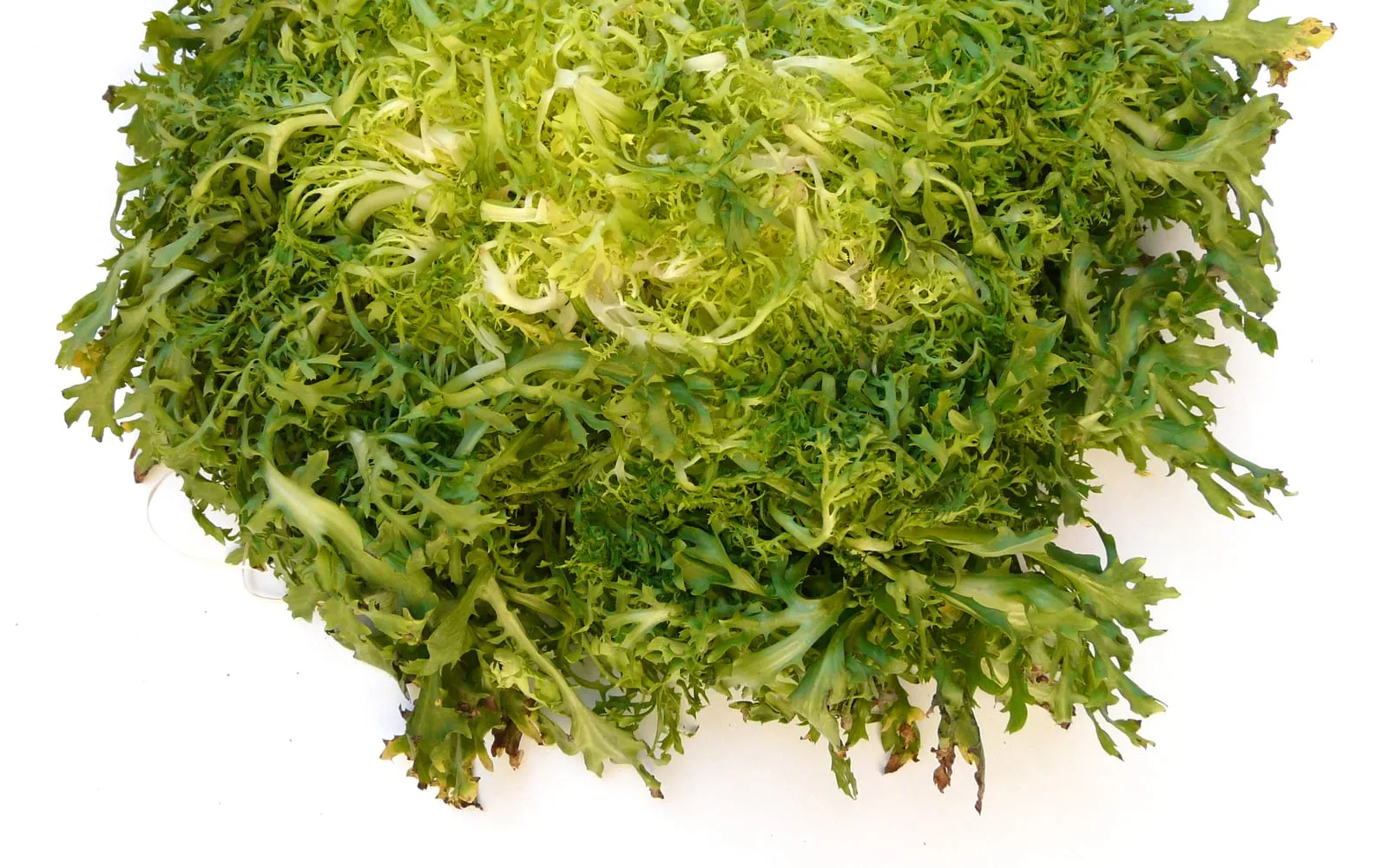
A rosette 20 to 40 cm across, flat in the curly types and more upright in escarole.
Curly endive leaves are narrow, deeply cut and heavily frilled, forming a dense tangle. The centre of a well-grown plant is almost impenetrable, which is what makes it blanch so well and what makes it a good home for slugs.
Escarole leaves are broad, wavy-edged and slightly puckered, in a paler green, overlapping loosely.
Blanched hearts are cream to pale yellow, crisp and tender, and markedly sweeter than the green leaves around them.
Flavour is bitter and nutty, strongest in the outer leaves and mildest at the blanched centre.
A bolting plant sends up a branched stem with pale blue chicory-like flowers, and the leaves turn too bitter to eat.
Where it is from
Endive is native to the eastern Mediterranean, and it has been cultivated long enough that no clear wild ancestor is agreed on.
Egyptians, Greeks and Romans all grew it, and it appears in classical texts alongside chicory in ways that make the two hard to separate.
It reached northern Europe by the Middle Ages and was a standard salad plant in Tudor and Stuart England, where it was blanched under tiles and pots exactly as it is now.
France developed the curly types and made frisee a fixture of the bistro salad. Italy and Spain favoured escarole and cook it as often as they eat it raw.
The naming confusion with chicory is old and unresolvable. Belgian endive is forced chicory, Cichorium intybus, and endive proper is this plant. American usage swaps the two.
How it grows
Sow direct or in modules. Endive transplants better than chicory and a module-raised plant avoids slug damage at the seedling stage.
Sow from June to August at 1 cm deep in rows 35 cm apart, then thin or plant to 30 cm apart. Sowings before June bolt.
Germination takes five to ten days, and it is poor in soil above 25 deg C, so sow in the cool of the evening in a hot spell.
Plants are ready to blanch at ten to twelve weeks, when the rosette is full-sized.
Blanch by covering a dry plant with an upturned pot with the drainage hole blocked, or by gathering the leaves up and tying them with soft string. Leave for ten days in warm weather and up to three weeks in cold.
Cut the whole plant at the base once blanched. A blanched plant does not keep in the ground and rots within days, so blanch a few at a time.
Through the seasons
Spring is the wrong time to sow. Long days and rising temperatures bring bolting.
Early summer starts the sowing window in June, for an early autumn cut.
Midsummer is the main sowing time, July into early August, which gives the autumn and early winter crop.
Autumn grows the plants on and starts the blanching. Blanch a few at a time from late September so the harvest spreads over weeks.
Winter carries the last plants. Escarole stands to about -5 deg C and much more under a cloche. Blanching takes three weeks at this end of the year, and the plants must be dry when covered.
Care difficulty
Moderate. Blanching is the hard part.
The plant must be dry when you cover it. Water trapped under a pot or inside tied leaves for ten days rots the heart, and a wet autumn makes this the main difficulty of the crop.
Slugs treat a blanching cover as a hotel. Check under the pot every few days.
The sowing date matters as it does for chicory. June onwards.
Bitterness in an unblanched plant catches people out, and the fix is straightforward.
Cutting promptly once blanched is the last step. A blanched plant left in the ground for a week deteriorates fast.
Watering
Water weekly through the growing period, around 12 litres per square metre.
Water at the base, always. Wet leaves are a problem for this crop in a way they are not for most.
Stop watering the plant itself once blanching begins, and water the ground around it instead.
A drought-stressed plant turns markedly more bitter and blanching does not correct it.
Mulch after thinning to hold moisture.
Container growing works in a pot of 25 cm or more, and blanching in a container is easier because the plant can be moved somewhere dry.
Warning signs, diseases and pests
Slugs and snails shelter under blanching covers and inside the tangled hearts of curly varieties. Lift the cover every few days, clear the ground around the plants, and patrol on damp evenings.
Grey mould rots a blanched heart brown and slimy, and it is caused by covering a wet plant. Blanch only dry plants, in dry weather, and use escarole rather than curly types in a wet autumn.
Bolting follows a spring sowing. Sow from June.
Downy mildew brings yellow patches with grey growth beneath in a wet autumn. Space at 30 cm and water at the base.
Lettuce root aphid attacks the roots, showing as wilting in dry weather with white waxy deposits on the roots. Rotate with lettuce and chicory.
Tipburn browns the leaf edges after irregular watering in hot weather.
An unblanched plant is bitter rather than diseased.
Growing environment
Full sun, with light shade helping the earliest sowings in the window.
Fertile, moisture-retentive but free-draining soil. Endive dislikes both drought and waterlogging.
Neutral to slightly acid soil, pH 6 to 7.
Space at 30 cm each way. Crowding gives small plants and makes blanching awkward.
A cloche from October keeps the plants dry, which is exactly what the blanching needs, and extends the season by a month.
Rotate on three years with lettuce and chicory, which share the family and the root aphid.
Feeding
Work garden compost into the bed before sowing.
Feed with a balanced liquid feed fortnightly until blanching begins, then stop.
Avoid heavy nitrogen, which gives soft leaves that rot under a blanching cover.
Never use fresh manure.
A plant being blanched needs no feeding, since it is living on what it has already stored.
Troubleshooting
The heart rotted under the pot. The plant was wet when covered. Blanch only dry plants in dry weather, and use escarole rather than curly endive in a wet autumn.
It is too bitter to eat. Unblanched, or drought-stressed. Cover for ten days before cutting, and water weekly through the growing period.
It flowered instead of hearting up. Bolting from a spring sowing. Sow from June onwards.
Slugs under the blanching cover. They find it before you do. Lift the cover every few days and clear them out.
Brown edges on the leaves. Tipburn, from irregular watering in hot weather. Water steadily.
The blanched plant went off within days. Normal. A blanched plant does not keep in the ground. Blanch a few at a time and cut them promptly.
Which type should I grow? Escarole in a wet autumn, since the open head sheds water and the flavour is milder. Curly endive where you can keep it dry and want the classic frisee.
Is this Belgian endive? No. Belgian endive is forced chicory, Cichorium intybus. This is Cichorium endivia, a separate species.
Endive problem guides
Not sure what is wrong? See the common vegetable pests guide.