
Pest
Harlequin bug
Murgantia histrionica
Also called Calico bug, Fire bug
Cloverleaf-shaped white blotches spreading across cabbage and kale leaves, made by a strikingly patterned bug that feeds almost nowhere except the brassica family. A pest of the southern and central United States rather than a global one, with hand-picking and a mustard trap crop doing most of the work against it.
At a glance
- Type
- Pest
- Cause
- Insect
- Severity
- Destroys the crop or display
- Affects
- Herbs and edibles
- Active
- May to September
- Established in
- North America and Central and South America
What you are seeing
- Irregular white or pale cloverleaf-shaped blotches on brassica leaves where the bug has drained the tissue, expanding into large dead patches
- Wilted, blackened or entirely stunted seedlings on a heavy attack, since young plants have far less tissue to spare
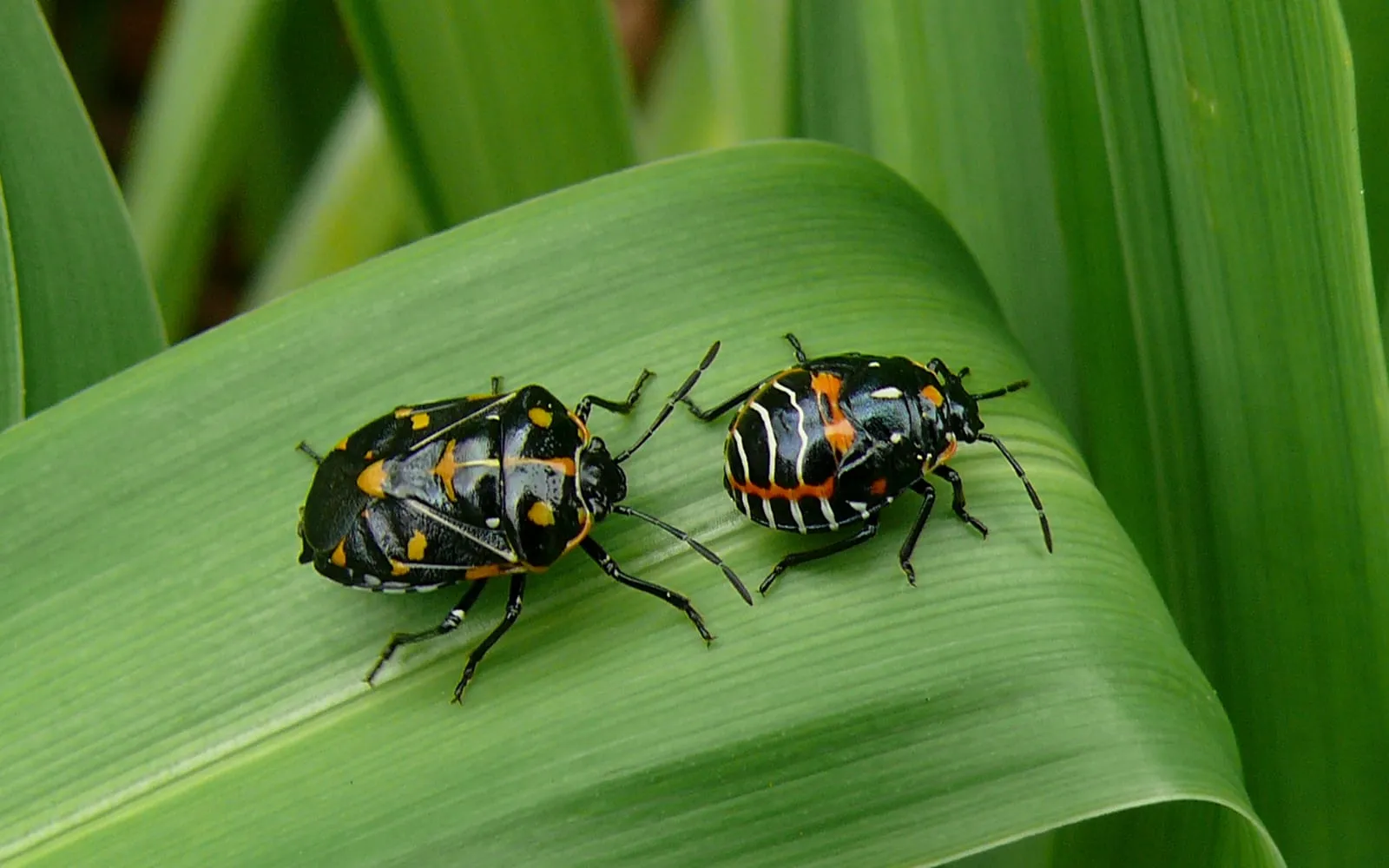
- Shield-shaped adult bugs about 9 to 12 mm long, boldly patterned in black, red, orange and yellow
- Clusters of barrel-shaped eggs banded in black and white, laid in double rows on the underside of leaves
- Wingless nymphs in similar bold colouring feeding in groups alongside the adults
- Flowering or bolted brassica plants nearby carrying especially heavy numbers, since the bug favours flowering tissue
Before you treat anything
None beyond ordinary garden hygiene. Damaged leaves are unattractive rather than unsafe, and the rest of a lightly affected plant crops normally.
What you are looking at
Pale, irregular blotches shaped roughly like a four-leaf clover spreading across cabbage, kale or broccoli leaves, where the bug has drained the tissue rather than chewed it, expanding into large dead patches on a heavy attack. Young seedlings take the worst of it and can wilt, blacken or die outright, since they have so little leaf tissue to lose before the damage becomes fatal.
The insect responsible is hard to mistake for anything else: a shield-shaped bug 9 to 12 mm long, boldly patterned in black, red, orange and yellow, with wingless nymphs carrying similarly bold colouring and feeding in groups alongside the adults. Eggs are laid in double rows on the leaf underside, barrel-shaped and banded in black and white, and are conspicuous once you know what to look for.
An American specialist
This bug feeds almost exclusively on plants in the brassica family and turns to anything else only when none is available. Native to Mexico and Central America, it has spread across most of the southern and central United States, where mild winters let adults survive the cold season and build up steadily from spring onward. It does not reliably overwinter north of roughly the latitude running through Philadelphia and northern California, so gardens further north see it as a seasonal visitor riding in on wind currents rather than a permanent resident, and pressure there varies considerably from year to year.
It has not established outside the Americas, so a similarly bold black, red and yellow shield bug found on brassicas elsewhere belongs to a different, unrelated species.
What to do about it
Check plants two or three times a week through the season and hand-pick adults, nymphs and egg clusters into soapy water; the bold colouring makes this more practical than it sounds.
Grow a border of mustard or rapeseed as a trap crop, since harlequin bugs consistently prefer it over the vegetable being harvested, and deal with the trap crop directly once it is carrying a useful share of the population.
Cover young transplants with row cover through the vulnerable seedling stage.
Clear brassica debris and weedy mustard relatives from the bed at the end of the season, in areas where the bug overwinters locally.
Choose fast-maturing varieties or plant early where seasonal pressure builds predictably through summer.
What it gets mistaken for
Capsid bugs are smaller, plain green and leave small ragged holes rather than the pale, cloverleaf-shaped blotches this species produces by draining tissue.
Cabbage root fly damage starts below ground with no insect visible on the leaves, the opposite pattern from harlequin bug, whose conspicuous adults and nymphs are the first thing most gardeners notice.
What to do, in order
Start here
Prevention, and the changes that stop the problem returning. Most of these pages should end at this tier.
- Clear brassica debris and weeds at the end of the season
- Adults overwinter in plant debris, weeds and mulch near where brassicas grew, in the parts of its range where winters allow it to survive at all. Removing spent plants and clearing weedy brassica relatives such as wild mustard reduces the population available to start next year.
- Grow a trap crop of mustard or rapeseed at the edge of the bed
- Harlequin bugs consistently prefer mustard and rapeseed over the actual crop when given a choice, and a border planting of either draws bugs away from cabbage, kale and the other crops being grown for harvest. The trap crop then needs its own attention, either treated directly or pulled and destroyed once it is carrying a useful share of the population, since leaving it standing breeds more bugs nearby.
- Delay planting or use fast-maturing varieties where pressure is high
- Numbers build through the season in most of the affected range, so a crop planted early and harvested before the bug's peak, or one chosen for a short time to maturity, spends less of its life exposed to heavy pressure.
Then reach for a barrier
Netting, hand removal and water. Nothing here harms anything except the target.
- Hand-pick adults, nymphs and egg clusters
- The bold black-and-white banded eggs are laid in visible clusters on the leaf underside and are easy to spot and crush once you know to look. Checking plants two or three times a week through the season and removing everything found, adults, nymphs and eggs alike, into soapy water keeps a garden-scale planting well ahead of the damage.
- Cover young transplants with row cover
- A floating cover over newly planted brassicas keeps bugs off during the seedling stage, when a plant has the least tissue to spare and is most easily set back or killed by feeding damage.
Then bring in the predators
Encourage what already lives in the garden, and buy predators in where the problem is under glass and nothing will arrive on its own.
- Encourage general predators
- Assassin bugs, spiders and some parasitoid flies take a share of eggs and nymphs, though none give control on the scale hand-picking and a trap crop achieve together on a garden planting.
Biological controls are live organisms and their sale and release are regulated country by country. An agent sold freely in one place may be unapproved in another, so buy from a licensed supplier where you live and never import or move one yourself.
Plants affected
Guides that name it among the problems to watch for. The list is the plants it is characteristic of rather than everything it will feed on.
A common vegetable pest
This is one of the pests that vegetable growers meet most often. See it alongside the others on the vegetable pests guide, grouped by how they feed and with prevention that works against most of them.
Common vegetable pests