
Edible
Cos Lettuce
Lactuca sativa var. longifolia
Also known as Romaine, Little Gem, Romaine lettuce
How to grow cos lettuce, Lactuca sativa var. longifolia. The upright heart that stands heat better than a butterhead, tying up for a tight head, and beating tipburn.
At a glance
- Difficulty
- Easy
- Water
- Every two or three days in dry weather
- Light
- Full sun, with light shade in midsummer
- Temperature
- 10-20 deg C. Germination fails above 25 deg C
- Hardiness
- USDA 4-9, RHS H4, hardy to -6 C
- Type
- Annual
- Height
- 20-35 cm
- Native to
- The eastern Mediterranean
- Best month
- May in the Northern Hemisphere, November in the Southern Hemisphere
Cos stands heat better than butterhead types and it shares the family's germination problem, since lettuce seed goes dormant above about 25 deg C soil. Sow in the evening, water the drill first, or chill the seed for a few days before sowing. Hardier cultivars overwinter under a cloche.
Hardiness zones describe winter cold alone. Summer heat, humidity, rainfall and the length of the growing season decide as much, so treat the range as the outer limit rather than as a recommendation.
Every month named in this guide is for the temperate Northern Hemisphere. If you garden in the Southern Hemisphere, shift each one by six months, so May becomes November. Closer to the equator the wet and dry seasons matter more than the calendar, and the shift stops being a useful guide.
Not known to be toxic
- Safe to eat
- The whole head, raw or grilled
Cos lettuce is a food crop and carries no toxicity concern. The RHS does not list Lactuca sativa as a potentially harmful garden plant and the ASPCA does not list it as toxic to cats and dogs. The milky latex that bleeds from a cut stem contains lactucin and lactucopicrin, sesquiterpene lactones that taste bitter and have a mild sedative reputation going back to Roman writers. The concentration rises sharply once the plant bolts, which is why a bolted lettuce is unpleasantly bitter, and it is a flavour problem rather than a safety one. Wild lettuce, Lactuca virosa, is a different species with far more of the same compounds and a genuine history of medicinal use, and it is not this plant. Lettuce is a nitrate accumulator, and leaves grown under glass in low winter light carry more than summer-grown ones, which concerns commercial growers rather than gardeners. Contact dermatitis from the latex occurs occasionally in people who handle large quantities.
Sources: RHS potentially harmful garden plants, ASPCA toxic and non-toxic plants
About
Cos is the lettuce to grow if you have ever been disappointed by a butterhead. The upright habit keeps the leaves off wet soil, the heavy midribs give it a crunch nothing else in a salad provides, and it stands summer heat considerably better than the soft-hearted types.
It also holds in the ground longer once ready, which is what makes it practical for a household rather than a market garden. A butterhead goes over within days of hearting. A cos waits a week or two.
Little Gem is a cos, despite being sold as though it were a category of its own. It is a small, fast, dense variety of the same thing, ready in eight weeks rather than twelve, and it is the most useful lettuce a small garden can grow.
Appearance and character
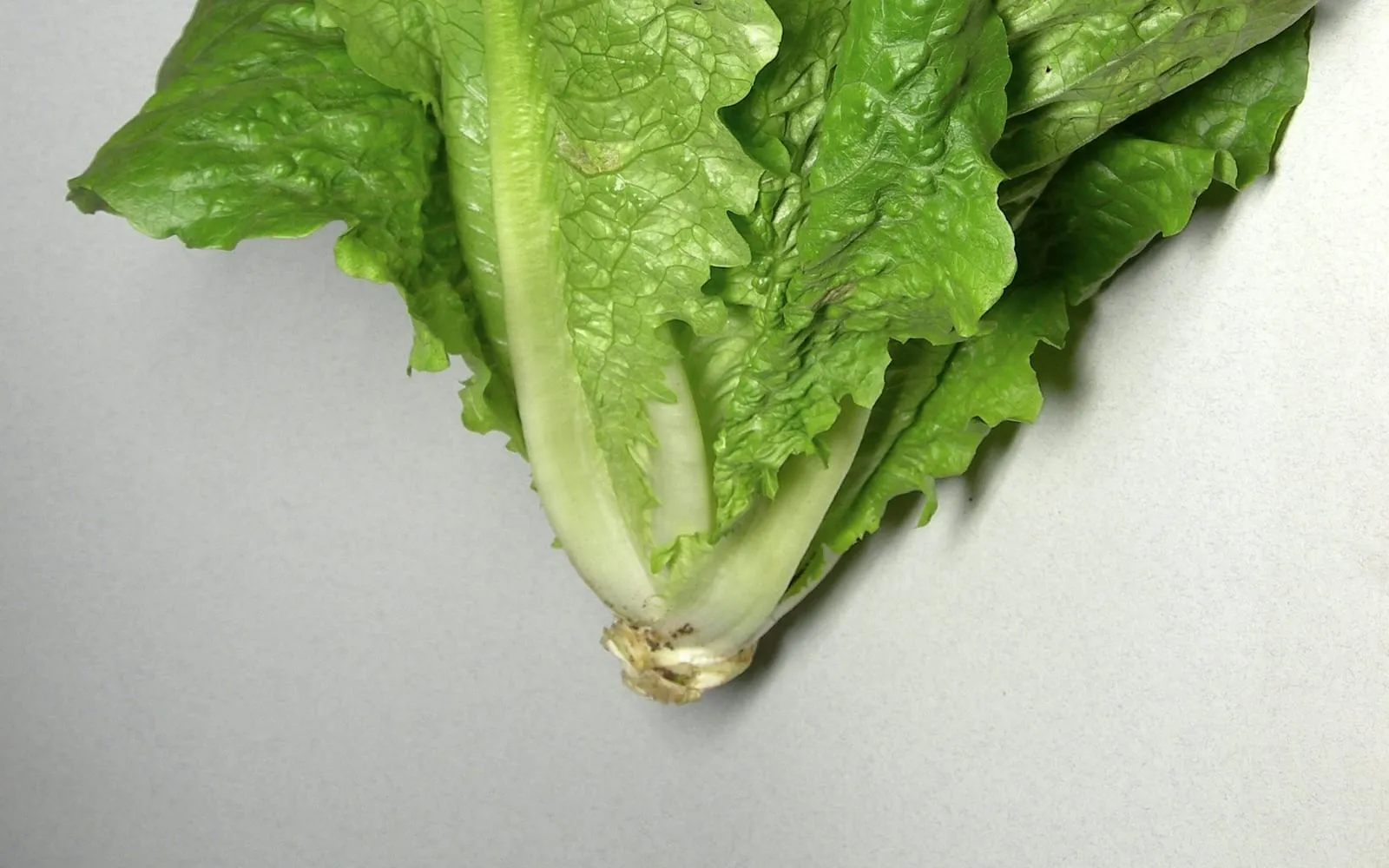
An upright elongated head, 20 to 35 cm tall, considerably taller than wide, with leaves overlapping rather than wrapping tightly.
Leaves are long, stiff and spoon-shaped, with a thick pale midrib running the full length and a puckered blade.
Colour runs from deep green outside to pale yellow-green at the heart, and the red varieties such as ‘Cimarron’ and ‘Rouge d’Hiver’ are bronze to deep red on the outer leaves.
The heart is the crop. Blanched by the leaves around it, it is pale, sweet, crisp and far less bitter than the outer leaves.
A bolting plant lengthens its central stem, the head loosens and opens, and the leaves turn bitter within days. A flowering stem to a metre follows, with small yellow dandelion-like flowers.
Where it is from
Cos lettuce descends from wild lettuce, Lactuca serriola, a prickly bitter weed of dry Mediterranean and Asian ground that still turns up on waste ground across Europe.
Egyptian tomb paintings from around 2500 BC show tall upright lettuces closely resembling cos, which makes this the oldest recognisable lettuce form.
The English name comes from the Greek island of Kos, and the French and American name romaine from Rome, and both refer to routes by which the plant travelled rather than to where it began.
Britain has grown it since the Middle Ages, and it became the standard salad lettuce of the eighteenth-century kitchen garden before the softer butterheads displaced it in Victorian times.
Little Gem was bred in the twentieth century and has been the best-selling British lettuce for decades.
How it grows
Sow direct or in modules. Cos transplants well from modules at three weeks, which is the better route where slugs are a problem.
Sow at 1 cm deep in rows 30 cm apart, then thin or plant to 30 cm apart for full-sized varieties and 20 cm for Little Gem types.
Germination fails above 25 deg C, which catches out midsummer sowings. Sow in the evening, water the drill first, and shade the row in a heatwave.
Sow every fortnight from March to August for a continuous supply.
Heads are ready in ten to twelve weeks for full-sized varieties and eight for Little Gem.
Tie the outer leaves loosely with soft string ten days before cutting if you want a tighter, paler heart. Most modern varieties heart adequately without it.
Cut the whole head at the base with a knife. Some varieties resprout from the stump and give a second smaller picking.
Through the seasons
Early spring takes the first sowings under fleece or in modules from March, planted out in April.
Late spring and summer carry successional sowings every fortnight. Water steadily and provide light shade for July and August sowings, both to help germination and to slow bolting.
Late summer takes the final outdoor sowing in August for an autumn crop.
Autumn brings that crop in from September to November. A cloche keeps it clean and extends cutting.
Winter is possible under cover. Sow a hardy variety such as ‘Winter Density’ in September under a cloche or in a tunnel for a spring cut.
Care difficulty
Easy, with slugs as the perennial nuisance.
Slugs are the whole difficulty for most gardeners. A row of lettuce seedlings is the single most attractive thing on an allotment on a damp night. Module-raising and planting out at a decent size is the most effective answer, along with morning watering and evening patrols.
Bolting follows heat and drought. Steady watering, light shade in midsummer and a bolt-resistant variety all help.
Germination failure in hot weather is easily solved and easily overlooked. Sow in the evening into a watered drill.
Tipburn browns the leaf edges after irregular watering.
Nothing else needs much attention. The crop is fast and forgiving.
Watering
Water every two or three days in dry weather. Lettuce is mostly water and grows too fast to draw on reserves.
Keep the top 20 cm evenly damp. Irregular watering causes both tipburn and bolting.
Water in the morning so the leaves dry before dusk. Evening watering leaves wet foliage overnight and invites slugs and grey mould.
Water at the base rather than over the head, particularly once the plants start to heart.
Mulch after planting to hold moisture and keep the roots cool.
Container growing works well in a pot 20 cm deep, watered daily in summer.
Warning signs, diseases and pests
Slugs and snails shred the leaves and graze seedlings off at the base. Water in the morning, keep the surrounding ground clear, raise plants in modules and plant out at a decent size, and patrol on damp evenings.
Lettuce root aphid wilts plants in dry weather and shows as white waxy deposits on the roots when lifted. Rotate on three years and grow resistant varieties where it is established.
Downy mildew brings pale yellow patches above and grey growth beneath in a wet autumn. Space at 30 cm, water at the base, and remove affected leaves.
Grey mould rots the base of the plant in wet weather. Space widely and avoid planting too deep, since a buried stem is what starts it.
Bolting lengthens the stem and turns the leaves bitter. Water steadily and give light shade in midsummer.
Tipburn browns the leaf margins and is a watering fault rather than a disease.
Cutworms sever seedlings at ground level and are found just below the surface.
Growing environment
Full sun for spring and autumn crops, and light shade in midsummer, which slows bolting and helps germination.
Fertile, moisture-retentive but free-draining soil. Lettuce dislikes both drought and waterlogging.
Neutral soil, pH 6.5 to 7.
Space at 30 cm for full-sized varieties and 20 cm for Little Gem types.
A cloche or low tunnel extends the season at both ends and keeps autumn crops clean.
Rotate on three years with endive and chicory, which share the family and the root aphid.
Feeding
Work garden compost into the bed before sowing.
Feed with a balanced liquid feed fortnightly on poor or sandy soil. On a bed in good heart it is unnecessary.
Avoid heavy nitrogen, which gives soft leaves that rot and attract slugs.
Never use fresh manure.
Container-grown plants in fresh compost need no feed for the eight to ten weeks they occupy the pot.
Troubleshooting
Seedlings vanished overnight. Slugs. Raise plants in modules and plant out at a decent size, water in the morning, and patrol on damp evenings.
Nothing germinated in July. Lettuce seed goes dormant above 25 deg C. Sow in the evening into a watered drill and shade the row.
It bolted before hearting. Heat and drought. Water every two or three days, give light shade in midsummer, and choose a bolt-resistant variety.
Brown edges on the leaves. Tipburn, from irregular watering. Water steadily.
The plant wilts in sun and never recovers. Lettuce root aphid. Lift one and look for white waxy deposits on the roots. Rotate and grow resistant varieties.
Loose open heads. Crowding, shade or a plant on its way to bolting. Space at 30 cm and give it full sun.
The leaves taste bitter. The plant has started to bolt. The latex that carries the bitterness increases sharply at that point. Cut earlier and sow successionally.
Is Little Gem a cos? Yes. It is a small dense fast variety of cos, ready in around eight weeks, and it is the most practical lettuce for a small garden.
Cos Lettuce problem guides
Not sure what is wrong? See the common vegetable pests guide.