
Edible
American Persimmon
Diospyros virginiana
Also known as Eastern Persimmon
How to grow American persimmon, Diospyros virginiana. Why a female tree needs a male nearby to fruit, waiting for it to soften fully before the tannins stop puckering the mouth, and the bezoar risk that means fencing grazing animals away from windfalls.
At a glance
- Difficulty
- Moderate
- Water
- Regularly for the first two to three years while establishing
- Light
- Full sun for the best fruiting
- Temperature
- Hardy; needs a long, warm growing season to ripen fruit fully
- Hardiness
- USDA 4-9, RHS H6, hardy to -30 C
- Type
- Deciduous tree, living well over a century
- Height
- Up to 20 m, though usually smaller in cultivation
- Native to
- eastern North America
One of the hardiest fruiting trees widely grown, tolerating winters far more severe than most orchard fruit survives. Cold is rarely the limiting factor. Ripening the fruit fully, so that its intense natural astringency has broken down, needs a long, warm growing season and enough autumn heat to let the crop soften on the tree rather than being cut short by an early hard frost.
Hardiness zones describe winter cold alone. Summer heat, humidity, rainfall and the length of the growing season decide as much, so treat the range as the outer limit rather than as a recommendation.
Edible, with limits
- Safe to eat
- The fully ripe fruit
- Do not eat
- Unripe or fallen fruit eaten in quantity, particularly by grazing animals
- Harm from
- Eating it
- Affects
- Horses
The ripe fruit is a well-regarded wild and cultivated food and carries no toxin. The risk with this species is mechanical rather than chemical, and it is well documented in horses and cattle rather than in typical garden pets. Unripe persimmons are intensely astringent from tannins, and a grazing animal that eats a large quantity of fallen fruit, particularly windfalls under a heavily fruiting tree, can form a phytobezoar: a dense, fibrous mass of tannin-bound fruit pulp and seeds that lodges in the stomach and fails to pass, causing colic and, in serious cases, a life- threatening gut obstruction requiring veterinary or surgical treatment. This is a recognised risk on properties where horses or cattle graze under or near a fruiting persimmon tree, particularly where windfalls are left to accumulate, and it is worth fencing stock away from a heavily dropping tree in autumn or clearing fallen fruit regularly. It is not a concern for people eating the ripe fruit normally, nor is it associated with typical cat and dog behaviour around a garden tree.
Sources: RHS potentially harmful garden plants, ASPCA toxic and non-toxic plants
About
American persimmon is a hardy fruit tree from eastern North America. It survives winters that would kill many orchard trees, but the fruit needs a long, warm season to ripen properly.
The fruit is edible only once it is fully soft. Firm or underripe fruit is strongly astringent because of its tannins, while fully ripe fruit becomes sweet and rich. A female tree also needs a male tree nearby for reliable pollination and fruit.
Appearance and character
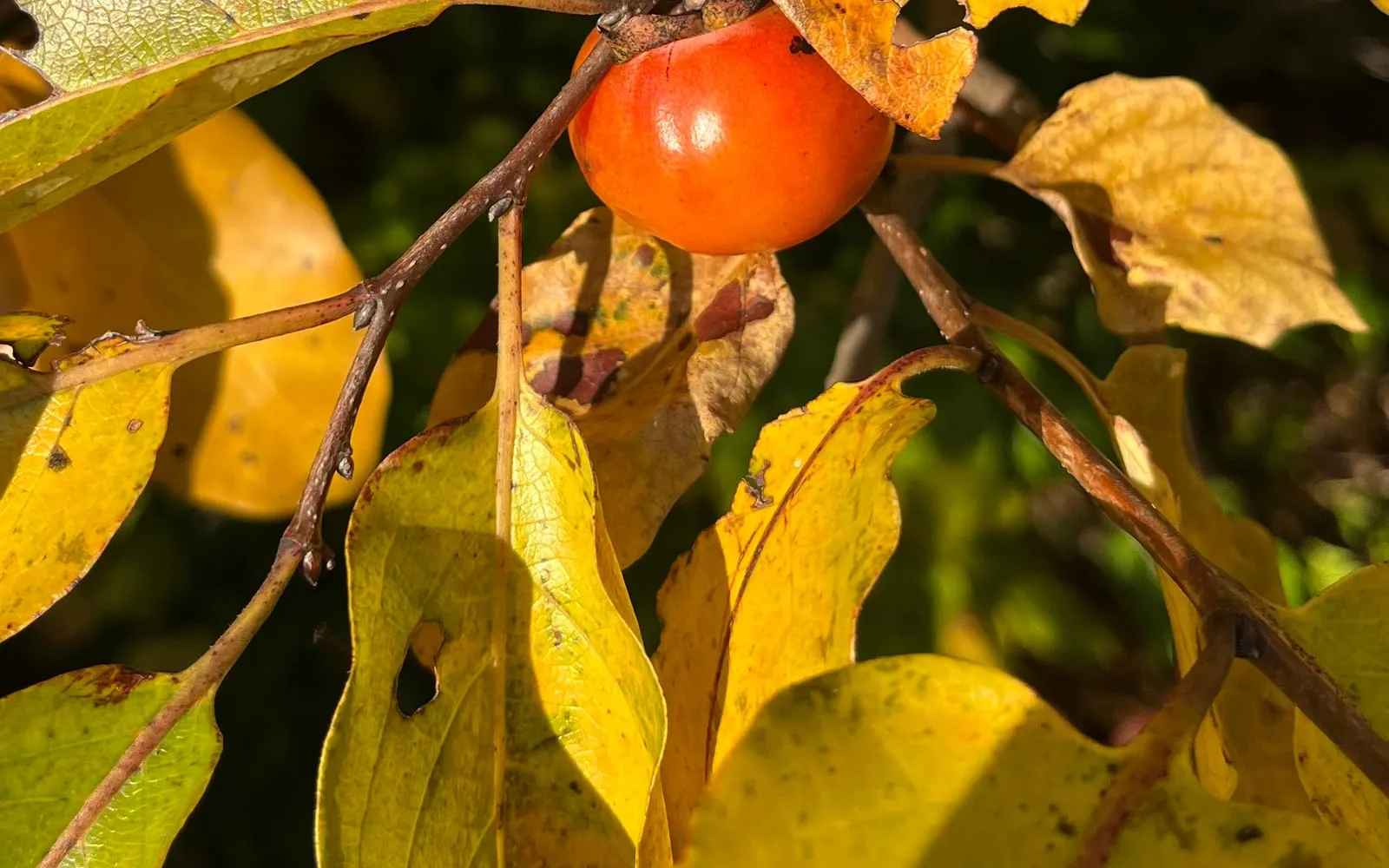
Leaves are oval to elliptic, glossy dark green, 7 to 14 cm long, with a pointed tip and smooth margins, turning yellow in autumn before falling.
Bark is one of the tree’s most distinctive features, thick, dark grey to black, and broken into small, blocky, almost square plates, a texture unlike most other trees grown in a temperate garden and a useful identification feature even without leaves or fruit present.
Fruit is small, round and orange to purplish when ripe, 2 to 4 cm across, intensely astringent while firm and green, and transforming as it softens into a sweet, rich pulp around several large, flattened seeds.
The species is dioecious, meaning individual trees are either male or female, so a female tree needs a male tree nearby for pollination and fruiting, a detail that catches out gardeners used to self-fertile fruit trees.
Where it is from
Diospyros virginiana is native to eastern North America, from the southern Great Lakes down through the southeastern United States, growing in a wide range of woodland and open habitats and tolerating both drought and poor soil better than most fruit trees.
It has a long history of use by Indigenous peoples across its range, both fresh once ripe and dried or preserved for winter, and early European settlers adopted it quickly once they learned to wait for full ripeness.
How it grows
Plant in almost any reasonable soil; this species tolerates poor, dry and heavy clay soils considerably better than most fruit trees, though it still fruits best given decent fertility and consistent moisture.
Plant at least two trees if you want fruit, since the species is dioecious and a lone female tree, or a lone male, produces no crop at all. Some named cultivars are self-fertile or produce fruit without pollination, so check before assuming you need a separate pollinator.
Choose the final position with care. The tree develops a long taproot and does not transplant well once established, so a young, container- grown or small bare-root tree settles in far more successfully than an attempt to move a larger, more established specimen later.
It suckers readily from the roots, particularly if the roots are damaged or disturbed by digging nearby, so site it away from a vegetable bed or lawn edge where suckers would be unwelcome, or be prepared to remove them as they appear.
Prune minimally, mainly to remove dead, damaged or crossing wood in winter dormancy, since the tree fruits well with little formal training and heavy pruning can reduce the following year’s crop.
Through the seasons
Spring brings small, inconspicuous flowers, easy to miss, followed by the start of fruit development on pollinated female trees.
Summer is quiet growth. Water a young, still-establishing tree during any dry spell; an older, established tree is notably drought tolerant.
Autumn brings the fruit to ripeness, often helped along by the first light frosts, which soften the pulp and reduce astringency further. Harvest as fruit softens, or let it drop and collect it from the ground.
Winter is dormant. The tree is fully hardy and needs no protection in a suitable climate; this is also the season for any necessary pruning.
Care difficulty
Moderate, mostly because of two details that catch newcomers out rather than any ongoing demands. The tree needs a male and female present to fruit unless a self-fertile cultivar is chosen, and the fruit must be allowed to soften fully before eating, since picking and eating it while still firm is an unpleasant experience that puts many first-time growers off the crop entirely. Beyond those two points, the tree is tolerant, hardy and largely undemanding.
Watering
Water regularly through the first two to three growing seasons while the taproot establishes, a deep soak rather than frequent light watering.
Once established, the tree is notably drought tolerant and generally needs no supplementary watering except in a prolonged, severe dry spell, particularly one that coincides with fruit development in late summer and autumn.
Warning signs, diseases and pests
Persimmon wilt is a serious vascular disease affecting trees in parts of the species’ native range, causing sudden wilting and dieback of branches or the whole tree, with staining visible in the wood beneath the bark. There is no cure once a tree is infected, and severely affected trees are usually removed to reduce the risk to others nearby.
Fruit that drops green and unripe in quantity is usually a stress response, often to a dry spell during fruit development, rather than a disease. Consistent watering during summer reduces the problem.
Deer and other wildlife are drawn strongly to the ripe, fallen fruit, which can mean most of a crop disappears overnight in an area with a significant deer population; fencing or netting individual low branches is the practical response where this matters.
Growing environment
Full sun gives the best fruiting, though the tree tolerates a good amount of shade without dying back, fruiting less rather than failing outright.
Adaptable to a wide range of soils, from poor and dry to heavy clay, though it performs best given reasonable fertility and consistent moisture through the growing season.
A long, warm growing season matters more than winter cold for a good crop, since the tree’s exceptional hardiness is rarely the limiting factor; what limits fruiting in a cooler or shorter-season climate is whether the fruit has time to ripen fully before frost cuts the season short.
Where livestock graze, fence stock away from a fruiting tree or clear fallen fruit regularly, given the documented risk of bezoar formation in horses and cattle that eat large quantities of windfalls.
Feeding
A light application of balanced fertiliser in spring is enough where soil is poor, but on reasonable ground this species often needs no supplementary feeding at all, reflecting its general tolerance of low-fertility conditions in the wild.
A mulch of well-rotted compost applied in spring, kept clear of the trunk, supplies adequate general fertility for most soils.
Avoid heavy nitrogen feeding, which encourages leafy growth at the expense of fruit and can also increase suckering from the roots.
Troubleshooting
The fruit was unbearably bitter and puckering. It was not ripe yet. American persimmon must soften almost to the point of feeling overripe before the tannins break down enough to eat; a fruit that is firm, however brightly coloured, will always taste this way. Wait until it is soft to a gentle squeeze, or let it drop naturally.
My tree has never fruited. Check whether you have both a male and a female tree, or a confirmed self-fertile cultivar, since a lone tree of the wrong sex, or a lone female with no pollinator nearby, produces no crop regardless of how well it is otherwise growing.
Suckers keep appearing some distance from the trunk. This is normal root suckering, more likely where roots have been disturbed nearby. Remove suckers as they appear by pulling or cutting them at ground level, and avoid digging close to the tree’s root zone.
I have horses or cattle near a fruiting tree. Is that a problem? Potentially, yes. Fence grazing animals away from a heavily fruiting tree, or clear fallen fruit regularly, since eating large quantities of windfalls is a documented cause of gut-blocking bezoars in horses and cattle.
Can I transplant an established tree to a better spot? It is best avoided. The long taproot makes established trees difficult to move successfully; choose the final position carefully when planting a young tree instead.