
Edible
Lovage
Levisticum officinale
Also known as Garden lovage, Love parsley
How to grow lovage, Levisticum officinale. The two-metre celery-flavoured perennial, cutting it back for a second flush of leaf, and how little of it a recipe needs.
At a glance
- Difficulty
- Easy
- Water
- Weekly in dry weather, since the leaves are large and thirsty
- Light
- Full sun to part shade
- Temperature
- Fully hardy, to about -25 deg C
- Hardiness
- USDA 4-8, RHS H6, hardy to -25 C
- Type
- Hardy herbaceous perennial, long-lived
- Height
- 100-200 cm, occasionally taller
- Native to
- western Asia
- Best month
- April and May in the Northern Hemisphere, October and November in the Southern Hemisphere
Hardy well beyond any use for it and large enough to need planning for, since a mature clump reaches two metres and shades everything behind it. Cold does not trouble it at all. Cutting the whole plant down in midsummer brings a second flush of young leaf.
Hardiness zones describe winter cold alone. Summer heat, humidity, rainfall and the length of the growing season decide as much, so treat the range as the outer limit rather than as a recommendation.
Every month named in this guide is for the temperate Northern Hemisphere. If you garden in the Southern Hemisphere, shift each one by six months, so April becomes October. Closer to the equator the wet and dry seasons matter more than the calendar, and the shift stops being a useful guide.
Skin irritant
- Safe to eat
- Leaves, stems, roots and seeds
- Do not eat
- The sap on skin in strong sunlight
- Harm from
- Handling it
- Affects
- People
Lovage is a culinary herb and every part of it is eaten. It does not appear on the RHS list of potentially harmful garden plants and the ASPCA holds no entry for it. The caution is the one the whole carrot family carries. Lovage sap contains furanocoumarins, and skin contact followed by strong sunlight can produce a phototoxic rash in susceptible people. Cutting down a two-metre plant on a hot day is how most people meet that. Wear long sleeves. Herbal references also advise against medicinal doses of lovage root in pregnancy and for anyone with kidney disease, which describes concentrated preparations rather than leaves in a soup. Anyone identifying an umbellifer in the wild should read the hemlock and hemlock water-dropwort guides first, because the family contains the two most poisonous plants in Britain.
Sources: RHS potentially harmful garden plants, ASPCA toxic and non-toxic plants
About
Lovage tastes of celery turned up loud. One leaf flavours a pan of soup, and three leaves ruin it, so pick lightly when planting a herb that reaches two metres.
It is a hardy perennial that lives for decades, comes back from the crown every March and needs nothing beyond a spring mulch and enough room. In a temperate garden it is one of the earliest things to pick, with usable leaf in April, weeks before most herbs have started.
Every part is edible. The leaves go in soups and stocks, the hollow stems can be candied like angelica or used as a straw in a Bloody Mary, the seeds work like celery seed, and the root is eaten as a vegetable in parts of central Europe.
Appearance and character
A large upright clump, 1 to 2 m in leaf and taller in flower, spreading to about a metre across.
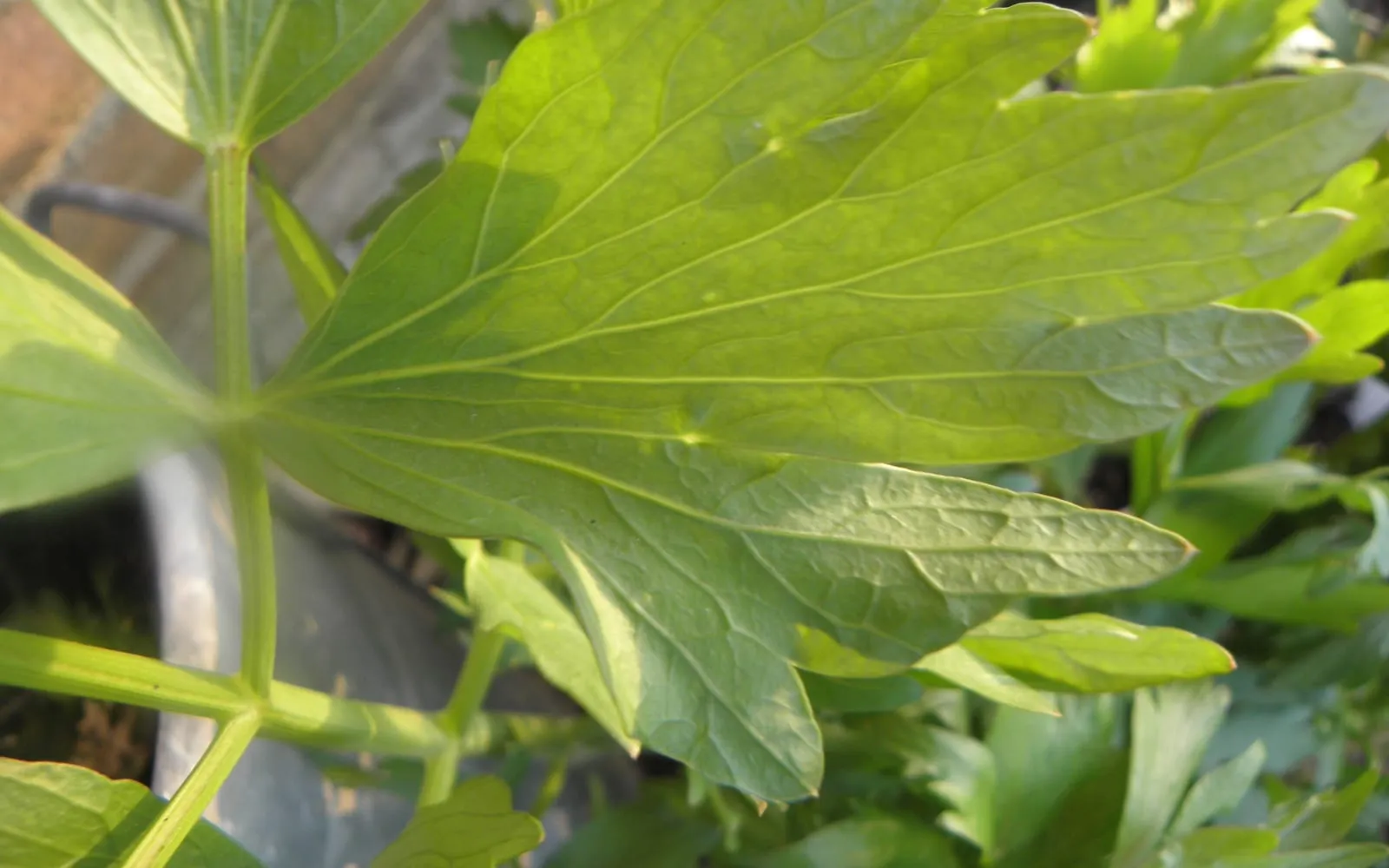
Leaves are glossy, dark green and divided into broad wedge-shaped leaflets with toothed tips, looking like an oversized flat-leaved celery. They come up in March and are at their best before the plant flowers.
Flowers are small and greenish-yellow, carried in flat-topped umbels on thick hollow stems in June and July.
Seeds are ridged, brown and strongly aromatic, ripening in August. They keep the celery flavour in concentrated form.
The scent is unmistakable. Crush a leaf and it is celery, stronger and sweeter than celery itself, with a faint anise note behind it.
The root is thick, fleshy and branched, and an established plant is difficult to move because of it.
Where it is from
Lovage is native to western Asia, probably Iran and Afghanistan, and it has been grown across Europe for so long that its wild origin is argued over.
The Romans grew it and Apicius uses it constantly. Roman cooking leaned on it in the way modern cooking leans on stock cubes, and the seed was traded across the empire.
Monastery gardens kept it through the medieval period. Charlemagne’s ninth century list of plants to be grown on imperial estates includes it, which is about as early as European horticultural records get.
Britain grew it heavily until the eighteenth century and then largely dropped it, partly because celery itself became available and easier to use in quantity.
Central and eastern Europe never let it go. Lovage is standard in Czech, Polish, Romanian and German cooking, and Maggi seasoning tastes enough like it that the plant is called Maggi herb in German-speaking countries, despite the sauce containing none of it.
How it grows
Sow fresh seed in autumn or early spring. Lovage seed loses viability fast, so a packet more than a year old is often a waste of a season.
Sow in modules or a seedbed and cover with 5 mm of compost. Germination takes two to three weeks and is better after a spell of cold, which is why autumn sowing outdoors works well.
Alternatively divide an established clump in March. Each piece needs a bud and a length of root.
Plant out at 60 cm, and give it more room than that looks like it needs. A mature plant occupies a square metre.
Choose deep, moist, fertile ground in sun or part shade. Lovage is one of the few Mediterranean-adjacent herbs that wants a rich bed rather than a poor one.
Cut the whole plant down to 10 cm in June, as the flower stems extend, if you want leaf rather than seed. It regrows within a month and the second flush is more tender.
Let one stem flower and seed if you want seed for the kitchen or new plants. Remove the rest, since the plant seeds freely.
Mulch heavily each March. Nothing else is needed for the next twenty years.
Through the seasons
Winter is bare ground. The whole plant dies back and there is nothing to see, which surprises people who have watched it reach two metres in July.
Spring brings shoots in March, earlier than almost anything else in the herb garden. Mulch now, and pick the first leaves in April.
Early summer is the main harvest, and the flower stems start to extend in late May. Cut the plant to the ground in June for a second flush of leaf.
Midsummer is flowering and the plant is at full height. Bees, hoverflies and parasitic wasps all work the umbels.
Late summer ripens the seed. Cut the heads before they shatter if you want to collect it.
Autumn ends the season. Cut the dead growth down in October or leave it for winter structure and clear it in March.
Care difficulty
Easy, and the difficulty most people report is a matter of scale rather than culture.
The plant is much larger than a herb-bed slot allows for. Two metres of lovage in the middle of a small herb garden shades everything behind it, and moving an established plant is hard work because of the deep fleshy root. Site it at the back of a border or in a vegetable plot from the start.
Old seed is the other common failure. Lovage seed does not keep, and a poor germination rate usually means the packet is stale rather than that anything was done wrong.
It has few pests. Leaf miner and celery leaf spot both disfigure the leaves and neither threatens the plant.
Beyond mulching and cutting it back in June, there is nothing to do. It is one of the longest-lived and least demanding plants in this collection.
Watering
Water new plants weekly through their first summer while the root establishes.
Water an established clump in a dry spell. Large soft leaves lose a great deal of water and the plant wilts dramatically before it suffers any real harm.
Give a thorough soak over the whole root spread rather than a light sprinkle. The roots go deep and shallow watering does little.
Mulch in March with 8 cm of compost or well-rotted manure over the root area, kept off the crown. That holds more water than any watering can.
A container is a poor home for lovage and will need daily watering in July. Use the largest pot you can and expect a smaller plant.
Water at the base rather than over the leaves, which reduces leaf spot.
Warning signs, diseases and pests
Celery leaf spot browns the leaflets from the tip and can defoliate a plant in a wet summer. Remove affected leaves, cut the plant back for a clean flush and avoid overhead watering.
Leaf miner tunnels pale winding trails through the leaf. Pick off the affected leaves. The damage is cosmetic on a plant this size.
Aphids build dense colonies on the flowering stems in June. Cutting the plant down removes them along with the flowers.
Slugs graze the first shoots in March and can check a young plant badly.
Leaves that turn coarse and bitter mean the plant has flowered. Cut it to the ground and take the regrowth.
Yellowing lower leaves through July are the plant shedding old growth, which is normal.
A plant that dwindles after several years in the same spot usually wants feeding and a mulch rather than moving.
Growing environment
Sun or part shade. Lovage takes more shade than most herbs and the leaf is better in a spot that gets some relief in the afternoon.
Deep, moisture-retentive, fertile soil. This is one of the few herbs that rewards a rich bed.
pH from 6 to 7.5 suits it and it grows on most temperate soil.
Give it space. The back of a border, a corner of the vegetable plot or a bed of its own all work. A 40 cm gap in a herb bed does not.
Shelter helps in flower, because a two-metre stem in wind is heavy, though the stems are stout enough that staking is rarely needed.
The flowers are excellent for beneficial insects, particularly hoverflies and the small parasitic wasps that go after aphids, so letting one stem flower has a use beyond seed.
Feeding
Feed it, which sets lovage apart from most of the herbs here. A big leafy perennial cropped hard needs the nutrition.
Mulch with well-rotted manure or compost in March, spread over the root spread and kept clear of the crown.
A liquid feed after the June cut-back speeds the second flush of leaf, and a general balanced feed is right for that.
Do not overdo nitrogen. Soft growth attracts aphids and the celery flavour thins.
Feed a container plant fortnightly through summer, since a pot of lovage exhausts itself fast.
Divide and replant into refreshed ground every five or six years if the clump weakens, though many plants run for decades without it.
Troubleshooting
Everything I cook with it tastes of celery. Use less. One leaf is enough for a large pan, and lovage overwhelms a dish faster than any other soft herb.
Nothing germinated. Old seed. Lovage seed does not keep well. Buy fresh, or sow in autumn straight after collecting it.
It has taken over the herb bed. It reaches two metres. Move it to the back of a border in March while it is dormant, taking as much root as you can.
The leaves went brown at the tips. Celery leaf spot in a wet summer. Cut the plant to the ground and take the clean regrowth.
It flowered and the leaves went tough. Normal. Cut it down in June before it flowers if you want leaf through the summer.
Seedlings everywhere. Cut the seed heads off in August. One head produces a great many viable seeds.
Can I eat the root? Yes. It is used as a vegetable in central Europe, dug in autumn from a plant at least two years old. Digging it ends that plant.