
Edible
Black-Eyed Pea
Vigna unguiculata
Also known as Black-eyed bean, Cowpea, Yardlong bean, Niebe
How to grow black-eyed peas, Vigna unguiculata. The heat-loving bean that fixes nitrogen on poor soil, picking young pods, and drying the seed.
At a glance
- Difficulty
- Moderate
- Water
- Weekly, and more at flowering
- Light
- Full sun under glass or in the warmest sheltered position
- Temperature
- 20-30 deg C. Growth stops below 15 deg C
- Hardiness
- USDA 10-11, RHS H1b, hardy to 5 C
- Type
- Tender annual
- Height
- 60 cm as a bush, 2-3 m as a climber
- Native to
- West Africa
- Best month
- May in the Northern Hemisphere, November in the Southern Hemisphere
Heat and drought are taken better than by any other common bean, and it crops on poor sandy ground that would starve a french bean. Nothing below 15 deg C. Many traditional cultivars are short-day and flower only as autumn comes on, while the modern day-neutral ones crop on a summer season anywhere warm enough.
Hardiness zones describe winter cold alone. Summer heat, humidity, rainfall and the length of the growing season decide as much, so treat the range as the outer limit rather than as a recommendation.
Every month named in this guide is for the temperate Northern Hemisphere. If you garden in the Southern Hemisphere, shift each one by six months, so May becomes November. Closer to the equator the wet and dry seasons matter more than the calendar, and the shift stops being a useful guide.
Edible, with limits
- Safe to eat
- The young pods, the fresh shelled seeds, the dried seeds and the leaves
- Harm from
- Eating it
- Affects
- People
Black-eyed peas are a staple food across Africa, India and the American south, and they are safe when cooked. The caution is the one that applies to all Phaseolus and Vigna beans. Dried seeds contain lectins, chiefly phytohaemagglutinin, which cause vomiting and diarrhoea if the beans are undercooked. Black-eyed peas contain far less of it than red kidney beans, which is why they are among the few dried beans that do not require a long soak, and they still need proper boiling rather than a gentle simmer. Soak dried beans for a few hours and boil for at least ten minutes before reducing the heat. Fresh green pods and freshly shelled seeds are cooked in the normal way and present no issue. Neither the RHS nor the ASPCA lists Vigna unguiculata among harmful plants. The leaves are eaten as a cooked green across West Africa, and a crop in a cool climate often produces more leaf than seed.
Sources: RHS potentially harmful garden plants, ASPCA toxic and non-toxic plants
About
The black-eyed pea is neither a pea nor closely related to the French and runner beans in the rest of these guides. It is a Vigna, an African crop, and the difference shows in what it wants. Heat, sun, and poor dry soil that would disappoint almost anything else.
That drought and poverty tolerance is why it feeds so much of the semi-arid tropics. It fixes its own nitrogen, roots deeply, and crops on sand where a French bean would fail.
In a cool summer it is a greenhouse or warm-corner crop. Sown in May and grown under cover it gives a good crop of young pods and fresh shelled beans by September. A dry crop needs a hot summer and a sheltered site, and even then it is a close run thing.
The yardlong bean sold in Asian greengrocers is the same species, subspecies sesquipedalis, grown for pods up to a metre long.
Appearance and character
Either a compact bush 60 cm tall or a twining climber to 2 or 3 m, depending on variety.
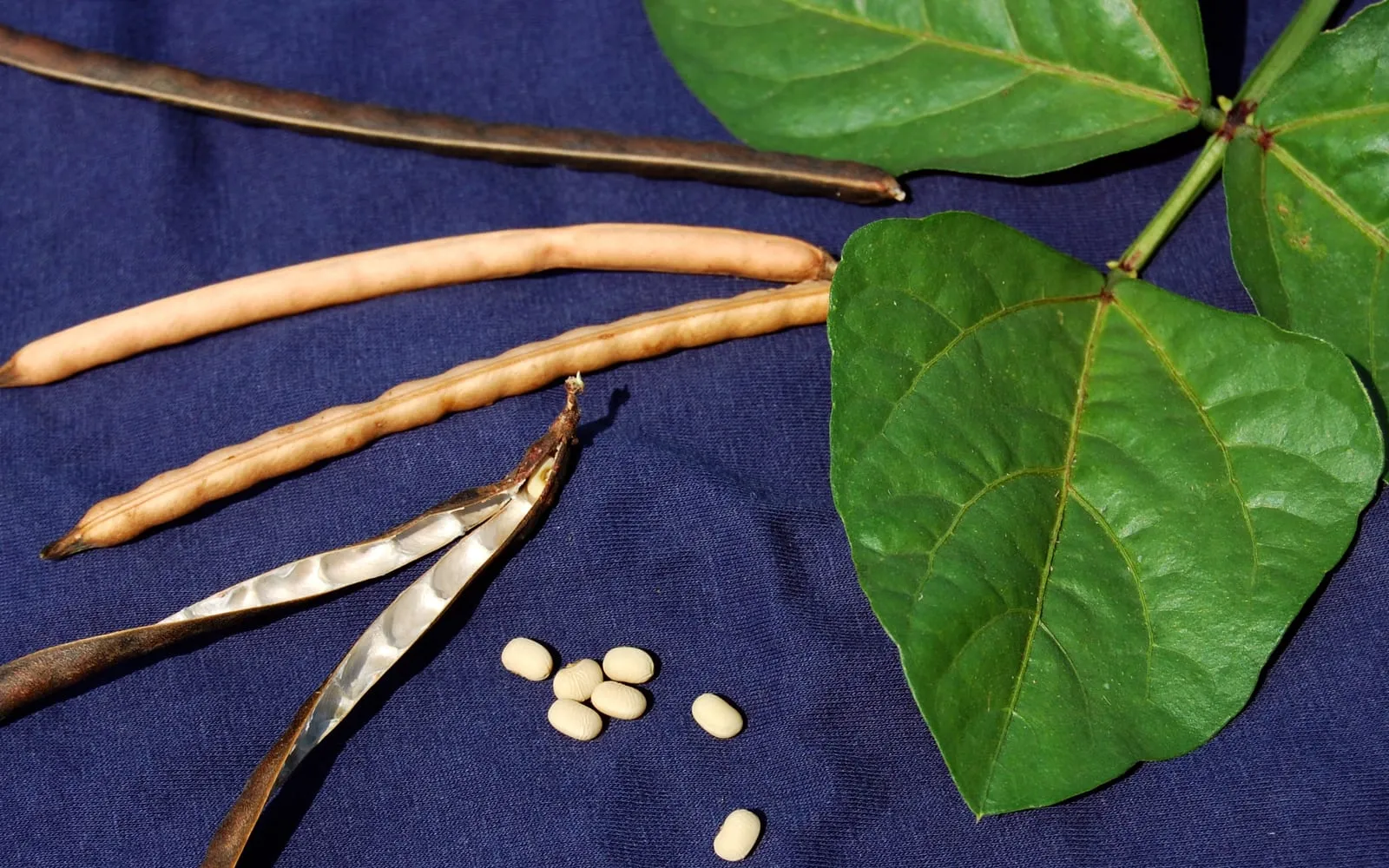
Leaves are trifoliate, with three smooth pointed leaflets that are larger and glossier than a French bean’s, in a fresh mid-green.
Flowers are showy for a bean, 2 to 3 cm across, in white, cream, pale yellow or lilac, held in pairs on long stalks that stand clear of the foliage.
Pods are slender and cylindrical, 10 to 25 cm in the ordinary types and up to a metre in the yardlong forms, hanging in pairs.
Seeds are kidney-shaped and cream with the characteristic black or brown eye around the hilum, which is the scar where the seed joined the pod.
Flavour cooked is earthy and slightly nutty, and the young pods eat much like a French bean.
Where it is from
Vigna unguiculata was domesticated in West Africa, most probably in the region of modern Nigeria and Niger, at least three thousand years ago. Wild relatives still grow across sub-Saharan Africa.
It spread east to India early, where a distinct group of forms developed, and the yardlong bean was selected in South East Asia.
The transatlantic slave trade carried it to the Americas in the seventeenth century, and it became a staple of the American south. The tradition of eating black-eyed peas at New Year for luck comes directly from that history.
Northern Europe has never grown it as a field crop and has always imported the dried seed.
It remains one of the most important legumes in Africa, valued as much for its drought tolerance and its nitrogen fixing as for the seed.
How it grows
Sow indoors in May at 18 to 20 deg C, one seed to a 9 cm pot. Germination takes five to ten days in warmth and fails in cold wet compost.
Plant out after the last frost in late May or June, into a greenhouse border, a polytunnel or the warmest sheltered outdoor bed.
Space bush varieties at 20 cm and climbing ones at 15 cm along a support.
Give climbers a structure to 2.5 m. Canes, netting or strings all work.
Pick young pods from July or August, at 15 cm and while still slender, and keep picking. Regular picking is what keeps the plant producing.
For fresh shelled beans, leave the pods until they are plump and the seeds fill them, then shell and cook.
For dried beans, leave the pods until they are brown and papery, then shell and dry the seeds thoroughly indoors before storing.
Through the seasons
Late spring is sowing, indoors in May at 18 to 20 deg C.
Early summer is planting out, from late May, with supports already in place. Water in and mulch.
Summer is growth and flowering. Water weekly and more at flowering, since dry roots at that point cause the flowers to drop.
Late summer is the harvest of young pods, from July or August. Pick every few days.
Autumn finishes the crop with fresh shelled beans in September, and dried ones in a good year. Frost ends it.
Care difficulty
Moderate, and the difficulty is heat rather than technique.
Warmth is the requirement. Growth stops below 15 deg C, which puts this crop under glass where summers are cool.
Poor soil is an advantage rather than a problem, and this catches people out. A rich bed gives a large leafy plant and few pods.
Blossom drop follows cold nights or dry roots at flowering.
Picking regularly is what keeps a bean plant producing, and it applies here as to every other bean.
Ripening a dry crop is the ambitious end of what is achievable in a cool climate, and young pods are the realistic target.
Watering
Water weekly, and increase at flowering and pod fill.
The plant is drought-tolerant and produces less when dry, so watering is about yield rather than survival.
Dry roots at flowering cause the flowers to drop without setting pods.
Water at the base rather than over the foliage.
Mulch after planting to hold moisture.
Reduce watering once the pods are filling if you want a dry crop.
Container growing works in a pot of 30 litres or more for a bush variety.
Warning signs, diseases and pests
Blackfly colonise the growing tips from June. Pinch out the tips once the plant has reached its support and wash the colonies off.
Slugs graze young plants. Protect transplants for the first fortnight.
Red spider mite bronzes and speckles the leaves in dry glasshouse heat. Damp down daily and use Phytoseiulus predators.
Blossom drop follows cold nights or dry roots.
Root rot follows waterlogging on heavy ground. This plant wants light, free-draining soil.
An enormous leafy plant with few pods means the ground was too rich or nitrogen was applied.
Pods failing to ripen dry is a weather problem rather than a fault.
Mexican bean beetle, a coppery ladybird-like beetle that eats leaves rather than aphids, skeletonises the foliage from the underside and is worst in the Mid-Atlantic and Appalachian United States. It has not established outside the Americas.
Growing environment
Full sun under glass or in a polytunnel, or the warmest sheltered outdoor position in the south.
Light, free-draining soil. Sandy and moderately poor ground suits this crop better than a well-manured bed.
Neutral to slightly acid, pH 6 to 7.
Temperatures of 20 to 30 deg C by day and above 15 at night.
A support to 2.5 m for climbing varieties.
Shelter from wind.
Rotate with other legumes on three years.
Feeding
Dig a little compost into the bed before planting and stop there.
Black-eyed peas fix their own nitrogen through root nodules, so nitrogen feeding is wasted and produces leaf at the expense of pods.
A potash feed once pods start forming helps on very poor ground.
Never use fresh manure.
Leave the roots in the ground when clearing the plants, since the nitrogen nodules feed whatever follows.
Troubleshooting
The plants sat still all summer. Too cold. Growth stops below 15 deg C. Grow under glass or in a polytunnel where summers are cool.
Masses of leaf and hardly any pods. Too rich a soil or nitrogen feeding. This crop wants poor ground and fixes its own nitrogen.
The flowers dropped without setting. Blossom drop from cold nights or dry roots. Water more at flowering and grow under cover.
The pods never dried on the plant. Normal in a cool summer. Pick young pods at 15 cm and use them like French beans, or shell them fresh in September.
Black clusters on the growing tips. Blackfly. Pinch out the tips once the plant reaches its support and wash the colonies off.
The plant collapsed at the base. Root rot from heavy wet soil. This crop needs light free-draining ground.
Do I have to soak the dried beans? They contain far less lectin than kidney beans and are among the few dried beans that cook without a long soak. Soak for a few hours and boil hard for at least ten minutes anyway.
Is a yardlong bean the same plant? Yes, subspecies sesquipedalis, selected for pods up to a metre long that are eaten young as a vegetable. Grow it exactly the same way, and it needs even more heat.
Black-Eyed Pea problem guides
Not sure what is wrong? See the common vegetable pests guide.