
Gardening for heavy rain and flooding: draining, slowing and planting for wet
Rain is arriving in fewer, heavier bursts. Waterlogged soil drowns roots as surely as drought starves them. Improve drainage, slow runoff and choose plants that tolerate wet ground.
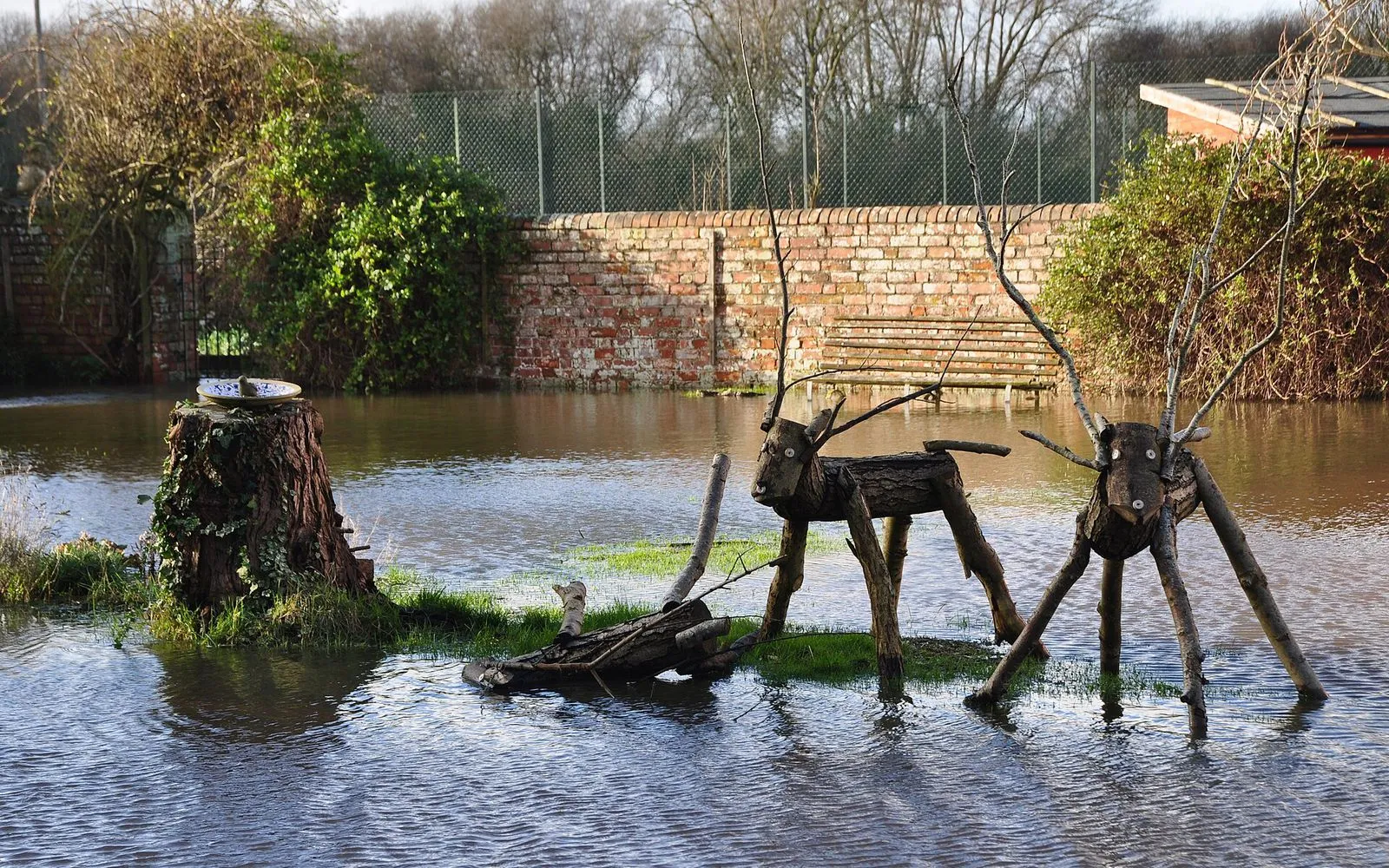
The same warming that brings hotter, drier summers also brings heavier rain. Warmer air holds more moisture, and the IPCC reports with high confidence that downpours have grown more intense. A garden that is dry in August can be waterlogged in winter or after a single summer storm. Too much water kills a plant as surely as too little, and it can do so faster.
Rain, heat and drought belong together. Gardening for extreme heat and drought-tolerant gardening cover dry extremes, and gardening in a changing climate covers the wider pattern. The same garden may need to handle drought and flooding, so plan for both ends of the range rather than the mild average between them.
What too much water does
Roots need air as much as they need water. Healthy soil has spaces between its particles, and roots draw oxygen from those spaces. When heavy rain fills them with water, the air is pushed out. Roots then suffocate, die and rot. The plant above wilts and yellows, much like a plant dying of thirst, so worried gardeners often water a waterlogged plant again.
Dead and dying roots are then open to disease. Root rot and phytophthora both take hold in wet soil and kill plants that waterlogging has weakened. Standing water and long-wet foliage also favour leaf diseases such as downy mildew. On top of all that, a downpour leaches nutrients out of reach and scours bare soil away, so a garden loses fertility and structure in the same storm that drowns its roots.
Open the soil and raise the planting
Start with the soil. Organic matter dug in or laid on top opens heavy ground so water can move through it instead of sitting on it. The same improved soil can also hold more water during drought, so this work helps in both extremes. Avoid working or walking on soil while it is wet, since that compacts it and closes the spaces that let it drain.
Where water still lingers, lift the planting above it. Raised beds put roots into free-draining soil above the wet, and breaking up a compacted layer below the surface, or digging a soakaway on very heavy ground, gives trapped water somewhere to go. Containers should stand on pot feet so they never sit in a saucer of rain. Keep roots out of standing water, because plants grown for dry-to-average conditions do not survive long with their roots submerged.
Slow the water down
Sending storm water away as fast as possible moves the problem downstream and wastes water you may need later. Slow the water and let it soak into the ground where you can. A rain garden, a shallow planted hollow fed by a downpipe or a path, holds a burst of rain and lets it soak away over hours. A swale, a level shallow channel along a slope, does the same across a larger area.
Permeable surfaces also help. Gravel, planting and open paving let rain enter the soil where hard paving would send it to the drain. A water butt on each downpipe catches roof runoff for the dry weeks to come. Every measure that holds water on the plot reduces flooding now and stores more water for later.
Protect the soil from the storm
Downpours damage bare soil most. Rain hitting open ground compacts the surface, washes away the finest and most fertile particles and carries dissolved nutrients out of reach. Keep the ground covered with mulch, low planting or a green manure crop. Cover takes the force of the rain and holds the soil in place. Covered soil keeps more of its structure and fertility through wet spells.
Plant for wet feet, within reason
Some plants take wet ground by nature, from riverbanks, damp meadows and pond margins. Hosta, astilbe, rhubarb, primrose and many ferns thrive in reliably moist soil, and trees and shrubs such as dogwood, alder, willow and hornbeam cope with ground that floods from time to time.
Separate soil that is occasionally wet from soil that is permanently waterlogged. Many plants survive short flooding if the water drains away within a day or two. Far fewer survive ground that never drains, and even bog and marginal plants have limits. Match the plant to how long the water stands, not to how wet the ground looks after a single storm.
Storms bring wind as well as water
Heavy rain often arrives with strong wind, and the combination is worse than either problem alone. Saturated soil holds roots less firmly just when wind is pushing hardest, so trees and tall plants can rock loose or blow over in a wet storm that they would have survived when dry. Firm and stake new plantings, check tree ties, and inspect established trees for loose footing before the stormy season. Plan for the wettest week as deliberately as for the driest.
Common questions
- Why does heavy rain damage plants?
- Roots need air as well as water. When soil fills with water, the air is driven out, and roots starved of oxygen begin to die and rot. A waterlogged plant often looks like a thirsty one, wilting and yellowing, because its damaged roots can no longer take up water. Heavy rain also washes nutrients out of the soil, batters soft growth and erodes bare ground.
- What is waterlogging and how do I fix it?
- Waterlogging is soil so saturated that water fills the spaces between the particles and pushes the air out. Short term, keep off the soil so you do not compact it further, and move containers onto feet so they drain. Long term, add organic matter to open the soil up, break up any compacted layer, raise beds above the wet, and on heavy ground consider a soakaway or a planted area designed to hold and absorb water.
- What is a rain garden?
- A rain garden is a shallow planted hollow that collects rainwater running off a roof, path or drive, holds it briefly and lets it soak into the ground rather than rushing to the drain. It is planted with species that cope with both a short flooding and drier spells between. A rain garden eases pressure on drains, recharges the soil and turns a downpour from a problem into a resource.
- Which plants tolerate wet soil?
- Plants from riverbanks, damp meadows and pond edges. Hosta, astilbe, rhubarb, primrose and many ferns take reliably moist ground, and shrubs and trees such as dogwood, willow, alder and hornbeam cope with soil that floods at times. The key distinction is between ground that is occasionally wet and ground that is permanently waterlogged, since far fewer plants survive permanently waterlogged soil.
Sources and further reading
- RHS Gardening in a Changing Climate reportRoyal Horticultural Society, 2017The RHS on flash flooding and surface water as garden-scale effects of a changing climate, and on gardens as flood buffers.
- AR6 Synthesis Report: Climate Change 2023Intergovernmental Panel on Climate Change. IPCC, 2023The observed increase in heavy precipitation, reported with high confidence, as warmer air holds more moisture.