
Drought-tolerant gardening: a garden that needs less water
A drought-tolerant garden is designed to need little added water, not merely planted with tough plants. Soil, mulch, watering habits and plant choice all play a part.
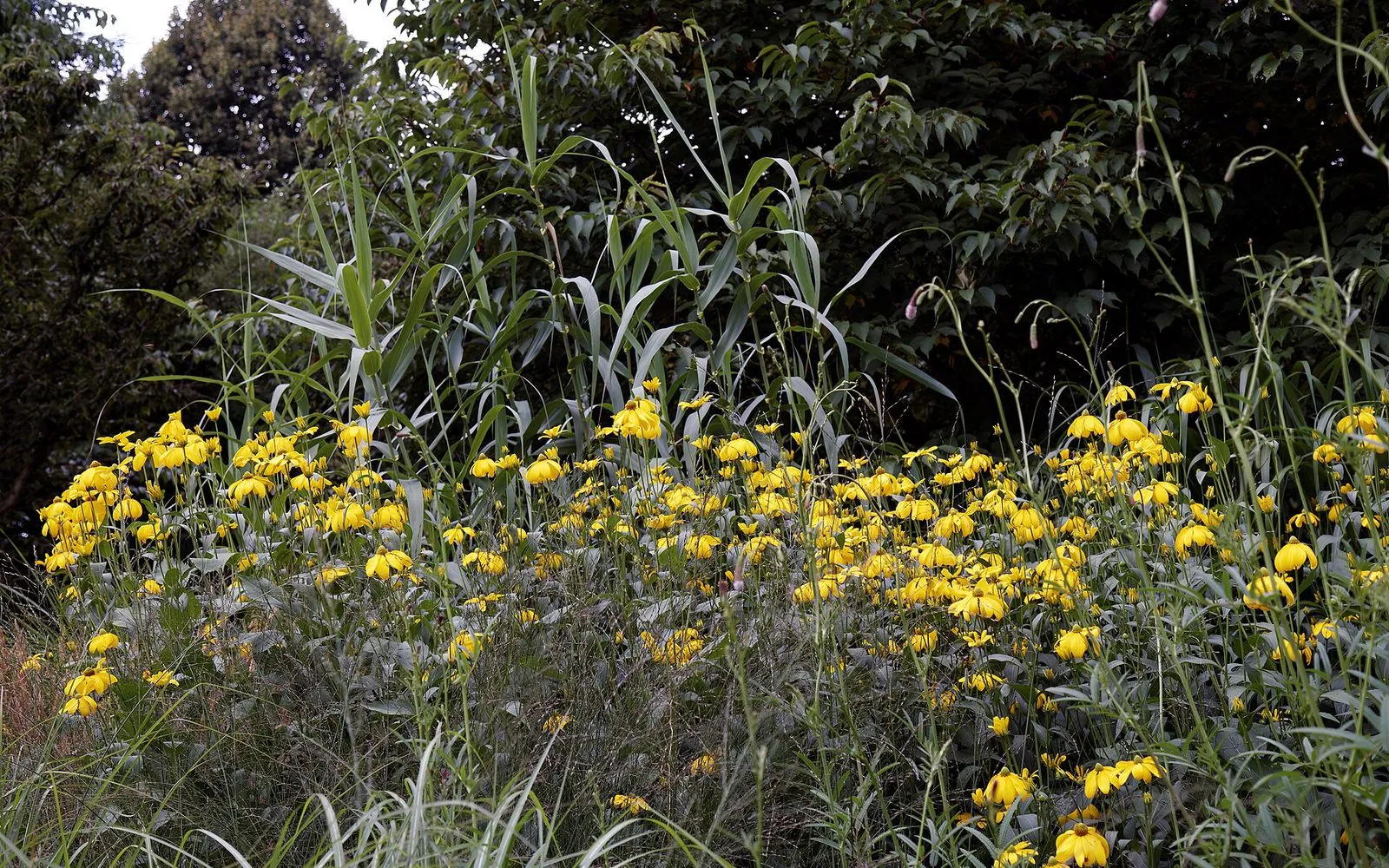
Drought-tolerant gardening is often treated as a plant list. Plant choice matters, but the larger work is in the soil, mulch, establishment watering and stored rainfall. Tough plants perform best when the garden around them supports dry growth.
Dry spells are becoming more common and more severe in many regions as the climate warms, and the IPCC reports the same pattern with growing confidence. A garden that depends on the hose through every dry week is expensive to keep and vulnerable to a hosepipe ban. Heat and drought overlap, but they need different responses. Gardening for extreme heat covers high temperature, and gardening in a changing climate covers the wider pattern.
What drought tolerance is, and is not
Plants survive drought in a handful of ways. Some send roots deep to reach water long after the surface has dried. Some store water in fleshy leaves or stems and live off it. Some have small, tough, waxy, hairy or aromatic leaves that lose less water to the air. Some stop altogether, dying back to a root or a bulb and waiting the dry season out.
None of these adaptations means a plant needs no water. A drought-tolerant plant survives a dry spell once it has a root system deep and wide enough to reach more soil. A plant put in this spring has not reached that stage. It can die in a drought as fast as any other plant unless you water it through its first season. Drought tolerance belongs to a settled plant, not a new one.
Improve the soil, then let it drain
Soil rich in organic matter holds more water for longer. Dig in garden compost or well-rotted manure, or lay it as a mulch for worms to pull down. This increases the amount of water the ground can store between one rain and the next.
Free drainage matters just as much for many drought-tolerant plants. Mediterranean and silver-leaved plants evolved on stony hillsides, and they often die in soil that stays wet and cold, especially in winter. On heavy ground, work grit into the planting hole and use a gravel surface to keep crowns and roots out of standing water. Aim for soil that holds some moisture deep down but never stays boggy at the surface.
Mulch to keep the water in
Once the soil holds water, mulch keeps it there. A layer of bark, compost, leaf mould or gravel over moist soil slows evaporation, keeps the ground cooler and stops the surface baking into a crust that sheds the next shower. Two to five centimetres is enough, kept clear of plant stems. Mulch does not add water, so lay it when the soil is already damp, after rain or a good soak, rather than over dry ground it will only help to stay dry.
Water to grow roots downward
Watering affects how deep roots grow. A deep soak that wets the whole root zone, given once a week or less, encourages roots to grow down into cooler, damper soil. A daily sprinkle keeps roots near the hot, fast-drying surface, so the plant never builds the deeper root system it needs for dry spells.
Reduce watering gradually as new plants settle. Stretch the interval between soaks so roots keep growing out into the soil. Water in the early morning to lose less to evaporation, and water the soil rather than the leaves so roots can use it.
Capture the water you have
A dry-summer garden is often wet in winter. Water that runs off in January may be missing in July. A water butt on every downpipe stores roof runoff for dry weeks, and several butts store more. Permeable surfaces, gravel and planting in place of paving let rain soak into the ground instead of running to the drain. A shallow planted hollow can hold a downpour long enough for water to soak in. Every litre kept on the plot is a litre you do not need from the tap in a drought.
Choose plants for dry ground
With the soil, mulch and watering in place, choose species adapted to drought. The dry-climate group in the Koppen classification covers places where evaporation exceeds rainfall, and many useful garden plants come from those conditions. Lavender, rosemary and sage bring the Mediterranean shrubs, catmint and coneflower the deep-rooted prairie perennials, and bearded iris and many silver-leaved plants the same dry, sunny preference. Agave and other succulents store their own water for the longest dry spells.
A gravel garden uses free-draining ground, a stone mulch and no irrigation once the planting is established. Reducing the lawn, or letting it go dormant and brown in summer rather than watering it, saves more water than any other single change, because a mown green lawn is one of the thirstiest parts of a garden.
The risk is winter wet, not summer dry
Drought-tolerant plants often fail from wet soil rather than summer drought. A lavender or a bearded iris can survive a rainless August, then rot in a cold, waterlogged winter because its roots cannot breathe in saturated soil. Root rot kills many drought-tolerant plants, and poor drainage is usually the cause. Raised beds, grit and sloping ground help move water away in winter. A drought garden needs to handle wet winters as well as dry summers.
Common questions
- What does drought-tolerant mean?
- It means a plant can survive a dry spell without dying or being badly set back, using adaptations such as deep roots, water stored in fleshy leaves, or small, waxy or silver leaves that lose less water. It does not mean the plant needs no water at all. Drought tolerance is about surviving dry periods once established, not about thriving on nothing.
- Do drought-tolerant plants still need watering?
- Yes, especially while they establish. A new plant has a small root system and cannot reach much soil, so it needs regular water through its first season, sometimes its first two, before it can manage with less help. After that, deep and occasional watering suits it better than frequent sprinkling. Many drought-tolerant plants are killed by too much water, not too little, particularly in cold wet soil in winter.
- How does mulch help in a drought?
- A layer of mulch over the soil slows evaporation from the surface, keeps the ground cooler and stops it baking hard, so more of any rain or watering soaks in rather than running off. Organic mulches such as bark, compost or leaf mould also improve the soil beneath over time. Apply mulch to moist soil, since it slows water leaving but does little to add water that is not there.
- What are the best drought-tolerant plants?
- Plants from dry, sunny climates. Mediterranean shrubs such as lavender, rosemary, sage and thyme, deep-rooted prairie perennials such as coneflower and catmint, and succulents such as agave that store water in their leaves. Bearded iris and many silver-leaved plants suit the same conditions. The pattern to look for is tough, narrow, waxy, hairy or aromatic foliage, which usually signals a plant that loses less water.
Sources and further reading
- RHS Gardening in a Changing Climate reportRoyal Horticultural Society, 2017The RHS on drought as one of the extremes gardens increasingly face, and on adapting through design and plant choice.
- AR6 Synthesis Report: Climate Change 2023Intergovernmental Panel on Climate Change. IPCC, 2023The projected rise in the frequency and severity of drought in many regions as the climate warms.
- Updated world map of the Koppen-Geiger climate classificationM. C. Peel, B. L. Finlayson and T. A. McMahon. Hydrology and Earth System Sciences, 2007The dry-climate group, defined by water lost to evaporation exceeding rainfall, and the plants adapted to it.