
Edible
Common Sage
Salvia officinalis
Also known as Garden sage, Culinary sage, Broadleaf sage
How to grow Salvia officinalis. The pruning cut that kills it, why a four-year-old plant stops earning its place, when the leaves taste strongest, and the thujone question.
At a glance
- Difficulty
- Easy
- Water
- Rarely once established. Water new plants through the first summer
- Light
- Full sun, six hours minimum
- Temperature
- Hardy to about -15 deg C when dry. Winter wet is the danger
- Hardiness
- USDA 5-9, RHS H5, hardy to -15 C
- Type
- Evergreen woody subshrub, short-lived
- Height
- 40-60 cm, spreading to 60 cm
- Native to
- Dry limestone hillsides of the northern Mediterranean
- Best month
- April in the Northern Hemisphere, October in the Southern Hemisphere
Cold is survivable and winter wet is not, so drainage decides where sage lives. The plant is also short-lived by nature, going woody and sparse after four or five years, and taking cuttings in late summer is part of growing it rather than a rescue. Purple and variegated forms are a zone tenderer than the plain green.
Hardiness zones describe winter cold alone. Summer heat, humidity, rainfall and the length of the growing season decide as much, so treat the range as the outer limit rather than as a recommendation.
Every month named in this guide is for the temperate Northern Hemisphere. If you garden in the Southern Hemisphere, shift each one by six months, so April becomes October. Closer to the equator the wet and dry seasons matter more than the calendar, and the shift stops being a useful guide.
Edible, with limits
- Safe to eat
- The leaves and flowers, in normal culinary quantities
- Harm from
- Eating it
- Affects
- People
Sage is a food plant and normal culinary use is safe. The caution attaches to concentration rather than to the herb. Sage contains thujone, a compound also found in wormwood, which is a neurotoxin at high doses and can cause seizures. Reaching a harmful dose from cooking is not realistic, and it is entirely possible with sage essential oil or with strong extracts taken as a supplement, and there are documented cases of seizures following ingestion of sage oil. Never take sage essential oil internally. Two further cautions matter. Sage has a long and effective traditional use for reducing milk supply during weaning, so anyone breastfeeding who does not want that effect should avoid large or medicinal quantities. And medicinal doses are generally advised against in pregnancy. Culinary amounts in food carry neither concern. The ASPCA does not list Salvia officinalis among plants toxic to cats, dogs or horses.
Sources: NC State Extension, Salvia officinalis, RHS potentially harmful garden plants
About
Sage is a subshrub rather than a herb in the soft green sense. The base goes woody within two or three years, and old sage wood carries very few dormant buds.
Cut a sage back into bare brown wood and the stump usually stays bare. Cut it back to a point where green shoots are already showing and it fills out. Lavender, rosemary and thyme all behave the same way, and all four are killed by gardeners who prune them like a herbaceous perennial in March.
Sage has a working life. Four or five years in, the plant sprawls, goes bare in the middle and produces sparse leaves on long woody arms. Replacing it is routine maintenance rather than a failure.
Appearance and character
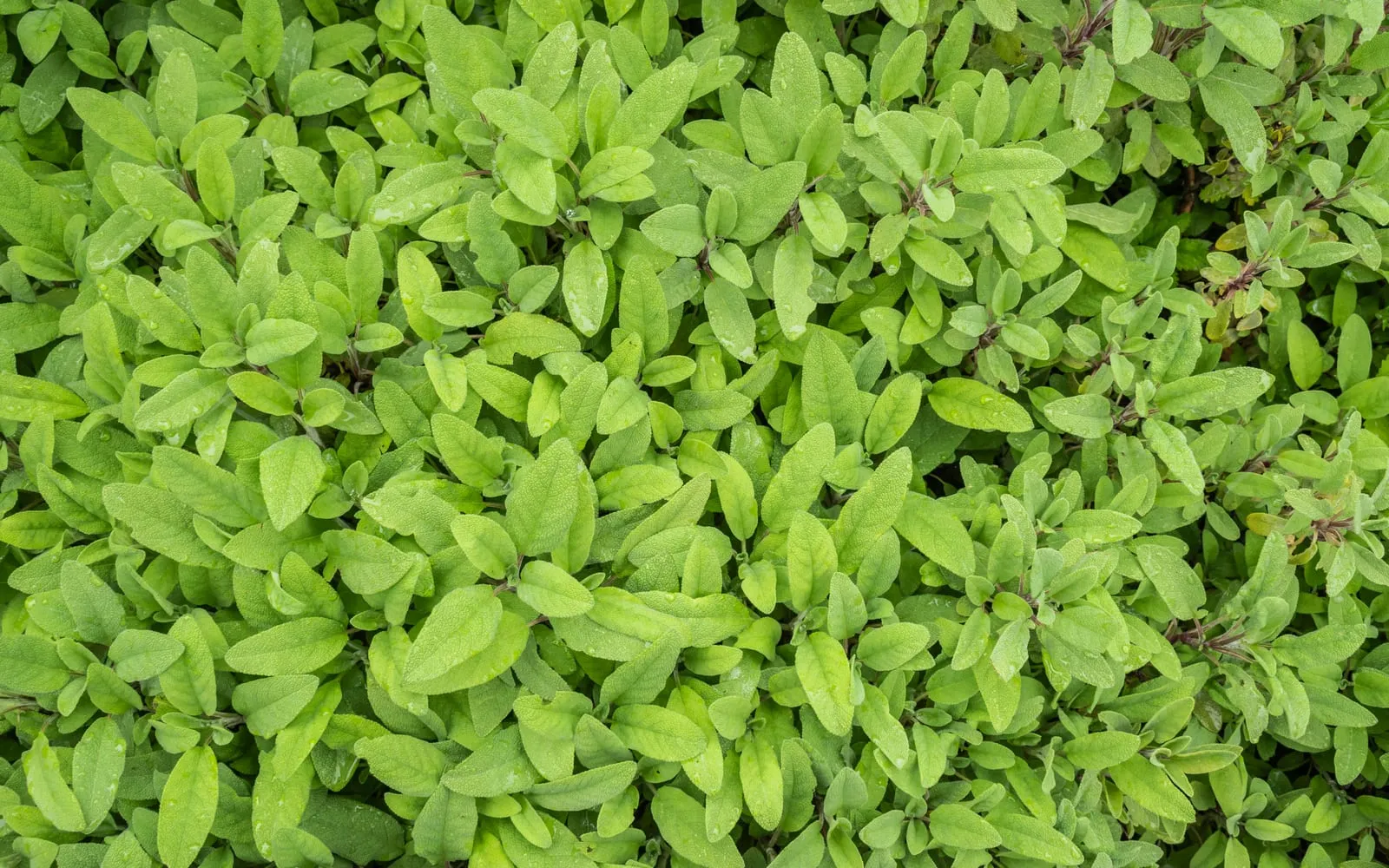
Oval to oblong leaves, 4 to 8 cm long, grey-green and softly downy with a finely pebbled surface that holds water in beads after rain.
The plant makes a low spreading mound of 40 to 60 cm, woody at the base with softer growth at the tips.
Flowers appear in June and July as spikes of hooded violet-blue lipped flowers, attractive in their own right and heavily worked by bumblebees.
‘Purpurascens’ has purple-flushed young leaves and is a good culinary form. ‘Icterina’ is variegated gold and green. ‘Tricolor’ carries cream, pink and green and is markedly less hardy than the plain species.
Salvia lavandulifolia, narrow-leaved sage, is a separate species with finer foliage, better drought tolerance and a cleaner flavour, worth seeking out.
The scent when you brush past is warm, camphorous and slightly peppery.
Where it is from
Dry limestone hillsides around the northern Mediterranean, from Spain through Italy to the Balkans, in thin stony soil in full sun.
Everything about the plant follows from that. The grey down on the leaves reflects light and reduces water loss. The aromatic oils deter grazing and reduce transpiration. The woody base survives summer drought.
None of it prepares the plant for a wet winter. Sage handles frost perfectly well down to around -15 deg C when the soil is dry, and it rots at the crown in mild wet clay at temperatures it would shrug off elsewhere.
Alkaline soil suits it, which is why sage grows so well in a chalky garden and sulks on acid peat.
Poor soil produces better sage than rich soil. Feeding gives soft, large, watery leaves with less oil and therefore less flavour.
How it grows
An evergreen woody subshrub. Leaves persist through winter, looking tired by February and refreshing in spring.
Growth restarts in April, with the main flush through May and June, flowering in June and July.
Flavour peaks just before flowering, when the concentration of essential oils in the leaves is highest. Harvest for drying at that point.
Roots are shallow and wide-spreading, so sage transplants poorly once established and resents disturbance.
Propagation is easy and worth doing every couple of years. Semi-ripe cuttings taken in late summer root readily in gritty compost. Layering works even better, since sage roots wherever a low branch touches soil, and you can peg a stem down in spring and detach a rooted plant in autumn.
Seed germinates reliably though named cultivars do not come true.
Through the seasons
Spring brings new growth from April. Prune now, lightly, cutting back to just above visible new shoots. Plant new stock.
Early summer is the peak. Harvest heavily before the flowers open, when the flavour is strongest. Let some plants flower for the bees.
After flowering in July, trim the plant over to remove the spent flower spikes and keep it compact. Take cuttings now.
Autumn needs no work beyond clearing fallen leaves off the crown. Stop harvesting hard by the end of September so growth hardens.
Winter asks for drainage rather than protection. The plant stays evergreen. Avoid cutting it back now, and avoid mulching over the crown.
Care difficulty
Easy, with two specific ways to go wrong.
Pruning into old wood is the first and the most common. Sage does not reliably reshoot from bare brown stems. Prune in spring, cutting to just above growth that is already breaking, and never take the plant back to a leafless woody framework.
Winter wet is the second. Sage on heavy clay rots at the base over a wet winter. Plant in a raised bed, on a slope, in a gravel garden or in a pot, and add grit to heavy ground.
Beyond those two the plant looks after itself. It needs no watering, no feeding and no staking, and it is untroubled by most pests.
Watering
Water new plants weekly through their first summer while the roots establish.
After that, established sage needs no watering in a temperate climate except in an extreme drought.
Water at the base rather than over the foliage. The downy leaves hold water, and wet foliage in still air encourages mildew.
Never water in autumn or winter.
Container-grown sage needs regular watering through summer, and the pot must drain freely. Let the compost dry out between waterings.
Over-watering shows as soft floppy growth, poor flavour and eventual root rot, which is a more common problem than drought.
Warning signs, diseases and pests
A leggy plant with bare woody stems and leaves only at the tips has reached the end of its useful life. Take cuttings and replace it.
Yellowing lower leaves with a soft brown base is root rot from winter wet.
Powdery mildew coats the leaves greyish-white in humid still conditions, particularly on crowded plants. Space them further apart and improve airflow.
Sage leafhopper causes fine pale stippling across the leaf surface and is more unsightly than damaging.
Capsid bugs distort and pucker the new shoot tips.
Leaves that are large, soft and pale with weak flavour indicate too much feeding or too much shade.
A plant that fails to shoot after a spring prune was almost certainly cut into old wood. This is not recoverable.
Whitefly can build up on plants grown under cover.
Growing environment
Full sun, six hours minimum. Shade gives leggy plants with poor flavour.
Free-draining soil is essential. Work grit into heavy ground and plant slightly proud so water runs away from the crown. Sage thrives on chalk.
Poor to moderate fertility. Rich soil produces bulk at the expense of aroma.
Hardy to about -15 deg C in dry conditions. In a wet cold garden, grow it in a pot and move it somewhere sheltered for winter, or accept replacing it more often. ‘Tricolor’ and the variegated forms need more protection than the plain species.
A gravel mulch under the plant keeps the base dry and reflects heat, which suits it far better than a compost mulch.
Space plants 45 to 60 cm apart for airflow.
Sage grows well in a large pot in a gritty compost, and a pot solves the drainage problem outright.
Feeding
Sage needs no feeding on any reasonable soil.
A light mulch of garden compost in spring is enough where the ground is very poor, kept clear of the woody base.
Avoid nitrogen-rich fertilisers. They produce large soft leaves with diluted essential oils, so the plant looks better and tastes weaker.
Container plants benefit from a single balanced feed in late spring, and no more.
Refresh container compost every couple of years rather than feeding harder.
Troubleshooting
I cut it back hard and nothing grew. You cut into old wood. Sage does not reshoot reliably from bare brown stems. Take cuttings from anything still living and start again, and prune only to just above visible green growth next time.
It has gone woody and sprawling with few leaves. Normal after four or five years. Take semi-ripe cuttings in late summer, or layer a low branch, and replace the parent.
When should I harvest for the best flavour? Just before the flowers open in June, when the oil concentration peaks. That is also the time to cut for drying.
Should I let it flower? The flowers are excellent for bees and they do cost some leaf flavour. Let some plants flower and keep others trimmed for the kitchen.
It died over winter. Wet rather than cold. Improve the drainage, plant proud, mulch with gravel rather than compost, or grow it in a pot.
The leaves are big, soft and taste of very little. Too much feeding, too much water or too much shade. Grow it harder.
Can I use sage oil? Not internally. Sage essential oil contains concentrated thujone and has caused seizures when swallowed. Cooking with the leaves is safe.
Is it safe while breastfeeding? Culinary quantities are fine. Sage has a well-established traditional use for reducing milk supply during weaning, so avoid strong sage teas and supplements unless that is the effect you want.