
Outdoor plant
Yarrow
Achillea millefolium
Also known as Common yarrow, Milfoil
How to grow yarrow in a border or wildflower meadow. Its feathery foliage, flat pollinator-friendly flower heads, and long history as a wound herb.
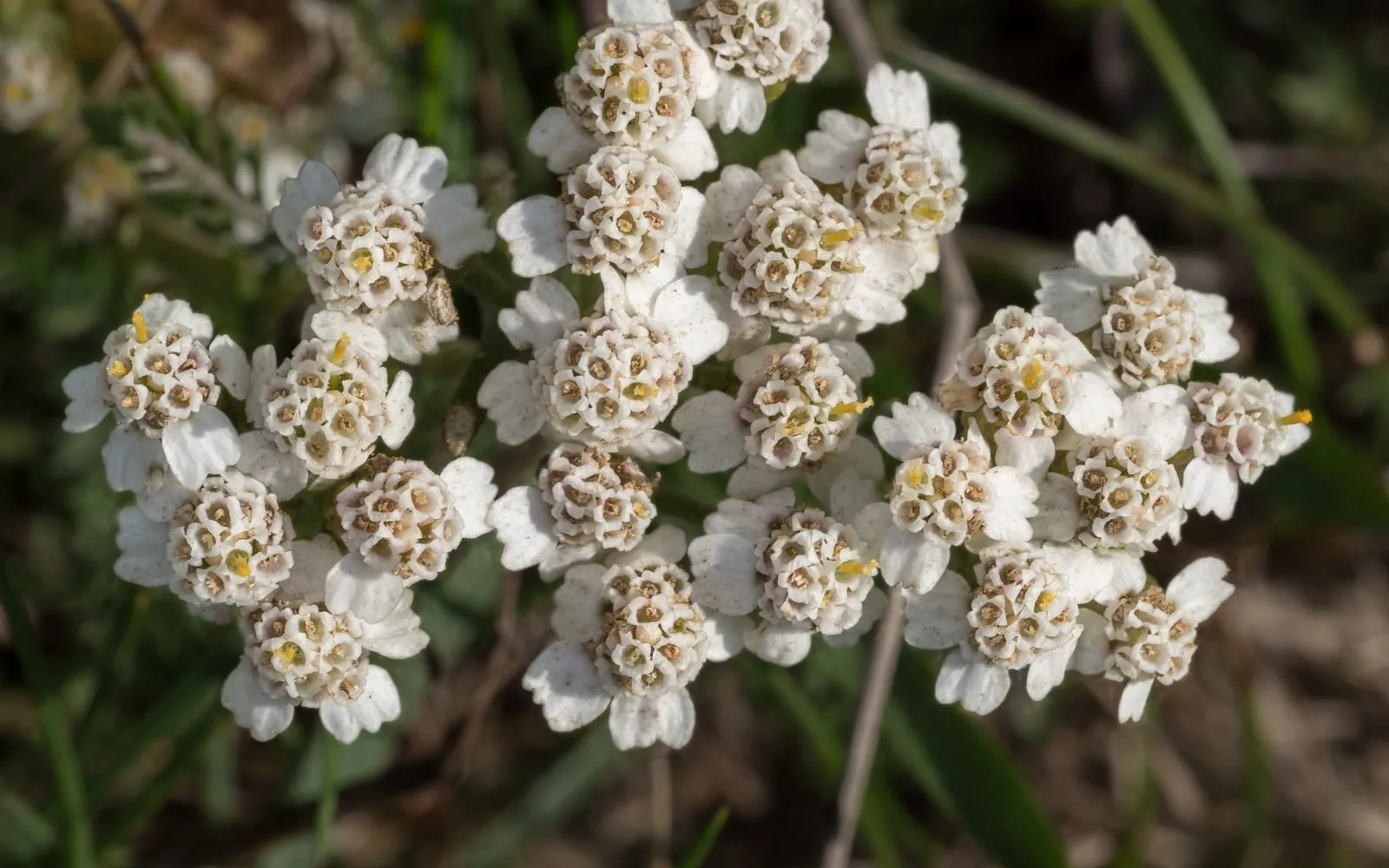
At a glance
- Difficulty
- Easy
- Water
- Regular watering while establishing, drought-tolerant once mature
- Light
- Full sun
- Hardiness
- USDA 3-9, RHS H7, hardy to -35 C
- Type
- Hardy herbaceous perennial
- Height
- 30-90 cm
- Native to
- Europe, Temperate Asia
Extremely hardy and tolerant of a wide range of conditions, from cold winters to hot, dry summers, reflecting a native range spanning most of the temperate Northern Hemisphere. It performs best in poor to moderate soil and tends to flop and need staking in rich, heavily fed ground, the opposite problem to many border perennials.
Hardiness zones describe winter cold alone. Summer heat, humidity, rainfall and the length of the growing season decide as much, so treat the range as the outer limit rather than as a recommendation.
Harmful if eaten
- Do not eat
- The whole plant
- Harm from
- Eating it and handling it
- Affects
- People, cats, dogs and horses
Yarrow can cause mild digestive upset if eaten in quantity, and its foliage occasionally causes contact dermatitis in sensitive people, a reaction documented since it was traditionally handled as a wound herb. The ASPCA lists it as mildly toxic to cats, dogs and horses, with vomiting and diarrhoea being the main signs. Serious poisoning is rare, since the plant is bitter and unpalatable in any quantity likely to cause real harm.
About
Yarrow is a tough, drought-tolerant perennial grown for its flat, plate-like clusters of small flowers, typically white but available in shades of pink, yellow and red in garden varieties, held above finely divided, almost fern-like foliage that releases a sharp, aromatic scent when brushed or crushed. Its flat flower heads are a magnet for hoverflies, bees and other beneficial insects, making it a mainstay of wildlife and pollinator-focused planting schemes.
The plant has a long history of traditional use as a wound herb, reflected in its scientific name Achillea, a reference to the Greek hero Achilles, said to have used it to treat his soldiers’ battle wounds, and in old country names like woundwort and staunchweed that record centuries of the same practical use.
Appearance and character
Finely divided, feathery leaves, almost fern-like in their fine texture, form a low mat of foliage from which upright, wiry flower stems rise through summer. Each stem is topped with a flat, plate-like cluster made up of many small individual flowers, creating a broad landing platform that is easy for pollinating insects to work across compared with a deeper, more tubular flower shape.
Flowering continues over a long season given regular deadheading, and the flat flower heads dry well, holding their shape and much of their colour if cut and hung to dry for winter arrangements.
Where it is from
Grassland, meadows and disturbed ground across a huge native range spanning Europe and temperate Asia, tolerant of poor, dry soil and a wide range of climate conditions within that broad distribution.
That wide native range across such varied conditions explains the plant’s remarkable adaptability in cultivation, thriving in everything from a hot, dry gravel garden to a damper temperate border, provided the soil is not consistently waterlogged.
How it grows
A hardy perennial spreading gradually by shallow rhizomes, forming an increasingly wide clump of foliage from which flower stems rise each summer. Growth is vigorous, and an established clump can spread further than expected within a few years if not periodically divided or contained.
Deadheading spent flower heads promptly encourages a longer, more continuous flowering display, while leaving some heads to mature and set seed supports self-seeding into new areas of a naturalistic border or meadow planting.
Through the seasons
Spring fresh foliage emerges and flower stems begin developing as temperatures rise.
Summer is the main flowering period, with flat flower heads opening over an extended season, particularly if deadheaded regularly.
Autumn flowering tapers as temperatures drop; leave some seed heads in place over winter for birds and overwintering insects.
Winter the plant dies back to ground level in a colder climate, fully hardy and needing no protection, or persists as low foliage in a milder one.
Care difficulty
Easy. This is an especially low-maintenance perennial once established, tolerating poor soil, drought and general neglect far better than a rich, well-fed border position, which works against its naturally compact, upright growth habit.
Watering
Regular watering supports establishment in the first year. Once settled, this species tolerates real drought well, and deep, infrequent watering suits it far better than frequent light watering, particularly on poor, free-draining soil where it performs best.
Warning signs, diseases and pests
Aphids occasionally colonise flower stems and soft new growth, usually in low enough numbers to leave alone or dislodge with a jet of water. Powdery mildew can develop in crowded, poorly ventilated conditions, showing as a pale, dusty coating on leaves, and thinning a congested clump improves air circulation and reduces its likelihood.
Floppy, weak stems that need staking usually indicate soil that is too rich or too shaded for this species, which naturally needs poor soil and full sun to stay compact and upright; moving a struggling clump, or avoiding feeding it altogether, generally corrects this over a season.
Growing environment
Full sun is essential for compact, upright growth and the best flowering. Ordinary, free-draining soil suits it well, and this species tolerates poor, dry ground much better than rich, fertile soil, which tends to produce weak, floppy growth.
Feeding
None to minimal. This species is adapted to poor soil, and fertiliser generally produces softer, weaker growth than the compact, upright habit it shows on lean ground, so the better approach for most gardens is to leave it unfed.
Troubleshooting
Stems are floppy and need staking. Usually soil that is too rich or a position with too much shade. Avoid feeding and move a struggling clump to a sunnier, leaner spot if practical.
A pale, dusty coating has appeared on the leaves. This is powdery mildew, more likely in crowded, poorly ventilated conditions. Thin the clump to improve air circulation and remove badly affected foliage before it spreads further through the planting.
The clump has spread further than intended. This species spreads by shallow rhizomes and can be more vigorous than expected. Lift and divide in spring or autumn, discarding or relocating excess growth, and consider a root barrier if it borders a smaller, more delicate planting.
Flowering has slowed or stopped mid-season. Deadhead spent flower heads promptly to encourage further flowering, since this species responds well to regular deadheading over a long summer season rather than tapering off once the first flush has faded.
You want to dry flower heads for winter arrangements. Cut stems once the flat flower heads are fully open but before they begin to fade, and hang them upside down somewhere dry and airy out of direct sun; they hold their shape and much of their colour well once dried this way.
You are choosing a yarrow variety for a specific border colour scheme. Named garden varieties come in shades well beyond the wild species’ white, including deep red, salmon and gold, though these selected forms often prove slightly less drought-tolerant and shorter- lived in the border than the plain wild species growing on lean ground, a trade-off worth weighing against the extra colour on offer.