
Edible
Velvet Bean
Mucuna pruriens
Also known as Cowhage, Cowitch
How to grow velvet bean, Mucuna pruriens. Why the pod hairs are sold as novelty itching powder, the soaking and boiling that turns a raw, L-DOPA-laden seed into a safe pulse, and a vine that can cover a fence in one warm season.
At a glance
- Difficulty
- Moderate
- Water
- Regular water through the growing season; drier once pods mature
- Light
- Full sun
- Temperature
- Needs sustained warmth; damaged by any chill near freezing
- Hardiness
- USDA 10-12, RHS H1c, hardy to 5 C
- Type
- Vigorous annual or short-lived perennial climbing vine
- Height
- 3-18 m along a support in a single warm season
- Native to
- tropical Asia, tropical Africa
A tropical legume with no frost tolerance at all, grown as a fast-climbing summer annual well outside the warm zones where it persists as a perennial. It needs a long run of warm days and nights to flower and pod, so a short or cool growing season limits it to vigorous foliage with little or no seed crop, and any dip near freezing kills the whole plant outright.
Hardiness zones describe winter cold alone. Summer heat, humidity, rainfall and the length of the growing season decide as much, so treat the range as the outer limit rather than as a recommendation.
Toxic if eaten
- Safe to eat
- The mature seed, once soaked, boiled or roasted and the water discarded
- Do not eat
- The fine hairs covering the pod, and the raw or undercooked seed
- Harm from
- Handling it and eating it
- Affects
- People
Velvet bean carries two separate hazards that a grower needs to keep straight, since one is immediate and the other is about what happens before the seed is eaten. The pods are covered in fine, barbed hairs that break off into skin on contact and cause intense, long-lasting itching, a reaction well documented enough that cowhage powder has been sold as a novelty itching powder under exactly that name. Handling an unopened pod without gloves, or brushing against a plant in a garden bed, is enough to cause it, and the hairs are difficult to remove once embedded, so gloves and long sleeves around mature pods count as basic handling gear rather than an optional precaution. Separately, the ripe seed inside is a real food across parts of Africa and Asia, but only once processed. Raw or undercooked seed contains a high concentration of L-DOPA alongside trypsin inhibitors and other compounds that interfere with digestion and nerve signalling, and eating it unprepared causes nausea, vomiting and, at higher doses, more serious neurological effects from the L-DOPA itself. Traditional processing, soaking the seed for a day or more with repeated changes of water, then boiling or roasting it thoroughly, breaks down or leaches out most of the problem compounds and is what makes the bean safe to eat as the pulse it is grown for. This is not a plant to pick and snack on straight from the pod, and anyone growing it for food should follow a tested recipe for processing the seed rather than improvising.
Sources: RHS potentially harmful garden plants, National Capital Poison Center
About
Velvet bean is a fast-growing tropical legume grown for a seed that, properly processed, is eaten as a pulse and used medicinally for its high L-DOPA content, and for pods covered in hairs that cause one of the most reliably unpleasant skin reactions in the garden. It climbs vigorously by twining stems, covering a fence or a trellis in a single warm season, with showy purple flowers followed by curved, densely hairy pods. Growing it well means managing two different things at once: giving a fast tropical climber the warmth and support it needs, and handling the mature pods with the care their hairs demand.
Appearance and character
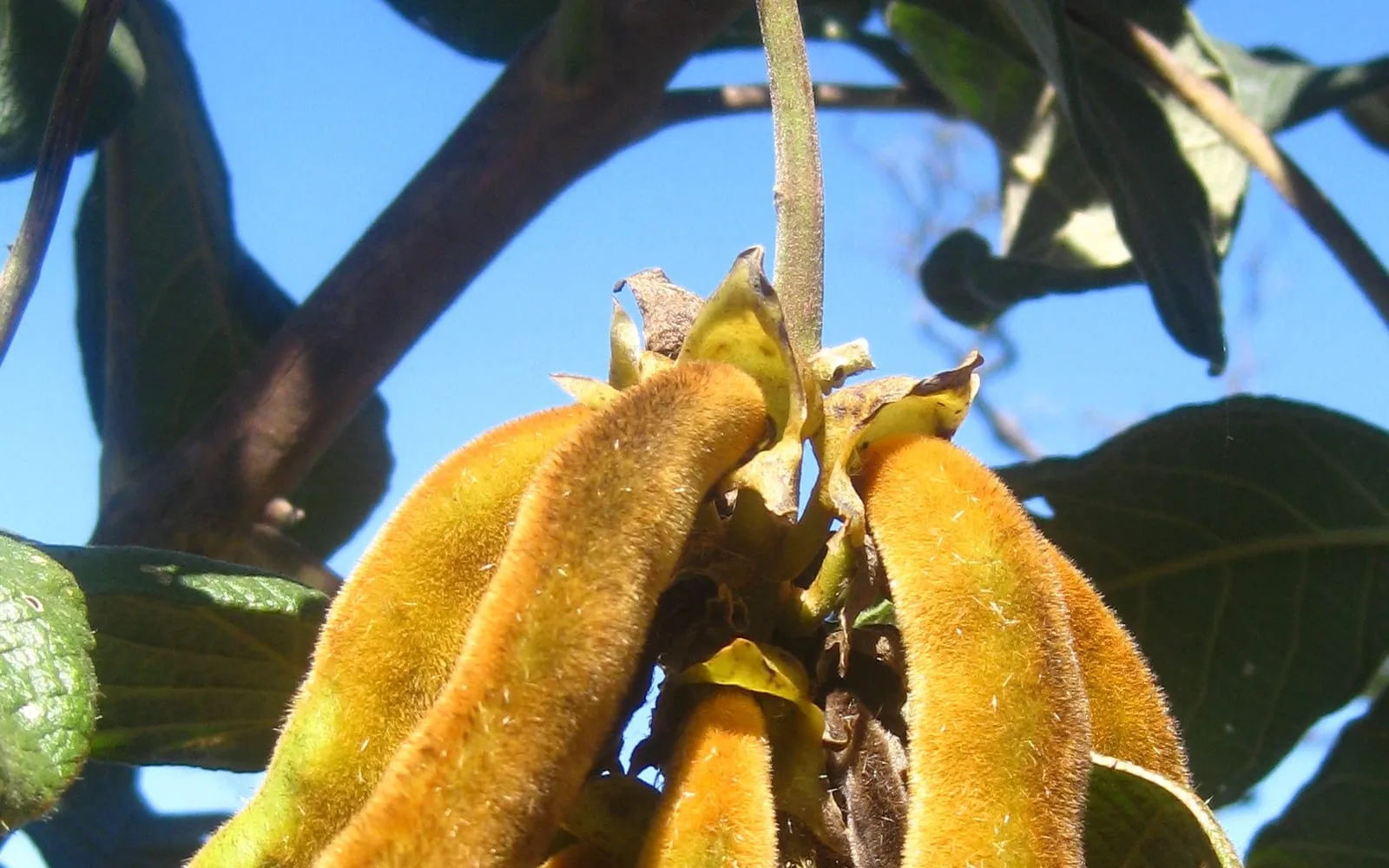
Growth is a vigorous, twining vine with three-lobed leaves typical of a climbing bean, covering a support with dense foliage within weeks of sustained warm weather. Flowers hang in long clusters, dark purple to nearly black, pea-like in shape and produced in quantity once the plant has established. Pods follow in curved clusters, densely covered in fine, orange-brown hairs that give the plant its common name and its reputation. Inside, each pod holds several hard, shiny seeds, mottled brown, black or white depending on the variety, which are the part grown for food once correctly processed. A well-grown plant in a hot, humid climate can cover a substantial support and set a heavy pod crop in a single season.
Where it is from
Mucuna pruriens is native across tropical Asia and tropical Africa, growing wild in disturbed ground, forest margins and hedgerows through a broad band of the tropics on both continents. It has a long history of traditional use in both regions, as a cover crop and green manure that fixes nitrogen and suppresses weeds, as a processed food seed, and in Ayurvedic medicine under the name Kapikachhu, where its L-DOPA content is the basis for its use in managing Parkinson’s disease symptoms under medical supervision. That dual identity, food crop and source of a chemically active pharmacological compound, is why any grower needs a clearer picture of it than “just another climbing bean” before deciding what to do with a harvested pod.
How it grows
Sow after all frost risk has passed and the soil has warmed, since this is a plant that will not tolerate cold and grows only sluggishly until temperatures are consistently warm. Give it a strong, tall support from the start, since the vine grows fast and heavy once established and can pull down a flimsy trellis. It fixes much of its own nitrogen as a legume, so avoid heavy nitrogen feeding, which pushes leafy growth at the expense of flowering and podding. Space plants generously, since a single vine covers a wide area of support by the end of a warm growing season. Handle the plant with long sleeves once pods begin to form, and consider gloves mandatory for harvesting, since brushing against a mature pod is enough to transfer its irritant hairs to skin or clothing.
Through the seasons
Spring is for sowing, once the soil is reliably warm and all frost risk has passed.
Summer is vigorous climbing growth and flowering, with the vine covering its support and setting the first pods.
Autumn brings pod maturity in a long warm season. Harvest and process the seed before any cold weather arrives.
Winter kills the plant outright wherever frost occurs, so treat it as an annual outside reliably frost-free climates and clear the dead vine once it has finished.
Care difficulty
Moderate. The plant itself grows easily and needs little beyond warmth, a sturdy support and a long enough season to flower and pod, all of which make the growing side straightforward in a suitable climate. The difficulty sits in handling it safely once pods appear, and in the discipline of processing the harvested seed properly before eating any of it, rather than in anything about day-to-day cultivation.
Watering
Water regularly through active growth, flowering and pod development, since consistent moisture supports the heaviest crop through a plant’s single fast-growing season. Reduce watering as pods approach maturity and begin to dry, since a drier finish helps the pods ripen and the seed inside firm up properly.
Warning signs, diseases and pests
Aphids cluster on soft new shoots and flower buds, distorting growth and fouling the plant with honeydew; a strong jet of water or an insecticidal soap usually controls a light infestation without further treatment.
Whitefly clouds up from the underside of the leaves when the plant is disturbed, sapping vigour and excreting honeydew that then grows sooty mould; yellow sticky traps and an insecticidal soap help bring a heavy infestation under control.
Pod borer larvae tunnel into developing pods, hollowing out seeds from the inside and leaving small entry holes visible on the pod surface; removing and destroying affected pods promptly limits how many larvae complete their life cycle on the plant.
Root-knot nematodes stunt growth and cause small, beaded galls along the roots, usually diagnosed only once a plant is lifted and the roots examined; rotating planting sites and avoiding heavily infested ground are the main practical defences, since there is no treatment available to an amateur grower once the soil is contaminated.
Growing environment
Full sun and consistent warmth suit it best; growth slows sharply in cool or overcast conditions and stops altogether anywhere near freezing. Soil fertility matters less than for many food crops, since this legume fixes much of its own nitrogen and tolerates poor ground reasonably well, provided drainage is adequate. A sheltered, sunny position against a wall or fence gives it both the support it needs to climb and a little extra warmth in a marginal climate.
Feeding
Little feeding is needed beyond a light application at planting time, since the plant fixes nitrogen from the air through its root nodules once established. Heavy additional feeding, nitrogen especially, encourages leafy growth over flowering and podding and offers no real benefit to a plant already meeting most of its own needs.
Troubleshooting
I brushed against a pod and now my skin is itching badly. What do I do? This is the well-documented reaction to the fine hairs covering the pods. Avoid rubbing the area, since that drives the hairs deeper; instead, use sticky tape to lift hairs from the skin, wash the area with soap and water, and apply a soothing lotion. The itching is intensely uncomfortable but not dangerous, and usually settles within a day or two.
Can I eat the seeds straight from a pod I have picked? No. Raw or undercooked seed contains L-DOPA and other compounds that cause nausea, vomiting and, at higher intakes, more serious effects. The seed becomes a safe food only after thorough processing, typically an extended soak with repeated water changes followed by boiling or roasting, and a grower planning to eat the crop should follow a tested method rather than guessing at one.
My vine has grown huge but produced very few pods. A cool or short growing season is the likely cause, since this plant needs sustained warmth over an extended period to flower and pod heavily. In a marginal climate, expect strong foliage growth with a modest seed harvest at best.
Is it safe to grow this where children or pets have access to the garden? The pods are the main concern, since contact with the hairs causes real discomfort even though it is not dangerous. Site the support away from paths and play areas where brushing against a mature pod is likely, and harvest pods promptly once they are ready rather than leaving them within easy reach.
Why do the pods feel almost fuzzy rather than smooth like a typical bean? That fuzz is the dense covering of fine, barbed hairs responsible for the itching reaction. It is also one of the plant’s best identifying features, and it makes harvest different from an ordinary climbing bean.