
Edible
Gotu Kola
Centella asiatica
Also known as Asiatic pennywort, Indian pennywort, Brahmi
How to grow Centella asiatica, the pennywort eaten in Sri Lanka and used across Asia. Keeping it wet and frost-free outside the tropics, and telling it from marsh pennywort.
At a glance
- Difficulty
- Easy
- Water
- Frequently, keeping the compost damp at all times
- Light
- Partial shade to full sun, with more shade in dry conditions
- Temperature
- Tender. Above 10 deg C, and it thrives at 20 to 30
- Humidity
- High
- Hardiness
- USDA 9-11, RHS H1b, hardy to 8 C
- Type
- Tender creeping perennial
- Height
- 10-20 cm, spreading widely
- Native to
- wetlands and damp grassland across southern and eastern Asia, Africa, Australia
Permanently wet ground and warmth are the two requirements, and it grows in standing water at the edge of a pond as readily as in a pot. It runs by stolon and has become an invasive weed of wetlands in parts of Australia and the southern United States. Nothing below 10 deg C.
Hardiness zones describe winter cold alone. Summer heat, humidity, rainfall and the length of the growing season decide as much, so treat the range as the outer limit rather than as a recommendation.
Skin irritant
- Safe to eat
- The leaves and stalks, eaten raw and cooked
- Harm from
- Eating it and handling it
- Affects
- People
Gotu kola is a vegetable. Sri Lankan cooking uses the raw shredded leaves in gotu kola sambola, Thai and Vietnamese cooking juice it as a drink, and it appears in salads across southern Asia. NC State Extension lists Centella asiatica with no toxicity section, the plant does not appear on the RHS list of potentially harmful garden plants, and the ASPCA does not list it among plants toxic to dogs, cats or horses. The European Medicines Agency maintains a herbal monograph on centellae asiaticae herba, which is the best short account of how the plant is regulated in Europe. Two documented cautions attach to concentrated preparations rather than to the leaf in a salad. LiverTox carries a monograph on Centella asiatica recording case reports of liver injury with long-term use of extracts, and contact dermatitis from topical preparations is reported often enough to be listed on the EMA monograph. Anyone taking it as a supplement alongside prescribed medication should mention it to their GP.
Sources: NC State Extension, Centella asiatica, European Medicines Agency herbal monograph, centellae asiaticae herba, LiverTox, Centella asiatica, RHS potentially harmful garden plants, ASPCA toxic and non-toxic plants
About
Gotu kola is a salad plant with a reputation. In Sri Lanka the leaves are shredded raw with coconut, lime and chilli and eaten at breakfast, in Vietnam they go into a green drink sold on the street, and in Ayurvedic and Chinese practice the whole herb has centuries of recorded use. The plant behind all of that is a small creeping pennywort that would pass for a weed in a temperate garden.
The English name is a Sinhala one. Gotu kola means cup-shaped leaf, which describes the round scalloped blade held up on its own stalk from a creeping stem. The genus name Centella and the family Apiaceae place it alongside carrot and parsley, which is not obvious from looking at it.
Outside the tropics it is a frost-tender perennial for a pot. It grows fast through the summer, spreads by runners over the surface of the compost, and gives cuttable leaf from June to September. Keep it above 10 deg C in winter and it carries on for years.
Appearance and character
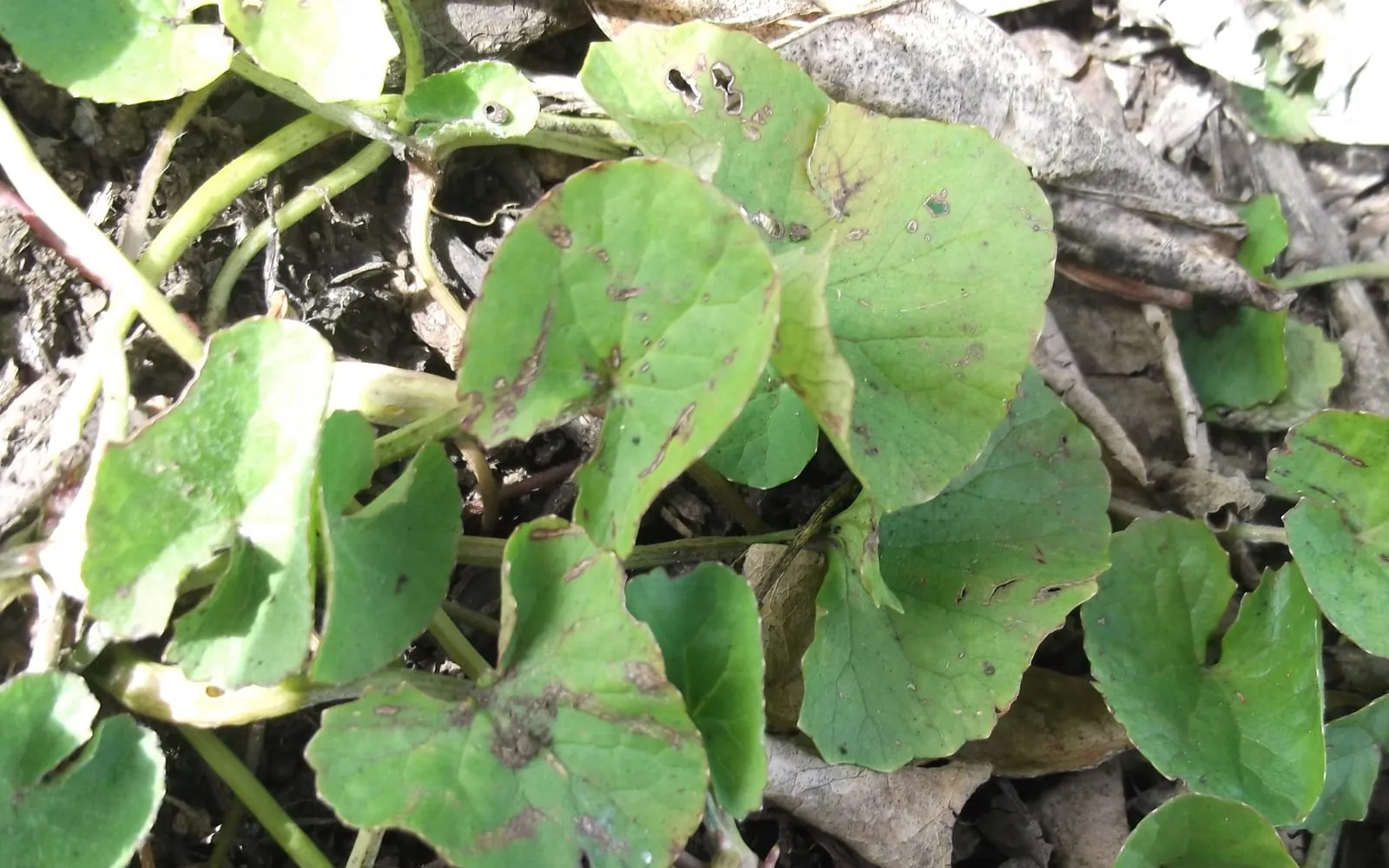
The plant creeps by stolons that run across the soil surface, rooting where they touch, exactly as a strawberry does. From each rooted node a small rosette of leaves rises on stalks 5 to 15 cm long.
Each leaf blade is round to kidney-shaped, 2 to 5 cm across, with a scalloped margin and palmate veins radiating from where the stalk meets the blade. The texture is soft and slightly fleshy and the colour a fresh mid-green. Crushed, the leaf smells faintly of celery, which gives away the family.
Flowers are the size of a pinhead and hard to find. Three or four sit in a tiny umbel on a very short stalk, tucked underneath the leaves at ground level, greenish white to pink. The fruits that follow are small, flattened and ribbed, in the manner of the whole carrot family.
Where it is from
The species grows across a huge area of the tropics and subtropics. It is found through India and Sri Lanka, southern China, south-east Asia and Indonesia, and again in northern Australia, much of Africa and parts of the Pacific. Whether all of that range is native is unresolved, and the plant travels readily with soil and water.
Its habitat is damp open ground, meaning paddy bunds and ditch banks, damp grassland and stream sides, and lawns in wet climates. It behaves as a lawn weed in Sri Lanka and Australia, which explains how easy it is to grow when the temperature suits.
It has naturalised in the southern United States, in the Pacific and in parts of southern Europe, and is listed as an invasive weed in wetlands in a few of those places. A frosty winter removes any risk of that.
How it grows
Growth is by stolon. A single plant sends runners in every direction, and each runner roots and produces a new rosette every few centimetres, so a plant fills a 30 cm pot in a season and then climbs over the rim.
The plant grows year round in the tropics with no dormancy. In a cool-climate conservatory it slows to nothing from November and restarts in March, holding its leaves through the winter if kept warm enough.
Roots are shallow and fibrous and sit in the top few centimetres, which is why the plant is so intolerant of drying out. A wide shallow pot suits it better than a deep one.
Through the seasons
Start plants in spring from divisions or rooted runners. Push a rooted node into damp compost in a wide pot, keep it warm and shaded from the fiercest sun, and it establishes within a fortnight.
Through summer the pot can go outside once nights are reliably above 12 deg C, in dappled shade with a saucer of water underneath. Pick leaves from June by cutting stalks at the base, taking no more than a third of the plant at a time.
Bring it in before the first frost, cut back any damaged growth and keep it on a warm windowsill through the winter with much less water than in summer, but never dry. Repot and divide in March.
Care difficulty
Easy given warmth and moisture, and impossible without either. There is no third requirement. The plant tolerates poor light, cramped pots, hard water and irregular feeding.
The mistakes people make with it are seasonal. Leaving it outside into October kills it with the first frost, and watering it in January as though it were still in growth rots the crown in cold compost.
If it becomes congested, pull the whole mat apart in spring and replant a few rooted pieces. That resets the plant and gives spares.
Watering
Keep the compost damp at all times through spring and summer, with a saucer of water under the pot in hot weather. The plant comes from wet ground and shows stress within a day of drying out.
Reduce watering from October, keeping the compost barely moist rather than wet. Cold wet compost in low light is what rots the shallow roots over winter.
Rainwater is preferable if you have it. Hard tap water does no obvious harm and leaves a deposit on the leaves that spoils the look of a plant you intend to eat.
Warning signs, diseases and pests
Slugs and snails are the outdoor problem and they are serious, since a soft ground-hugging leaf is exactly what they want. Standing the pot on a table or a gravel bed helps more than anything applied to the plant.
Aphids gather on new leaves in a warm greenhouse and whitefly builds up under glass in summer. Both come off with a rinse under a tap, which suits a plant whose leaves you plan to eat better than any spray.
Root rot is the winter risk. A plant kept wet and cold yellows from the centre outward and the stolons go soft. Keeping it warmer and drier from November prevents it.
Growing environment
Bright shade is ideal. The plant takes full sun where the soil stays wet and scorches at the leaf margins in sun with a dry root, so shade is the safer default in a pot.
Compost should be moisture-retentive and reasonably rich. A loam-based compost with added garden compost suits it, in a wide shallow pot rather than a deep one.
Temperature is the limit. Above 10 deg C at all times, ideally 20 to 30 for active growth. This is a plant for a windowsill, a heated greenhouse or a conservatory, and it goes outside only for the summer.
Feeding
A dilute balanced liquid feed every fortnight from April to September keeps the leaves large and soft, which is what you want from a plant grown for salad.
Stop feeding in autumn. A plant ticking over in low light cannot use it, and fertiliser salts in cold wet compost damage the shallow roots.
Repot into fresh compost each spring rather than relying on feeding to keep an old exhausted pot going. Dividing at the same time keeps the plant vigorous.
Troubleshooting
Is gotu kola the same as brahmi? Both plants are called brahmi in India. This one is Centella asiatica, with round scalloped leaves on long stalks, and the other is Bacopa monnieri, a marsh herb with small oblong fleshy leaves. They are unrelated. A packet labelled brahmi could hold either.
Can I grow it outdoors here? Only for the summer. It is killed by frost, so it goes out in June and comes back in before autumn.
Is it the same as marsh pennywort? No. Hydrocotyle vulgaris is a native British wetland plant with a leaf stalk attached at the centre of a circular blade, like an umbrella. Centella’s stalk joins at a notch in the edge of a kidney-shaped leaf.
How much can I pick? Up to about a third of the leaves at a time in the growing season, cutting the stalks at the base. The plant regrows quickly in warmth.
My leaves are small and the plant looks starved. Usually a congested pot. The mat exhausts the compost within a season. Divide it in spring and repot into fresh compost.
Does it flower? Yes, though the flowers are minute and hidden under the leaves at ground level. Most growers never notice them.
Is it safe to eat every day? It is a daily vegetable in Sri Lanka. The cautions in the literature attach to concentrated extracts taken over long periods rather than to leaves in a salad, and anyone on prescribed medication should mention any supplement use to their GP.