
Outdoor plant
Twinleaf
Jeffersonia diphylla
Also known as Rheumatism Root, Helmet Pod
How to grow twinleaf, Jeffersonia diphylla, a woodland perennial with a two-halved leaf and a lidded seed pod that needs shade and limy soil.
At a glance
- Difficulty
- Moderate
- Water
- Keep the soil moist in spring and in dry spells
- Light
- Partial to full shade
- Temperature
- Very hardy, dying back and returning each spring
- Hardiness
- USDA 4-8, RHS H6, hardy to -30 C
- Type
- Low herbaceous perennial, long-lived and slow to build
- Height
- Up to 25 cm
- Native to
- Eastern North America
Fully hardy, spending winter dormant below ground and coming up in early spring. It grows in rich deciduous woodland, often over limestone, so it needs dappled shade, a humus-rich soil that stays moist through spring, and a leaning towards neutral or alkaline instead of strongly acid ground. It dislikes summer drought and hot sun, and needs no special winter protection within its range.
Hardiness zones describe winter cold alone. Summer heat, humidity, rainfall and the length of the growing season decide as much, so treat the range as the outer limit rather than as a recommendation.
Not known to be toxic
Twinleaf is not listed as toxic by the ASPCA or the RHS. Its root was used in North American herbal medicine, giving it the old name rheumatism root, and the family it belongs to does contain plant alkaloids, but the species is not documented as a poisoning hazard and is not treated as a dangerous garden plant. As with any medicinal plant, there is no reason to eat it, and handling and growing it pose no problem.
Sources: RHS potentially harmful garden plants, ASPCA toxic and non-toxic plants
About
Twinleaf takes its name from its leaf, which is split almost to the base into two matching halves, so each one looks like a pair of blue-green wings or an open butterfly on a slender stalk. The leaf is unusual enough that the plant is worth growing for foliage alone, and it holds that fresh, distinctive shape from spring right through summer.
The flower is a brief bonus. In early to mid spring, before the leaves are fully open, each plant sends up a single white flower of eight petals on a bare stalk, about the size and simplicity of a bloodroot flower. It lasts only a day or two, and a spell of wind or rain can strip it, so catching it in full is part of the pleasure.
It is a woodland plant for a shady, humus-rich corner, slow to build but long-lived once settled. The botanical name honours Thomas Jefferson, given by a botanist who admired his knowledge of natural history.
Appearance and character
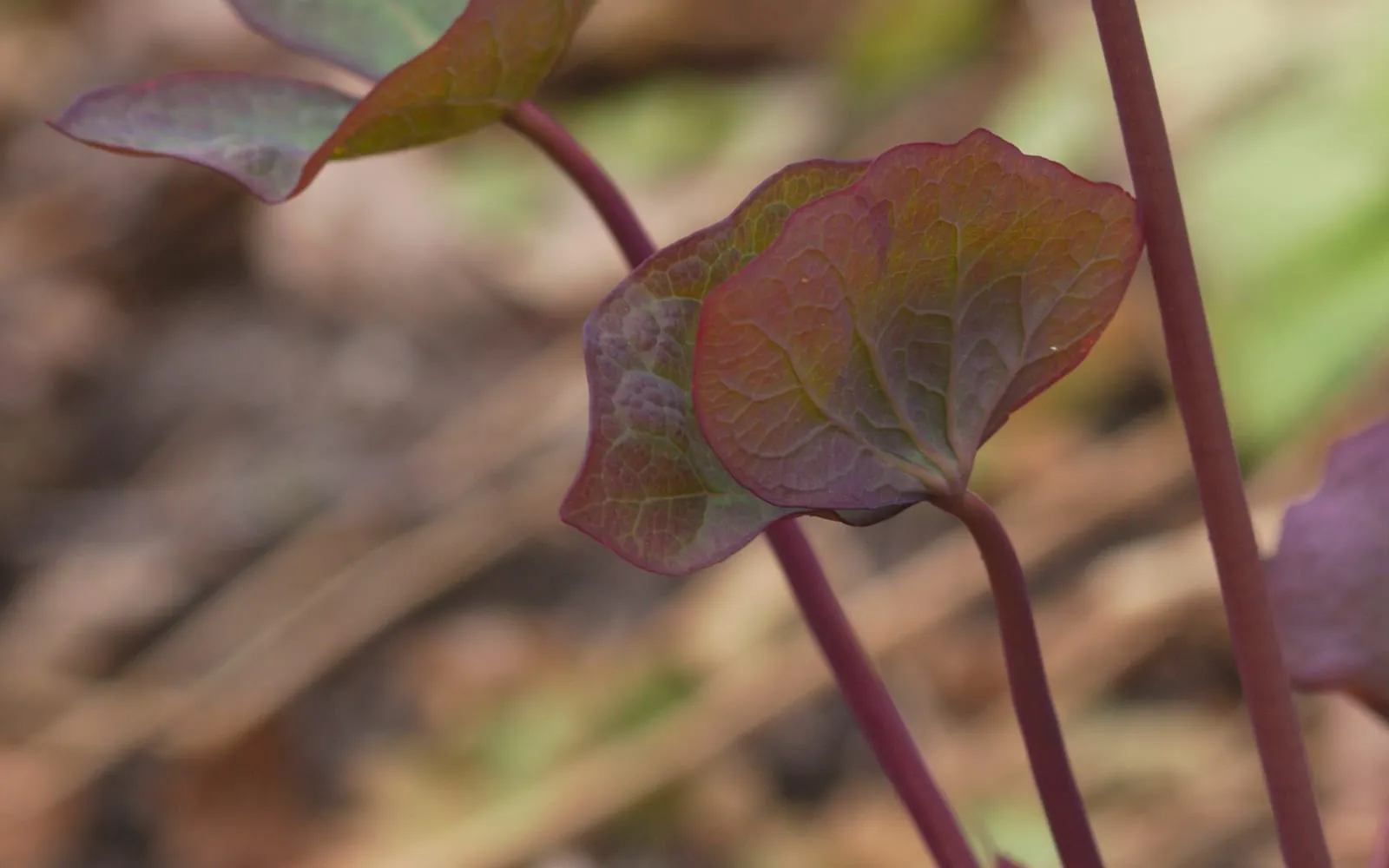
The leaves define the plant. Each is divided into two symmetrical lobes joined at a central notch, blue-green and smooth, carried on a long thin petiole, and the paired shape is where both the common name and the epithet diphylla come from.
Flowers are solitary, white and cup-shaped, with eight petals and a boss of yellow stamens, opening in earliest spring on a leafless stem that rises with the unfurling foliage. They are short-lived, often gone within a couple of days.
The seed pod is a green, pear-shaped capsule that opens by a hinged lid part way down, like a tiny lidded pot, spilling seeds that ants carry off and disperse.
The whole plant is low and neat, rarely more than twenty-five centimetres tall, forming a slowly expanding clump instead of spreading or running.
Where it is from
Jeffersonia diphylla grows in rich deciduous woodland across eastern North America, frequently on soils derived from limestone, in the dappled shade beneath trees that are still bare when it flowers. It is a plant of cool, moist, leafy ground.
Give it summer shade, soil kept moist and rich in leaf litter, and neutral to alkaline ground. It has no tolerance for hot, dry, open sites, where it will not persist.
How it grows
Plant in a shady or partly shaded position in humus-rich, moisture-retentive but well-drained soil, ideally neutral to slightly alkaline. A woodland edge, a north-facing bed or the shade of shrubs all suit it, alongside other woodlanders such as mayapple and barrenwort.
Work leaf mould or garden compost into the soil before planting, and set the crown at the depth it grew before. Twinleaf does badly with deep planting and root disturbance, and is slow to recover from either.
Leave it undisturbed once planted. It builds up gradually over years into a good clump and does not respond well to being lifted and divided, so choose the position with the long term in mind.
Mulch each year with leaf mould to feed the plant gently and keep the soil cool and moist, mimicking the leaf litter of its woodland home.
Through the seasons
Early spring brings the folded leaves and the single white flower rising together, the flower fleeting and easily missed.
Late spring the leaves expand fully and the curious lidded seed pods form and ripen. This is a good time to collect and sow fresh seed if you want more plants.
Summer is quiet foliage in the shade. Keep the soil moist through any dry spell, and the leaves hold their shape and colour well.
Autumn the foliage dies back and the plant returns to dormancy underground. Mulch with leaf mould now or in early spring.
Care difficulty
Moderate, and mostly a question of patience and the right spot. Where it has shade, a moist limy soil and freedom from disturbance, twinleaf is hardy, healthy and permanent, asking almost nothing. The difficulty is that it establishes slowly, responds poorly to being moved, and needs conditions a hot, dry or strongly acid garden cannot give. Get the position right at the start and leave it be.
Watering
Keep the soil moist through spring and in any dry spell in summer, since the plant comes from ground that stays cool and damp under a leaf canopy. It does not want to bake dry, and a plant that dries out repeatedly will struggle to establish.
At the same time it dislikes waterlogging, so the soil should drain freely even while holding moisture. A yearly leaf-mould mulch does much of the work of keeping the roots cool and evenly moist.
Warning signs, diseases and pests
Slugs and snails are the main threat, grazing the emerging shoots and the flowers in spring and able to spoil the brief display or set a young plant back. Protect the new growth in the vulnerable weeks.
The short-lived flowers are a disappointment more than a problem. They last only a day or two, and bad weather during those few days can strip them, so some springs give a better show than others.
Poor establishment is the other common issue, and it nearly always traces to the crown being disturbed, planted too deep, or allowed to dry out. A settled, undisturbed plant is trouble-free.
Growing environment
Partial to full shade suits it, the dappled or open shade of deciduous trees being ideal, since it flowers while they are still bare and then shelters under their canopy through summer. Hot, direct sun scorches it.
The soil should be humus-rich, moist but well-drained, and neutral to alkaline. Its natural link with limestone means it takes lime happily, unlike many woodland plants, and only a hot, dry or strongly acid soil is a real obstacle.
A woodland bed, a shady border or the foot of a north wall all work, and it sits well among other shade-lovers like hosta and spring woodlanders that enjoy the same cool, leafy ground.
Shelter is worth having for the sake of the flimsy early flowers, which a cold wind can damage during their brief life.
Feeding
Feed with leaf mould instead of with fertiliser. An annual mulch of leaf mould or well-rotted compost, laid in autumn or early spring, supplies the gentle, steady fertility this woodlander is adapted to and keeps the soil in good heart.
Heavy feeding is unnecessary. The plant grows slowly by nature, and rich fertiliser does nothing to speed it and can do harm. The leaf-litter pattern of its native woods is the model to copy.
Troubleshooting
I missed the flower entirely. It is famously brief, often open for only a day or two, and easily lost to wind or rain. Watch the plant closely in early spring, and grow it for the distinctive foliage and the seed pods as much as for the flower.
It has sat and done nothing since I planted it. Twinleaf establishes slowly and hates disturbance. Check it is not planted too deep, keep the soil moist and mulched, and give it time. A settled plant speeds up after the first year or two.
Will it grow on my acid soil? It prefers neutral to alkaline ground and is associated with limestone in the wild. On acid soil, add some garden lime and plenty of leaf mould, though it will always be happier where the soil is naturally limy.
Can I divide it to make more? Better not. It handles disturbance poorly and does not divide well. Collect the fresh seed from the lidded pods in late spring and sow it straight away, which is the reliable way to raise new plants, if a slow one.
Why are the new shoots being eaten in spring? Slugs and snails, which target the soft emerging growth. Protect the crown as it comes up, since damage at that stage spoils both the flower and the season’s foliage.