
Outdoor plant
Stoneroot
Collinsonia canadensis
Also known as Richweed, Horse Balm, Citronella Horsebalm
How to grow stoneroot, Collinsonia canadensis, a tall woodland mint with lemon-scented foliage and pale yellow flowers, named for its hard knobbly root.
At a glance
- Difficulty
- Moderate
- Water
- Keep the soil moist in dry spells
- Light
- Partial to full shade
- Temperature
- Very hardy; dies back to the root in winter
- Hardiness
- USDA 4-8, RHS H7, hardy to -30 C
- Type
- Herbaceous perennial from a hard woody rhizome
- Height
- 60 to 120 cm
- Native to
- Eastern North America
Fully hardy, dying back each winter and returning from its woody root in spring. It grows in rich, moist, deciduous woodland, so it needs cool shade and a soil that stays damp and full of leaf litter, and it is untroubled by hard winters. Hot, dry, sunny sites do not suit it, since its needs are those of the forest floor instead of the open border.
Hardiness zones describe winter cold alone. Summer heat, humidity, rainfall and the length of the growing season decide as much, so treat the range as the outer limit rather than as a recommendation.
Not known to be toxic
Stoneroot is not listed as toxic by the ASPCA or the RHS. It is an aromatic member of the mint family, and the crushed foliage smells of lemon or citronella, which is harmless. The hard root has a history of medicinal use, giving the plant its names, but that is a prepared remedy and a matter for a qualified practitioner instead of a garden safety concern, and there is no reason to eat any part of the plant. Growing and handling it pose no problem.
Sources: RHS potentially harmful garden plants, ASPCA toxic and non-toxic plants
About
Stoneroot is a tall woodland member of the mint family from eastern North America, grown as a shade perennial and long known for its rock-hard root. Crush a leaf and it gives off a sharp lemon or citronella scent, which places it among the aromatic mints and explains the name citronella horse balm.
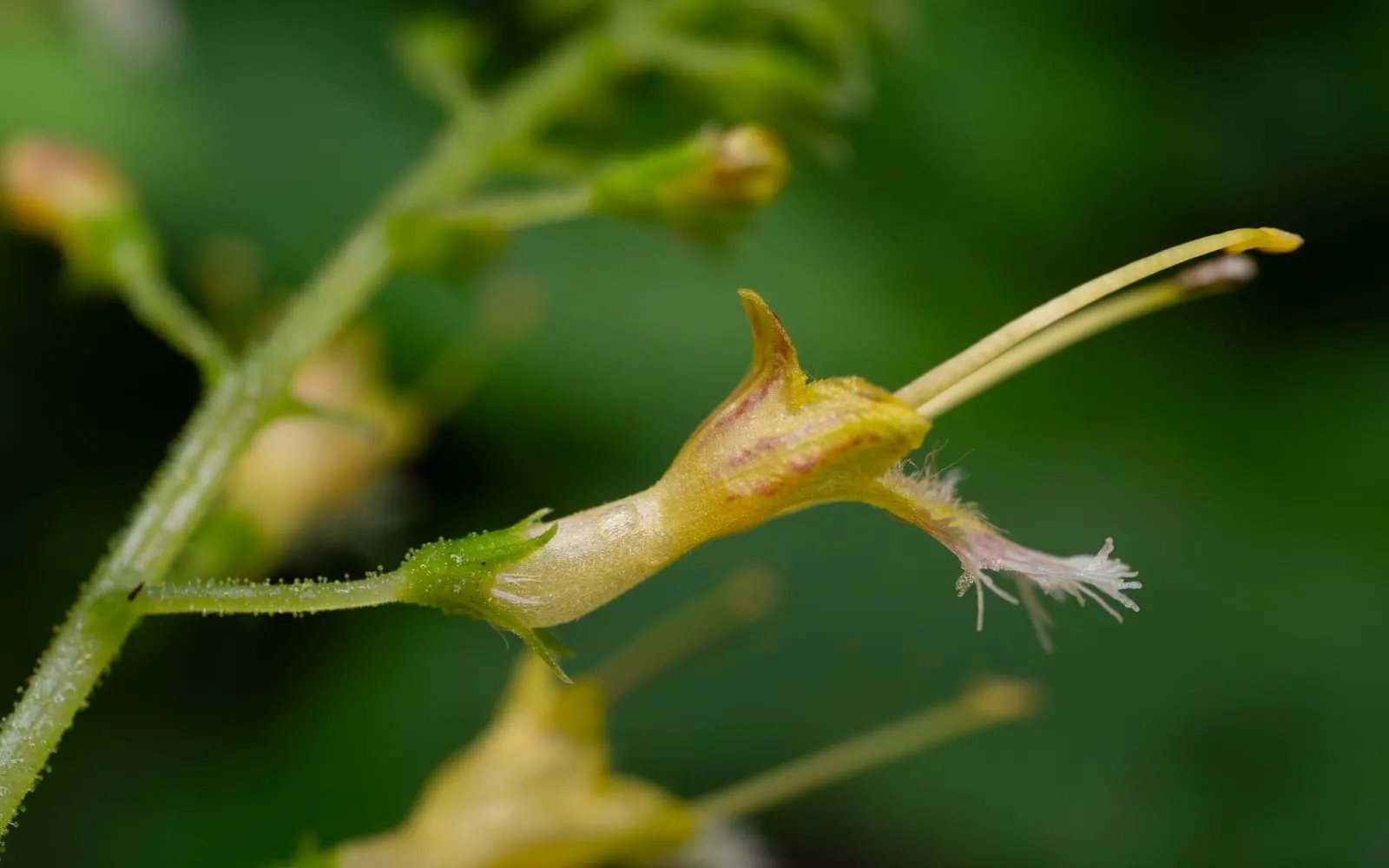
In late summer it opens airy, branching sprays of small pale yellow flowers above its broad leaves, a light and unusual display for a shady spot at a time when many woodland plants have finished. The flowers have a fringed lower lip and a faint lemon fragrance.
The name comes from the root, which is dense, knobbly and so hard it is difficult to cut, and which has a long history of medicinal use in North America. As a garden plant it is a strong, easy native for moist shade, and this guide covers growing it instead of any medicinal use.
Appearance and character
Leaves are large, broadly oval, pointed and toothed, held in opposite pairs up square stems in the way of the mint family, and they release a lemon or citronella scent when bruised.
Stems are upright, square in cross-section, and build into a bushy clump some sixty centimetres to well over a metre tall in good woodland soil.
Flowers open in late summer in loose, branching, airy panicles above the foliage, each a small pale lemon-yellow tube with a fringed, flaring lower lip, lightly fragrant and attractive to insects.
The root is the origin of the name, a hard, woody, knobbly rhizome, unusually dense and tough, which is the part with the plant’s medicinal history.
The plant is a leafy, upright woodlander topped by small yellow flowers, useful for its late season and its tolerance of shade rather than for one bold feature.
Where it is from
Collinsonia canadensis grows in rich, moist deciduous woodland across eastern North America, in the cool shade of the forest floor, on humus-rich soils full of leaf litter. It is a true woodland plant.
Those conditions explain what it needs in a garden. It needs shade, a soil that stays moist and rich, and the leaf-litter fertility of woodland. In that setting it grows strongly and stays healthy. A hot, dry or sunny position is the wrong place for it.
How it grows
It grows readily in moist, shaded, humus-rich soil, building a leafy clump each spring from the hard rootstock and flowering in late summer, then dying back with the cold. Given the right shady, damp spot it is undemanding.
Plant it in partial to full shade in soil improved with plenty of leaf mould or compost, and keep it moist through dry spells. A woodland bed, a shady border or the north side of a wall all suit it, among other shade lovers.
Cut the dead stems down in late autumn or late winter, and mulch each year with leaf mould to feed the plant and keep the soil moist and rich. It can be divided in spring if you want more, though the hard root takes some effort to cut.
It self-seeds gently in suitable conditions without becoming a nuisance, and an established clump is long-lived and largely looks after itself in the right place.
Through the seasons
Spring brings new shoots from the rootstock, growing quickly in the warming, moist soil, and a time to watch for slugs.
Summer is leafy growth, the bushy clump filling out and the flower panicles beginning to form towards late summer.
Late summer is the flowering, the airy sprays of pale yellow flowers opening above the leaves when much else in the shade has finished.
Autumn and winter the plant sets seed and dies back to its hard root, resting underground until spring. Cut it down and mulch during this time.
Care difficulty
Moderate, and easy in the right place. Given moist, shaded, humus-rich soil it is hardy, healthy, long-lived and little troubled, needing only a yearly mulch and some slug protection in spring. The one way to struggle with it is to plant it in sun or dry ground, which its woodland nature will not accept. Match it to shade and moisture and it needs little attention.
Watering
Keep the soil moist through the growing season, watering in dry spells, since the plant comes from damp woodland and dislikes drying out. A leaf-mould mulch does much of the work of holding moisture in the soil.
An established clump in naturally moist, shaded ground needs little extra water, while one in a drier or more open spot needs closer attention and heavier mulching to keep it happy.
Warning signs, diseases and pests
Slugs and snails are the main threat, grazing the soft new shoots in spring and able to set a clump back before it gets going. Protect the emerging growth in the vulnerable weeks.
Beyond that it is a strong, healthy plant with few pests or diseases, one of the easier native woodlanders once it has the shade and moisture it needs.
The aromatic foliage and hard root are harmless to handle, and the plant poses no toxic hazard in the garden.
Growing environment
Partial to full shade suits it, matching the woodland floor it comes from. It grows poorly and scorches in full sun, and is at its best in the dappled or open shade of trees or a north-facing bed.
The soil should be moist, rich and humus-rich, improved with leaf mould or compost and kept from drying out. Cool, damp, leafy ground is ideal, and hot, dry or poor soil is not.
It combines well with other shade-loving perennials such as hosta and astilbe, giving height and a late flush of flower among them, and suits a woodland or shady wildlife planting.
Feeding
Feed with leaf mould instead of fertiliser. An annual mulch of leaf mould or garden compost supplies the steady, gentle fertility the plant is adapted to and keeps the soil moist and rich at the same time.
Heavy feeding is unnecessary and can push soft, floppy growth. Use the woodland pattern: steady, mulch-based feeding rather than strong fertiliser.
Troubleshooting
Why is the root so hard? That is natural and is where the name stoneroot comes from. The rhizome is unusually dense and woody, hard enough to be awkward to cut, and it is the part with the plant’s medicinal history.
The leaves smell of lemon. That is normal for this aromatic mint, and gives it the name citronella horse balm. The scent is harmless and one of the plant’s pleasant features.
It is struggling in a sunny border. Wrong place. Stoneroot is a woodland plant that needs shade and moist, rich soil. Move it to a shaded, damp spot improved with leaf mould and it should recover.
Can I use the root medicinally? The hard root has a history of medicinal use, but that is a matter for a qualified practitioner and not something to attempt from a garden plant. This guide covers growing it, not any medicinal use.
How do I get more plants? Divide an established clump in spring, cutting the hard root into pieces each with roots and shoots, or let the plant self-seed gently and lift the seedlings. Division takes some effort because the root is so tough.