
Outdoor plant
Unicorn Root
Aletris farinosa
Also known as True Unicorn Root, Colicroot, Star Grass
How to grow unicorn root, Aletris farinosa, a North American bog plant with a flat rosette and a wand of mealy white flowers that resists cultivation.
At a glance
- Difficulty
- Moderate
- Water
- Keep the soil moist in the growing season
- Light
- Full sun to partial shade
- Temperature
- Very hardy; dies back to the rosette and root
- Hardiness
- USDA 4-9, RHS H5, hardy to -30 C
- Type
- Herbaceous perennial from a rosette and short rhizome
- Height
- 30 to 90 cm in flower
- Native to
- Eastern North America
Fully hardy, dying back each winter and returning from its rhizome in spring. It grows in the sandy, acidic, low-nutrient soils of pine barrens, damp meadows and bog edges, so it needs an open, acidic, sandy site that stays moist in the growing season and never turns rich or limy. It has no special heat or chill requirement across its range.
Hardiness zones describe winter cold alone. Summer heat, humidity, rainfall and the length of the growing season decide as much, so treat the range as the outer limit rather than as a recommendation.
Harmful if eaten
- Do not eat
- The root, which is intensely bitter
- Harm from
- Eating it
- Affects
- People
The plant is grown, where it can be grown at all, as a native wildflower instead of for eating, and the bitter root is the part with a history of medicinal use, giving it the name colicroot. The fresh root is strongly bitter and reported to cause nausea and stomach upset if taken in quantity, so it is not something to dig up and eat, and any medicinal use is a matter for a qualified practitioner. Handling the plant is harmless. The foliage is not a recognised hazard.
Sources: RHS potentially harmful garden plants, North Carolina Extension plant toxicity database
About
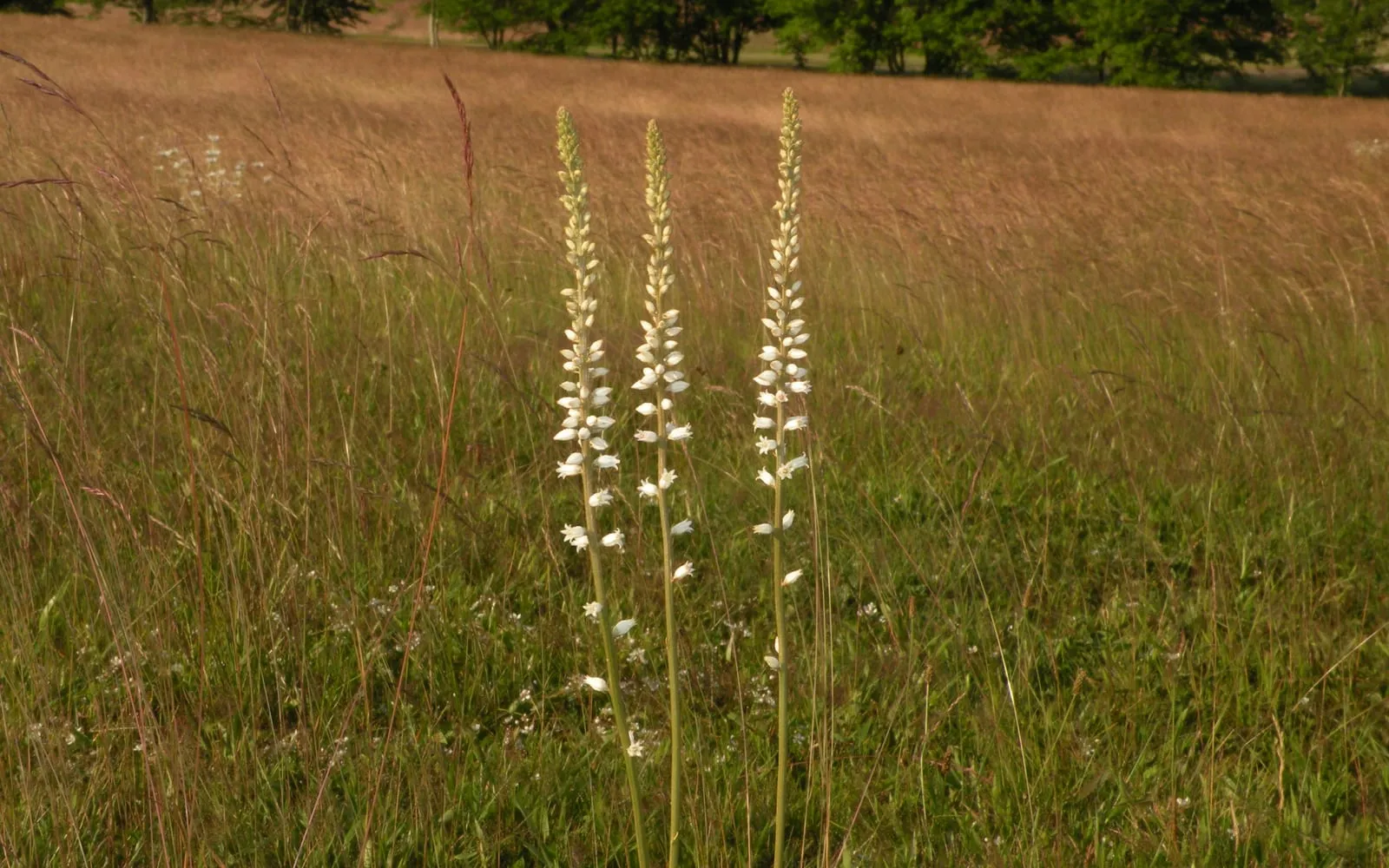
Unicorn root is a North American wildflower of damp, sandy, acid ground, grown occasionally in native-plant and bog gardens and long known for its bitter, medicinal root. It forms a flat rosette of pale, pointed leaves that lies against the soil like a green star, from which a slender flowering wand rises in summer.
The wand carries small white flowers with a curiously rough, mealy surface, as though dusted with flour, which is what the species name farinosa records. That mealy texture and the star-like rosette are the plant’s clearest field marks.
Its names cause some confusion, and one is worth settling at once. This is the true unicorn root or colicroot, Aletris farinosa. It is a different plant from false unicorn root, Chamaelirium luteum, another North American medicinal that shares the unicorn name, and the two should not be muddled.
Appearance and character
The rosette lies flat on the ground, a ring of narrow, pointed, yellowish-green leaves radiating from the centre like the points of a star, which gives the plant the name star grass. It is evergreen or nearly so in mild areas.
The flower wand rises from the centre in summer, a slim, upright stem thirty to ninety centimetres tall, mostly bare, topped with a slender spike of flowers.
Flowers are small, white, tubular and urn-shaped, narrowing at the mouth, and their surface is rough and mealy to both eye and touch. They open from the base of the spike upwards.
The root is a short, knotty rhizome, bitter to the taste, and is the part with the plant’s long medicinal history and the reason it was dug from the wild.
The whole plant is understated, an open rosette and a thin wand of pale flowers, grown for interest and for its place in a native or bog planting instead of for a bold display.
Where it is from
Aletris farinosa grows across eastern North America, in pine barrens, damp sandy meadows, open woods and the edges of bogs, on acidic, sandy, nutrient-poor soils. It is a plant of open, sunny to lightly shaded, lean ground.
Those conditions are what make it hard to grow. It is adapted to acid, sandy soil that is moist in the growing season and never rich, and it responds poorly to disturbance and dislikes ordinary garden soil. It is uncommon in cultivation and best attempted only where its needs can be met closely.
How it grows
In the wild it grows slowly from seed and a short rhizome, holding its rosette year-round and sending up its flower wand in summer. It is long-lived and undemanding once settled in the right ground, but slow and particular about getting there.
Grow it in an open, sunny to lightly shaded site with moist, sandy, acidic, unfed soil, such as a bog garden margin or a sand bed. It transplants badly and does badly if its roots are disturbed, so a container-raised young plant set out carefully has the best chance.
Do not feed it or plant it in rich soil, both of which it dislikes. Leave it undisturbed once placed, since it does not respond to division or moving, and be patient, because it establishes slowly.
Collecting plants from the wild is not the answer. Wild unicorn root moves poorly, has declined in places, and rarely survives the attempt, so a nursery-raised plant is the only sensible source.
Through the seasons
Spring brings fresh growth in the rosette as the soil warms, a point to watch for slugs on the soft new leaves.
Summer sends up the flowering wand with its spike of mealy white flowers, the plant’s main season of interest.
Autumn the flowers finish and set seed, and the top of the flower stem dies away as the season cools.
Winter the plant rests as a rosette and rhizome, holding its leaves in mild areas and dying back further where winters are hard.
Care difficulty
Moderate to difficult, and entirely a matter of soil. Where its acid, sandy, moist, unfed conditions can be matched, it is hardy and long-lived and needs almost nothing. In ordinary garden soil it will not settle, and it responds poorly to disturbance and transplanting, so the challenge is establishing it at all rather than caring for it afterwards.
Watering
Keep the soil moist through the growing season, since the plant comes from damp meadows and bog edges and dislikes drying out. At the same time it needs sharp, sandy drainage instead of heavy, stagnant wet.
An established plant in suitable ground needs little beyond the natural moisture of a damp site, and a sand or bog bed that stays reliably moist suits it far better than a border watered by hand.
Warning signs, diseases and pests
Failure to establish is the commonest problem, usually from the wrong soil or root disturbance. Rich, limy or dry ground does not suit it, and a moved or divided plant often fails. The best response is to start with the right site and leave the plant alone.
Slugs graze the soft spring rosette and can set a young plant back, so protect the new growth in the vulnerable weeks.
The bitter root should not be eaten, though the plant is harmless to handle and poses no hazard in the garden beyond that.
Growing environment
Full sun to partial shade suits it, with open, sunny ground giving the best growth in the wild. It is not a plant for deep shade.
The soil is the part to get right. It must be sandy, acidic, low in nutrients and moist in the growing season, matching the pine barrens and bog edges it comes from. Rich, limy, heavy or dry soils do not suit it.
A bog garden margin, an acidic sand bed, or a damp, open, sandy spot are the places it might succeed, and it is best grown among other acid-loving, lean-soil natives instead of in a conventional border.
Feeding
Do not feed it. The plant is adapted to poor, unfed ground and feeding does it harm instead of good, encouraging soft growth and shifting the soil away from the lean, acidic conditions it needs. Leave the soil poor.
Troubleshooting
Is this the same as false unicorn root? No. This is true unicorn root, Aletris farinosa. False unicorn root is a different plant, Chamaelirium luteum, which shares the name but is another species entirely. Do not confuse the two.
It died soon after I planted it. Almost always the wrong soil or root disturbance. It needs acid, sandy, moist, unfed ground and hates being moved. Match the soil closely and set out a young plant with minimal root disturbance.
Why are the flowers rough and mealy? That is natural and is what the name farinosa, meaning floury, describes. The mealy surface of the flowers is a normal feature of the plant.
Can I use the root for colic? The bitter root gave the plant its old name colicroot and has a history of medicinal use, but that is a matter for a qualified practitioner, not something to attempt from a garden plant. The fresh root can cause nausea if taken in quantity.
Can I dig one up from the wild? No. Wild plants transplant poorly, rarely survive the move, and the species has declined in places. Buy a nursery-raised plant instead.