
Outdoor plant
Blue Cohosh
Caulophyllum thalictroides
Also known as Papoose root, Squaw root, Yellow ginseng
How to grow Caulophyllum thalictroides in a shaded bed. Blue-grey spring foliage, deep blue seeds that are not berries, and why the historic use is not repeated here.
At a glance
- Difficulty
- Moderate
- Water
- Through the first summer, then in dry spells
- Light
- Partial to deep shade
- Temperature
- Fully hardy, to about minus 30 deg C
- Hardiness
- USDA 3-8, RHS H7, hardy to -30 C
- Type
- Hardy herbaceous perennial from a knotty rhizome
- Height
- 40-80 cm
- Native to
- the deciduous woodlands of eastern North America
Rich moist woodland shade and a cold winter are both needed, and the seed carries a double dormancy that takes two winters outdoors. Cold is no obstacle. The blue fruits are seeds rather than berries and they are toxic, so site it away from anywhere children forage.
Hardiness zones describe winter cold alone. Summer heat, humidity, rainfall and the length of the growing season decide as much, so treat the range as the outer limit rather than as a recommendation.
Toxic if eaten
- Do not eat
- The seeds and the rhizome
- Harm from
- Eating it and handling it
- Affects
- People, cats and dogs
NC State Extension lists Caulophyllum thalictroides as poisonous, naming the seeds and the roots, and describing stomach pain, vomiting and headache from eating them, along with skin irritation from handling the plant. The seeds are the garden hazard. They are a striking deep blue, look exactly like berries, sit at about knee height in late summer and are not berries at all but naked seeds. Children should be told to leave them. The plant does not appear on the RHS list of potentially harmful garden plants, which reflects how rarely it is grown in British gardens. The separate and more serious record concerns its historic use to induce labour. Case reports in the medical literature describe severe harm to newborns following maternal use of blue cohosh, including heart failure and stroke, attributed to the alkaloids the plant contains. That is why this guide records the historic use as history and goes no further with it.
Sources: NC State Extension, Caulophyllum thalictroides, RHS potentially harmful garden plants, ASPCA toxic and non-toxic plants, NHS on herbal medicines
About
Blue cohosh is a woodland perennial worth growing for its first three weeks. The shoot pushes through in April already carrying its divided leaves, and the whole plant emerges an extraordinary blue-grey, almost purple in some individuals, before greening as it expands. Nothing else in a shade border does that.
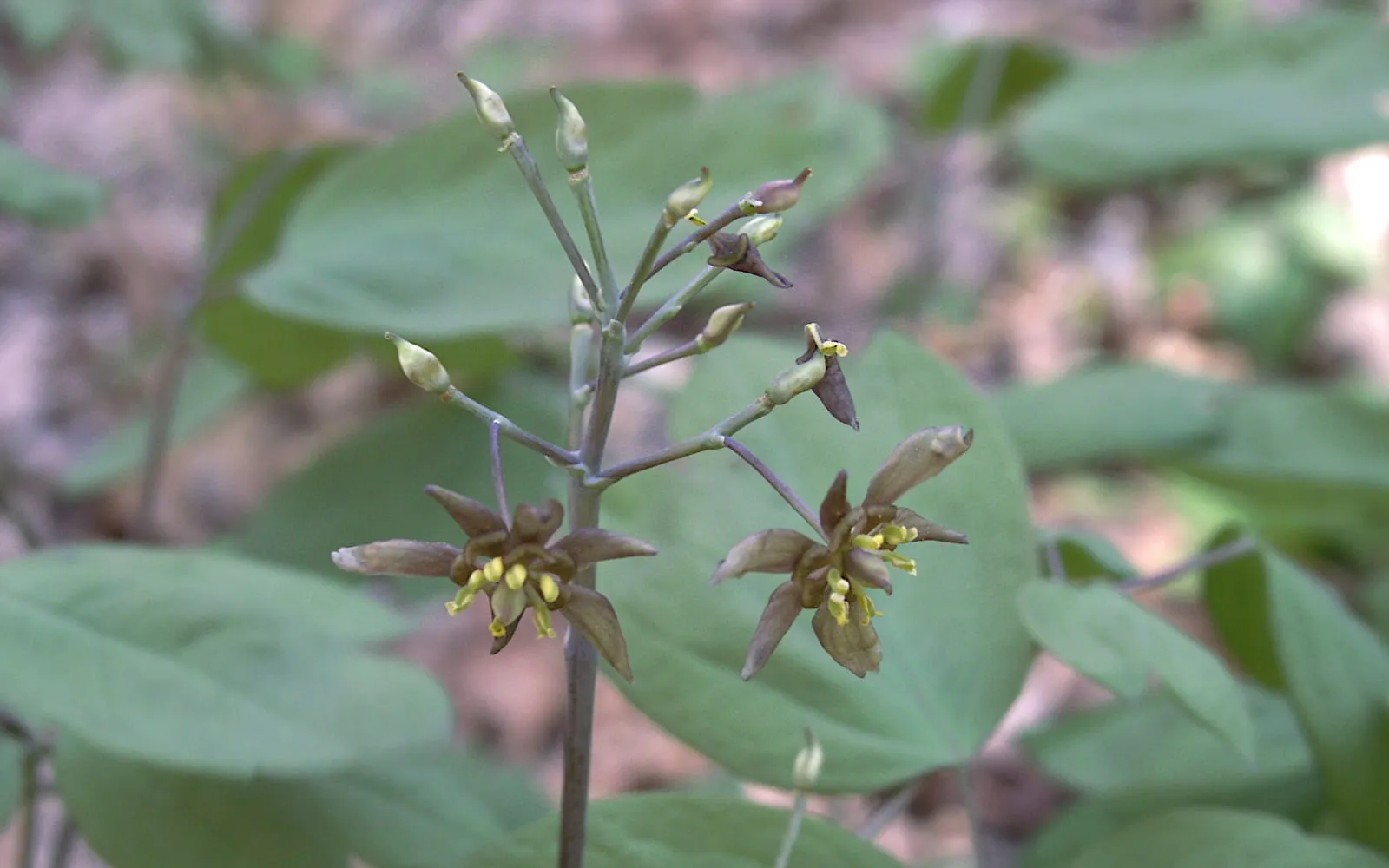
The foliage that follows is fine and much divided, resembling a meadow rue, which is where thalictroides comes from. The flowers in May are small and yellow-green and easy to miss, and what follows them is the plant’s other feature: seeds the size of a pea in a deep matt blue, held on stout stalks through late summer.
Those are seeds rather than berries. The ovary wall splits and falls away early, leaving the seeds to develop naked and exposed, which almost no other flowering plant does. They are poisonous, they look appetising, and they sit at knee height.
Appearance and character
A single stout stem rises from the rhizome and divides near the top into a large compound leaf, three times divided, with each leaflet lobed at the tip. The whole arrangement reads as a cloud of fine foliage on one stalk.
The spring colour is the reason to grow it. Emerging growth is a blue-grey with a purple cast, sometimes strong enough to look artificial, fading to a dull green by early summer. It persists in some plants longer than in others.
Flowers open in May in a small loose cluster above the leaf, each about 1 cm across with six yellow-green or purplish sepals that do the work of petals. The seeds that follow swell through the summer to about 1 cm, ripening a deep matt blue with a whitish bloom, held two or three to a stalk.
Where it is from
The species grows across eastern North America from New Brunswick to Alabama and west to Manitoba and Arkansas, in rich moist deciduous woodland with deep leaf litter, often on slopes and often alongside goldenseal, bloodroot and trillium.
It is a plant of undisturbed woodland soil with a high organic content and does not colonise open or compacted ground. Populations are local rather than widespread even within its range.
The name cohosh is Algonquian and is applied to several unrelated woodland plants, including black cohosh, Actaea racemosa, which is a different genus in a different family. The two are not interchangeable in any sense.
How it grows
Growth is a single spring event. The shoot emerges in April with the leaf and the flower buds already formed inside it, expands over two or three weeks, and then holds through the summer without further extension.
The rhizome is knotty and creeping, extending slowly and marked with the scars of previous years’ stems, which allows the age of a plant to be read the way a ginseng root can be.
Seed is slow. It needs a warm period followed by a cold one and germinates in the second spring, and seedlings take four or five years to reach flowering size. Division of the rhizome in autumn is the practical route.
Through the seasons
Plant rhizome divisions in autumn, 5 cm deep in shaded ground improved with leaf mould, 30 cm apart. Autumn planting suits the plant’s cycle better than spring.
The shoot emerges in April in its blue-grey livery, flowers in May, and holds its foliage through the summer. Slug protection in April is the only regular job.
Seeds ripen blue in August and September. Collect them if you want more plants, sow at once into pots left outdoors, and expect germination in the second spring. The top dies down in autumn, and a leaf mould mulch then feeds and protects the rhizome.
Care difficulty
Moderate. The plant is hardy and long-lived once settled and slow to establish and slow to propagate, which is why it is uncommon in the trade.
Give it what a woodland floor gives. That means shade and leaf mould, steady moisture, and no disturbance. In those conditions it needs nothing further and lives for decades.
The one thing to plan for is the seed. In a garden used by young children, deep blue pea-sized seeds at knee height in late summer are worth either explaining or removing.
Watering
Water through the first summer after planting. An established plant in a shaded bed with a leaf mould mulch handles most summers unaided.
The plant wants soil that stays evenly moist without being wet. Drought shows as scorched leaflet margins and an early die-back, which costs the plant that season’s growth.
The rhizome sits shallow and rots over winter in ground that stays saturated, so drainage is the thing to check before planting.
Warning signs, diseases and pests
Slugs take the emerging shoot in April, and since the plant produces one shoot carrying everything, losing it means losing the year. Grit around the crown and a patrol on wet evenings in that month are the whole pest control programme.
Voles work under a winter mulch and eat the rhizomes, so pull the mulch back from the crowns in a garden where they are a known problem.
Leaf scorch means too much sun or too little water at the root. Root rot in waterlogged ground is the only thing likely to kill an established plant, and it shows as a shoot that fails to appear one spring.
Growing environment
Partial to deep shade under deciduous trees. This is a woodland floor species and sun scorches it.
Soil should be deep, moist, rich in leaf mould and free-draining, from acid to neutral. It is worth preparing properly, since the plant will sit undisturbed for many years.
Hardiness is not a consideration. The species survives minus 30 deg C, and a cold winter is part of its cycle rather than a threat.
Feeding
Leaf mould in autumn, and nothing else. A 5 cm layer feeds the plant, keeps the soil cool and protects the shallow rhizome.
Manufactured fertiliser is unnecessary and risks the fine roots. This is a plant adapted to nutrients arriving as slowly rotting leaves.
Improve the soil before planting rather than feeding afterwards, since the plant should not be disturbed once it is in.
Troubleshooting
Is it the same as black cohosh? No. Black cohosh is Actaea racemosa, a different genus in a different family with a tall white flower spike. The shared name comes from Algonquian and is applied to several unrelated woodland plants.
Are the blue things berries? No, they are naked seeds. The ovary wall splits and falls away early, leaving the seeds to ripen exposed, which is unusual among flowering plants. They are poisonous and sit at knee height, so tell children to leave them.
Why is the spring foliage blue? A waxy bloom on the emerging growth, which fades as the leaves expand. It is the plant’s best ornamental feature and it lasts two or three weeks.
Can I grow it from seed? Yes, slowly. Seed needs a warm period then a cold one and germinates in the second spring, and seedlings take four or five years to flower. Division of the rhizome in autumn is much quicker.
Why does the guide not describe the historic use? Because case reports in the medical literature describe severe harm to newborns after maternal use, and a growing guide is not the place to repeat a practice with that record.
Where do I buy one? From a specialist woodland plant nursery. It is slow to propagate, which keeps it uncommon and expensive.
Nothing came up this spring. Check for vole damage under the mulch and for waterlogging. A plant that loses its single shoot to slugs will usually return the following year; a rotted rhizome will not.