
Outdoor plant
Virginia Bugleweed
Lycopus virginicus
Also known as Virginia Water Horehound, Bugleweed
How to grow Virginia bugleweed, Lycopus virginicus, a spreading wetland mint with tiny white flowers that needs caution because of its effect on the thyroid.
At a glance
- Difficulty
- Moderate
- Water
- Keep the soil moist to wet
- Light
- Full sun to partial shade
- Temperature
- Very hardy; dies back in winter
- Hardiness
- USDA 3-8, RHS H6, hardy to -30 C
- Type
- Herbaceous perennial, spreading by runners
- Height
- 30 to 80 cm
- Native to
- Eastern North America
Fully hardy, dying back each winter and returning from its runners in spring. It grows in wet ground, along stream banks, marshes and pond edges, so it needs soil that stays damp. It struggles in dry soil and thrives where the ground stays damp, and it has no special heat or chill requirement across its range.
Hardiness zones describe winter cold alone. Summer heat, humidity, rainfall and the length of the growing season decide as much, so treat the range as the outer limit rather than as a recommendation.
Harmful if eaten
- Do not eat
- The whole plant, taken medicinally
- Harm from
- Eating it
- Affects
- People
Virginia bugleweed is a member of the mint family and is not a poison in the ordinary sense, but it has a real effect on the body that calls for caution. It has a long medicinal use for an overactive thyroid and a racing heart, and it acts on the thyroid, so it should not be taken by anyone on thyroid medication, by anyone with a thyroid condition, or in pregnancy, and any medicinal use belongs with a qualified practitioner. As a garden plant it is safe to grow and handle, and this guide covers growing it instead of using it.
Sources: RHS potentially harmful garden plants, North Carolina Extension plant toxicity database
About
Virginia bugleweed is a spreading wetland perennial of the mint family from eastern North America, grown in damp and boggy corners and long used in herbal medicine. It makes an upright, leafy clump that spreads by runners into a patch, topped through late summer by tiny white flowers clustered where the leaves meet the stem.
It is a plant of wet ground, including stream banks, marshes, ditches and pond edges, where the soil stays reliably damp. In that setting, it is an easy, hardy native for a bog garden or a moist wildlife planting, valued more for its ecology and its medicinal history than for any showy display.
Its medicinal use is the reason many people grow it, but it is also the reason to be cautious. It acts on the thyroid, so this guide covers growing it rather than using it medicinally. Any medicinal use belongs with a qualified practitioner.
Appearance and character
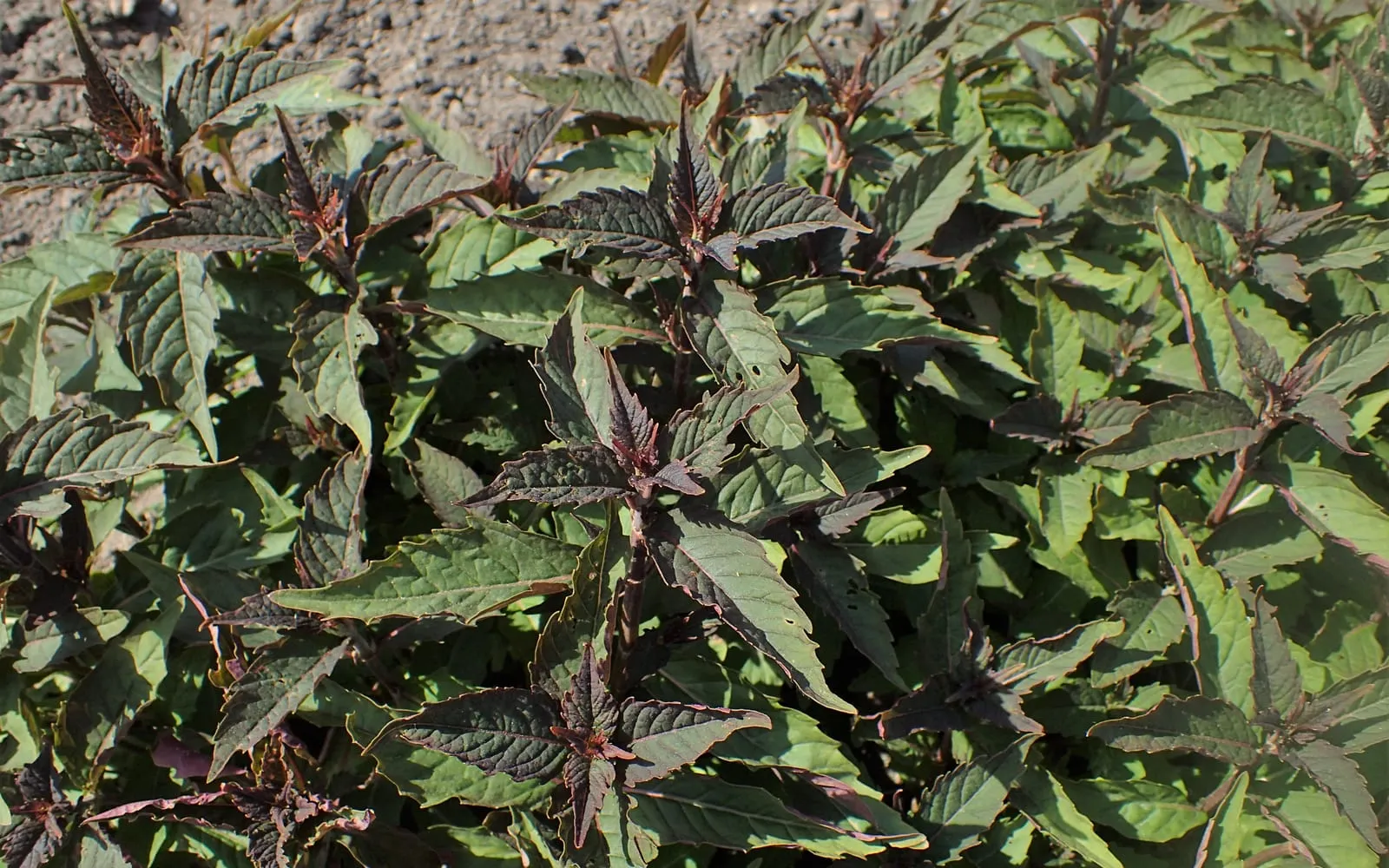
Stems are upright and square, as in the mint family, rising from a network of runners to between thirty and eighty centimetres, and building into a spreading patch instead of a tight clump.
Leaves are lance-shaped, toothed and pointed, held in opposite pairs up the stems, plain mid green and slightly rough.
Flowers are very small and white, clustered in tight whorls where the leaves join the stem, opening through late summer. They are modest and easily overlooked, more use to small insects than to the eye.
The plant spreads by underground and surface runners, forming a widening patch over time, which is worth knowing before placing it in a small space.
The overall look is of a plain, leafy, upright wetland herb, grown for its place in a damp planting and its medicinal interest instead of for a bold show.
Where it is from
Lycopus virginicus grows across eastern North America, in wet meadows, marshes, along streams and at pond and ditch edges, on moist to wet, fertile ground in sun or light shade. It is a true wetland plant.
That habitat sets its one firm need, which is moisture. It has little tolerance for dry ground and thrives where the soil stays damp, so a bog or waterside spot suits it and a dry border does not. Beyond that it is adaptable and hardy.
How it grows
It grows up each spring from its overwintered runners, spreading into a leafy patch through summer, flowering late, then dying back with the cold. In damp ground it is vigorous and easy, asking little.
Plant it in moist to wet, fertile soil in full sun or partial shade, at a pond margin, in a bog bed or in a border kept reliably damp. Keep it wet, since drying out is the main thing it will not accept.
Give it room to spread, or site it where its running growth is welcome, since it widens into a patch and can crowd smaller neighbours. Lift and thin it, or divide it in spring, to keep it in bounds and to make more plants.
Cut the dead stems down in late autumn or winter, and mulch in spring to feed the plant and hold moisture. It is otherwise self-reliant in a suitably damp spot.
Through the seasons
Spring brings new shoots from the runners, growing quickly in the moist, warm soil, and a time to divide or thin the patch.
Summer is leafy growth and spread, the clump widening and the flower whorls beginning to form towards late summer.
Late summer is the flowering, the tiny white flowers opening in their whorls, a quiet display useful to small insects.
Autumn and winter the plant sets seed and dies back to its runners, resting underground until spring. Cut it down during this time.
Care difficulty
Moderate, and easy in wet ground. In the damp soil it needs, it is hardy, vigorous and trouble-free, spreading readily and asking little. The two things to manage are its need for constant moisture and its spreading habit, both simple enough once known. The other caution is medicinal: it acts on the thyroid and should not be taken casually.
Watering
Keep the soil moist to wet at all times, since this is a wetland plant with no real drought tolerance. Generous watering, or a naturally damp site, is what keeps it growing well.
An established patch in wet ground or at a pond margin needs little extra water, while one in an ordinary border needs regular watering and heavy mulching to keep the soil from drying.
Warning signs, diseases and pests
Slugs graze the soft spring growth and can damage young shoots, so protect the emerging growth where slugs are a problem.
Its spreading habit is expected. In a small space it can outgrow its spot and crowd neighbours, so thin or divide it to keep it in bounds.
The plant is safe to grow and handle. The caution is internal use, since it acts on the thyroid and should not be taken by anyone for whom that matters.
Growing environment
Full sun to partial shade suits it, with sun in wet ground giving the sturdiest growth and light shade tolerated where the soil stays damp.
The soil should be moist to wet and fertile, matching the marshes and stream banks it comes from. Dry, free-draining ground is wrong for it, and it is happier in soggy soil than in a well-drained bed.
A pond margin, a bog garden, a rain garden or a damp wildlife planting all suit it, and it belongs among moisture-loving plants where its spread and its small flowers add to a naturalistic, wet-ground scheme.
Feeding
Feed lightly. A spring mulch of compost supplies enough on most damp, fertile soils, and heavy feeding only pushes soft growth on an already vigorous spreader. The mulch also helps hold the moisture the plant depends on.
Troubleshooting
It is spreading into its neighbours. That is its nature, since it runs to form a patch. Thin or divide it in spring, or plant it where its spread is welcome, such as a bog garden with room to fill.
It keeps wilting and browning. Too dry. This is a wetland plant that will not tolerate drying out. Keep the soil moist to wet, move it somewhere damper, and mulch to hold moisture.
Can I use it for an overactive thyroid? It has a medicinal history for exactly that, but it acts on the thyroid and should not be taken by anyone on thyroid medication, with a thyroid condition, or in pregnancy. Any such use is a matter for a qualified practitioner, not for self-treatment.
Is it safe to have in the garden? Yes, to grow and handle. Its caution is about taking it internally, not about having it in the ground, so it is fine in a damp border or bog garden.
How do I get more plants? Divide the patch in spring, since it spreads by runners and lifts and splits easily, or let it spread and lift rooted pieces from the edge of the clump.