
Outdoor plant
Goldenrod
Solidago virgaurea
Also known as European goldenrod
How to grow European goldenrod in a border or wildlife garden. Its late-season yellow spikes, why it is wrongly blamed for hay fever, and its value to autumn pollinators.
At a glance
- Difficulty
- Easy
- Water
- Regular watering while establishing, drought-tolerant once mature
- Light
- Full sun to light shade
- Hardiness
- USDA 4-8, RHS H6, hardy to -15 C
- Type
- Hardy herbaceous perennial
- Height
- 20-80 cm
- Native to
- Europe, Temperate Asia
Reliably hardy through ordinary temperate winters, tolerating a wide range of soil conditions and, unlike some more vigorous North American relatives grown in gardens, staying reasonably well-behaved and clump-forming rather than spreading aggressively. It flowers late in the season, an important source of nectar for pollinators preparing for winter.
Hardiness zones describe winter cold alone. Summer heat, humidity, rainfall and the length of the growing season decide as much, so treat the range as the outer limit rather than as a recommendation.
Not known to be toxic
Goldenrod has no toxicity listing from the RHS or the ASPCA and is considered safe around pets and children. Despite a long-standing popular association with hay fever, its pollen is heavy and insect- carried rather than airborne, and the real culprit for most late- summer hay fever is ragweed, an unrelated plant that flowers at the same time and is wind-pollinated.
Source: RHS
About
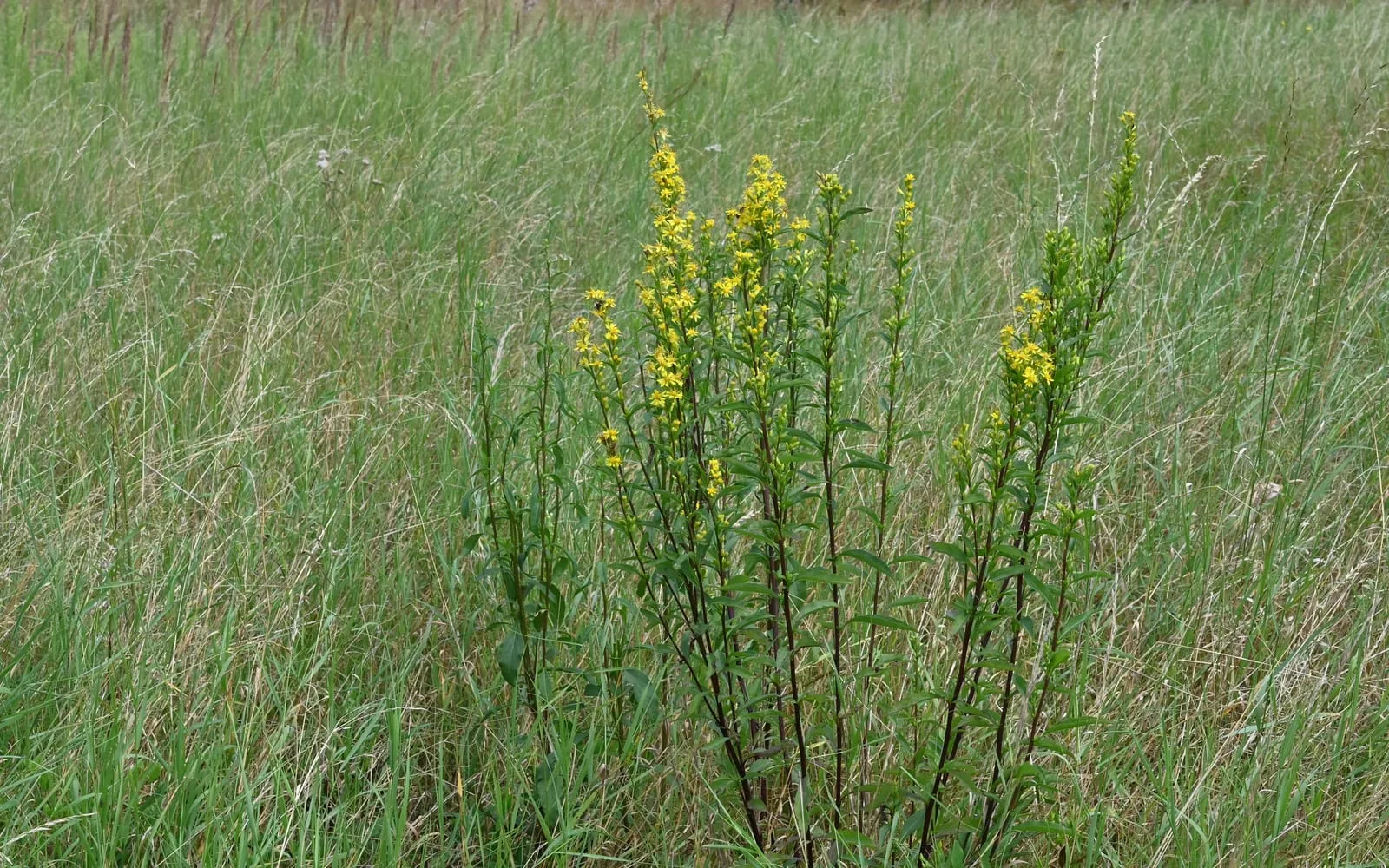
European goldenrod produces dense, upright spikes of small, bright yellow flowers from late summer into autumn, a valuable late-season source of nectar and pollen when many other border plants have already finished flowering for the year. It is a native British and European wildflower, much more restrained and better behaved in a garden setting than some of the taller, more vigorously spreading North American goldenrod species also grown ornamentally.
The plant has an undeserved reputation as a cause of hay fever because it flowers at the same time of year as ragweed, an unrelated and much more significant allergen; goldenrod’s pollen is heavy and sticky, carried by insects rather than the wind, and rarely reaches the airways in the way wind-blown ragweed pollen does.
Appearance and character
Upright, slightly branching stems carry narrow, lance-shaped leaves and are topped with dense, feathery spikes or plumes of many small, bright yellow flowers, opening from late summer and continuing into autumn. Compared with some larger North American Solidago species widely sold in garden centres, this native European species stays much more compact and restrained in habit.
Flower spikes are a significant late-season draw for bees, hoverflies and butterflies, often visibly busy with insect activity on a warm autumn afternoon when few other nectar sources remain available in a typical border.
Where it is from
Woodland edges, grassland and rocky ground across Europe and temperate Asia, tolerant of a range of soil types and light conditions within that broad native distribution.
That native, well-adapted origin is part of why this particular goldenrod species behaves so much better in a garden setting than some of its larger, more vigorously spreading North American relatives, which have become significant garden escapes and even invasive weeds in parts of Europe after being introduced as ornamentals.
How it grows
A hardy perennial forming a modest, slowly expanding clump rather than spreading aggressively by rhizome, flowering on upright stems from late summer. Growth is steady and well-behaved, and this species rarely needs the same kind of active containment some taller garden goldenrods demand.
Because it flowers so late in the season, it plays a particular role in a border or wildlife garden planned for extended pollinator interest, filling a nectar gap between the main summer flush of most other border perennials and the last flowers of autumn.
Through the seasons
Spring fresh growth emerges from the clump as temperatures rise.
Summer foliage develops through the growing season, with flower spikes beginning to form toward the end of summer.
Autumn is the main flowering period, with dense yellow spikes providing a significant late-season nectar source for pollinators.
Winter the plant dies back to ground level, fully hardy and needing no protection through even a severe winter.
Care difficulty
Easy. This is a low-maintenance, well-behaved native perennial, tolerating a range of soil and light conditions while providing valuable late-season interest for very little ongoing care.
Watering
Regular watering supports establishment in the first year. Once settled, this species tolerates real drought reasonably well, needing supplemental watering mainly during an extended dry spell.
Warning signs, diseases and pests
Few significant pests or diseases trouble this species in typical cultivation; aphids occasionally colonise flower stems but rarely cause lasting harm.
Sparse or weak growth in a shaded position usually reflects insufficient light rather than disease, and moving a struggling clump to a sunnier spot generally improves both growth and flowering over the following season.
Growing environment
Full sun to light shade both suit it, and ordinary, free-draining soil gives good results without needing any particular enrichment. This species tolerates poor soil much better than very rich, heavily fed ground.
Feeding
None to minimal. This species performs well in ordinary garden soil without supplemental feeding, and rich conditions offer little benefit for a plant already well suited to lean ground.
Troubleshooting
Growth is sparse or weak. Usually too much shade. Move the plant to a sunnier position for stronger growth and more reliable flowering.
You are concerned goldenrod will cause hay fever nearby. This is a common misconception. The real culprit at this time of year is usually ragweed, an unrelated, wind-pollinated plant; goldenrod’s heavier, insect-carried pollen rarely becomes airborne in any quantity.
You want a goldenrod for a smaller garden without aggressive spread. This native European species is a much better choice than several larger North American Solidago species sold as garden ornamentals, which can spread more vigorously than a small border comfortably accommodates.
Flowering seems to finish earlier than expected. Check the growing conditions match what the species prefers, since a plant under stress from drought or deep shade can flower briefly and poorly rather than producing the full, extended late-season display a well-sited plant gives.
You want to combine this species with other late-season pollinator plants. Ice plant and Michaelmas daisy both flower on a similar autumn schedule and share a preference for full sun, making a useful trio for extending nectar availability right through to the first hard frosts of the year.
You are dividing an established clump. Lift and split it in spring as new growth begins, replanting vigorous sections with plenty of roots attached and discarding any old, woody centre, much as you would with many other clump-forming border perennials that have been in the same spot for several years.
You are trying to identify which goldenrod species you already have in the garden. Check the overall height and spreading habit first: this native European species stays especially shorter and more restrained than the taller North American Solidago species commonly sold in garden centres, which can reach well over a metre in height and spread much more aggressively by rhizome given the chance. If in doubt, watch how far a clump has travelled after a couple of seasons before deciding whether it needs the same firm containment its larger, more vigorous relatives generally do, since this species rarely calls for it.