
Edible
Tea plant
Camellia sinensis
Also known as Tea, Tea bush, Cha, Chinese tea plant
How to grow tea, Camellia sinensis. A hardy evergreen camellia for acid soil, picked as two leaves and a bud, and processed at home into green or black tea.
At a glance
- Difficulty
- Moderate
- Water
- Twice weekly in summer, more in a container
- Light
- Part shade to full sun, with shelter from cold wind
- Temperature
- Hardy to about -10 deg C, and var. sinensis is the hardier form
- Hardiness
- USDA 7-9, RHS H4, hardy to -10 C
- Type
- Evergreen shrub, living a century or more
- Height
- 1-2 m clipped, 5 m or more if left alone
- Native to
- Southern China, Northern Myanmar, North-east India
- Best month
- May, June, July, August and September in the Northern Hemisphere, November, December, January, February and March in the Southern Hemisphere
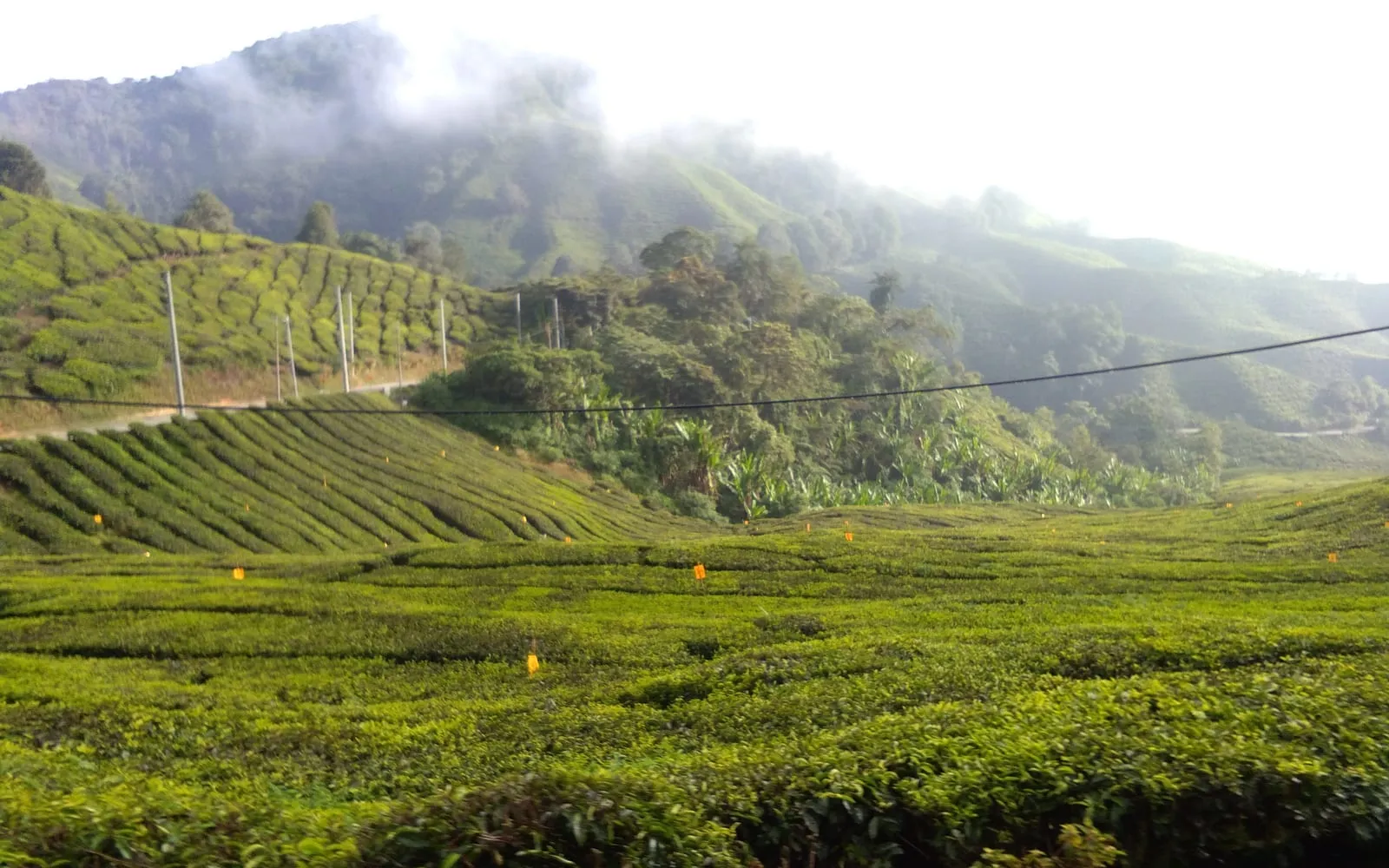
The mountains where India, China and Burma meet. The small-leaved Chinese variety takes about -10 deg C and is what grows in cooler regions; the broad-leaved Assam variety is far more tender and wants the wet tropics. It needs acid soil, high rainfall and, for the best leaf, altitude and mist.
Hardiness zones describe winter cold alone. Summer heat, humidity, rainfall and the length of the growing season decide as much, so treat the range as the outer limit rather than as a recommendation.
Every month named in this guide is for the temperate Northern Hemisphere. If you garden in the Southern Hemisphere, shift each one by six months, so May becomes November. Closer to the equator the wet and dry seasons matter more than the calendar, and the shift stops being a useful guide.
Edible, with limits
- Safe to eat
- The young leaves and buds
- Do not eat
- Dried leaf and used teabags, for pets
- Harm from
- Eating it
- Affects
- Cats and dogs
The leaves are the source of tea and are food in the ordinary sense. The ASPCA lists Camellia sinensis as toxic to cats and dogs on the strength of its caffeine content, and the risk sits with the dried and concentrated material rather than with a growing bush. Used teabags and loose dried leaf in a compost caddy are what dogs find and eat, and a quantity of either can produce caffeine poisoning with restlessness, a racing heart and vomiting. Fresh leaves on the plant carry far less and a dog chewing a shoot is not an emergency. Keep spent leaf out of reach and dispose of teabags where a dog cannot forage.
Sources: RHS potentially harmful garden plants, ASPCA toxic and non-toxic plants
About
Every tea in the world comes from this one species. Green, black, white, oolong and pu-erh differ in how the leaf is handled after picking rather than in the plant it came from.
It is a camellia, closely related to the ornamental ones, and it grows through USDA 7 under the same conditions. Acid soil, shelter, and protection from cold drying wind.
Two varieties are grown. Camellia sinensis var. sinensis is the small-leaved Chinese form, hardy to about -10 deg C and the one to grow here. Var. assamica is the large-leaved Indian form, tender and unsuitable outdoors in a cool climate.
A single bush will not keep you in tea. It gives enough for a few cups a week through the season, which is enough to make the processing worth learning.
Appearance and character
A dense evergreen shrub with an upright habit, kept clipped low in cultivation to form a flat picking surface.
Leaves are 4 to 10 cm in the Chinese form, oval with a pointed tip, glossy dark green, leathery, with finely serrated edges and a distinct network of sunken veins.
New growth in spring is pale green and downy, and the unopened bud carries fine silvery hairs, which is what gives white tea its name.
Flowers open in autumn, from September to November, 2 to 4 cm across, white with five to seven petals and a boss of golden stamens, lightly scented.
Fruit is a hard brown three-lobed capsule containing one to three round seeds, and it takes a year to ripen.
Where it is from
Camellia sinensis is native to the border region where southern China, northern Myanmar and north-east India meet.
Chinese cultivation goes back at least two thousand years, and the plant spread through Japan, Korea and eventually the whole world through trade.
The Assam variety was recognised as native to India only in the 1820s, before which the British assumed all tea had to come from China.
Robert Fortune’s removal of tea plants and Chinese growing knowledge from China to India in the 1840s, on behalf of the East India Company, is among the most consequential acts of plant theft in history.
Britain has a small commercial tea industry now, with plantations in Cornwall and Scotland proving the plant crops here given shelter and acid ground.
How it grows
Buy a container-grown plant of Camellia sinensis var. sinensis, which is the hardy form. Check the label, since var. assamica is sometimes sold without warning.
Test the soil pH. It needs acid ground at 4.5 to 5.5, and a container of ericaceous compost is the answer on chalk.
Plant in part shade with shelter from cold east wind, which scorches evergreen foliage in winter.
Water with rainwater. Hard tap water raises the pH and causes yellowing.
Clip the plant to about 75 cm to form a flat picking table once it is established, which encourages the flush of soft shoots you want.
Mulch with composted bark, pine needles or leaf mould each spring.
Through the seasons
The first flush of new growth comes in April and May, and this is the best picking of the year.
Pick two leaves and a bud from each shoot tip. Taking more gives coarser tea.
Further flushes follow through summer at roughly three-week intervals, and picking continues into September.
Process the same day. For green tea, steam or pan-fry the leaves within a few hours to stop oxidation, then roll and dry. For black tea, wither the leaves overnight, roll them firmly to bruise, leave them to oxidise until they turn coppery, then dry in a low oven.
Flowering comes in autumn, which is pleasant but takes energy from leaf production.
Clip the bush lightly in late winter to maintain the picking surface.
Care difficulty
Moderate. The plant itself grows like any camellia, and the difficulties are soil, shelter and processing.
Acid soil is essential, and a chalky garden means container growing with ericaceous compost and rainwater.
Winter wind is the other risk. The foliage is evergreen and cold dry wind browns it badly, so a sheltered position matters more than winter temperature.
Hardiness to about -10 deg C covers USDA 7 and warmer, though a hard winter in an exposed garden will damage it.
Processing the leaf is a skill worth learning and is where most of the interest lies.
Watering
Water twice weekly through the growing season, keeping the root zone damp.
Use rainwater. Lime from tap water accumulates and causes the yellowing that eventually kills the plant.
The plant is shallow-rooted and suffers in drought, which also reduces the quality of the flush.
Mulch with composted bark or pine needles, which conserves moisture and maintains acidity.
A container needs checking every few days in summer, and free-draining ericaceous compost so the roots never sit wet.
Warning signs, diseases and pests
Leaves yellowing between the veins. Lime-induced chlorosis from tap water or alkaline soil. Switch to rainwater, apply chelated iron and mulch with an acid material.
Brown scorched patches on evergreen leaves after winter. Cold drying wind. Improve shelter, since this does more damage than low temperature.
Plant wilting in a container with roots eaten away. Vine weevil grubs. Apply nematodes in late summer.
Brown limpet bumps along stems and leaf ribs. Scale insects. Scrub off with soapy water.
Fine mottling with webbing beneath the leaves. Red spider mite in a hot dry spot. Raise humidity and improve airflow.
Plant yellowing with soft dark roots. Root rot from waterlogging. Improve drainage.
Growing environment
Part shade suits it best in a cool climate, and full sun is acceptable with reliable moisture.
Acid soil at pH 4.5 to 5.5 is essential. On chalk, grow it in a container of ericaceous compost.
Shelter from cold east wind matters more than winter cold, since the plant is evergreen and wind scorches the foliage.
Moist humus-rich free-draining soil, matching the hillside forest edge it comes from.
A pot of at least 45 cm suits a plant kept in a container, and a group of three bushes in the ground gives enough leaf for regular picking.
Feeding
Feed monthly from April to August with an ericaceous fertiliser, which supports the repeated flushes of new growth that picking encourages.
A plant being picked regularly needs more feeding than an ornamental camellia, since you are removing growth all season.
Mulch each spring with composted bark, pine needles or leaf mould.
Never use lime, mushroom compost, wood ash or general-purpose fertiliser.
Yellowing is usually a pH problem rather than hunger, so check the water source first.
Troubleshooting
Leaves yellow with green veins. Alkaline conditions, nearly always from tap water. Switch to rainwater and treat with chelated iron.
Tea tasting bitter and harsh. Picked too coarsely, or over-oxidised. Take only two leaves and a bud, and stop black tea oxidation once the leaf turns coppery.
Very little new growth to pick. Underfeeding, too much shade, or a plant that has not been clipped into a picking table.
Foliage browning over winter. Wind scorch. Move the plant or provide a windbreak.
Plant flowering heavily and growing little. Autumn flowering is normal and takes some energy. Remove buds if leaf production matters more.
Bought plant not hardy. Check whether it is var. assamica, which is the tender Indian form and needs a heated greenhouse here.
Tea plant problem guides
Not sure what is wrong? See the common vegetable pests guide.