
Edible
Lemon
Citrus limon
Also known as Lemon tree, Citrus x limon, Meyer lemon
How to grow Citrus limon outside the subtropics. The cold bright winter it needs instead of a warm room, why the leaves drop in October, the two different feeds, and which variety to buy.
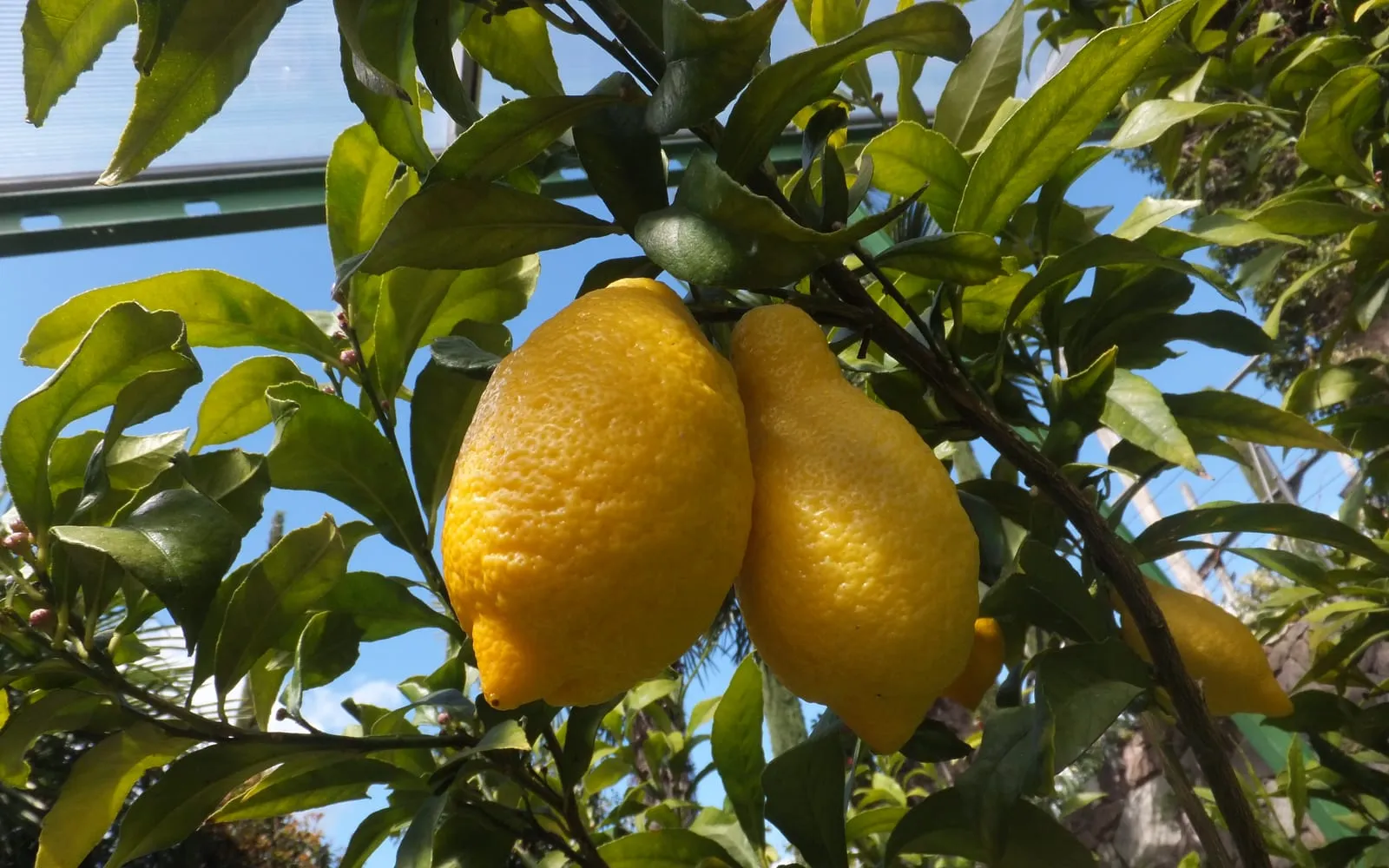
At a glance
- Difficulty
- Moderate
- Water
- Every few days in summer, every 2-3 weeks in winter
- Light
- Full sun. Outdoors in summer, the brightest possible spot in winter
- Temperature
- 15-25 deg C in summer, 5-15 deg C in winter. Damaged below about -2 deg C
- Humidity
- Moderate. Dry heated air causes leaf drop and encourages red spider mite
- Hardiness
- USDA 9-11, RHS H1c, hardy to -3 C
- Type
- Evergreen tree, long-lived
- Height
- 1.5-2 m in a container, 6 m in the ground in a warm climate
- Native to
- A hybrid of citron and bitter orange, first cultivated in north-east India and China
- Best month
- October in the Northern Hemisphere, April in the Southern Hemisphere
A hybrid of citron and sour orange, probably from north-east India. It flowers repeatedly through the year rather than in one flush, so a tree carries flowers and fruit at several stages at once, and it needs less summer heat than an orange to reach usable quality.
Hardiness zones describe winter cold alone. Summer heat, humidity, rainfall and the length of the growing season decide as much, so treat the range as the outer limit rather than as a recommendation.
Every month named in this guide is for the temperate Northern Hemisphere. If you garden in the Southern Hemisphere, shift each one by six months, so October becomes April. Closer to the equator the wet and dry seasons matter more than the calendar, and the shift stops being a useful guide.
Skin irritant
- Safe to eat
- The fruit, juice and zest
- Harm from
- Eating it and handling it
- Affects
- Cats, dogs and horses
The fruit is food and the plant is mildly toxic to pets. The ASPCA lists Citrus limon as toxic to cats, dogs and horses, through the essential oils and psoralens concentrated in the peel, leaves and stems, causing vomiting, diarrhoea, depression and skin irritation. A dog eating windfall peel or a cat chewing leaves is the realistic scenario, and the outcome is usually an upset stomach. Concentrated citrus oil is a good deal more dangerous to cats than the fruit, so keep citrus essential oils away from them entirely. For people, lemon juice and zest on skin followed by sun exposure causes phytophotodermatitis, a delayed burn appearing a day or two later. Bartenders know it as margarita burn. Wash your hands after zesting a lot of lemons on a sunny day. The fruit is entirely safe to eat.
Sources: ASPCA (Lemon, Citrus limonia), NC State Extension, Citrus x limon
About
Almost every lemon tree that fails in a cool climate fails in the same room. Somebody brings it indoors in October, stands it in a warm living room next to a radiator, and by February it has dropped every leaf.
A lemon does not want a warm winter. It wants a cold bright one, somewhere between 5 and 15 deg C, frost-free and as light as you can manage. An unheated conservatory, a cold greenhouse, a porch or a bright spare bedroom with the heating off all work. A heated sitting room combines high temperature with low light and dry air, which is the exact combination that strips a citrus tree.
Get the winter right and the rest is straightforward. Lemons are hungry, thirsty in summer, and otherwise obliging.
Appearance and character
An evergreen tree with a naturally open, slightly untidy branching habit and sharp thorns on most varieties.
Leaves are glossy dark green, oval and leathery, releasing a strong citrus scent when crushed. New growth flushes bronze or purple before greening.
Flowers are white, waxy and five-petalled, often flushed purple in bud, with an intense sweet fragrance. They appear in flushes through the year, most heavily in spring.
Fruit takes six to nine months to ripen, so a healthy tree carries flowers, green fruit and ripe fruit at the same time. That simultaneity is one of the pleasures of growing one.
‘Meyer’ is the variety to choose for a first tree. It is a hybrid with a sweeter, thinner-skinned fruit, a more compact habit, fewer thorns and better cold tolerance than a true lemon.
‘Garey’s Eureka’, sold as ‘Four Seasons’ or ‘Quatre Saisons’, crops almost continuously and is the other reliable choice.
Where it is from
The lemon is a hybrid rather than a wild species, a cross between citron and bitter orange, first brought into cultivation in north-east India, Myanmar and southern China.
It reached the Mediterranean through Persia and the Arab world, and the great lemon gardens of southern Italy and Spain are where most gardeners in cool climates have seen the plant growing properly.
That climate is the specification. Hot bright summers, mild winters that stay above freezing, and free-draining soil. Citrus is not frost hardy and suffers below about -2 deg C, with damage to fruit and foliage before the wood is harmed.
The soil in those regions is often slightly acidic and always free-draining, which is why citrus needs a specific compost and dislikes alkaline tap water.
Rain there is seasonal, so the plant is adapted to periods of drying between soakings rather than permanently damp roots.
How it grows
An evergreen tree flowering in flushes rather than in one season, with fruit ripening slowly over six to nine months.
Growth is strongest from late spring through summer, and slows almost to nothing in winter.
Fruit is carried on the previous season’s growth, so light annual pruning in late winter to keep the shape is enough. Remove crossing branches, cut back leggy shoots, and take out any growth appearing below the graft union.
Most plants are grafted onto a rootstock. Any shoot emerging from below the graft is rootstock growth and should be removed at once, since it is vigorous and will overwhelm the tree.
Young trees often shed some fruitlets shortly after flowering. That is a natural thinning and not a fault.
Propagation is by cuttings or grafting. Seed from a shop lemon germinates readily and gives a thorny plant that takes many years to fruit, if it ever does.
Through the seasons
Spring brings the main flowering flush and the return of growth. Repot now if needed, start the summer feed, and move the tree outside once night temperatures stay above about 10 deg C, hardening it off gradually.
Summer is the growing season. Stand it outside in the sunniest sheltered place you have. Water frequently and feed weekly with summer citrus feed.
Autumn is the transition. Bring it back under cover before the first frost, around late September or early October in most temperate regions. Move it gradually to reduce the shock that causes leaf drop.
Winter is the critical season. Keep it cold, between 5 and 15 deg C, and as bright as possible. Water sparingly. Switch to winter citrus feed monthly. Most losses happen now, and warmth is usually the cause.
Care difficulty
Moderate. The plant is not difficult in itself, and a cool temperate climate makes it a management exercise rather than a planting one.
Winter conditions are the whole problem. Cold and bright is right, warm and dim is wrong, and most homes offer the second.
The move between inside and outside is the second issue. A sudden change in light and temperature makes a citrus tree drop leaves, so shift it over a week or two, in stages, rather than in one afternoon.
Winter watering is the third. A dormant tree in a cool room needs very little, and watering it on a summer schedule rots the roots.
Feeding is the fourth, and it is easily solved once you know that summer and winter citrus feeds are different products for a reason.
Watering
Water every few days in summer when the tree is growing hard and standing outside, and every two to three weeks in winter.
Soak thoroughly until water runs from the base, then let the top third of the compost dry before watering again. Test with a finger rather than guessing.
Use rainwater where you can. Hard tap water raises the pH of the compost over time and causes the yellowing between the leaf veins that citrus growers see constantly.
Never leave the pot standing in water. Winter overwatering is the most common cause of root rot and of the leaf drop people blame on cold.
Reduce watering sharply from October, and check the compost before every watering through winter.
Raise the pot on feet so it drains freely, particularly if it stands outside through a wet temperate summer.
Warning signs, diseases and pests
Leaves dropping in autumn or winter usually mean a sudden move, a warm dry room, or overwatering. Work through all three.
Yellowing between the veins while the veins stay green is chlorosis, caused by alkaline compost or hard water locking up iron and magnesium. Feed with a citrus fertiliser containing chelated trace elements and switch to rainwater.
Overall pale yellow leaves suggest general hunger, which is common because citrus feeds heavily.
Sticky leaves with black sooty mould mean scale insects or mealybugs above.
Scale insects appear as small brown limpets along stems and leaf midribs. Scrape them off and wipe the foliage.
Mealybugs show as white fluff in leaf joints and come off with a cotton bud dipped in surgical spirit.
Red spider mite causes fine stippling and webbing and thrives in dry heated air, which is another reason to keep the tree cool in winter.
Flowers forming and dropping without setting fruit is common on young trees and often corrects itself with age and better feeding.
Fruit splitting comes from irregular watering.
Citrus greening is the world’s most destructive citrus disease, spread by a tiny mottled psyllid and incurable once a tree is infected. It has devastated citrus industries across the Americas and Asia but has not established in Europe, Australia or New Zealand, all of which treat a suspected sighting as reportable. Buy trees only from a certified, disease-free nursery.
Mediterranean fruit fly stings ripening fruit to lay eggs, leaving a pinprick mark that develops into a soft rotting patch with small maggots inside. It is established across the Mediterranean, the Middle East and much of Central and South America. Pick up and destroy fallen fruit, and net or bag fruit as it ripens where the pest is present.
Growing environment
Full sun. Outdoors from late spring to early autumn in the sunniest, most sheltered spot available, ideally against a south-facing wall.
Winter it under cover at 5 to 15 deg C in the brightest place you have. A cold greenhouse, unheated conservatory, porch or cool bright room all work. Keep it away from radiators.
Use a proper citrus compost, or a loam-based John Innes No. 2 opened up with sharp grit or perlite. Ordinary multipurpose compost holds too much water.
Choose a pot only slightly larger than the root ball. Citrus flowers and fruits better when slightly restricted, and an oversized pot holds wet compost the roots cannot use.
Terracotta suits citrus well because it breathes and dries.
Move the tree gradually between indoors and out over one to two weeks in spring and autumn.
Shelter it from cold wind, which damages the foliage.
Feeding
Citrus is a hungry plant and the feeding regime has two parts. Use a summer citrus feed, which is high in nitrogen, weekly from March or April to September. Use a winter citrus feed, which is lower in nitrogen and higher in potassium and trace elements, monthly from October to February.
Those are different products and the distinction matters. Feeding a summer formula through winter pushes soft growth in poor light that then drops.
Both should contain chelated iron and magnesium, which is what prevents the chlorosis that plagues container citrus.
Repot every two or three years in spring, into a pot one size up, or refresh the top few centimetres of compost if the tree is already in its final container.
Never feed a tree with bone-dry compost. Water first, then feed.
Troubleshooting
It dropped all its leaves after I brought it indoors. Too warm, too dark, or moved too suddenly. Lemons want a cold bright winter at 5 to 15 deg C. Move it somewhere cool and light, cut the watering right back, and it will usually releaf in spring.
Yellow leaves with green veins. Iron and magnesium locked up by alkaline compost or hard water. Use a citrus feed with chelated trace elements and water with rainwater.
It flowers but never sets fruit. Common on young trees. Feed properly, give it more light, and be patient. Indoors, a gentle tap on the flowers or a soft brush helps pollination.
The fruit is taking forever. Six to nine months from flower to ripe lemon is normal. A tree with flowers and fruit at different stages simultaneously is behaving correctly.
Sticky leaves and black mould. Scale insects or mealybugs. Find them on the stems and leaf undersides, remove them physically, and wipe the leaves clean.
Which variety should I buy? ‘Meyer’ for a first tree, since it is more compact, less thorny and more forgiving of cold. ‘Garey’s Eureka’, sold as ‘Four Seasons’, for near-continuous cropping.
Can I grow one from a pip? It will germinate readily and give a very thorny plant that may take a decade to fruit or never fruit at all. Buy a grafted tree if you want lemons.
A vigorous shoot has appeared from low on the trunk. Rootstock growth from below the graft union. Cut it off flush, or it will take over the tree.
Can it stay outside all year? Only in the mildest coastal parts of the south and west, and even then with fleece protection in a cold snap. Damage begins around -2 deg C.
Lemon problem guides
Not sure what is wrong? See the common vegetable pests guide.
- Scale insects on stems and leaf undersides
- Mealybugs in leaf joints
- Red spider mite in dry heated air
- Root rot from winter overwatering
- Citrus greening, absent from Europe, Australia and New Zealand but present across much of the Americas and Asia
- Mediterranean fruit fly, established across the Mediterranean, the Middle East and parts of the Americas