
Disease
Coral spot
Nectria cinnabarina
Also called Coral spot fungus
Coral spot forms coral-pink cushions on dead branches and can move into weak or wounded wood. Prune out affected twigs, avoid leaving snags and do not reuse diseased sticks as plant supports.
At a glance
- Type
- Disease
- Cause
- Fungus
- Severity
- Destroys the crop or display
- Affects
- Garden plants, Herbs and edibles
- Active
- All year
- Established in
- Europe, North America, Asia, Australia and New Zealand
What you are seeing
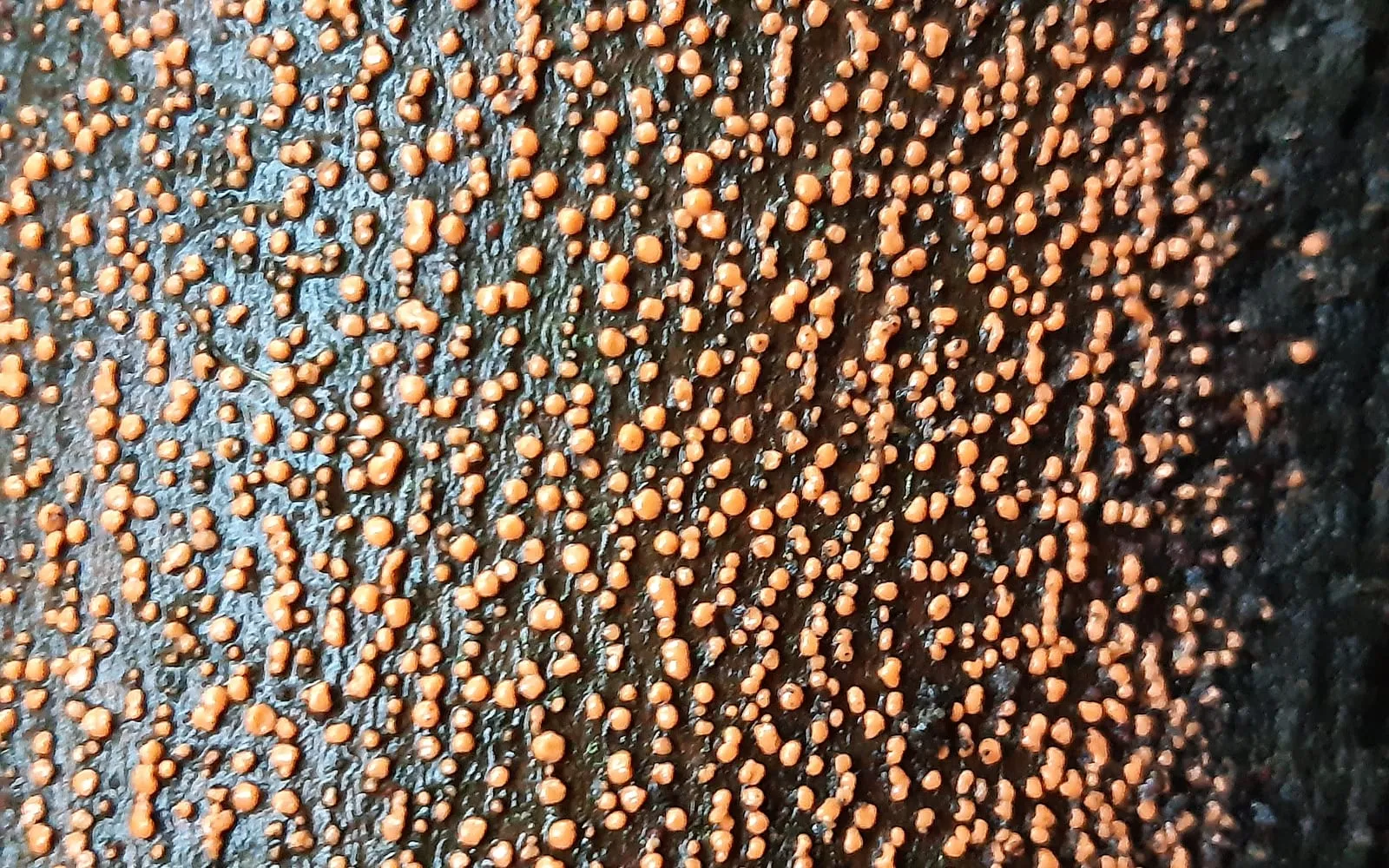
- Raised cushions the colour of salmon or coral, a couple of millimetres across, studding dead bark
- The same cushions darkening to brick red or almost black with age
- A branch or a whole stem wilting in summer while the rest of the plant grows on
- Leaves browning and hanging on the affected branch
- Dead snags and pruning stubs covered in pustules
- Bark shrinking and cracking where the live and dead wood meet
Before you treat anything
Harmless to people and animals. Nothing here needs protective equipment beyond the usual care with a saw.
What you are looking at
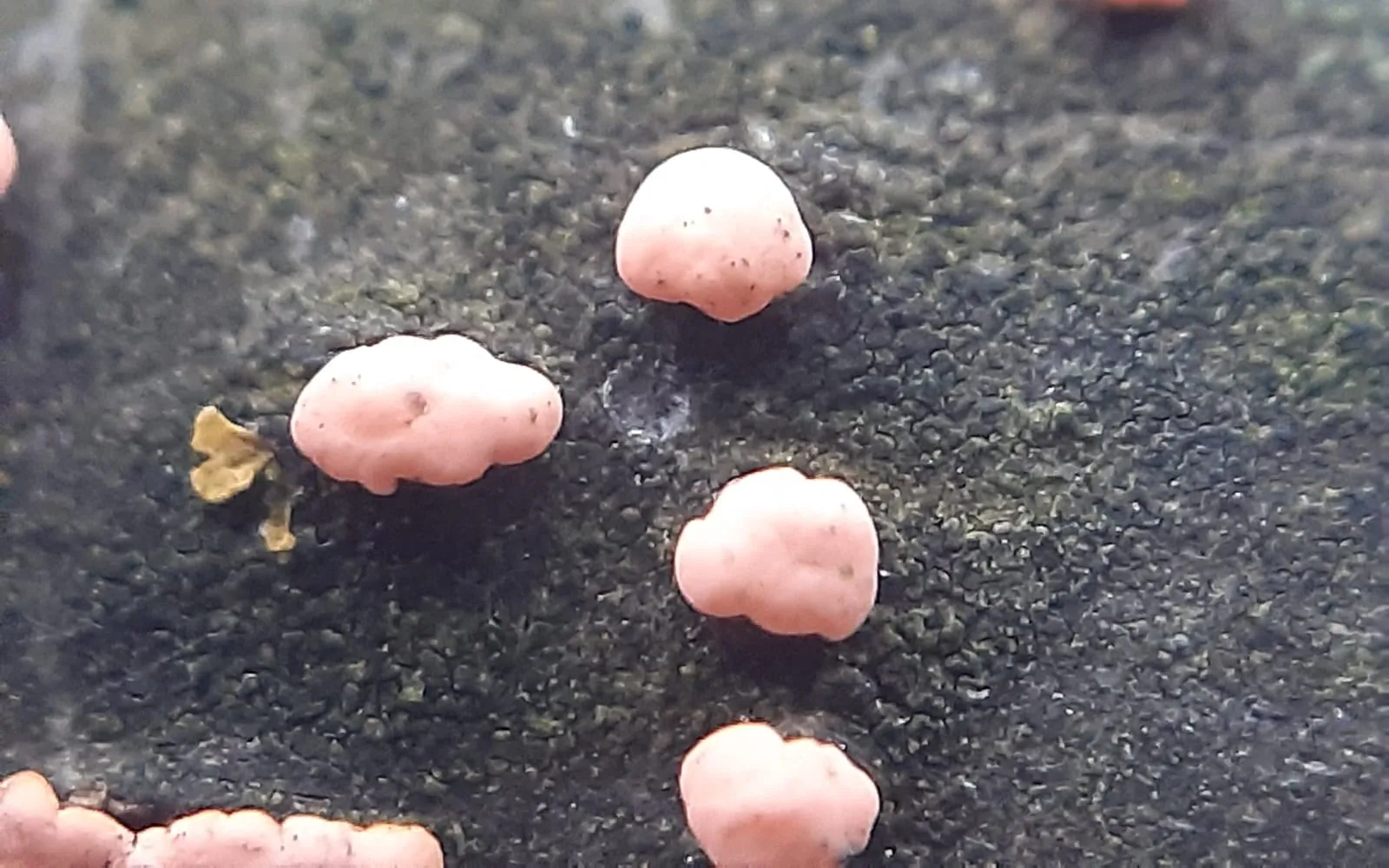
Small raised cushions the colour of tinned salmon, a couple of millimetres across, studding a dead branch. There are usually a great many of them, packed close enough to make the wood look pink from a few paces. With age they darken through brick red towards black.
Before the pustules appear, the branch dies. A stem wilts in summer, the leaves brown and hang on rather than dropping, and the whole thing is dead by autumn while the rest of the plant carries on. The pink comes afterwards, on the wood that has already gone.
Japanese maples, magnolias, elaeagnus, figs, gooseberries and currants are where gardeners meet it most. It turns up on a great many other woody plants and on almost any dead wood lying about.
A weak parasite with an open door
Coral spot spends most of its life doing something useful. It is a decay fungus of dead wood, and on a pile of prunings or a dead stump it is getting on with the job.
What makes it a garden problem is that it will move from dead tissue into living tissue when a plant offers it the chance. A pruning stub that dies back, a snapped branch, a strimmer wound, a frost crack, or a plant already weakened by drought all give it a foothold. From there it works down into healthy wood and kills the branch.
That is why the same fungus is harmless on one plant and fatal to the maple beside it. The difference is whether there was a way in.
It also explains the single most overlooked source in a garden. Pea sticks kept from last year, bean poles cut from hazel, brushwood stacked behind the shed and a log pile against the border wall are all dead wood, and dead wood covered in pink cushions a metre from a young acer is a problem waiting to happen.
What to do about it
Cut the affected branch back into clean sound wood, well past the last pustule and past any staining, and do it as soon as you notice the dieback.
Look over the whole plant for stubs left from previous pruning and take them back to a bud or a collar.
Clear the dead wood out of the garden. Burn the prunings or take them away, and move the log pile and the pea sticks away from anything susceptible.
Keep the plant growing well. Mulch, water in a dry summer, feed in spring. A strong maple holds the line and a starved one does not.
Stop making wounds. Check ties, keep the strimmer away from stems, and prune cleanly.
Nothing sold to gardeners treats this, and nothing needs to. The fungus is everywhere and the management is entirely about not giving it a route in.
What it gets mistaken for
Honey fungus kills from the base upwards, with sheets of white fungal growth under the bark at ground level and black bootlaces in the soil. Coral spot works downwards from a wound on a branch.
Silver leaf turns the foliage a metallic silver and stains the wood purple-brown inside, with nothing visible on the outside of the bark.
Bacterial canker sinks and kills bark on plums and cherries and weeps amber gum.
Other Nectria species produce similar cankers on apple and beech with rings of callus around them and much smaller, redder fruiting bodies.
Orange algae and some lichens colour bark orange in damp shade without harming anything. Those are flat films rather than discrete raised cushions, and they sit on live bark as readily as dead.
What to do, in order
Start here
Prevention, and the changes that stop the problem returning. Most of these pages should end at this tier.
- Take out dead wood as it appears
- This fungus lives on dead wood first and moves into living tissue from there. A garden with no dead snags, no stubs left from bad pruning and no dying branches left in place gives it nowhere to build up. That one habit prevents most cases.
- Prune properly, back to a bud or a collar
- A stub left projecting beyond a bud dies back and becomes the base the fungus works from. Cut just above a bud on soft growth and just outside the branch collar on a limb, so the wound closes rather than leaving dead tissue behind.
- Keep the plant growing strongly
- A vigorous plant walls off an infection and a stressed one loses branch after branch. Mulch, water through a dry summer, and feed in spring, particularly on Japanese maples, which are the plants most often lost to this.
- Avoid wounding the bark
- Strimmer damage, ties cutting in, frost cracks and snapped branches all provide the entry. Check ties yearly and keep machinery away from stems.
Then reach for a barrier
Netting, hand removal and water. Nothing here harms anything except the target.
- Cut affected branches back into clean wood
- Take the branch back well past the last sign of pustules and past any staining in the wood, into tissue that looks and cuts sound. Do it as soon as the dieback is noticed rather than waiting for the branch to finish dying.
- Keep the log pile and the pea sticks away from the border
- Prunings stacked behind the shed, bean poles cut from hazel, and pea sticks kept from last year are all dead wood, and dead wood is where this sporulates. A pile of pustule-covered brushwood next to a collection of maples is a supply line. Burn it, take it to the tip, or store it well away.
- Burn or bin infected prunings rather than shredding them
- Shredded infected wood spread as a mulch puts the fungus at the base of the plant you have just pruned.
In pictures
Plants affected
Guides that name it among the problems to watch for. The list is the plants it is characteristic of rather than everything it will feed on.