
Edible
Santol
Sandoricum koetjape
Also known as Cotton fruit, Kechapi, Krathon, Wild mangosteen
How to grow santol, Sandoricum koetjape. The cotton fruit with a rind you eat and a pulp you suck, the two colour forms, and the seeds that have put people in hospital.
At a glance
- Difficulty
- Difficult
- Water
- Twice a week in growth, less in winter
- Light
- Full sun
- Temperature
- Minimum 12 deg C. Damaged below 10 deg C
- Humidity
- High
- Hardiness
- USDA 10-12, RHS H1b, hardy to 12 C
- Type
- Tender evergreen or briefly deciduous tree
- Height
- 15-45 m in the open, 2 m in a pot
- Native to
- Indochina, the Malay peninsula
- Best month
- June, July and August in the Northern Hemisphere, December, January and February in the Southern Hemisphere
Wet lowland Indochina and Malaysia. A large tree in the ground, and it wants steady warmth with no frost at any stage.
Hardiness zones describe winter cold alone. Summer heat, humidity, rainfall and the length of the growing season decide as much, so treat the range as the outer limit rather than as a recommendation.
Every month named in this guide is for the temperate Northern Hemisphere. If you garden in the Southern Hemisphere, shift each one by six months, so June becomes December. Closer to the equator the wet and dry seasons matter more than the calendar, and the shift stops being a useful guide.
Toxic if eaten
- Safe to eat
- The rind and the white pulp around the seeds
- Do not eat
- The seeds, which must never be swallowed
- Harm from
- Eating it
- Affects
- People
The flesh of a santol is food and is eaten across South East Asia. The seeds are a documented surgical hazard. They are large, smooth, slippery and embedded in a cottony pulp that is sucked off, and swallowing one is easy to do by accident. Philippine hospitals report a recurring pattern of intestinal perforation and abscess from swallowed santol seeds, sometimes weeks after the fruit was eaten, because the seed lodges in the gut wall and works through it. Surgical case series describe this often enough that it has a name in Philippine practice. Suck the pulp and spit the seed out, and never give a whole segment to a small child. Nothing else in the plant is listed as harmful, and unripe fruit is astringent rather than dangerous.
Sources: RHS potentially harmful garden plants, ASPCA toxic and non-toxic plants
About
Santol is eaten in two parts. The thick rind is peeled, sliced and eaten as a sharp crunchy fruit, often with salt or in a Thai salad, and the white cottony pulp clinging to the seeds inside is sucked off separately and the seeds spat out.
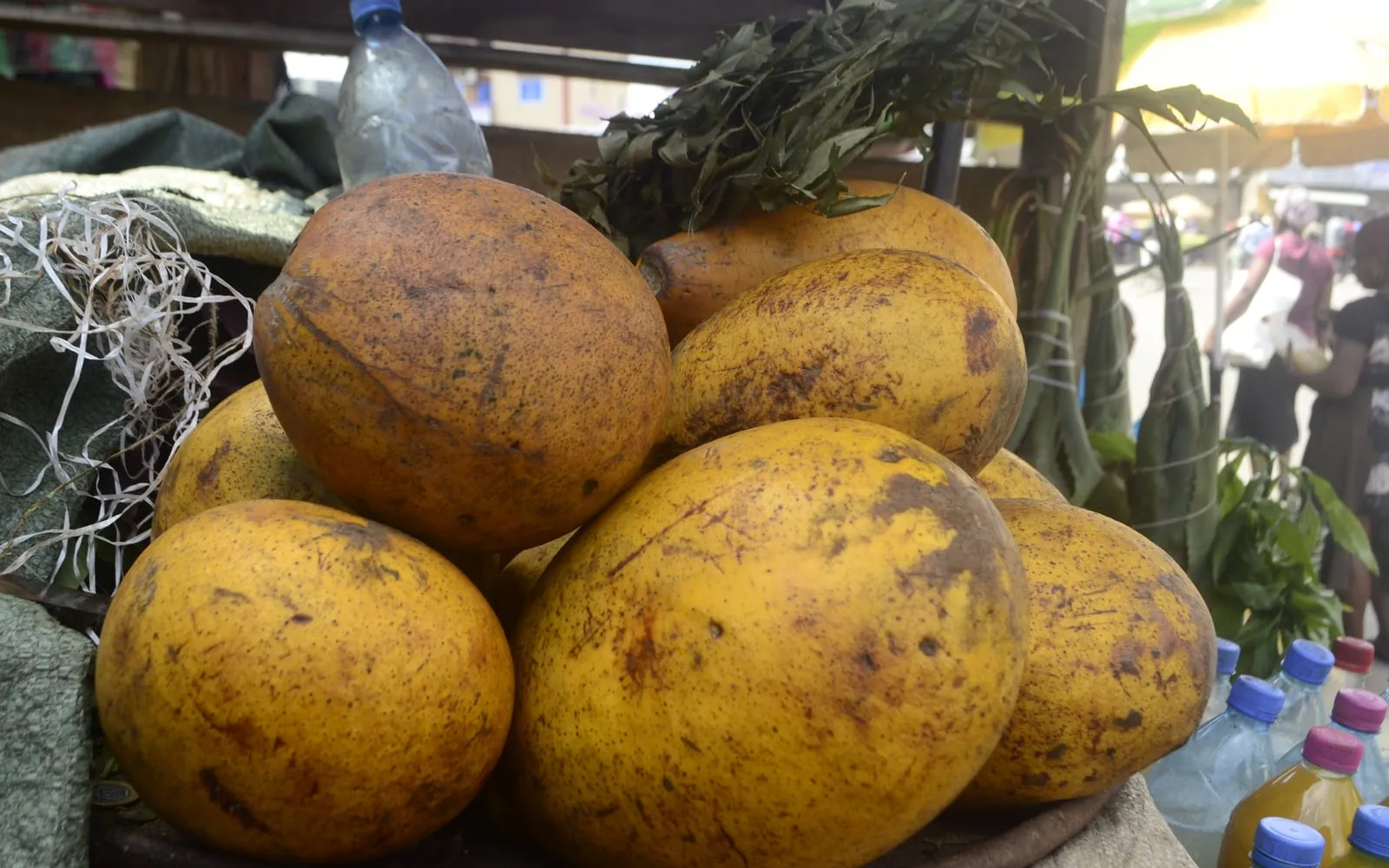
Two colour forms are sold. Yellow santol has a thinner rind and softer pulp, and red santol, sometimes called the Bangkok type, has a thicker rind, is sweeter, and is the better fruit of the two.
The seed is the part to be careful about. Philippine surgeons see a steady trickle of intestinal perforations from swallowed santol seeds, because they are large, slippery and easy to get down by accident.
Appearance and character
An upright evergreen tree with a broad crown and a buttressed base, 15 to 45 m in the open, and one of the largest trees in this collection.
Bark is grey-brown and smooth on young trees, becoming fissured with age.
Leaves are compound with three leaflets, each 10 to 25 cm, oval, glossy green, and they turn red or orange before falling, which is unusual in a tropical tree and briefly spectacular.
Flowers are small, yellowish green, fragrant, and borne in loose branched sprays in the leaf axils.
Fruit is round and slightly flattened, 4 to 15 cm, with a soft velvety rind that ripens from green to a golden yellow or a dull red-brown.
The rind is thick, 1 to 2 cm, white inside, and tastes sharp and faintly sweet.
Inside are three to five large brown seeds, each wrapped in a translucent white cottony pulp that is sucked off the seed.
The pulp is sweet-sour and pleasant, and it clings hard to the seed.
Where it is from
Santol is native to Indochina and the Malay peninsula, and it has been carried across South East Asia for so long that its exact wild range is uncertain.
The Philippines, Thailand, Malaysia, Indonesia, Cambodia and Vietnam all grow it, and it is a common village tree throughout.
Thailand improved it most. The Bangkok red-fleshed selections have thicker, sweeter rinds and are the ones grown commercially.
The Philippines uses it heavily, in a sour soup called sinigang, in preserves, and eaten raw with salt.
The Spanish carried it to the Americas and it is grown in a small way in Central America and the Caribbean.
Temperate markets see it very rarely, in South East Asian groceries in summer, since the fruit does not travel well.
How it grows
Sow seed from a ripe fruit within a few days. Santol seed loses viability quickly.
Sow at 25 to 30 deg C in free-draining compost. Germination takes three to six weeks.
Buy a grafted plant if fruit is the aim, since seedlings take five to seven years and vary.
Grow in deep free-draining compost. Santol tolerates poor ground well.
Give full sun and a minimum of 12 deg C.
Keep humidity high.
Water twice a week in growth and less in winter.
Feed monthly from April to September.
Prune hard and often. This tree reaches 45 m in the open and a pot plant needs constant restraint.
Expect fruit in four to six years on a grafted plant under warm glass, and expect the plant to outgrow the space long before that.
Through the seasons
Winter is a warm rest above 12 deg C, watered lightly and unfed. Some leaves may colour and fall.
Spring brings a growth flush and flowering. Repot and start feeding.
Early summer is fruit set.
Midsummer is fruit swell.
Late summer is harvest, matching the South East Asian season.
Autumn is when to stop feeding and reduce watering.
Care difficulty
Difficult, chiefly because of size.
The tree reaches 45 m in the open, which is the largest here, and even a restrained pot plant grows fast and needs hard annual pruning.
Minimum 12 deg C is the floor and damage begins below 10 deg C.
High humidity is needed.
Soil is undemanding, which is one point in its favour.
Fruit comes in four to six years on a grafted plant, and grafted plants are hard to find outside the tropics.
The seed hazard has to be understood before the fruit is shared with anyone, particularly a child.
Watering
Water twice a week in growth, keeping the compost evenly damp.
Reduce in winter without letting it dry out.
Drain fully.
Keep humidity high with misting and grouping.
Use rainwater where the supply is very hard.
Water steadily through fruit swell.
Use a deep pot, since the root system is vigorous.
Warning signs, diseases and pests
Leaves turning red or orange and falling is normal for this species and is not a disease.
Crisping around the leaf margins is dry air.
Leaves dropped after a cold night are chill damage, which starts below 10 deg C.
Brown limpets along the stems are scale.
White fluff where a leaf meets the stem is mealybug.
Fine webbing across the foliage is spider mite.
A plant wilting in wet compost is rotting at the root.
Small punctures with soft brown patches spreading beneath them are fruit fly, which belongs to orchards in the tropics rather than to a glasshouse.
Rapid growth outstripping the pot is the usual complaint on hard water. Prune hard each spring.
Growing environment
A big heated glasshouse. Nothing outside the tropics will hold it in the open, and a small conservatory buys you three or four years before the plant wins.
A floor of 12 deg C, with 25 to 32 deg C wanted for growth and fruit.
Full sun.
Humidity high.
Deep compost of no great richness, draining freely, anywhere from pH 5.5 to 7.5.
A large pot, and a willingness to cut the tree back hard every spring.
Height above everything else. In Thai and Philippine forest this reaches 30 m or more, so decide in advance what happens when it reaches the glass, because it will.
Feeding
Feed monthly from April to September with a balanced liquid feed.
Switch to high potash as fruit swells.
Stop feeding at the end of September.
Give nothing through winter.
Top-dress or repot each spring.
Keep feeding moderate, since a vigorous tree in a small space needs no encouragement.
Add magnesium if older leaves yellow between the veins.
Troubleshooting
How do I eat one? In two parts. Peel and slice the thick rind and eat it as a sharp crunchy fruit, often with salt. Then suck the white cottony pulp off the seeds inside and spit the seeds out.
Can I swallow the seeds? No. Philippine hospitals report a recurring pattern of intestinal perforation and abscess from swallowed santol seeds, sometimes weeks later. Spit them out, and do not give a whole segment to a small child.
Yellow or red, which is better? Red santol, often called the Bangkok type, has a thicker sweeter rind and is generally the better fruit. Yellow has a thinner rind and softer pulp.
The leaves have gone red and are falling. Normal. Santol leaves colour before they drop, which is unusual for a tropical tree.
How big does it get? Up to 45 m in the open, which makes it the largest tree in this collection. A pot plant needs hard pruning every spring.
Why is it called cotton fruit? The white pulp around each seed is fibrous and cottony in texture.
Will it fruit outside the tropics? In a large heated greenhouse with a grafted plant, in four to six years, and it will need constant pruning to stay in bounds.
What is it used for besides eating raw? Sinigang, the Philippine sour soup, and preserves, marmalades and pickles across the region.
Santol problem guides
Not sure what is wrong? See the common vegetable pests guide.