
Edible
Chempedak
Artocarpus integer
Also known as Cempedak, Champedak, Baroh
How to grow chempedak, Artocarpus integer. The smaller, softer, stronger-smelling relative of the jackfruit, the battered fritters it is famous for, and the hairy twigs that tell the two apart.
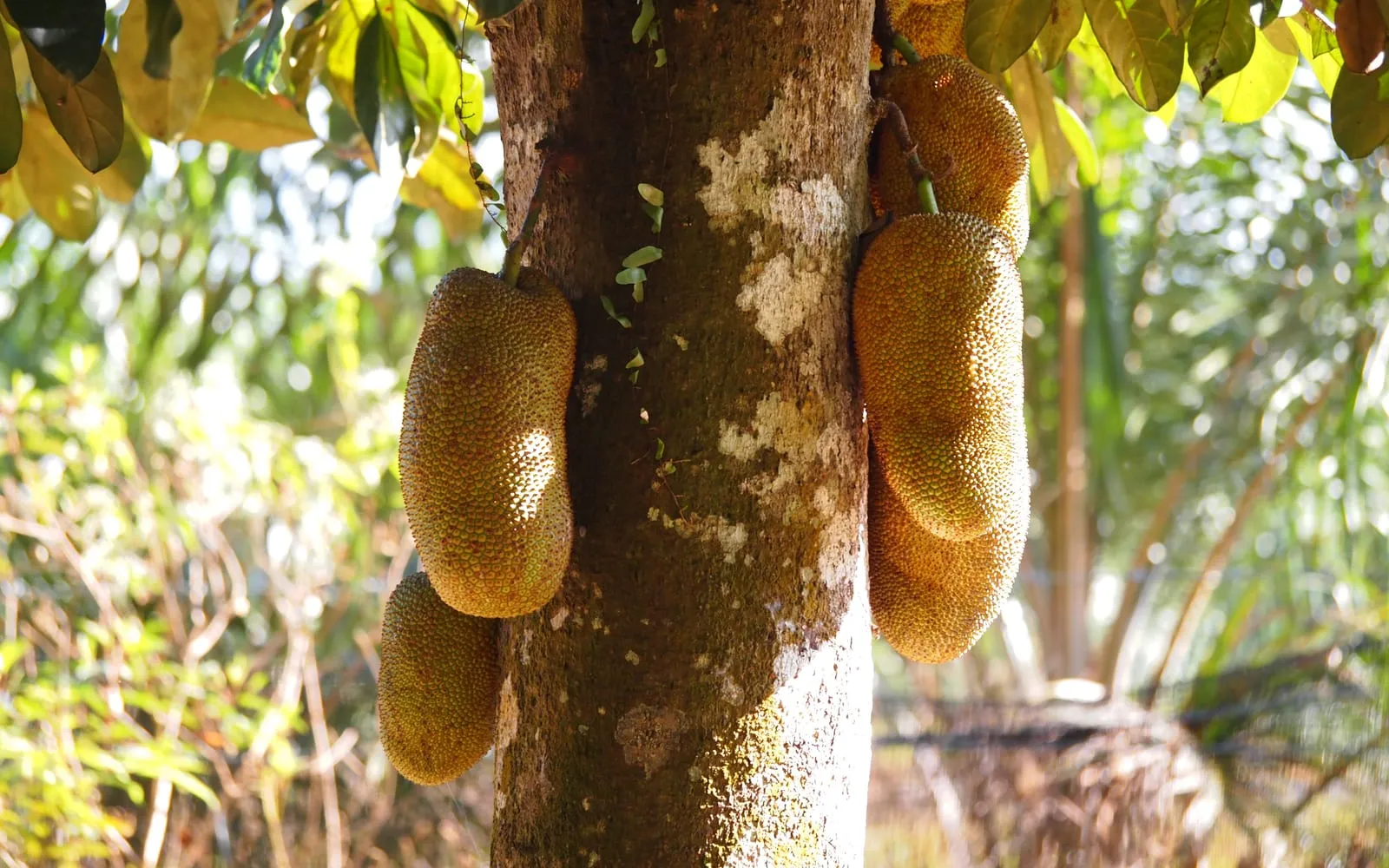
At a glance
- Difficulty
- Difficult
- Water
- Twice a week in growth, less in winter
- Light
- Full sun when mature, light shade when young
- Temperature
- Minimum 15 deg C. Damaged below 10 deg C
- Humidity
- Very high. It is a wet-tropics tree
- Hardiness
- USDA 11-12, RHS H1b, hardy to 15 C
- Type
- Tender evergreen tree
- Height
- 10-20 m in the open, 2 m in a pot
- Native to
- the Malay peninsula, Borneo, Sumatra
- Best month
- June and July in the Northern Hemisphere, December and January in the Southern Hemisphere
Wet lowland Malaysia and Indonesia, with no dry season and no cool nights. It is less adaptable than its relative the jackfruit and rarely succeeds outside that band.
Hardiness zones describe winter cold alone. Summer heat, humidity, rainfall and the length of the growing season decide as much, so treat the range as the outer limit rather than as a recommendation.
Every month named in this guide is for the temperate Northern Hemisphere. If you garden in the Southern Hemisphere, shift each one by six months, so June becomes December. Closer to the equator the wet and dry seasons matter more than the calendar, and the shift stops being a useful guide.
Skin irritant
- Safe to eat
- The ripe flesh around each seed, and the seeds boiled or roasted
- Do not eat
- The white latex, and the seeds raw
- Harm from
- Eating it and handling it
- Affects
- People
Chempedak is not toxic and nothing in the plant is listed as harmful to cats or dogs. It carries the same white latex as its relative the jackfruit, sticky, hard to wash off and mildly irritant to skin, so the knife and hands are oiled before a fruit is opened. Raw seeds contain the same trypsin inhibitors as jackfruit seeds and are not eaten raw; boiled or roasted they are good. People sensitive to latex or to birch pollen occasionally react to the fruit, as they do to jackfruit, since the family shares those proteins.
Sources: ASPCA toxic and non-toxic plants, RHS potentially harmful garden plants
About
Chempedak is what a jackfruit would be if it were smaller, softer and more pungent. The fruit is a quarter to a tenth the size, the flesh is deeper orange and far more custard-like, and the smell is strong enough that people who like jackfruit sometimes balk at this one.
Malaysia and Indonesia turn it into fritters. The bulbs are dipped in batter and deep fried, and cempedak goreng is a street food fixture from Kuala Lumpur to Java.
Telling the two trees apart is a matter of hairs. Chempedak twigs, leaf stalks and young leaves carry stiff brown or golden hairs, and jackfruit’s are smooth.
Appearance and character
An upright evergreen tree with a dense crown, 10 to 20 m in the open, more slender than a jackfruit.
All parts bleed a thick white latex when cut.
Leaves are alternate, elliptic to obovate, 10 to 25 cm, leathery and glossy dark green above, and covered on the stalks, midribs and young growth in stiff brown or golden hairs, which is the character that separates it from jackfruit.
Flowers are packed into dense heads on the trunk and main branches. Male heads are slender and cylindrical, female heads become the fruit.
Fruit is cylindrical to oblong, 20 to 35 cm, 1 to 6 kg, far smaller than a jackfruit, with a thin yellow-green to brown rind covered in low blunt bumps rather than sharp spines.
Inside, the bulbs are deep yellow to orange, soft, sweet, aromatic and much more custard-like than a jackfruit’s, each wrapping a large seed.
The smell of a ripe fruit is strong, sweet and slightly cheesy, and it fills a room.
The fibrous core and papery strands between the bulbs are inedible, as in jackfruit.
Where it is from
Chempedak is native to the Malay peninsula, Borneo and Sumatra, where it grows in lowland rainforest.
It has been cultivated across the region for centuries and remains a garden and market tree rather than a plantation crop.
Malaysia, Indonesia, Brunei and southern Thailand are where it is eaten, and Sarawak and Sabah have local forms that are prized.
Hybrids with jackfruit have been raised in Malaysia, sold as nangka-cempedak, combining the size of one with the flavour of the other.
The fruit is soft, strongly scented and short-lived, so it does not enter international trade at all, and a temperate-climate reader is unlikely to see one outside a specialist South East Asian supplier selling frozen bulbs.
How it grows
Sow seed from a ripe fruit within a few days. Chempedak seed dies quickly and cannot be dried.
Sow at 25 to 30 deg C in a deep pot, since the seedling puts down a taproot immediately. Germination takes two to five weeks.
Leave the roots alone. Like jackfruit, this species resents repotting and sits for months afterwards, so sow into the pot it will occupy for a year or two.
Grow in deep, rich, free-draining compost on the acid side.
Give light shade when young and full sun when mature.
Keep the temperature above 15 deg C and the humidity very high. This is a wetter tree than jackfruit and it minds dry air more.
Water twice a week in growth and less in winter, without letting it dry.
Feed monthly from April to September.
Expect fruit in three to six years in the tropics from a grafted plant, and expect a temperate plant to be foliage.
Through the seasons
Winter is the difficult season. Hold above 15 deg C with humidity as high as possible, water lightly and feed nothing.
Spring brings a growth flush as light returns. Start feeding.
Early summer is the main growing period.
Midsummer is peak growth and, on a mature tree in the tropics, flowering on the trunk.
Late summer is a second flush in a warm house.
Autumn is when to stop feeding and hold the plant warm.
Care difficulty
Difficult, and a step harder than jackfruit.
Warmth is the first demand, at a minimum of 15 deg C against jackfruit’s 10.
Very high humidity is the second. Chempedak is a wet-tropics tree and dry heated air scorches and defoliates it.
The taproot is the third. It resents disturbance and sulks after repotting.
Size is the fourth, though the tree is more slender than a jackfruit.
Obtaining a plant or fresh seed outside the tropics is the practical obstacle before any of the above.
As a foliage plant in a warm humid house it grows steadily, and that is what it should be attempted as.
Watering
Water twice a week in growth, keeping the compost evenly damp.
Drain fully. Waterlogging kills it as it kills jackfruit.
Reduce in winter without letting the compost dry.
Keep humidity very high with misting, damp gravel and grouping.
Use rainwater where the supply is hard.
Use a deep pot for the taproot.
Water steadily in hot weather, since the leaf area is large.
Warning signs, diseases and pests
A plant that stops growing after repotting is reacting to root disturbance. Leave it alone.
Brown leaf edges and tips mean dry air, which this species minds more than jackfruit.
Leaf drop after a cold night is chill damage below 10 deg C.
Wilting in damp compost is root rot.
Brown limpets on the stems are scale.
White fluff in the leaf axils is mealybug.
Fine webbing on the leaves is spider mite.
Small fruit rotting in still humid air is fruit rot. Improve airflow.
Sticky white latex from any cut is normal.
Growing environment
A heated humid greenhouse. There is no outdoor or conservatory option outside the tropics.
Minimum 15 deg C, with 25 to 32 deg C for growth.
Very high humidity year round.
Full sun when mature, light shade when young.
Deep rich free-draining compost, slightly acid.
pH from 5.5 to 6.5.
A deep pot, repotted as rarely as possible.
Head room, though less than a jackfruit needs.
Feeding
Feed monthly from April to September with a balanced liquid feed containing iron.
Stop feeding at the end of September.
Give nothing through winter.
Top-dress rather than repot wherever possible.
Add sequestered iron if young leaves yellow between the veins.
Add magnesium if older leaves yellow between the veins.
Keep feeding steady rather than heavy.
Troubleshooting
How do I tell it from a jackfruit? By the hairs. Chempedak twigs, leaf stalks and young growth carry stiff brown or golden hairs, and jackfruit’s are smooth. The fruit is also much smaller, with low blunt bumps rather than sharp spines.
Which tastes better? Chempedak is softer, deeper orange, sweeter and far more strongly scented. You will have a firm preference within one mouthful, and it will not be a mild one.
What is cempedak goreng? The bulbs dipped in batter and deep fried, which is a street food fixture across Malaysia and Indonesia.
Can I eat the seeds? Boiled or roasted, yes. Raw they contain trypsin inhibitors, as jackfruit seeds do.
How do I open one without getting glued up? Oil the knife and both hands first. The latex is the same as jackfruit’s and sets hard.
My plant stopped after repotting. It has a taproot and resents disturbance. Sow into a deep pot and leave it there.
Why does it need more warmth than jackfruit? It comes from wetter equatorial forest, so it wants 15 deg C and very high humidity where jackfruit manages at 10 and tolerates drier air.
Will it fruit outside the tropics? Not realistically. Even in the tropics a grafted plant takes three to six years, and it needs a heated humid house here.
Chempedak problem guides
Not sure what is wrong? See the common vegetable pests guide.