
Houseplant
Pygmy Date Palm
Phoenix roebelenii
Also known as Miniature Date Palm, Dwarf Date Palm
Practical guidance for growing pygmy date palm, Phoenix roebelenii, including its base spines, slow arching fronds, bright light, steady moisture, and pet-safe care.
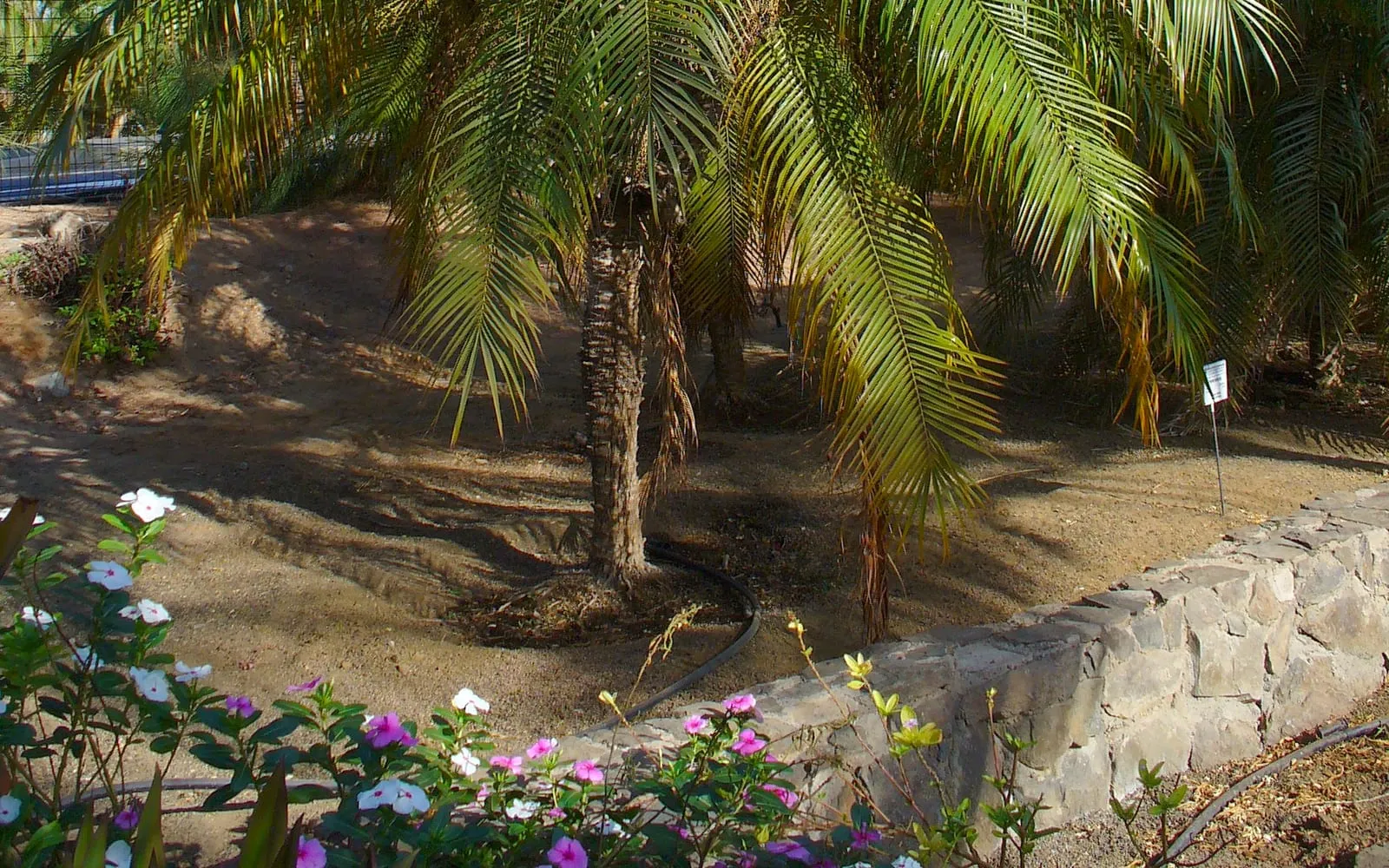
At a glance
- Difficulty
- Moderate
- Water
- When the top few centimetres of soil have dried out
- Light
- Bright light with some direct sun; tolerates lower light but grows thin
- Temperature
- Above 10 deg C
- Humidity
- Above average; benefits from extra humidity indoors
- Hardiness
- USDA 9b-11, RHS H2, hardy to -3 C
- Type
- Evergreen feather palm, slow growing and long-lived
- Height
- 1.5-3 m indoors over many years; up to 3.5 m outdoors
- Native to
- Southeast Asia
Established outdoor plants take a brief, light frost with little lasting damage, which is unusual for a palm this tender and part of why it is planted outdoors well beyond the true tropics in mild coastal climates. That tolerance is narrow rather than reliable: a longer freeze, or frost on a young or recently planted specimen, kills the growing point outright, and as a houseplant it is safest treated as having no frost tolerance at all.
Hardiness zones describe winter cold alone. Summer heat, humidity, rainfall and the length of the growing season decide as much, so treat the range as the outer limit rather than as a recommendation.
Not known to be toxic
Phoenix roebelenii is listed by the ASPCA among the palms that are non-toxic to cats and dogs, and it does not appear on the RHS index of potentially harmful garden plants either. A pet or child chewing a frond gets nothing worse than a mouthful of tough, fibrous leaf. The real hazard sits at the base of each frond, where a pair of stiff, needle-sharp spines several centimetres long grow from the leaf stalk. They are easy to miss at eye level on a tall specimen and are a genuine risk to the face and eyes when pruning, repotting, or walking close to an outdoor planting. Wear eye protection and thick gloves for any hands-on work, and site an outdoor plant well clear of paths.
Sources: ASPCA toxic and non-toxic plants, RHS potentially harmful garden plants
About
Pygmy date palm is a true dwarf palm rather than a young specimen of a larger species sold before it outgrows its pot, which is what sets it apart from most feather palms on the houseplant market. A mature plant tops out at a scale that suits an ordinary room, with slender trunks and softly arching fronds that give it a graceful, un-crowded silhouette even indoors.
Growth is slow. A young plant takes years to develop a visible trunk, and the species is often sold and grown as a multi-stemmed clump, several trunks of different heights rising from one base, rather than as a single stem. Sun, steady moisture and warmth all speed it along, but nothing turns it into a fast grower.
Appearance and character
Fronds are finely divided into narrow, soft, dark green leaflets, arching gracefully from the crown rather than standing stiffly upright, which is where the “soft” feel of this palm compared with coarser landscape palms comes from. A well-grown specimen can carry a dozen or more fronds at once, each up to 60 to 90 cm long.
At the base of each frond’s stalk sits a pair of sharp, rigid spines, easy to overlook against the softness of the leaflets further along the same frond. Trunks are slender and ringed with the diamond-shaped scars left by fallen fronds, thickening only gradually with age and often carrying a skirt of dead, brown fronds beneath the green crown if these are not trimmed away.
Outdoors in a warm climate, a mature plant produces small cream flower clusters followed by dark, date-like fruit, though flowering essentially never happens on an indoor specimen kept in a pot.
Where it is from
Phoenix roebelenii grows wild along the banks of the Mekong and other rivers through Laos, Vietnam, southern China and neighbouring parts of Southeast Asia, rooted in damp, silty ground that floods seasonally and drains freely the rest of the year. That combination, wet feet in the flood season and sharp drainage once the water recedes, is different from the constantly damp or constantly dry conditions many houseplants come from.
The riverbank habitat also explains why it tolerates lower light better than many sun-loving palms: young plants grow up in the dappled shade of taller riverside trees before eventually reaching the canopy gap and full sun as they mature, so an indoor plant kept out of direct sun manages reasonably well without thriving the way a plant given brighter light does.
How it grows
Plant in a rich, free-draining potting mix, ideally one blended for palms that holds moisture without staying soggy. A container with generous drainage holes matters more here than with many houseplants, since the roots dislike sitting in water despite coming from a floodplain.
Give it bright light with some direct sun where possible. A spot close to an east or west facing window suits it well; deep shade is tolerated for a period but produces sparser, more elongated growth over time.
Repot every two to three years, moving up only one pot size at a time, since palms generally resent having their roots disturbed more than they need to be. Wear gloves and work carefully around the frond bases, where the spines sit closest to hands during the job.
Trim only fully brown, dead fronds, cutting close to the trunk without damaging the ring of living tissue around it. Removing green or partly green fronds weakens the plant, since a palm draws nutrients back out of an ageing frond before it dies and cutting it early interrupts that process.
Through the seasons
Spring restarts active growth. Resume regular feeding and check whether the plant needs repotting.
Summer is the main growing season, when new fronds emerge fastest and the plant benefits most from consistent moisture and, where possible, a period outdoors in bright, sheltered light.
Autumn slows growth as light and warmth decline. Reduce feeding towards the end of the season and bring any plant that has spent summer outside back in before nights turn cold.
Winter is a rest. Water less often, letting the top of the compost dry out further between waterings than in summer, and keep the plant well away from cold draughts and glass that chills overnight.
Care difficulty
Moderate. The palm settles in without much fuss if it gets steady humidity and consistently bright light. Dry indoor air, especially with central heating running, is the most common reason an indoor specimen looks tired, showing as browning frond tips and an invitation to spider mite. Given both light and humidity, it needs little else beyond routine watering and feeding.
Watering
Water when the top few centimetres of compost have dried out, checking with a finger rather than a fixed schedule, since the interval shifts with light, temperature and pot size through the year.
Water thoroughly, letting the excess drain away completely rather than leaving the pot sitting in a saucer of water, which drowns the roots over time even though the palm dislikes drying out completely as well.
Warning signs, diseases and pests
Spider mite is the most common indoor problem, thriving in warm, dry air and showing as fine speckling on the fronds with faint webbing in bad cases. Raising humidity around the plant and wiping fronds down periodically helps prevent it taking hold.
Scale insects appear as small, flat brown bumps along the fronds and trunk, sapping the plant slowly. Wipe them away or treat with horticultural soap, checking again after a week or two.
Mealybug tucks into the bases of the fronds close to the spines, showing as small white, cottony tufts. Treat carefully in that area with a cotton bud dipped in alcohol.
Manganese deficiency shows as new fronds emerging weak, yellowed and frizzled rather than opening cleanly, a problem common enough in palms generally to have its own name, frizzle top. A palm-specific fertiliser containing manganese and magnesium, applied regularly through the growing season, is the fix and the prevention both.
Root rot follows compost kept consistently too wet, showing as yellowing lower fronds and a base that smells sour or feels soft. Reduce watering immediately and check the roots if the plant does not recover, cutting away anything soft and repotting into fresh, free-draining mix.
Growing environment
Bright light with some direct sun brings out the best growth, though this species tolerates more shade than most palms sold as houseplants, a legacy of growing up under taller trees in the wild.
Keep it above 10 deg C indoors at all times; established outdoor plants in a mild climate take a brief light frost, but this is not a reliable margin to rely on for a plant grown as a houseplant.
Humidity above the average room level helps considerably. Grouping it with other plants, standing the pot on a tray of moist pebbles, or running a humidifier nearby all reduce the brown frond tips that dry air otherwise causes.
Feeding
Feed with a fertiliser formulated for palms, which supplies the magnesium and manganese that a general houseplant feed often lacks and that this species needs to avoid frizzled, weak new growth.
Feed every four to six weeks through spring and summer, and stop through autumn and winter when growth has slowed and the plant is using far less.
Troubleshooting
The frond tips keep turning brown. Low humidity is the usual cause, especially in a centrally heated room in winter. Raise humidity around the plant and trim the browned tips with scissors for appearance, following the natural shape of the leaflet rather than cutting straight across.
New fronds are coming in yellow and frizzled instead of green and smooth. Manganese deficiency, often called frizzle top in palms. Switch to a palm fertiliser containing manganese and magnesium and feed consistently through the growing season; fronds already affected will not recover, but new growth should improve within a few months.
The lower fronds keep turning yellow and dying. Some of this is normal ageing, since older fronds naturally decline as the palm redirects resources to new growth at the crown. If several fronds yellow at once or the soil feels constantly wet, check for overwatering and root rot instead.
Can I keep it outdoors year round? Only in a reliably mild, frost-free or near frost-free climate. Established plants tolerate a brief light frost but not a hard or prolonged freeze, and a young or recently planted specimen has far less margin than an old, well-rooted one.
Why has it never flowered indoors? Size and conditions both. Flowering generally needs a larger, more mature plant than most homes have room for, along with more consistent warmth, humidity and light than an indoor pot usually provides, so an indoor plant staying purely ornamental is normal rather than a sign anything is wrong.
Pygmy Date Palm problem guides
Not sure what is wrong? See the common houseplant pests guide.