
Disorder
Reversion
Also called Reverted shoots, Loss of variegation, Going green, Green sports
Reversion sends plain green shoots through a variegated plant, often faster than the patterned growth. Cut reverted shoots out at the source and propagate only from correctly variegated material.
At a glance
- Type
- Disorder
- Cause
- Genetics of the plant
- Severity
- Cosmetic
- Affects
- Houseplants, Garden plants
- Active
- All year
What you are seeing
- One shoot on a variegated plant carrying leaves of plain green
- The green shoot growing longer, faster and with bigger leaves than the rest
- New leaves emerging with less white or yellow than the ones below them
- A variegated shrub half green and half patterned, with the green half winning
- An all-white or all-cream shoot that grows a few centimetres and then stalls
- Cuttings or divisions from a variegated plant coming up entirely green
- Variegation fading to a dull uniform colour without any single shoot changing
What you are looking at
One stem on a variegated plant carrying leaves of plain green, while everything around it keeps its white or cream. The green shoot is usually longer than its neighbours, with larger leaves and longer gaps between them, and it is heading for the light faster than anything else on the plant.
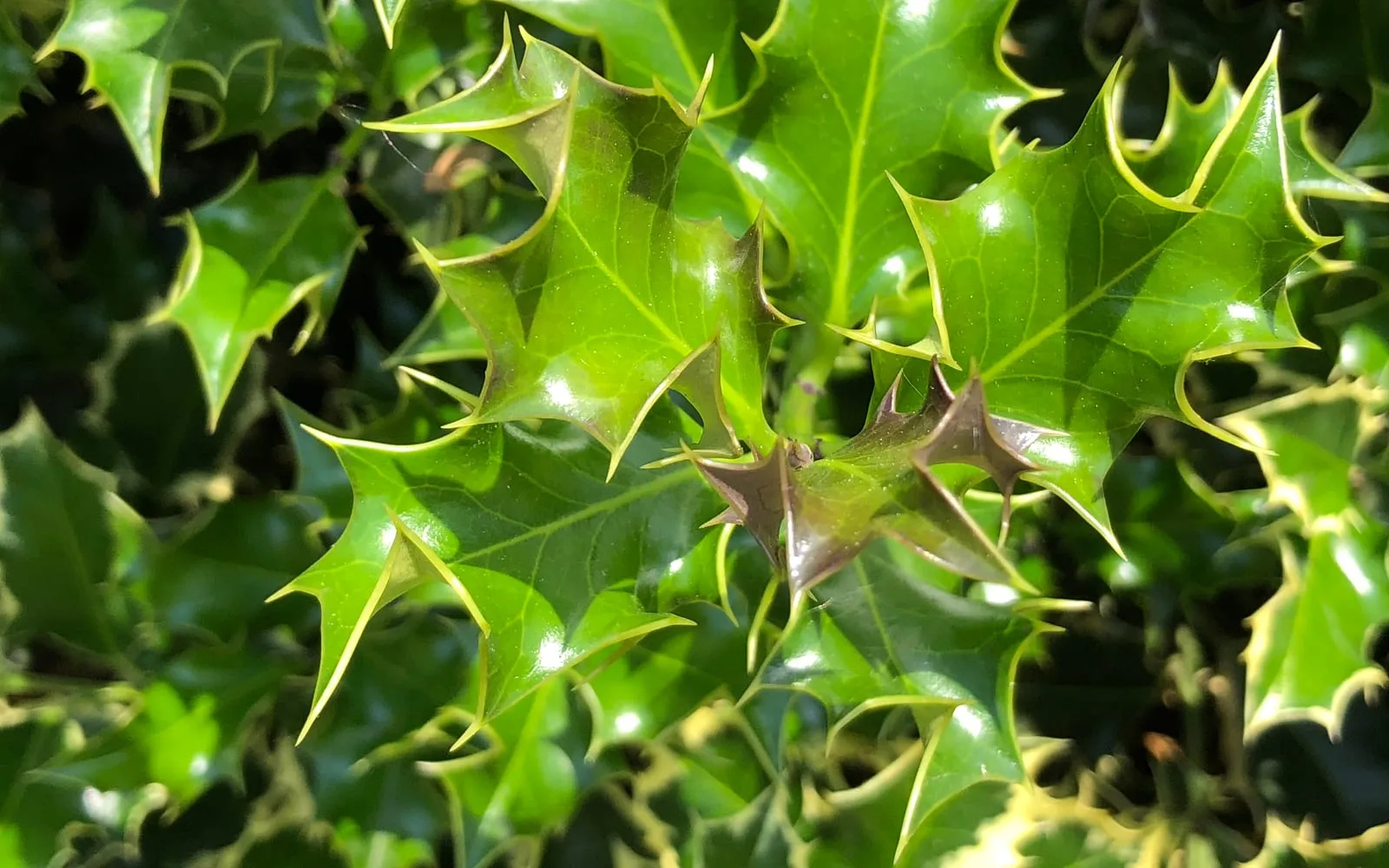
On a variegated holly or elaeagnus in a garden this shows as one branch, then a whole side, then most of the shrub. On a monstera or a rubber plant it shows as the next three leaves coming out plain after a run of beautifully marked ones.
The plant is in perfect health. That is most of the problem.
Why the green shoot wins
Variegated leaves are handicapped. The white and cream parts hold no chlorophyll, so a variegated plant runs on a fraction of the photosynthetic area a green one has, which is why variegated cultivars are slower, smaller and fussier than their plain parents.
A shoot that has reverted carries a full complement of chlorophyll. It makes more sugar per leaf, builds more leaf with it, and reaches the light ahead of the shoots it is competing with. Give it a season and it will be the dominant stem. Give it two and it will have shaded out everything else.
Nothing is wrong with the plant and nothing you did caused it. The green shoot is better at being a plant.
Two cell layers, stacked
Most variegated garden and house plants are periclinal chimeras. The word is forbidding and the structure behind it is simple, and it is what the pruning advice and the propagation advice both rest on.
A shoot tip is built in layers. The outermost layer of cells gives rise to the skin of the leaf and its margin, and the layers beneath give rise to the interior. In a chimeral variegate one of those layers carries a mutation that blocks chlorophyll and the other does not, so the plant is two genetically different tissues growing one inside the other, held together only by the geometry of the growing point.
A snake plant with a yellow edge is the clearest example. The yellow margin is the outer layer, the green centre is the layer beneath, and the plant looks the way it does because those two are stacked correctly.
Now suppose a new shoot arises from a bud deep in the stem, or from tissue below the surface, as it does after hard pruning or from a leaf cutting. That shoot is built entirely from the inner layer. It has no mutant tissue in it at all, and it comes out plain green. It has not lost anything. It never had it.
The reverse case produces the all-white shoot, built entirely from the layer that cannot photosynthesise. It grows on borrowed sugar for a few centimetres and then gives up.
The propagation trap
Cut a leaf off a variegated snake plant, put the base in compost, wait three months, and the plantlet that appears will be plain green. Gardeners do this every year and conclude that the plant was mislabelled.
The plantlet grows from an adventitious bud formed in tissue below the leaf surface, which is the layer without the mutation, so the yellow margin has no way of being passed on. Dividing the rhizome instead keeps an existing growing point with both layers intact, and the division comes up variegated.
The same rule holds for margined hostas, many ivies and a good number of variegated shrubs. Where the pattern lives in the outer layer, propagate by division or by cuttings that include a growing point, and never from a leaf.
Stem cuttings behave better than leaf cuttings because they carry an axillary bud that already has both layers. Choose one from a stem with green and white on the same leaf. A cutting taken from a fully green shoot produces a fully green plant, and a cutting from an all-white shoot produces nothing that survives.
The kind that is not reversion at all
Several popular plants are patterned without being chimeras, and they behave differently.
Calatheas, prayer plants, aglaonemas and spotted begonias carry their markings as an inherited pattern present in every cell. These cannot revert. What they can do is lose contrast in poor light, because a plant short of light builds more chlorophyll everywhere it can, and the pale zones dull down. Move the plant somewhere brighter and the new leaves come back properly marked, which never happens with a true reversion.
Monstera ‘Thai Constellation’ sits in this group too, and it holds its pattern reliably while ‘Albo’ throws green and white shoots constantly. ‘Thai Constellation’ was produced in tissue culture with the mutation in every cell, and ‘Albo’ is a chimera.
And a variegated tree grafted onto a plain rootstock produces plain green suckers from below the graft union. Those are not reversion either. They are a different plant entirely, growing from the roots it was grafted onto, and they need cutting off flush at their point of origin rather than trimming.
What to do about it
Cut every green shoot out as soon as you notice it, back to where it joins older growth.
Take out the all-white shoots on the same visit.
Move the plant somewhere brighter, which slows the takeover without preventing it.
Prune variegated shrubs lightly and renovate them over several years.
Propagate from stems that show both colours on one leaf, and divide rather than take leaf cuttings from anything with a coloured margin.
Pull rootstock suckers from below a graft union rather than treating them as reversion.
Bin a hosta with the ink-bled mottling of virus rather than dividing it, and clean the knife afterwards.
Accept a fully reverted plant as a green one, since nothing will bring the pattern back.
What it gets mistaken for
Mosaic virus mottles a leaf in irregular blotches that ignore its structure, often with distortion or puckering, and it usually affects the whole plant rather than one shoot.
Etiolation stretches the stems and pales everything, with long gaps between small leaves.
Interveinal chlorosis from a magnesium or iron shortage yellows the tissue between the veins while the veins themselves stay green, which produces a fine net pattern rather than solid blocks of colour.
Spider mite stippling dulls a leaf with thousands of tiny pale dots and comes with webbing under the leaf.
Sun bleaching pales the leaves that face the window and leaves the shaded side of the same plant properly coloured.
What to do, in order
Start here
Prevention, and the changes that stop the problem returning. Most of these pages should end at this tier.
- Cut the green shoot out as soon as you see it
- A reverted shoot has full chlorophyll, so it photosynthesises harder than its variegated neighbours and grows away from them. Left for a season it will be the biggest stem on the plant, and left for two it will be most of the plant. Trace it back to the point where it joins older wood and cut it off there, rather than shortening it, because a stub will push out more of the same.
- Take out the all-white shoots too
- The opposite sport turns up on the same plants and cannot feed itself. It grows a short way on reserves from the rest of the plant, stalls, and then dies back or scorches in the first bright spell. Remove it and stop the plant spending anything on it.
- Give it as much light as it will take
- Light does not cause reversion and it decides how fast a reverted shoot takes over. A variegated plant has less chlorophyll than a green one, so it is already at a disadvantage, and putting it in a dim corner widens the gap. Bright indirect light indoors, or the position the label recommends outdoors, keeps the variegated growth competitive.
- Prune lightly rather than hard
- Cutting a variegated shrub back into old wood forces growth from dormant buds deep in the stem, and those are the buds most likely to produce green shoots. Renovate over several years rather than in one winter, and take the top off a variegated holly or elaeagnus with restraint.
- Do not feed a reverted plant back into variegation
- Nothing added to the soil or the water will restore the pattern to a shoot that has lost it. The tissue is genetically different from the tissue beside it, and no nutrient changes that. Feeding a plant that has gone green produces a larger green plant.
- Expect nothing to change on a plant that has fully reverted
- Once every growing point on a plant is green, the variegated tissue is gone and will not come back. That is the point to decide whether you want a plain green plant of that species, since it will be a healthy and vigorous one.
Then reach for a barrier
Netting, hand removal and water. Nothing here harms anything except the target.
- Propagate from a shoot that carries the pattern you want
- This is where most variegated plants are lost. Take cuttings from a stem showing balanced variegation, with green and white on the same leaf, and avoid both the all-green and the all-white shoots. A cutting reproduces the tissue it was taken from and nothing else.
- Divide rather than take leaf cuttings from a margined variegate
- A snake plant with a yellow edge, propagated from a leaf cutting, comes up plain green every time. The yellow margin lives in the outer cell layer of the leaf, and the new plantlet grows from tissue underneath it, which never carried the mutation. Splitting the rhizome keeps the growing point intact and keeps the margin with it. The same trap catches many margined hostas and ivies.
- Destroy a plant whose variegation came from a virus
- Some sought-after patterns are symptoms. Hosta virus X produces the ink bleeding and mottling along the veins that has been sold under cultivar names, and it spreads on sap through pruning cuts and division. Bin an infected plant rather than composting or dividing it, disinfect the knife, and keep it away from healthy hostas.
Plants affected
Guides that name it among the problems to watch for. The list is the plants it is characteristic of rather than everything it will feed on.