
Disorder
Etiolation
Also called Leggy growth, Drawn seedlings, Stretching
Etiolation makes seedlings thin and weak, and stretches succulents into bare stalks. The pale growth will not shorten again, so recovery means improving the light and pruning back when new growth is strong.
At a glance
- Type
- Disorder
- Cause
- Growing conditions
- Severity
- Weakens the plant
- Affects
- Houseplants, Herbs and edibles, Garden plants
- Active
- All year
What you are seeing
- Long bare stretches of stem between the leaves
- Growth pale, yellowish or washed out compared with the older parts
- Stems thin, soft and unable to hold the plant up
- Seedlings elongating within days of germinating and then falling over
- A rosette succulent stretching upwards into a stalk and losing its shape
- Leaves smaller than they should be and turned to face one direction
- The whole plant leaning hard towards the nearest window
Before you treat anything
Nothing here is harmful. Grow lights get hot enough to scorch foliage at close range, so keep the stated distance.
What you are looking at
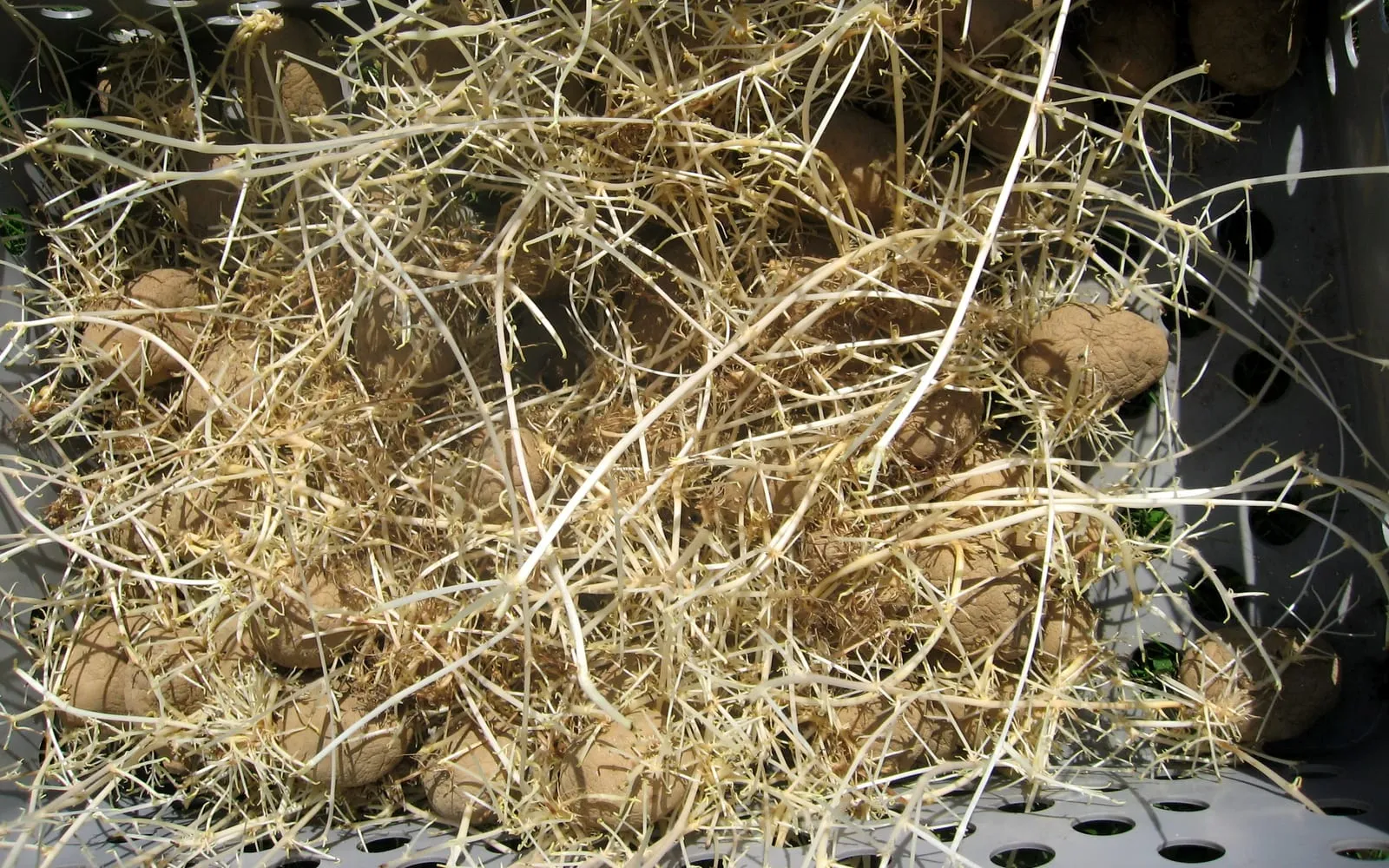
The stem has long bare stretches between the leaves, where a healthy plant of the same species would have them packed close together. The new growth is pale and washed out, the stems are thin and soft, and the whole plant is leaning towards the window.
On seedlings it is unmistakable. They come up, shoot to three or four times the height they should be within a few days, go pale, and then fall over under their own weight.
On succulents it is worse to look at. A tight rosette that took a year to build stretches upwards into a bare stalk with a few leaves on top, and it never recovers the shape.
The plant is doing something sensible
Etiolation is not a malfunction. A plant in low light lengthens its stems, keeps its leaves small and turns pale because it is looking for light, and in a wood that behaviour gets a seedling up through the litter to the canopy gap above it. Plants that do it well are the ones that survive being shaded.
On a windowsill in February there is no canopy gap to reach, so the plant stretches until it falls over.
Two things follow. Feeding a stretched plant makes it worse, because nitrogen buys growth and there is no light to build that growth properly. And warmth without light is the worst combination available, since warmth sets the pace of growth and light pays for it.
The other thing to understand is that it does not reverse. A stem that grew long and bare stays long and bare. Moving the plant into better light stops it getting worse and produces good growth from that point on, and the stretched section remains. Anything to be done about the existing growth is done with secateurs.
What to do about it
Move the plant to the brightest place you have, and turn it every few days.
Sow seed in late March and April rather than February, unless you have a grow light.
Move seedlings somewhere bright and cooler as soon as they germinate.
Buy a grow light if you sow early or garden on a north-facing windowsill. It is the one purchase that changes the outcome.
Stop feeding heavily while the light is poor.
Cut a leggy houseplant back hard in spring and root the top as a cutting.
Behead a stretched succulent, dry the cut for a few days, root the rosette in gritty compost, and give it far more light than it had.
Pot leggy tomato seedlings deeper, up to the lowest leaves, since they root from the buried stem.
What it gets mistaken for
Nitrogen shortage produces a small, pale, stunted plant. Etiolation produces a large, pale, overstretched one, and the two want opposite treatments.
Damping off collapses seedlings at a dark pinched point right at compost level, and the stem there is rotted rather than merely thin.
Natural climbing habit stretches the stems of ivies, philodendrons and pothos without the pallor and without the weak growth, and it is what those plants do.
Reversion on a variegated plant produces plain green shoots that are vigorous and sturdy rather than drawn.
A plant outgrowing its position gets tall while keeping its leaves close together and its stems firm, which is size rather than etiolation.
What to do, in order
Start here
Prevention, and the changes that stop the problem returning. Most of these pages should end at this tier.
- Give it more light, which is the whole answer
- Move the plant to the brightest position you have. A windowsill that feels bright to a person is often a tenth of the light outdoors, and that gap is the reason houseplants stretch. South and west facing windows in winter, and a spot where you can see a good piece of open sky from where the plant stands.
- Sow seed later rather than earlier
- Almost every leggy seedling in Britain was sown in February on a windowsill with eight hours of weak daylight. The same seed sown in late March or April, when light levels have doubled, produces short sturdy plants and catches up within weeks. Sowing early feels productive and usually costs you nothing but the plants.
- Turn the pot regularly
- A plant lit from one side leans and stretches towards it. A quarter turn every few days keeps it symmetrical, which is cosmetic on a houseplant and structural on a seedling.
- Ease off the nitrogen
- A high-nitrogen feed on a plant short of light produces more of the soft drawn growth you are trying to avoid. Feed to match the light the plant is getting rather than the growth you want from it.
- Keep seedlings cool as well as bright
- Warmth drives growth and light pays for it, so a warm dark place is the worst combination there is. Germinate in the warm, then move the tray somewhere bright and several degrees cooler as soon as the seedlings appear. A cold frame or an unheated porch grows better plants than a living room.
Then reach for a barrier
Netting, hand removal and water. Nothing here harms anything except the target.
- Use a grow light where the light is not there
- For late-winter sowings and for houseplants in a dark room, a supplementary light 20 to 30 cm above the plants for twelve to sixteen hours a day removes the problem entirely. This is the one piece of equipment that changes what is possible on a north-facing windowsill.
- Cut back and start again
- Etiolated growth never shortens. Cut a leggy houseplant back hard in spring, into a section with leaves close together, and let it reshoot in better light. Take the cut-off top as a cutting, since it will root readily and make a better plant than the one you cut.
- Behead and re-root a stretched succulent
- Cut the rosette off with a few centimetres of stem, let the cut dry for several days, and set it on dry gritty compost to root. The bare stalk left behind usually produces offsets. Then put the new plant somewhere far brighter than the old one was.
- Plant leggy tomato seedlings deep
- Tomatoes root from the buried stem, so a drawn seedling can be potted on with the stem laid in up to the lowest leaves and it will make a stronger plant than it was. This works for tomatoes and does not work for most other things.
Plants affected
Guides that name it among the problems to watch for. The list is the plants it is characteristic of rather than everything it will feed on.