
Edible
Curly Parsley
Petroselinum crispum
Also known as Parsley, Flat-leaf parsley, Italian parsley, Hamburg parsley
How to grow Petroselinum crispum. Why the seed takes a month to appear, why year two is a write-off, the difference between curly and flat-leaf, and the rash it can give you.
At a glance
- Difficulty
- Moderate
- Water
- Regularly. Never let it dry out, or it bolts
- Light
- Full sun or light shade. Some afternoon shade helps in high summer
- Temperature
- Hardy to about -10 deg C. It stands through most temperate winters
- Hardiness
- USDA 5-9, RHS H5, hardy to -12 C
- Type
- Biennial. Leaves in year one, flowers and seed in year two, then it dies
- Height
- 30-40 cm in leaf, 75 cm when flowering
- Native to
- The central and eastern Mediterranean, probably Greece and the Balkans
- Best month
- March and June in the Northern Hemisphere, September and December in the Southern Hemisphere
A biennial, so a plant that stood through winter runs to seed in its second spring and no amount of picking stops it. Sow every year. Seed germinates slowly because the coat carries germination inhibitors that need washing out, which is why soaking overnight and sowing into warm soil helps more than patience does.
Hardiness zones describe winter cold alone. Summer heat, humidity, rainfall and the length of the growing season decide as much, so treat the range as the outer limit rather than as a recommendation.
Every month named in this guide is for the temperate Northern Hemisphere. If you garden in the Southern Hemisphere, shift each one by six months, so March becomes September. Closer to the equator the wet and dry seasons matter more than the calendar, and the shift stops being a useful guide.
Skin irritant
- Safe to eat
- The leaves and stalks, and the swollen root of Hamburg parsley
- Harm from
- Eating it and handling it
- Affects
- People
Parsley is a food plant and eating it is safe. Two cautions apply, and both matter. The first is on the skin. Parsley belongs to the carrot family and its sap contains furanocoumarins, which react with sunlight to cause phytophotodermatitis, a delayed burn with redness and blistering appearing a day or two after handling the plant in bright sun. Harvesting a large quantity on a sunny day and then not washing your forearms is the usual circumstance. Wear gloves and long sleeves if you are cutting a lot, and wash afterwards. The second is medicinal quantity. Parsley contains apiol and myristicin, and concentrated parsley preparations have a long history as an abortifacient, so strong parsley teas, extracts and seed oil should be avoided in pregnancy. Parsley in food is not a concern. The ASPCA does list parsley as toxic to dogs, cats and horses, on the basis of the same furanocoumarins causing photosensitisation in animals that eat a great deal of it, which is a grazing risk rather than a garnish one.
Sources: ASPCA (Parsley, Petroselinum crispum), NC State Extension, Petroselinum crispum
About
Parsley seed is famously slow. Three to six weeks is normal, and the old saying has it going to the devil and back nine times before it germinates. The real reason is a germination inhibitor in the seed coat, and pouring hot water over the seed bed, or soaking the seed overnight before sowing, washes enough of it away to speed things up considerably.
The other thing to understand before sowing is the life cycle. Parsley is a biennial. It makes leaves in its first year, sits through winter, then in its second spring it bolts, throws up a flower stem, sets seed and dies. The leaves turn bitter and coarse as soon as it starts.
That means sowing every year. A parsley bed that produced beautifully last summer will be over by the following June, and the gardener who did not sow in spring has no parsley from midsummer onward.
Appearance and character
A dense rosette of triangular leaves on long stalks, divided and divided again, rising 30 to 40 cm.
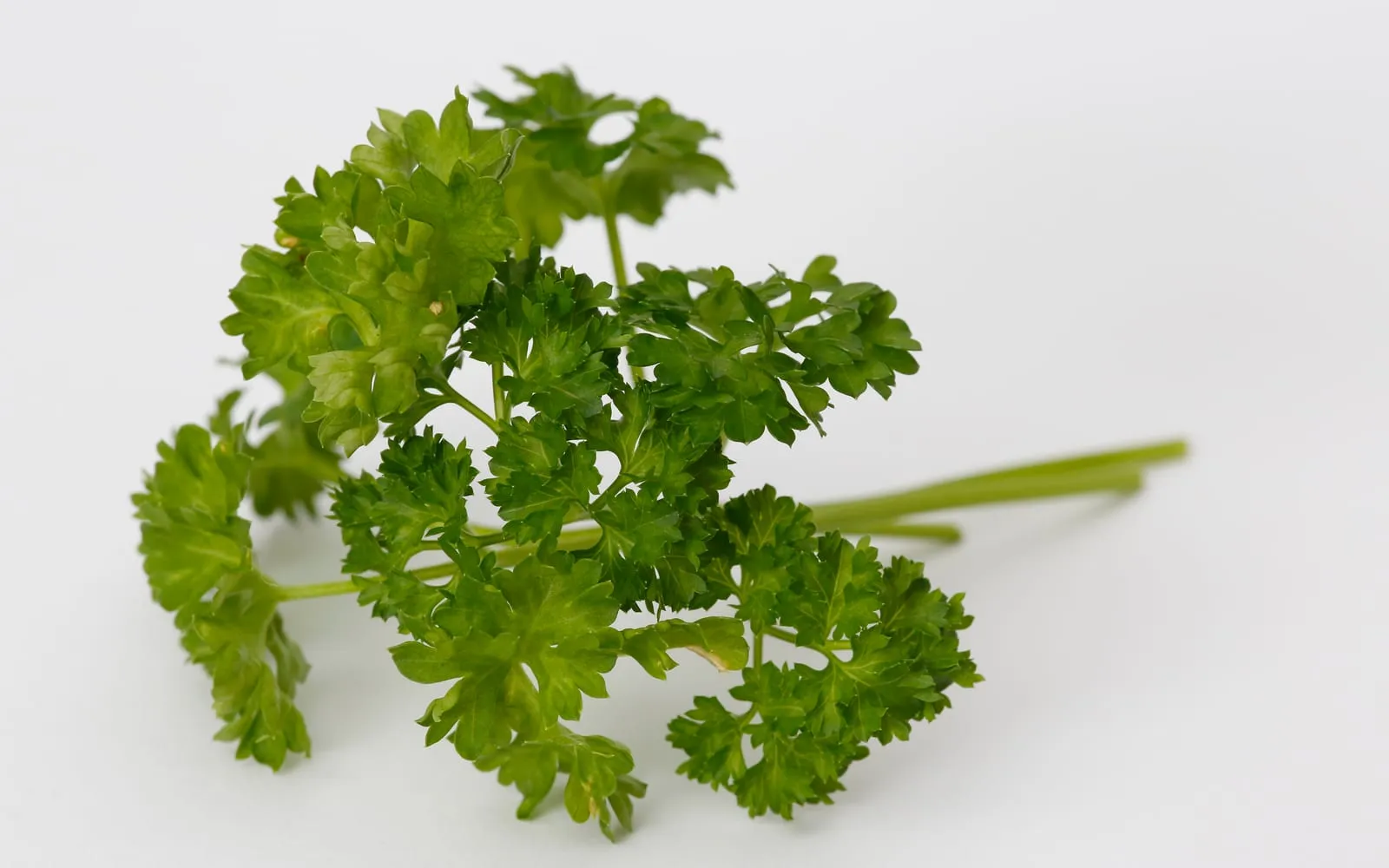
Curly parsley, Petroselinum crispum var. crispum, has tightly ruffled and crimped leaflets, bright green and springy. It holds its shape in a garnish and has a milder flavour.
Flat-leaf or Italian parsley, var. neapolitanum, has flat toothed leaflets and a stronger, cleaner, more peppery flavour. Most cooks prefer it.
Hamburg parsley, var. tuberosum, is grown for a swollen parsnip-like root that is excellent roasted, with usable if coarse leaves.
In its second year the plant sends up a branched stem to 75 cm carrying flat umbels of tiny greenish-yellow flowers, which are much visited by hoverflies and parasitic wasps.
The whole plant belongs to the carrot family and carries the family’s characteristic umbrella-shaped flower heads.
Where it is from
The central and eastern Mediterranean, most likely Greece and the Balkans, on rocky ground and in scrub, though it has been cultivated for so long that its wild distribution is uncertain.
Unlike most Mediterranean herbs, parsley is not a plant of thin dry soil. It grows naturally in damper, richer pockets, and it wants those conditions in a garden too.
That difference matters. Sage, thyme and rosemary all want poor dry ground and suffer from feeding. Parsley wants rich, deep, moisture-retentive soil and heavy feeding, and it bolts if it dries out. Growing all four in the same bed on the same regime disappoints somebody.
It tolerates cold well and stands through most temperate winters as a green rosette, which is why it is one of the few fresh herbs available from the garden in January.
Long summer days combined with drought stress are what trigger premature bolting.
How it grows
A biennial. Seed sown in spring produces leaves from early summer through to the following spring, then the plant flowers, seeds and dies.
Germination is slow and erratic, taking three to six weeks in cool soil and rather less in warm. Soil below about 10 deg C delays it further, so sowing too early in spring gains nothing.
The root is a taproot, which is why parsley resents transplanting and does far better sown where it is to grow, or raised in deep modules or root trainers.
Harvest by cutting whole stalks from the outside of the rosette at the base, which lets the centre carry on producing. Picking leaves off the tops of stems leaves a stubby, unproductive plant.
Plants left to flower self-seed freely, and volunteer seedlings appear around the parent the following year.
Successional sowing in March and again in June gives an unbroken supply, since the June sowing carries you through the following spring when the March plants bolt.
Through the seasons
Spring is the main sowing time, from March once the soil warms. Overwintered plants from last year produce a final flush before bolting. Sow the replacement crop now.
Summer is peak harvest. Water consistently, since drought is what causes bolting. Sow a second batch in June for autumn and winter.
Autumn brings steady growth. Plants from the June sowing bulk up. Move a container plant to a sheltered spot or into a cold frame for easier winter picking.
Winter keeps the rosettes green through frost. Harvest sparingly. Growth is slow, and cloche protection speeds it up noticeably.
Care difficulty
Moderate, entirely because of germination and bolting.
Germination defeats many people. The seed is slow, and gardeners conclude it has failed and dig the row over at week three. Sow into warm soil, soak the seed overnight first, mark the row clearly, and be patient.
Bolting is the second issue. Parsley bolts when stressed, and the usual stress is dry soil. Water it consistently, mulch it, and grow it somewhere that does not bake.
Second-year bolting is not preventable and is not a fault. The plant is doing what biennials do.
Beyond that it is undemanding, hardy and generous.
Watering
Water regularly and generously. Among the common kitchen herbs, this is the one that wants consistent moisture.
In summer that means a thorough soak two or three times a week in open ground, and daily attention for pots in hot weather.
Letting the soil dry out is the main trigger for premature bolting, and once a plant has bolted the leaves are bitter and it will not go back.
Mulch around the plants with compost to hold moisture.
Water at the base rather than over the leaves where practical, since wet crowded foliage encourages leaf spot.
Reduce watering through winter, keeping the soil damp rather than wet.
Warning signs, diseases and pests
A tall flower stem appearing in the second spring is the normal end of the life cycle. Pull the plant once it has seeded, or leave it for the hoverflies.
A flower stem in the first summer is premature bolting, caused by dry soil, heat or transplant shock. Cut it out and water hard, though the plant rarely recovers its quality.
Yellowing older leaves with poor growth suggests hunger, which is common in containers and in poor soil.
Carrot fly is the main pest. The larvae tunnel into the roots, causing stunted plants with reddish foliage that wilts. Cover the crop with insect-proof mesh or grow behind a 60 cm barrier.
Leaf spot appears as brown blotches in crowded damp conditions. Thin the plants and improve airflow.
Aphids gather at the growing point and distort new leaves.
Slugs strip seedlings and are the most likely cause of a row that germinated and then disappeared.
Nothing coming up at all after four weeks is often ordinary slowness. Wait six before resowing.
Growing environment
Full sun or light shade. Some shade in the afternoon reduces bolting in a hot summer, and full sun gives faster growth in spring and autumn.
Rich, deep, moisture-retentive but well-drained soil. Dig in plenty of well-rotted compost or manure before sowing. This is a hungry crop.
Depth matters because of the taproot. A deep pot suits parsley far better than a shallow trough, and 20 cm is a sensible minimum.
Hardy to about -10 deg C, standing through most temperate winters outdoors.
Sow direct where possible, 1 cm deep in rows 30 cm apart, thinning to 20 cm. Parsley resents root disturbance, so raise transplants in deep modules rather than seed trays.
Pouring boiling water along the drill before sowing warms the soil and helps break the germination inhibitor.
Grow it near a door. Parsley is picked in small quantities all year, and distance is the enemy of use.
Avoid growing it in the same ground two years running, since carrot fly builds up.
Feeding
Parsley is a leafy crop and responds well to feeding, unlike most herbs.
Dig in well-rotted compost or manure before sowing, which is usually enough for plants in open ground.
Feed container plants fortnightly through the growing season with a balanced liquid fertiliser, or a nitrogen-rich one for leaf production.
A liquid feed in late summer keeps overwintering plants productive.
Do not feed after growth stops in midwinter.
Yellowing leaves on a well-watered plant usually mean it needs feeding, which happens quickly in pots.
Troubleshooting
Nothing germinated. Wait longer. Three to six weeks is normal. Next time, soak the seed overnight, sow into warmed soil from mid-spring, and pour hot water along the drill first.
It has shot up a flower stem. In its second year that is the end of the life cycle and nothing can stop it. In its first year it has bolted early from drought, heat or transplant shock. Sow a fresh batch.
The leaves have turned bitter. The plant has bolted. Pull it up and start again.
Curly or flat-leaf? Flat-leaf has the stronger and cleaner flavour and most cooks prefer it. Curly holds its texture better as a garnish and in tabbouleh, and stands winter slightly better. Grow both if you have room.
Yellow leaves and slow growth. Hunger or drought. Feed and water, especially in a container.
Should I pick the leaves or cut the stems? Cut whole stalks from the outside of the rosette at the base. Picking leaves off the top leaves a plant that cannot recover properly.
I got a rash after cutting a lot of it. Phytophotodermatitis. The sap contains furanocoumarins that react with sunlight, and the burn appears a day or two later. Wear gloves and long sleeves when harvesting heavily in bright weather, and wash your arms afterwards.
Can I pick it wild? Do not. Parsley is an umbellifer, and the family includes fool’s parsley and hemlock, both of which have killed people who mistook them for something edible. Grow your own and leave wild umbellifers alone.