
Edible
Dong Quai
Angelica sinensis
Also known as Chinese Angelica, Female Ginseng
Practical guidance for growing dong quai, Angelica sinensis, including cool-climate needs, biennial flowering, root harvest, phototoxic sap, deep soil, and slug damage.
At a glance
- Difficulty
- Moderate
- Water
- Regular, even moisture; never allowed to dry out fully
- Light
- Partial shade in hot climates; full sun where summers are cool
- Temperature
- Fully hardy; dislikes prolonged summer heat and humidity
- Hardiness
- USDA 5-8, RHS H6, hardy to -20 C
- Type
- Hardy biennial to short-lived perennial herb
- Height
- 1-2.5 m in flower
- Native to
- China
Comes from cool, high-altitude regions of China and carries that preference into cultivation, tolerating hard winter cold far more readily than a hot, humid summer. A period of winter cold is also what triggers flowering in its second or third year, so a climate with no real winter chill can leave a plant vegetative indefinitely.
Hardiness zones describe winter cold alone. Summer heat, humidity, rainfall and the length of the growing season decide as much, so treat the range as the outer limit rather than as a recommendation.
Skin irritant
- Safe to eat
- Young leaves and stems, and the dried root used in cooking and herbal preparations
- Do not eat
- Sap on skin exposed to strong sunlight
- Harm from
- Handling it
- Affects
- People
Angelica sinensis contains furanocoumarins in its sap, the same class of compound found across the wider carrot family that includes giant hogweed, though at a far lower concentration here. Sap on the skin followed by strong sunlight can cause a burning, blistering reaction called phytophotodermatitis, so handling the plant while cutting or harvesting is best done with covered skin or washed off promptly afterwards. The dried root, known as dong quai, is one of the best-known ingredients in Chinese herbal medicine and has a long history of use prepared in controlled doses; herbal-safety references commonly caution against its use during pregnancy. Normal culinary and garden handling carries no other documented risk to people, and the species is not listed as toxic to pets by the ASPCA.
Sources: RHS potentially harmful garden plants, ASPCA toxic and non-toxic plants
About
Dong quai is a large, cool-climate herb grown mainly for its aromatic root, one of the most widely used ingredients in Chinese herbal medicine and a plant with genuine garden presence in its own right. It forms a substantial clump of divided leaves in its first year or two, then sends up tall flowering stems once it reaches maturity.
It behaves as a biennial or a short-lived perennial rather than a plant that flowers every year, and gardeners growing it for root harvest usually lift it before flowering rather than let it run to seed.
Appearance and character
Leaves are large and finely divided into toothed leaflets, held on stout, hollow, purple-tinged stems that thicken noticeably as the plant matures. A well-grown clump can spread close to a metre across before it sends up a flower stem.
Flowering, when it happens, produces the classic umbellifer structure: domed clusters of small white flowers held well above the foliage on branching stems, similar in form to its relatives cow parsley and wild carrot but on a considerably larger scale.
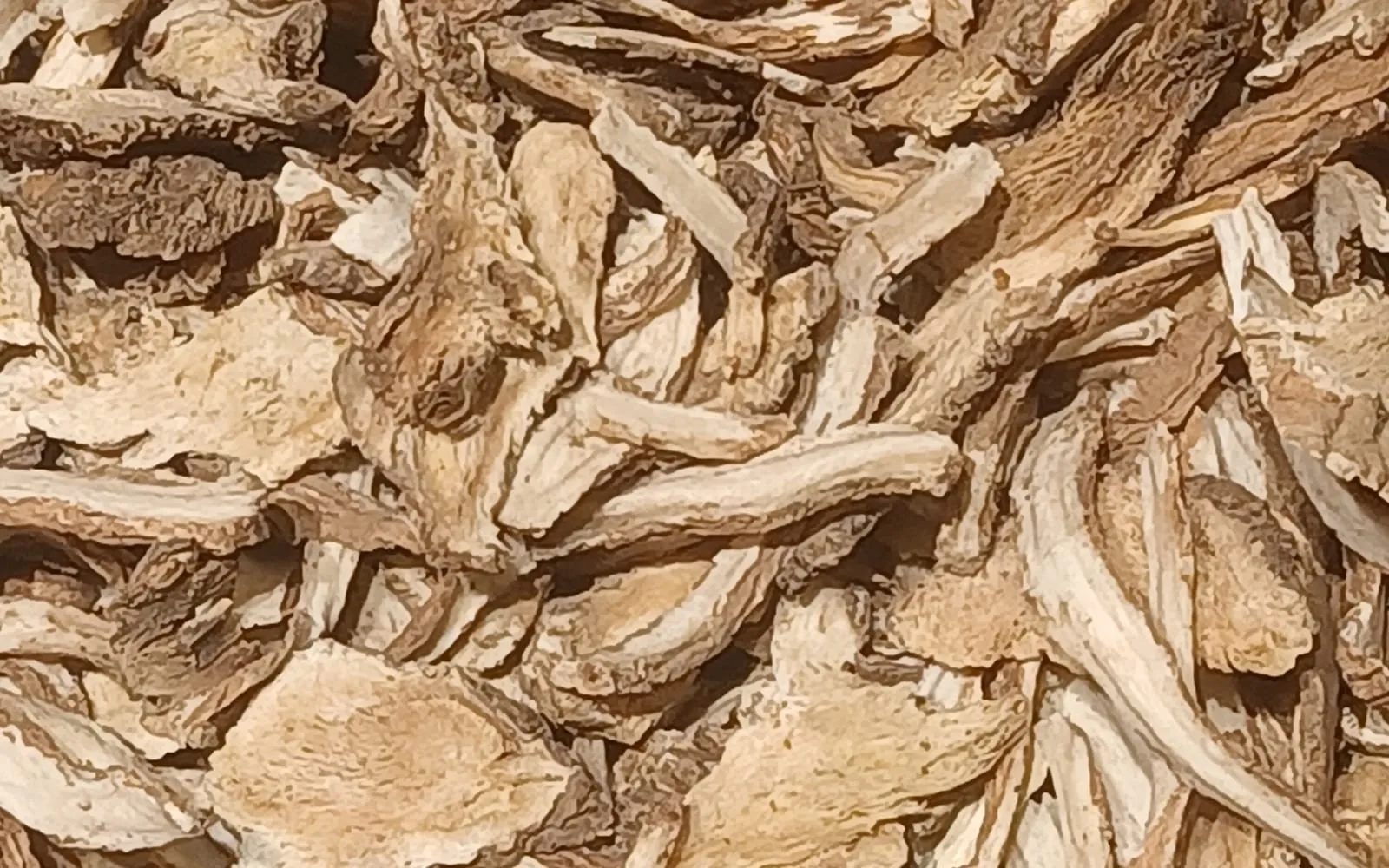
Below ground, the part most valued, the root is thick, branched and aromatic, with a warm, slightly sweet, medicinal scent that intensifies once the root is cut and dried.
Where it is from
Angelica sinensis is native to China, growing wild in cool, high-altitude regions of provinces including Gansu, Yunnan and Sichuan, often on mountain slopes and forest margins with cool summers and real winter cold.
Commercial cultivation for the herbal trade concentrates in these same cool, high-elevation areas today, and that origin explains why the plant performs poorly in a hot, humid lowland summer regardless of how well the soil and water are managed. Cool air matters to this species as much as soil does.
How it grows
Plant in deep, moist, fertile soil rich in organic matter, in a position with some shade from the hottest part of the day where summers run warm, or full sun where they stay cool. A shallow or poor soil limits root development, which matters directly if the crop is being grown to harvest.
Sow seed in autumn or early spring, since seed loses viability quickly and germinates best when relatively fresh. Thin seedlings to give each plant room for its eventual spread, since a large clump crowds its neighbours by its second season.
Most growers harvest the root at the end of the second growing season, before the plant flowers, since root quality and size peak then and decline once the plant puts its energy into seed production instead. A plant left unharvested flowers in its second or third year and usually dies after setting seed, in the pattern typical of a biennial.
Through the seasons
Spring brings strong new growth from an established root, or germination from freshly sown seed.
Summer is the main growing period for leaf and root, with mature plants beginning to send up a flower stem if left to run their full cycle.
Autumn is the usual root harvest time on a second-year plant, dug before hard frost sets in.
Winter cold is not something to protect against. The dormant root survives hard freezing in the ground, and that cold exposure is part of what triggers flowering the following year in a plant left unharvested.
Care difficulty
Moderate, and the main skill is matching it to a climate with a real cool season and a summer that does not run too hot or humid. Given that climate, it grows readily in ordinary fertile soil with consistent water and needs comparatively little routine attention through the season.
Where summers are hot, it struggles regardless of watering or feeding, and gardeners in warmer regions often grow it in the coolest, most sheltered part of the garden or give up on it as a poor match for their climate.
Watering
Water regularly and deeply, keeping the soil consistently moist rather than letting it dry out, particularly through the first year while the root system develops.
A dry spell in summer checks growth and can push the plant toward premature flowering, at some cost to root size for anyone growing it as a harvested crop rather than as an ornamental.
Warning signs, diseases and pests
Aphids cluster on new growth and developing flower stems, distorting growth and covering it with sticky honeydew. A strong jet of water or insecticidal soap controls light infestations.
Powdery mildew coats leaves in a pale, dusty film in humid, still conditions with poor air movement. Improving airflow around the clump and avoiding overhead watering late in the day helps prevent it.
Carrot fly larvae tunnel into the root in the same way as they do on carrot, since dong quai is in the same family. Fine mesh covers over young plants and rotating the planting position each year both reduce the risk.
Slugs and snails target soft young seedlings and fresh spring growth hardest, capable of destroying a whole sowing overnight. Barriers, torchlight collection or a pet-safe control help protect vulnerable young plants.
Growing environment
Partial shade suits it best where summers run hot, protecting the plant from the worst midday heat; full sun is fine in a reliably cool climate and produces the strongest growth there.
Deep, moisture-retentive, fertile soil is essential for good root development, since a shallow or compacted soil limits how far the root system can grow before it is harvested.
Cool air matters more than any single soil factor. Choose a climate or a shaded microclimate that keeps summer heat in check.
Feeding
A generous mulch of well-rotted compost worked into the soil before planting, followed by a balanced fertiliser application in spring, is usually enough for the whole season.
Avoid heavy feeding through summer, which encourages soft, lush top growth at some cost to the root development that most growers are cultivating this plant for.
Troubleshooting
The plant is tall and lush but the root stayed small. Likely heavy feeding or a shaded position that favoured leaf growth over the root. Reduce summer feeding and, where possible, give the plant more direct light to encourage stronger root development the following season.
My skin reacted after handling the stems. Almost certainly phytophotodermatitis, a sap reaction triggered by sunlight rather than an allergy in the usual sense. Wash the area promptly, keep it out of direct sun, and wear covered skin when cutting or harvesting this plant in future.
It flowered in its second year and then died. Normal behaviour for a biennial dong quai. The plant puts its stored energy into a single flowering and seed set, then dies back, so harvest the root before flowering if you are growing it for the root.
Seedlings keep disappearing overnight. Slugs and snails are the usual cause, particularly on fresh spring growth. Protect young seedlings with a barrier or torchlight collection until they are large enough to tolerate light grazing.
Will it grow well in a hot, humid summer climate? Not reliably. This species performs best with a cool summer and a real winter chill, and a hot, humid climate tends to produce a smaller, more stressed plant regardless of how carefully the soil and water are managed.