
Edible
Anise
Pimpinella anisum
Also known as Aniseed, Sweet cumin
How to grow anise, Pimpinella anisum. Why the seed needs a long hot summer to ripen, sowing it direct in May, and the aniseed flavour it shares with three unrelated plants.
At a glance
- Difficulty
- Difficult
- Water
- Weekly in dry weather while growing
- Light
- Full sun, and as much of it as the season offers
- Temperature
- Killed by frost. It needs 120 frost-free days to ripen seed
- Hardiness
- USDA 9-11, RHS H3, hardy to -3 C
- Type
- Half-hardy annual
- Height
- 30-60 cm
- Native to
- the eastern Mediterranean, western Asia
- Best month
- May and September in the Northern Hemisphere, November and March in the Southern Hemisphere
It needs 120 frost-free days and a dry warm finish to ripen seed, which is why the crop belongs to Mediterranean and continental climates and gives leaf but no seed in a cool damp one. The taproot resents transplanting, so sow it where it is to grow.
Hardiness zones describe winter cold alone. Summer heat, humidity, rainfall and the length of the growing season decide as much, so treat the range as the outer limit rather than as a recommendation.
Every month named in this guide is for the temperate Northern Hemisphere. If you garden in the Southern Hemisphere, shift each one by six months, so May becomes November. Closer to the equator the wet and dry seasons matter more than the calendar, and the shift stops being a useful guide.
Not known to be toxic
- Safe to eat
- Seeds and leaves
Non-toxic. Anise is a culinary spice with an extremely long record of safe use and it appears on neither the RHS list of potentially harmful garden plants nor the ASPCA list. The seeds and leaves are both eaten. Anise essential oil is a concentrated product containing anethole and should be treated as such rather than as a strong version of the spice. The remaining caution is identification, since anise belongs to the Apiaceae, the family that also holds hemlock and hemlock water-dropwort. Anise raised from a seed packet is safe; a white-flowered umbellifer growing wild is not something to harvest without certainty, and the checks are set out in the hemlock and hemlock water-dropwort guides.
Sources: RHS potentially harmful garden plants, ASPCA toxic and non-toxic plants
About
Anise is the original aniseed. Its seed flavours ouzo, pastis, sambuca, aguardiente and a long list of breads and sweets, and the flavour compound responsible, anethole, also turns up in fennel, star anise and liquorice, which is why four unrelated plants taste alike.
Growing it in a cool climate is a challenge with a clear cause. Anise needs about four frost-free months of warm weather to ripen its seed, and a cool summer does not supply that. The plant grows readily enough; the seed is what fails.
The leaves are the fallback. They carry the same flavour and can be picked all summer for salads and fish, so a row that never ripens a seed is not a wasted row.
Appearance and character
A slender upright annual, 30 to 60 cm, branching in the upper half.
The leaves change shape up the plant. The lowest are rounded and toothed, like a small celery leaf. The middle ones are divided into three. The uppermost are cut into fine feathery threads. That progression is a good field character.
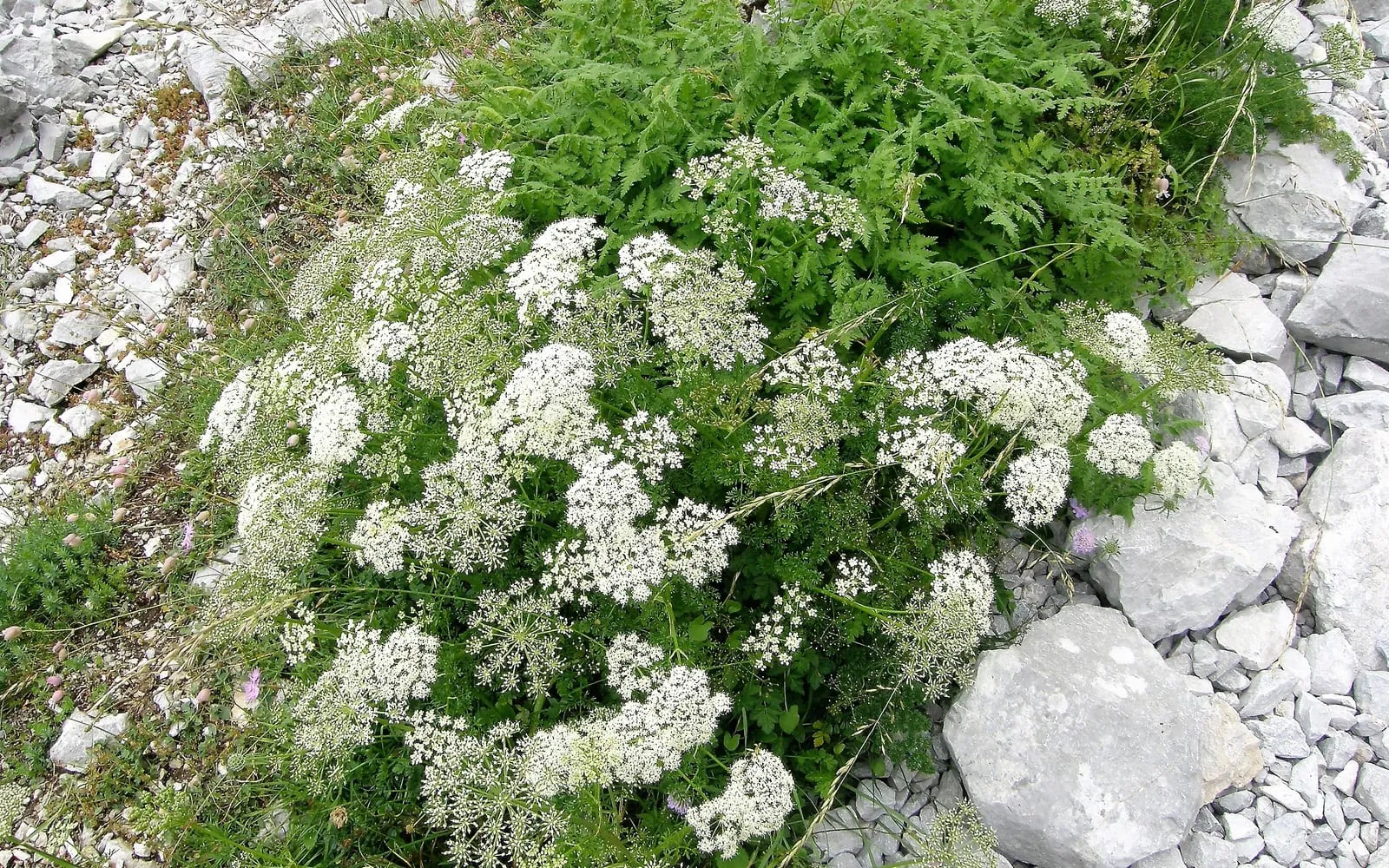
Flowers are small and white, in loose flat umbels 3 to 5 cm across, opening from July.
Seeds are small, grey-brown, ribbed and downy, about 3 mm long, ripening from late August in a good year.
The scent is sweet liquorice-aniseed and it is present throughout the plant, strongest in the ripe seed.
The whole plant is slight. Anise never looks robust, and a row of it is easily lost among stronger neighbours.
Where it is from
Anise is native to the eastern Mediterranean and western Asia, probably the Levant and Egypt, and it is among the oldest cultivated spices in the record.
Egyptian medical papyri from around 1500 BC list it. The Greeks and Romans both grew it, Pliny wrote about it at length, and Roman spiced cakes served at the end of heavy meals used it, which is one of the ancestors of the wedding cake.
Its transport across Europe was commercial and early. Anise was valuable enough that in 1305 Edward I placed a duty on it to fund repairs to London Bridge.
The drinks trade is what sustains it now. Ouzo, pastis, raki, arak, sambuca and anisette all depend on it, and Turkey, Spain, Egypt, Syria and Mexico grow most of the crop.
Northern Europe has never grown it commercially. The climate has always been the reason.
How it grows
Sow direct where it is to grow, from mid-May once the soil is warm. Anise has a taproot and transplanted plants sulk or fail.
Sow thinly in shallow drills, covering with 5 mm of soil, and thin to 20 cm.
Choose the hottest, sunniest, most sheltered spot in the garden. A south-facing bed against a wall gives you the best chance of ripe seed.
Germination takes two to three weeks in warm soil. A cold May sowing sits and rots.
Keep the row weeded. Anise is slight and slow to start, and weeds smother it easily.
Water in dry spells while the plant is growing, then keep water off the ripening heads.
Harvest leaves from July for the kitchen.
Cut the whole plant in September when the seed heads have gone grey-brown and before the seed shatters. Hang the stems upside down inside paper bags somewhere dry and airy and let the seed drop.
Give up gracefully on the seed in a wet cold summer, and take the leaves instead.
Through the seasons
Winter there is nothing. Anise is an annual killed by the first frost.
Spring is preparation. Warm a bed under a cloche from late April if you want to sow a fortnight earlier.
Late spring is sowing, from mid-May outdoors. Do not sow before the soil has warmed.
Early summer is slow growth and weeding. The plant does very little until late June.
Midsummer brings the flowers, from July, and the leaves are worth picking throughout.
Late summer is the critical period. The seed needs warm dry weather through August and September to ripen and fill.
Autumn is harvest, in September, cutting the plants as the heads turn grey-brown. A wet September ends the crop.
Care difficulty
Difficult in a cool climate, and the difficulty is climate rather than skill.
Anise needs roughly 120 frost-free days with real warmth to ripen its seed. A hot summer sometimes provides that and a cool one rarely does. Everything else about the plant is straightforward.
Transplanting fails. The taproot resents disturbance, so it goes in where it will stand, which means waiting for warm soil rather than starting it early indoors.
A greenhouse or polytunnel changes the odds considerably and is the honest answer for anyone north of the Midlands who wants seed.
The plant is otherwise undemanding. No feeding, little watering, no staking, and no pest or disease of consequence.
Growing it for leaves rather than seed removes the difficulty entirely and is worth doing on its own terms.
Watering
Water the seedbed before sowing and keep it damp until germination.
Water weekly through June and July in dry weather. A checked plant flowers late and then has no time to ripen seed.
Stop watering once the seed heads form. Wet weather at that stage is what spoils the crop and adding to it does not help.
Water at the base in the morning rather than over the plant.
A container needs watering twice a week in summer. Use a deep pot, since the taproot wants the room.
Water sparingly from late August, and keep a potted plant under cover if the weather turns.
Warning signs, diseases and pests
Seed that stays green and shrivels is the main failure and it means the season was too short or too cool. Nothing treats it. Grow under cover next year, or grow for leaves.
Damping off kills seedlings at the base in cold wet compost. Sow into warm soil, thinly.
Slugs clear a row of young plants overnight. Protect a new sowing.
Aphids gather on the flowering stems. Rub them off.
Plants that stay tiny all summer were usually sown too early into cold ground or were transplanted.
Seed heads that shatter before harvest have been left a few days too long. Cut as soon as they go grey-brown.
Mouldy seed heads mean a wet September. Cut the plants and dry them under cover rather than leaving them out.
Growing environment
Full sun and plenty of heat. This is the whole requirement, and no amount of care substitutes for it.
Light, free-draining soil of moderate fertility. Heavy cold clay gives you a plant that never gets going.
Alkaline is preferred, around pH 6.5 to 7.5. Anise grows on limestone soils in its native range.
A south-facing bed against a wall is the best outdoor position in a cool climate, since the reflected heat extends the season at both ends.
A polytunnel or greenhouse border is the reliable answer for seed, giving the extra weeks the plant needs.
Shelter matters. The plant is slender and an exposed windy site knocks it about and slows it further.
Feeding
Nothing is needed in reasonable soil, and rich ground works against you.
Nitrogen produces soft leafy growth and delays flowering, which is the opposite of what a short season needs.
Compost dug in the previous autumn is adequate preparation.
A container plant takes a weak balanced feed every three weeks, since a pot exhausts itself.
Anything that speeds the plant towards flowering helps and anything that slows it does not, which makes lean growing the right approach.
Troubleshooting
The seed never ripened. The season was too short. Anise wants about four frost-free months of warmth, which a cool climate rarely supplies outdoors. Grow it in a greenhouse or polytunnel, or grow it for leaves.
The plants stayed tiny. Sown too early into cold soil, or transplanted. Sow direct from mid-May.
Can I use the leaves? Yes. They carry the same aniseed flavour and are good in salads, with fish and in soups. That makes the plant worth growing even where the seed will not ripen.
Is this the same as star anise? No. Star anise is Illicium verum, a tree from southern China, and the two share the flavour compound anethole rather than any relationship.
Why does it taste like fennel? Same reason. Anethole occurs in anise, fennel, star anise and liquorice, four unrelated plants that happen to make the same compound.
When do I cut it? In September, when the seed heads have turned grey-brown and before they shatter. Dry the stems head-down in paper bags.
Can I sow it in modules? It usually fails. The taproot resents disturbance. Sow direct.