
Edible
Blessed Thistle
Cnicus benedictus
Also known as Holy thistle, St Benedict's thistle, Spotted thistle
How to grow blessed thistle, Cnicus benedictus. The bitter annual of medieval physic gardens, sowing it direct in spring, and the plague reputation that gave it its name.
At a glance
- Difficulty
- Easy
- Water
- Rarely once established
- Light
- Full sun
- Temperature
- Killed by hard frost. Sow in spring
- Hardiness
- USDA 7-10, RHS H3, hardy to -5 C
- Type
- Hardy annual
- Height
- 30-60 cm
- Native to
- the Mediterranean, western Asia
- Best month
- June and July in the Northern Hemisphere, December and January in the Southern Hemisphere
An annual rather than a biennial, so it goes from a spring sowing to seed in one season and is pulled at the end of it. Poor dry ground gives the most bitter plant, which is the point of it. It has naturalised in California and parts of Australia.
Hardiness zones describe winter cold alone. Summer heat, humidity, rainfall and the length of the growing season decide as much, so treat the range as the outer limit rather than as a recommendation.
Every month named in this guide is for the temperate Northern Hemisphere. If you garden in the Southern Hemisphere, shift each one by six months, so June becomes December. Closer to the equator the wet and dry seasons matter more than the calendar, and the shift stops being a useful guide.
Harmful if eaten
- Do not eat
- Large quantities of the herb, which cause vomiting
- Harm from
- Eating it and handling it
- Affects
- People
Blessed thistle is a traditional bitter herb and it is used in small quantities as a digestive tonic and in a few liqueurs. The European Medicines Agency has assessed it as a traditional herbal medicine for temporary loss of appetite. Large doses cause nausea and vomiting, which is a known effect rather than a poisoning, and herbal references advise against it in pregnancy. Handling the plant causes contact dermatitis in some people, as several members of the daisy family do, and anyone allergic to ragweed or chrysanthemum may react to it. It is not on the RHS list of potentially harmful garden plants and the ASPCA holds no entry for it. The spines are fine rather than vicious, and they are still worth gloves.
Sources: European Medicines Agency, Cnicus benedictus, RHS potentially harmful garden plants
About
Blessed thistle is a medieval physic garden plant that has almost disappeared from temperate gardens. It was grown across Europe as a cure-all, and its reputation peaked during the plague years, when it was believed to work against infection of every kind. That reputation gave it all three of its names.
The plant is an unassuming sprawling annual with yellow flower heads sitting in a nest of spiny bracts, and it is intensely bitter in every part. That bitterness is what it was grown for and what it is still used for, in small quantities as a digestive tonic and in a handful of liqueurs.
As a garden plant it is easy. Sow it in spring on poor dry ground, leave it alone, and it will flower from June until the frosts.
Appearance and character
A low sprawling annual, 30 to 60 cm, branching from near the base and often leaning outwards.
Stems are ridged, reddish and covered in soft white hairs, which give the whole plant a slightly woolly look.
Leaves are long, narrow and deeply lobed, with prominent pale veins and a spine at the tip of every lobe. The veining is conspicuous enough to look like variegation.
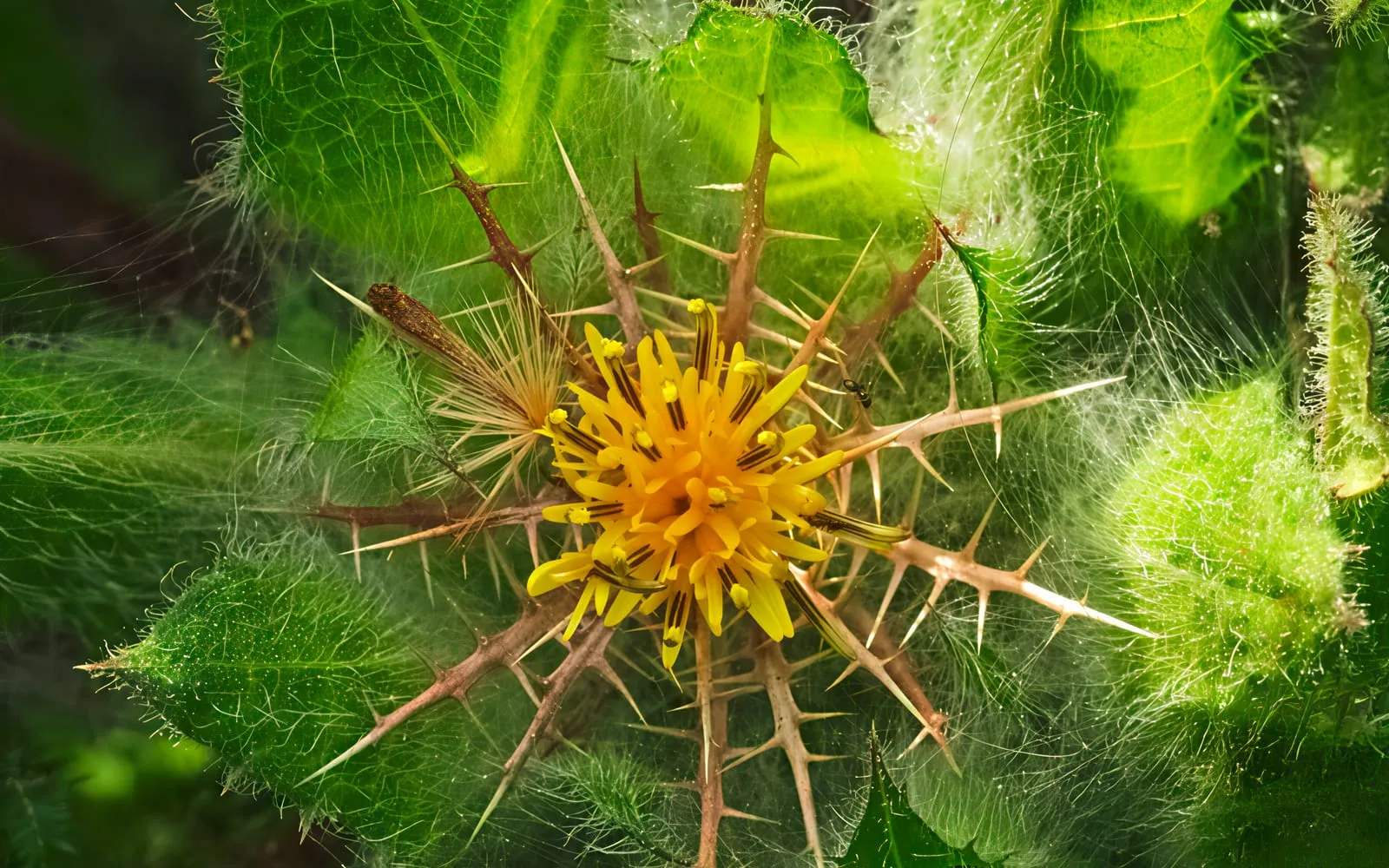
Flowers are yellow thistle heads, 3 to 4 cm across, each sitting in a nest of leafy bracts that end in long branched spines, giving the head a distinctive cupped appearance.
Seed is smooth, ribbed and topped with a double ring of bristles.
The whole plant is bitter. Chewing any part of it makes the point immediately.
Where it is from
Blessed thistle is native to the Mediterranean basin and western Asia, growing on dry stony ground, roadsides and neglected fields.
It became a European garden plant in the medieval period, grown in monastery physic gardens and in the herb gardens of the great houses.
The plague years made its reputation. Blessed thistle was one of the herbs credited with protecting against infection, and it appears in plague treatises across sixteenth century Europe. The names blessed, holy and St Benedict’s all come from that period.
Shakespeare knew it well enough to make a joke of it. In Much Ado About Nothing a character recommends carduus benedictus for a qualm, which was contemporary household advice.
It is grown commercially now on a modest scale in eastern Europe for the herbal trade, and it has naturalised widely as a weed in North America and Australia.
How it grows
Sow direct where it is to grow, in spring from April. The taproot resents disturbance.
Sow at 1 cm and thin to 30 cm. Germination takes one to two weeks in warm soil.
Choose an open sunny position on poor free-draining ground. Rich soil gives you a larger, softer, floppier plant.
Water until established, then leave it.
Wear gloves when handling it. The spines are fine rather than fierce and they are persistent.
Cut the plant back by half in midsummer if it goes lax, and it will flower again.
Harvest the flowering tops in June and July, when the herb is traditionally cut, and dry them somewhere warm and airy.
Deadhead if you want to limit self-seeding, which is moderate rather than aggressive.
Pull the plants after the first hard frost. It is an annual.
Through the seasons
Winter there is nothing. The plant is an annual killed by frost.
Spring is sowing, from April, once the soil has warmed.
Early summer brings rapid growth and the first flower heads in June.
Midsummer is the harvest, when the flowering tops are cut for drying, and the plant continues flowering afterwards.
Late summer ripens the seed. Collect some for next year or leave a plant to scatter it.
Autumn ends the plants at the first hard frost. Clear them away in gloves.
Care difficulty
Easy. Blessed thistle is a straightforward annual that asks for sun and drainage and nothing else.
Poor soil is what it wants. On rich ground it grows large and flops, and the bitterness that gives it its purpose is diluted.
Direct sowing is the only sensible route, since the taproot dislikes being moved.
Slugs are the one pest that does real damage, and only at the seedling stage.
The spines are fine and numerous rather than large, and they are more of an irritation than a hazard. Gloves are enough.
Nothing else needs doing. It needs no feeding, no watering once established, no staking and no protection, and it dies at the end of the season.
Watering
Water the seedbed before sowing and keep it damp until germination.
Water seedlings until they are established.
After that, leave it. Blessed thistle comes from dry stony Mediterranean ground and copes with a cool summer without help.
Water in an extended drought if plants wilt by mid-morning.
Water at the base rather than over the plant, since the hairy leaves hold water and mildew.
A container works if it is deep enough for the taproot, and needs weekly watering in summer.
Warning signs, diseases and pests
Aphids gather on the flower buds in early summer and bring in ladybirds. They rarely need action.
Slugs clear seedlings overnight. Protect a new sowing.
Powdery mildew whitens the foliage in late summer, usually as the plant finishes.
Root rot in cold wet ground kills plants outright. Improve drainage or grow it in a pot.
Lax floppy growth means rich soil or too much water.
Plants that stay small and never flower were sown too late or too deep.
Contact dermatitis after handling it affects some people, as it does with several daisy-family plants. Wear gloves.
Growing environment
Full sun. It flowers poorly in shade and goes leggy.
Poor, dry, free-draining soil. A gravel bed, a dry bank or a neglected corner all suit it better than a prepared bed.
pH from 6 to 8. It is unfussy and grows on chalk.
A physic garden or herb border is its historical home, and it works well in a wild or informal planting where its sprawl does not matter.
It is not a border plant in the ornamental sense. Blessed thistle is grown for what it is rather than how it looks.
For pollinators the flowers are useful, drawing bees through a long season from June to the frosts.
Feeding
None. Fed blessed thistle grows large and lax with less bitterness, which is the opposite of the point.
Do not add compost or manure. Poor ground gives a compact plant.
A container plant takes a weak balanced feed once, if at all.
If a plant looks starved, the cause is more likely crowding or shade than nutrition.
Ground that grew it needs nothing before the next crop.
Troubleshooting
Is it the same as milk thistle? No. Milk thistle, Silybum marianum, is much larger with purple flowers and white-marbled leaves, and its seed is used for silymarin. Blessed thistle is a small yellow-flowered annual and it is the whole herb that is used. The names overlap because milk thistle is sometimes called blessed milk thistle.
It flopped over. Rich soil or too much water. Grow the next one harder.
Can I make tea from it? It is used that way traditionally and it is extremely bitter. Use small amounts, and avoid it in pregnancy.
I got a rash handling it. Contact dermatitis, which several daisy-family plants cause. Wear gloves.
Nothing came up. Sown too early into cold soil, or too deep. Sow from April at 1 cm.
Why is it called blessed? From its medieval reputation as a cure-all, particularly during the plague years, when it was thought to protect against infection of every kind.
Can I grow it in a pot? Yes, in a deep one. The taproot wants the room.