
Edible
Common Sorrel
Rumex acetosa
Also known as Sorrel, Garden sorrel, Sour dock
How to grow sorrel, Rumex acetosa. The sharp lemony leaf that comes back every spring, keeping it cutting all season, and the oxalic acid to respect.
At a glance
- Difficulty
- Easy
- Water
- Weekly in a dry summer
- Light
- Full sun to partial shade
- Temperature
- Fully hardy to about -20 deg C, dying back each winter
- Hardiness
- USDA 3-9, RHS H7, hardy to -25 C
- Type
- Hardy herbaceous perennial, long-lived
- Height
- 30 cm in leaf, 60-100 cm in flower
- Native to
- Europe, including Britain, and across northern Asia
- Best month
- April in the Northern Hemisphere, October in the Southern Hemisphere
Hardy well beyond any vegetable use for it and among the first leaves up in spring. Long days send it to flower, and cutting the stems out keeps the leaves coming. Warm climates give a shorter and sharper crop, since oxalic acid rises with heat and stress.
Hardiness zones describe winter cold alone. Summer heat, humidity, rainfall and the length of the growing season decide as much, so treat the range as the outer limit rather than as a recommendation.
Every month named in this guide is for the temperate Northern Hemisphere. If you garden in the Southern Hemisphere, shift each one by six months, so April becomes October. Closer to the equator the wet and dry seasons matter more than the calendar, and the shift stops being a useful guide.
Edible, with limits
- Safe to eat
- The leaves, raw or cooked, in ordinary culinary quantities
- Harm from
- Eating it
- Affects
- People, cats, dogs and horses
Sorrel is a food crop used across Europe and the leaves are safe in normal culinary amounts. The caution is oxalic acid, which is what gives the leaf its sharp lemony taste and which sorrel contains in quantity, comparable to rhubarb leaves and well above spinach. Oxalate binds calcium, irritates the gut and contributes to kidney stones in people prone to them. Documented poisonings involve large quantities eaten as a vegetable rather than as a seasoning, and there is at least one recorded death from a soup made with around half a kilogram of sorrel. A handful in a sauce or an omelette is the normal use and is well within safe limits. Anybody with a history of kidney stones, gout or on a low-oxalate diet should treat sorrel as they treat rhubarb. Boiling and discarding the water removes a substantial part of it. The RHS lists Rumex species among plants harmful if eaten in quantity and the ASPCA lists sorrel as toxic to cats, dogs and horses on the same oxalate grounds, with livestock poisoning recorded in sheep grazing heavily on docks. Do not let a dog graze a sorrel bed.
Sources: RHS potentially harmful garden plants, ASPCA (Sorrel, Rumex species)
About
Sorrel tastes of lemon and green apple and it is the earliest thing in the kitchen garden. New leaves appear in March, weeks before anything sown that spring is ready, from a plant that needs no annual sowing and lives for a decade.
That sharpness is oxalic acid, and the risk is about quantity rather than worrying about. A handful in a sauce is the normal use and is entirely safe. Half a kilogram in a soup is not, and the difference is a matter of quantity rather than of the plant being dangerous.
Two species are grown. Common sorrel, Rumex acetosa, is the European native with large arrow-shaped leaves and a strong flavour. Buckler-leaf sorrel, Rumex scutatus, is a low spreading plant with small shield-shaped leaves, a milder taste and a better habit for a container. This guide is the common one.
Appearance and character
A clump of long-stalked leaves reaching about 30 cm, spreading slowly from a deep taproot.
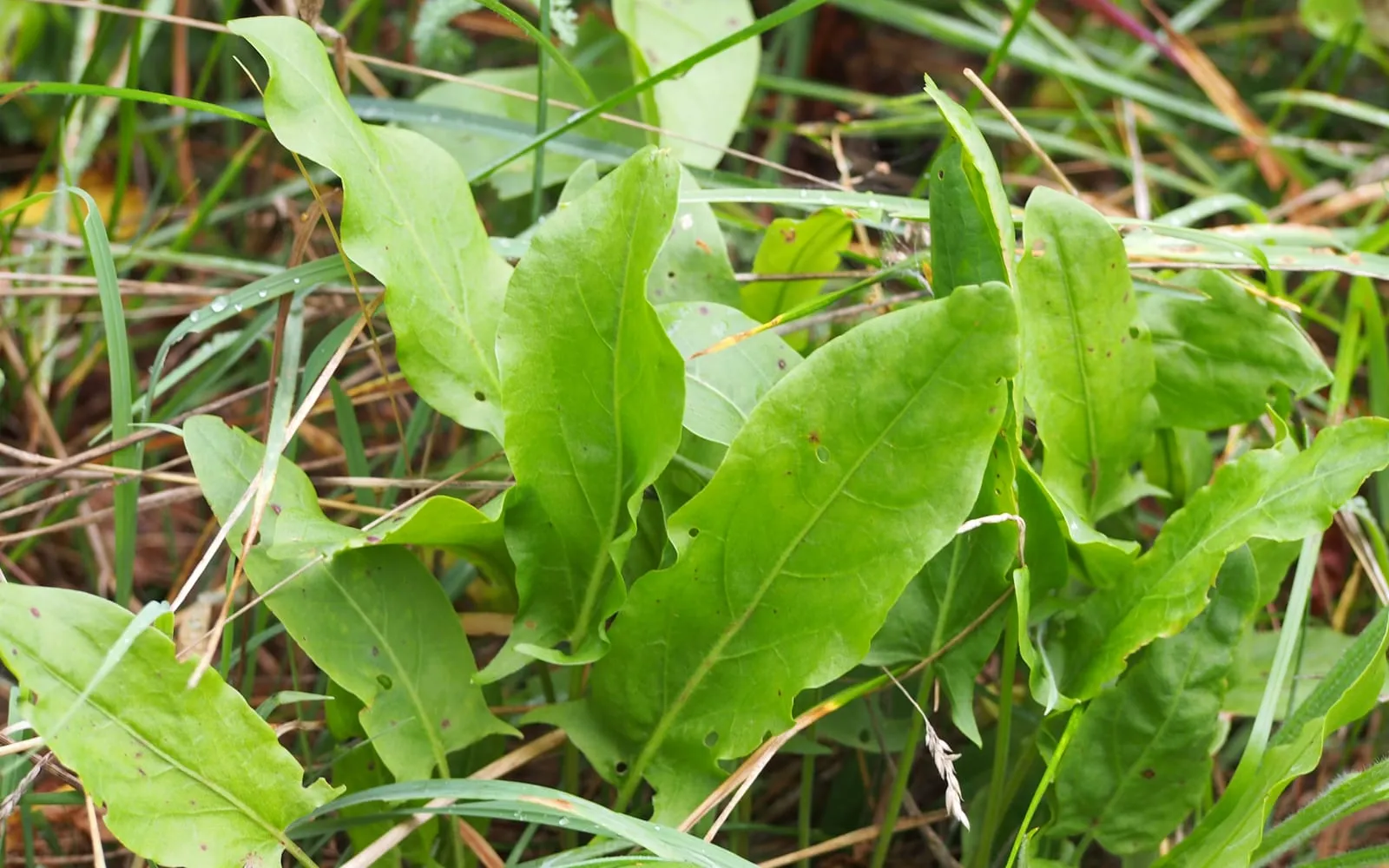
Leaves are arrow-shaped, or hastate, with two backward-pointing lobes at the base that clasp the stalk. That shape is the reliable identification and separates sorrel from the broad-leaved docks growing beside it.
Colour is fresh mid-green, sometimes flushed red along the veins, and the blade is thin and slightly succulent.
Flowers appear from May on stems 60 cm to a metre tall, in loose spikes of tiny green flowers that turn rusty red as they seed. The plant is dioecious, so individual plants are male or female.
Flavour is sharply acidic and lemony, strongest in spring, coarsening as the plant moves towards flowering.
Where it is from
Common sorrel is native to Britain and across Europe and northern Asia, growing in meadows, grassland and on roadsides. It is one of the commonest wild plants in Britain.
It has been eaten in Britain for as long as there are records. Mediaeval English cooking used it heavily as a souring agent, in the role lemons later took, and green sauce made from sorrel was a standard accompaniment to fish and pork.
France kept the tradition when England dropped it, and sorrel sauce with salmon remains a French classic. Oseille is a supermarket herb there.
The plant declined in British kitchens after citrus became affordable in the seventeenth and eighteenth centuries, which is the same reason several other souring herbs disappeared.
Sheep’s sorrel, Rumex acetosella, is a smaller relative of acid grassland and is edible in the same way and much less productive.
How it grows
Sow direct in spring or autumn at 1 cm deep in rows 30 cm apart, thinning to 30 cm. Sorrel germinates readily and grows quickly.
Alternatively divide an established clump in autumn or early spring, which is faster and gives a known plant.
Pick from eight to ten weeks after sowing, taking outer leaves and leaving the centre.
Cut the whole plant to 5 cm above the crown when it starts running to flower, usually in late May, and water and feed it. Fresh tender leaves follow within a fortnight. Repeating this through the season keeps a plant productive from March to October.
Remove flower stems as they appear unless you want seed. They exhaust the plant and produce a great deal of self-sown sorrel.
Divide and replant every three or four years, since old clumps become woody and less productive.
Through the seasons
Early spring brings the first leaves in March, which is the earliest crop in the garden and the best of the year.
Late spring is peak picking, and the point at which flower stems start to rise. Cut the whole plant hard in late May, feed it, and take the second flush.
Summer carries on with regular hard cuts. Water in dry weather to keep the leaves tender, since a dry plant is tough and unpleasantly sharp.
Autumn gives a last flush of good leaves in September and October, milder than the summer growth.
Winter is dormancy. The plant dies back to the crown and needs nothing. Mulch with compost in November or February.
Care difficulty
Easy, and one of the least demanding perennials in the vegetable garden.
Cutting hard is the technique that matters. A plant left to flower stops making useful leaves, and a plant cut to the ground in late May makes them again within a fortnight.
Self-seeding is the nuisance to manage. A single female plant left to seed puts sorrel across the plot for years, and the seedlings have a deep taproot that makes them awkward to pull.
Slugs take the tender spring growth and the plant outgrows them.
Leaf miner disfigures the leaves in early summer without reducing the crop meaningfully.
Watering keeps the flavour balanced. A drought-stressed plant is harsh rather than pleasantly sharp.
Watering
Water weekly in a dry summer, around 12 litres per square metre.
An established plant with a deep taproot survives drought and produces tough, harsh leaves through it, so watering is about quality rather than survival.
Water immediately after each hard cut, which is what drives the regrowth.
Mulch in spring with compost to hold moisture and feed the plant at the same time.
Container growing suits buckler-leaf sorrel better than the common one, since the taproot on Rumex acetosa wants depth. Use a pot at least 30 cm deep.
Warning signs, diseases and pests
Slugs graze the young spring leaves as they emerge. The plant grows away from them and the damage is cosmetic.
Leaf miner blisters pale tunnels through the leaves from May. Squeeze the blisters to crush the larvae and remove the worst leaves.
Rust spots the foliage orange in a wet summer. Cut the plant hard, remove the affected leaves, and the regrowth is usually clean.
Aphids cluster on the flower stems, which is one more reason to cut them off.
Self-seeding is the real problem rather than a pest. Cut flower stems before they colour up.
Tough bitter leaves mean a plant that has run to flower or gone short of water. Cut it to the ground and feed it.
Woody, unproductive clumps mean the plant needs dividing.
Growing environment
Full sun to partial shade. Sorrel crops well in light shade, which makes it useful in a spot too dim for most vegetables.
Moisture-retentive, fertile soil grows the tenderest leaves. The wild plant favours damp meadows.
Slightly acid soil, pH 5.5 to 6.8, though it tolerates a wide range.
Give it a permanent position outside the rotation, since it is a perennial that will occupy the same ground for years.
Keep it away from a wildflower meadow or a lawn edge, where its seedlings become a nuisance.
Divide every three or four years to keep it productive.
Feeding
Mulch with compost each spring, which is all an established plant needs.
Feed with a balanced or nitrogen-rich liquid feed after each hard cut, which drives the regrowth.
Avoid heavy nitrogen otherwise, which gives soft leaves and does nothing for the flavour.
Never use fresh manure.
A divided and replanted clump benefits from compost worked into the planting hole.
Troubleshooting
The leaves are tough and harsh. The plant is running to flower, or it has gone short of water. Cut it to 5 cm, water it, feed it, and pick the new growth.
Tall stems with rusty flowers. It has bolted. Cut them off before they seed, or you will have sorrel across the plot.
Sorrel seedlings everywhere. A plant was allowed to seed. They have a deep taproot, so pull them small. Cut flower stems next year before they colour.
Pale tunnels in the leaves. Leaf miner. Squeeze the tunnels to crush the larvae and remove the worst leaves.
Orange spots on the foliage. Rust in a wet summer. Cut the plant hard and the regrowth is usually clean.
The clump has gone woody and gives little. It needs dividing. Lift in autumn or early spring, split the crown, and replant the outer pieces.
How much is safe to eat? Culinary quantities, meaning a handful in a sauce or an omelette. It is high in oxalic acid, and the recorded harm involves eating it as a bulk vegetable rather than as a seasoning. Treat it as you would rhubarb.
How do I tell it from dock? Sorrel leaves are arrow-shaped with two backward-pointing lobes at the base. Broad-leaved dock has no lobes and tastes of nothing.
Common Sorrel problem guides
Not sure what is wrong? See the common vegetable pests guide.