
Houseplant
Japanese aralia
Fatsia japonica
Also known as Paper plant, Glossy-leaved paper plant, False castor oil plant
How to care for Fatsia japonica. The big-leaved shade shrub that works as a houseplant and a garden plant, why it hates warm rooms, and what the shiny black berries are.
At a glance
- Difficulty
- Easy
- Water
- When the top third of the compost has dried
- Light
- Low to medium indirect light. Deep shade suits it outdoors and in
- Temperature
- 10-21 deg C, and it dislikes anything above 24
- Humidity
- Moderate. Warm dry rooms cause more trouble than cold ones
- Hardiness
- USDA 8-11, RHS H5, hardy to -15 C
- Type
- Evergreen perennial shrub, long-lived
- Height
- 1.5-3 m
- Native to
- Japan, South Korea
Coastal woodland in southern Japan and South Korea, growing in deep shade on humid, mild, maritime slopes. It is hardy to around -15 deg C once established, which puts it in a different class from every other large-leaved plant sold as a houseplant. What it will not take is heat, and a hot dry summer scorches the leaves where a cold winter does nothing. It wants shade, shelter from wind and soil that does not dry out.
Hardiness zones describe winter cold alone. Summer heat, humidity, rainfall and the length of the growing season decide as much, so treat the range as the outer limit rather than as a recommendation.
Harmful if eaten
- Do not eat
- The sap and the berries
- Harm from
- Handling it and eating it
- Affects
- People
Fatsia japonica appears on the RHS list of potentially harmful garden plants, where it is noted as a skin irritant. The sap can cause contact dermatitis in sensitive people, and this plant carries very large leaves that need occasional cutting back, so gloves are sensible when pruning. The black berries produced by mature plants contain saponins and may cause mild stomach upset if eaten in quantity, though they are unappealing and poisoning is not commonly reported. The ASPCA does not list the species, and it is not among the plants commonly implicated in animal poisoning. Treat it as a plant to handle with gloves and to keep berries away from small children rather than as a serious hazard.
Sources: RHS potentially harmful garden plants, NC State Extension, Fatsia japonica
About
Japanese aralia is the plant to reach for when a dim corner needs something architectural and the room is cold. It carries leaves the size of dinner plates, it takes shade as deep as an aspidistra will, and unlike almost every other large-leaved foliage plant it is hardy enough to live outside through a real winter.
That combination makes it unusual. Most houseplants that look this tropical come from equatorial forests and collapse below 12 deg C. This one comes from temperate coastal woodland in Japan, survives around -15 deg C once established, and is happier in an unheated hallway or a cool porch than in a warm living room.
The mistake people make is treating it like a tropical plant. Put it somewhere warm and dry and it scorches, drops leaves and picks up spider mite. Put it somewhere cold, shaded and humid and it thrives on neglect.
Appearance and character
An upright evergreen shrub with thick green stems and very large glossy leaves, open in habit and often bare at the base with age.
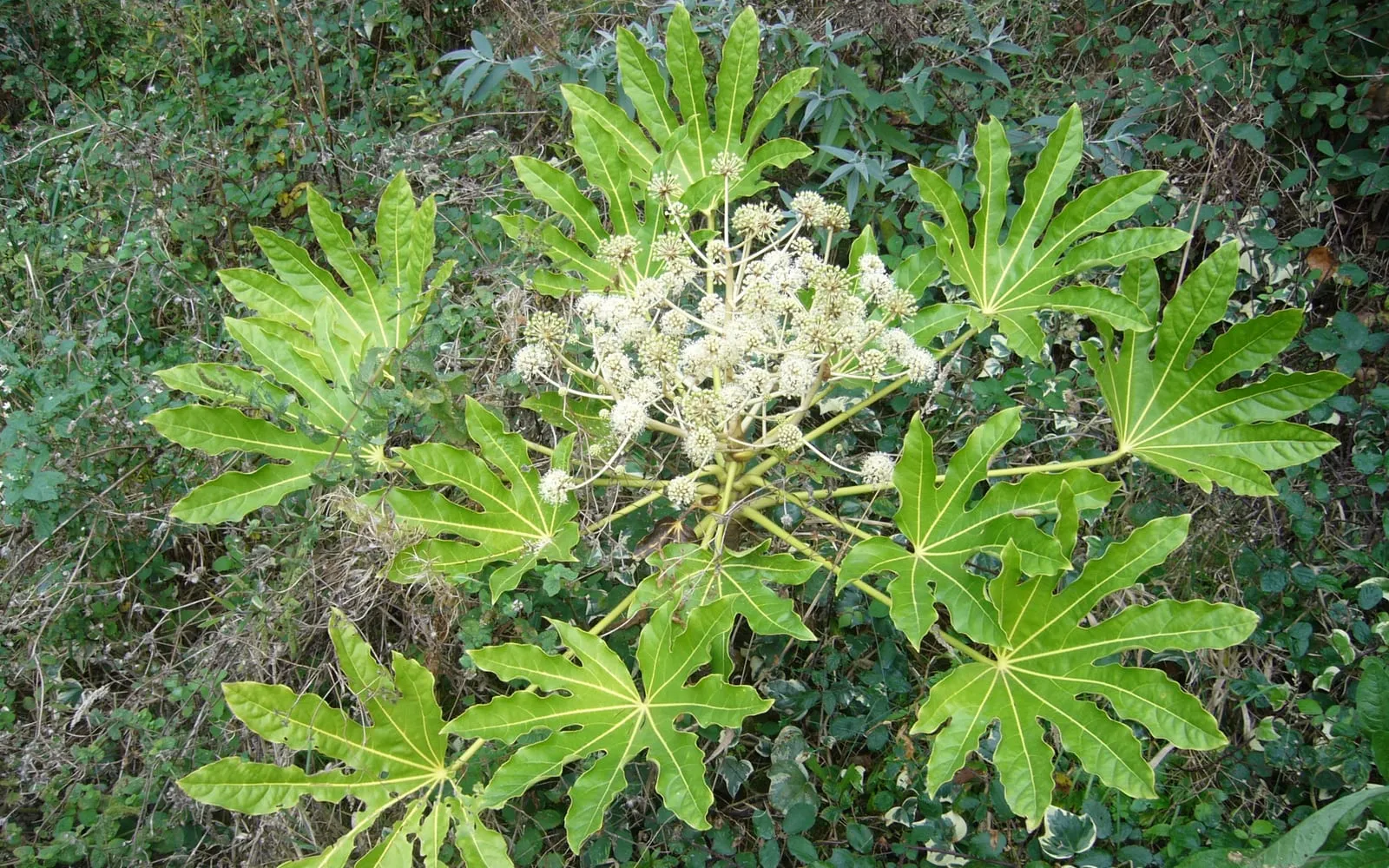
Each leaf is palmate, deeply cut into seven to nine pointed lobes, 20 to 40 cm across, thick, leathery and a deep glossy green, held on a long stout stalk. The size and gloss are the reason the plant is grown.
Growth is moderate, adding a flush of new leaves each year from the stem tips. A plant reaches 1.5 to 3 m over many years and spreads about as wide.
Flowering happens in autumn on mature plants, producing branched heads of small creamy white globular flowers held above the foliage, which are one of the very last nectar sources of the year outdoors. Shiny black berries follow in winter.
‘Variegata’ has white-tipped leaves and needs more light. ‘Spider’s Web’ is speckled with white and reverts easily. ‘Camouflage’ is marbled in pale green.
Fatshedera lizei is the hybrid between this plant and ivy, with smaller leaves and a lax climbing habit.
Where it is from
Coastal woodland and forest edge in southern Japan and South Korea, growing in shade on humid maritime slopes.
That habitat explains everything about the plant. Deep shade under a canopy selects for large thin-textured leaves that intercept as much light as possible. A maritime climate with mild wet winters and cool summers explains both the hardiness and the intolerance of heat and drought.
It was introduced to European gardens in the middle of the nineteenth century and became a standard shrub for shaded town gardens, where it tolerates pollution and dry root conditions once established.
The genus contains only a handful of species. Fatsia polycarpa from Taiwan is occasionally grown and has more deeply divided leaves.
How it grows
Give it low to medium indirect light indoors, or full to partial shade outdoors. Variegated forms want a little more.
Keep it out of direct sun, which scorches the large leaves badly.
Keep it cool. Between 10 and 21 deg C suits it, and above 24 deg C it starts to struggle. An unheated hall, a porch or a cool north-facing room is better than a warm living room.
Water when the top third of the compost has dried, thoroughly, and drain completely. It dislikes drying out fully.
Feed monthly at half strength through the growing season.
Wipe the leaves occasionally. Large glossy leaves collect dust, which matters more in a dim position.
Prune in spring. Cutting a leggy stem back hard promotes branching from lower down, which is the remedy for a plant that has gone bare at the base.
Repot every two or three years in spring into a heavy pot, since a tall plant with large leaves is top-heavy.
Move it outside for the summer in a shaded spot if you can. It responds well and comes back in better condition than it went out.
Through the seasons
Spring brings the main flush of new leaves. Resume feeding, repot, and prune leggy stems now.
Summer is steady growth. Water when the top third dries, feed monthly, and keep it out of sun and heat. A shaded position outdoors suits it.
Autumn is when mature plants flower, producing creamy globular heads. Reduce watering and stop feeding from October.
Winter is easy and this is where the plant differs from its neighbours on the houseplant shelf. Cool is good. Keep it above freezing indoors, water sparingly, and expect it to hold its leaves throughout.
Care difficulty
Easy, provided you keep it cool.
Heat is the main problem indoors. A warm dry room causes leaf scorch, leaf drop and red spider mite, and moving the plant somewhere cooler solves all three.
Direct sun scorches the large leaves within days.
Legginess is common in deep shade, producing a bare stem with a tuft of leaves at the top. Hard pruning in spring fixes it.
Scale insects are the pest to watch for, sheltering on the undersides of large leaves where they go unnoticed until honeydew appears.
Watering
Water when the top third of the compost has dried, roughly weekly in summer and every two to three weeks in winter.
Water thoroughly until it drains, then empty the saucer.
Do not let it dry out completely. Large thin leaves lose water quickly and wilt badly, and repeated wilting causes permanent brown margins.
Reduce watering in a cool room in winter, when the plant uses very little.
Underwatering shows as drooping leaves that recover on watering, with brown crisp margins where it has happened repeatedly.
Overwatering shows as yellowing lower leaves and soft stems.
Warning signs, diseases and pests
Brown scorched patches on the leaves are sun damage or heat. Move the plant into deeper shade and somewhere cooler.
Yellowing leaves dropping in numbers in winter usually means the room is too warm and dry rather than too cold.
Brown crisp leaf margins are drought damage, from either the compost or the air.
Small flat brown discs on the leaf undersides and stems are scale insects, with sticky honeydew and sooty mould below. Wipe them off and check monthly.
Fine pale stippling is red spider mite, which appears in warm dry rooms and almost never on a plant kept cool.
White cottony fluff in the leaf axils is mealybug.
A bare stem with leaves only at the top is deep shade and no pruning. Cut back hard in spring.
Variegated forms throwing plain green shoots is reversion. Cut those shoots out at the base.
Growing environment
Low to medium indirect light indoors, full to partial shade outdoors.
Never direct sun.
Cool, 10 to 21 deg C, and it dislikes anything above 24 deg C. This is the opposite of most houseplants.
Moderate humidity. A cool room is more important than a humid one.
Free-draining peat-free compost with some loam through it, in a heavy pot with drainage holes.
Outdoors it is hardy to around -15 deg C once established, growing in shade in USDA 8 and warmer, and it is a standard shrub for shaded town gardens.
Avoid radiators, hot conservatories and any position in direct sun.
Feeding
Feed monthly from spring to early autumn with a balanced liquid houseplant fertiliser at half strength.
Stop feeding from mid-autumn to early spring.
Feed variegated cultivars less, since rich feeding encourages reversion to plain green.
Repot every two or three years in spring into a heavy pot one size up.
Top-dress a large plant instead of repotting, replacing the top few centimetres of compost each spring.
Troubleshooting
The leaves are scorched at the edges. Sun, heat or drought. This plant wants shade and cool conditions, and it suffers in a warm room long before it suffers in a cold one.
It is dropping leaves in winter. Almost always too warm and dry rather than too cold. Move it somewhere cooler and away from the radiator.
Can it live outside? Yes. It is hardy to around -15 deg C once established and is a standard shrub for shaded gardens in USDA 8 and warmer.
It has gone bare at the bottom. Deep shade and no pruning. Cut the stems back hard in spring and it will break from lower down.
What are the black berries? They follow the autumn flowers on mature plants. They contain saponins and can cause mild stomach upset, so keep them away from small children.
Sticky leaves and black mould underneath. Scale insects on the leaf undersides, producing honeydew that sooty mould grows on. Wipe them off and check monthly.
Is it safe to handle? The RHS lists it as a skin irritant. Wear gloves when pruning, since the sap causes contact dermatitis in sensitive people.
My variegated one is going green. Reversion. Cut the plain green shoots out at the base, and feed less, since rich feeding encourages it.
Japanese aralia problem guides
Not sure what is wrong? See the common houseplant pests guide.