
Houseplant
Yellow Lady's Slipper
Cypripedium parviflorum
Also known as Cypripedium parviflorum, Yellow Moccasin Flower
How to grow Cypripedium parviflorum, the yellow lady's slipper orchid, a hardy terrestrial orchid with pouched yellow flowers and a cool woodland root run.
At a glance
- Difficulty
- Difficult
- Water
- Keep cool and evenly moist in growth; drier in dormancy
- Light
- Dappled shade to part shade
- Temperature
- Hardy; needs a cold winter dormancy
- Humidity
- Average to high
- Hardiness
- USDA 3-7, RHS H7, hardy to -35 C
- Type
- Hardy deciduous terrestrial orchid
- Height
- 20 to 60 cm
- Native to
- North America
A hardy woodland orchid from North America, growing in cool, humus-rich, moist but well-drained soil in dappled shade. It is fully hardy and needs a cold winter dormancy to flower, dying back to a rootstock each year. It cannot take heat, drought or a warm, dry root run, and depends on cool, moist, humus-rich woodland conditions instead of a heated room.
Hardiness zones describe winter cold alone. Summer heat, humidity, rainfall and the length of the growing season decide as much, so treat the range as the outer limit rather than as a recommendation.
Skin irritant
- Do not eat
- The glandular hairs on the leaves and stems
- Harm from
- Handling it
- Affects
- People
Lady's slipper orchids are not a poisoning risk, but the fine glandular hairs on their leaves and stems can cause a contact skin rash, rather like a mild poison ivy reaction, in sensitive people who handle them. Wear gloves if you are prone to skin irritation when planting or dividing them, and wash your hands afterwards. There is no significant hazard from eating the plant, and it is not listed as a serious toxin to pets.
Sources: North Carolina Extension plant toxicity database, RHS potentially harmful garden plants
About
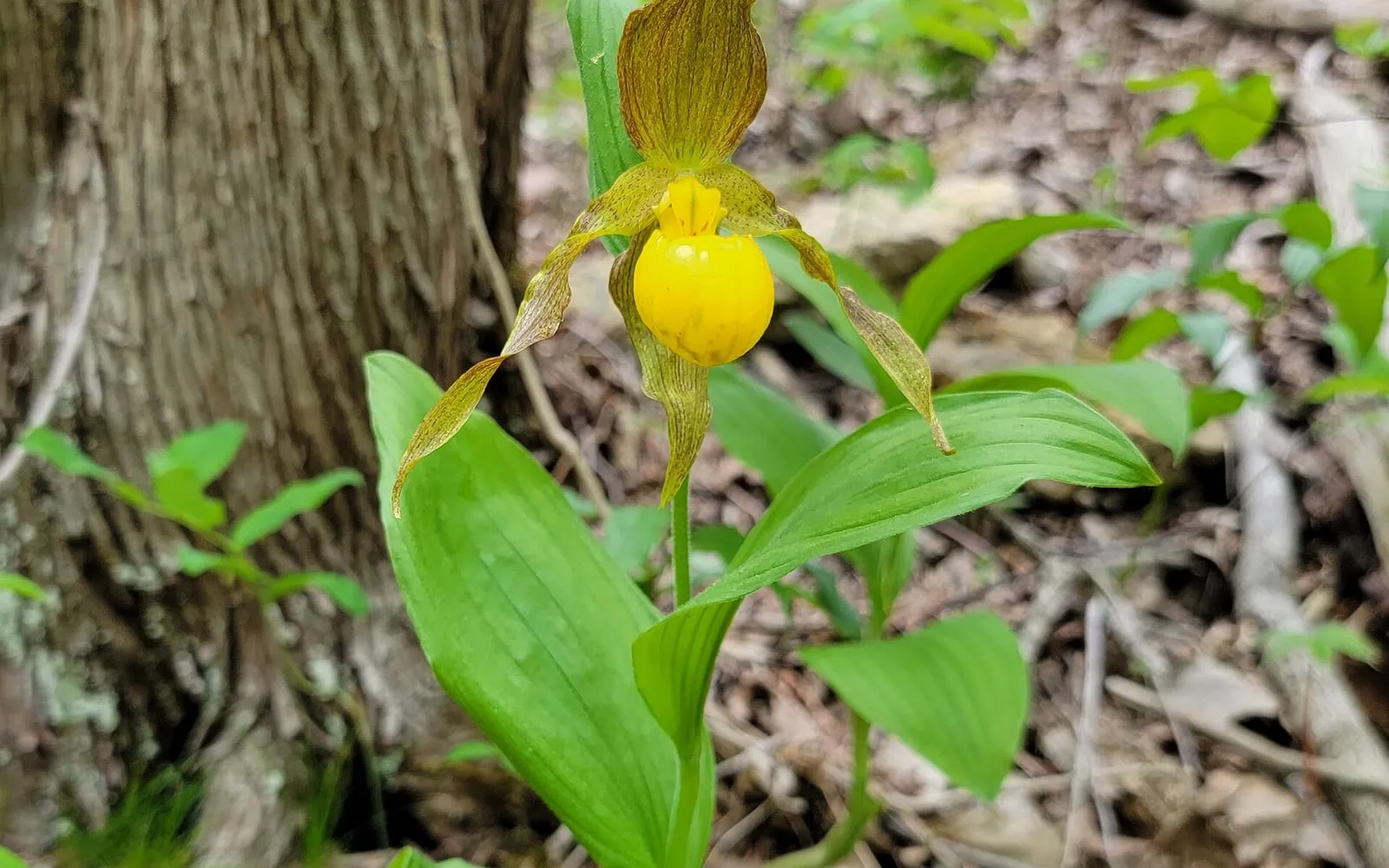
Yellow lady’s slipper is a hardy woodland orchid with a reputation for being difficult but worth growing well. From a clump of broad, strongly pleated leaves it produces flowers whose pouched lower lip forms a bright yellow slipper, held below twisted, greenish-brown to maroon side petals. A well-grown clump in dappled woodland shade can take years to establish.
It is a true terrestrial orchid, not a tropical epiphyte, growing in cool, humus-rich, moist but well-drained woodland soil across North America. It is fully hardy and depends on a cold winter dormancy, dying back to its rootstock each year and returning in spring. What it cannot take is heat, drought or a warm, dry root run, so it is a plant for a cool, shaded, moist spot in the ground or a deep pot, never a heated room.
It has a reputation for difficulty, largely because it needs those cool, humus-rich, evenly moist woodland conditions and handles disturbance poorly. Nursery-raised plants, never those dug from the wild, are much easier once given the right root run. Given cool shade, a humus-rich but free-draining soil and a cold winter, it can settle and slowly increase.
Appearance and character
The leaves are broad, oval and strongly pleated, a fresh green, several to a stem, dying back to the ground each autumn and returning in spring.
The flowers have a pouched, slipper-shaped lower lip in bright yellow, held below twisted, greenish-brown to maroon side petals and sepals, one or two to a stem in late spring.
It grows as a slowly spreading clump from a rootstock, gaining stems over years, and is fully hardy, dying back to that rootstock over winter.
The fine glandular hairs on its leaves and stems can irritate sensitive skin, so it is handled with a little care, though it is not a poisoning risk.
Where it is from
Cypripedium parviflorum grows across North America, in cool, humus-rich, moist but well-drained woodland and woodland-edge soils in dappled shade, often over neutral to limy ground. It is a plant of cool, shaded, leafy woodland, not of warm or dry places.
Give it dappled shade, a cool, humus-rich, moist but free-draining root run, and a cold winter dormancy. It cannot take heat, drought or a warm, dry, airless root run, and it handles root disturbance poorly once established.
How it grows
It grows in spring, producing its pleated leaves and slipper flowers, builds its rootstock through summer, then dies back in autumn and rests cold and dormant through winter. That cold dormancy is essential, and the plant returns and increases slowly over years in the right spot.
Grow it in a cool, humus-rich, moist but free-draining, neutral to slightly limy soil, in dappled or part shade, in the ground or a deep pot, and keep the root run cool and evenly moist in growth with rainwater. Plant nursery-raised stock, never wild-collected plants.
Keep it cool and shaded, mulch to keep the roots cool and moist, and let it die back and rest cold over winter. Disturb it as little as possible, and let the clump build up over years.
Propagation is by careful division of an established clump in early autumn, or from seed by specialists, which is slow and technical.
Through the seasons
Spring brings the pleated shoots and, in late spring, the yellow slipper flowers. Keep the root run cool and evenly moist.
Summer the plant builds its rootstock. Keep it cool, shaded and evenly moist with rainwater, and feed very sparingly.
Autumn the foliage dies back. Ease off watering as it goes dormant, and mulch the crown.
Winter the plant rests, cold and dormant below ground, which it needs to flower. Keep it cold and only just moist, never warm.
Care difficulty
Difficult, though less so with nursery-raised stock and the right root run. It needs cool, dappled shade, a humus-rich but free-draining, evenly moist soil, and a cold winter dormancy. It responds poorly to heat, drought and disturbance. Warm, dry or stagnant conditions kill it. Given a cool, shaded, moist woodland spot and patience, it can be grown and slowly increased.
Watering
Keep the root run cool and evenly moist through the growing season, using rainwater, since it comes from moist woodland and dislikes drying out. Never let it bake or dry hard in growth.
Never let it stand warm and waterlogged either, since the roots and crown rot in stagnant wet; the aim is cool, even moisture with free drainage. Ease off as it dies back, keeping it only just moist and cold through winter dormancy.
Warning signs, diseases and pests
Warm, wet or stagnant conditions rot the roots and crown, the commonest cause of failure. Keep the root run cool, evenly moist and free-draining, and never let it bake or sit warm and sodden.
Slugs and snails graze the emerging shoots and flowers in spring; protect the young growth from them. Failure to establish, or to return after planting, usually means the root run was too warm, too dry or too disturbed.
Handle it with gloves if your skin is sensitive, since the glandular hairs can cause a contact rash.
Growing environment
Dappled shade to part shade suits it, matching its woodland home. It cannot take full sun or heat, which scorch and weaken it, nor deep, dark shade, which stops it flowering.
It is fully hardy and needs a cold winter dormancy to flower, so it is a plant for a cool, shaded garden spot or a deep pot kept cold in winter, never a heated room. Average to high humidity and cool air suit it.
Grow it in a cool, humus-rich, moist but free-draining, neutral to slightly limy soil in dappled shade, in the ground or a deep pot, from nursery-raised stock only.
Feeding
Feed very sparingly in the growing season with a very dilute balanced feed, since it is adapted to lean, leafy woodland soil and does badly with strong fertiliser. A leaf-mould mulch feeds it more naturally.
Give nothing in dormancy. Fresh humus-rich soil and a mulch matter more than feeding.
Troubleshooting
It failed to return after planting. Usually the root run was too warm, too dry, too wet or too disturbed. Give it cool, dappled shade, a humus-rich but free-draining, evenly moist soil, and plant nursery-raised stock without disturbing the roots.
The crown has gone soft and rotted. Warm, wet or stagnant conditions. Keep the root run cool, evenly moist and free-draining, and never let it sit warm and sodden.
Can I dig one up from the wild? No. Wild lady’s slippers are protected and rarely survive transplanting. Always buy nursery-raised, propagated stock, which is far easier to establish.
Why does it need a cold winter? It is a hardy woodland orchid that depends on a cold dormancy to flower, so it cannot be grown as a warm houseplant; it needs a cold, dormant winter rest.
Does it irritate skin? It can. The fine glandular hairs cause a contact rash in sensitive people, so wear gloves when planting or dividing it if you are prone to skin irritation.
Yellow Lady's Slipper problem guides
Not sure what is wrong? See the common houseplant pests guide.